
Quick Answer: Which CG 200cc Crankshaft Is Right for You?
For daily commuting, heavy utility hauling, and long-term reliability, a genuine Original Equipment Manufacturer (OEM) crankshaft is the recommended choice. The CG 200cc engine, a workhorse of Philippine transport, is frequently subjected to high operating temperatures, heavy passenger loads, and demanding road conditions. An OEM crankshaft provides guaranteed metallurgy, precise factory balancing, and exact dimensional tolerances that ensure your engine runs smoothly without destructive vibrations.
Aftermarket options are viable primarily when you are facing strict budget constraints, performing a temporary repair, or building a highly customized performance engine. However, these benefits only hold true if you source the part from a highly reputable, established aftermarket manufacturer. Unbranded or extremely cheap aftermarket alternatives present a significant gamble.
Because replacing a crankshaft requires a complete engine teardown, the labor cost is both fixed and substantial. In the Philippines, having a professional mechanic split your engine cases, replace the gaskets, and rebuild the bottom end typically costs several thousand pesos. Saving a small amount upfront on a low-grade aftermarket part rarely justifies the risk of a premature bottom-end failure. If a cheap part fails, you will be forced to pay for the exact same expensive labor and gasket sets a second time.
Products mentioned in this guide
![[Hot Price]CG 200 CRANKSHAFT ASSEMBLY 【100% genuine 】](https://img.lazcdn.com/g/p/ae0f202ab6da682c5d4b843c9d9f0542.jpg_400x400q80.jpg_.webp)
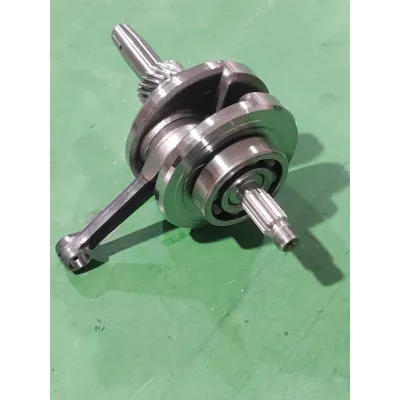
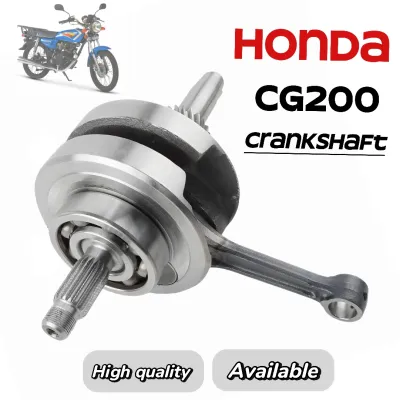
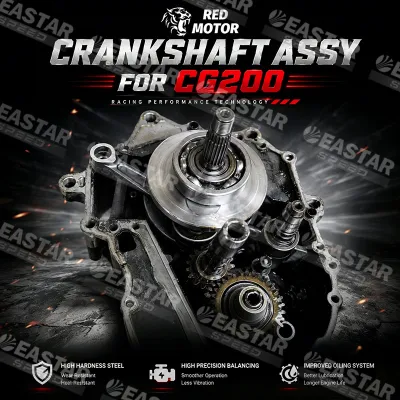
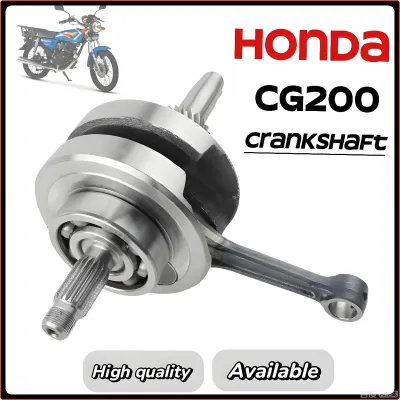
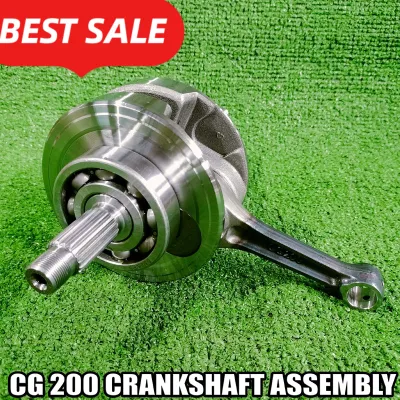
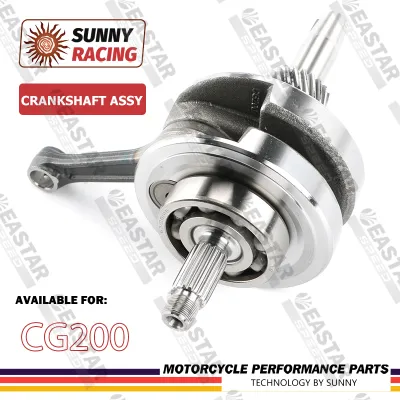
Prices are valid at publication and may change. Please refer to the product page for the latest price.
Recognizing When Your CG 200cc Crankshaft Needs Replacement
Before purchasing any replacement parts, you must accurately diagnose whether your crankshaft has actually failed. A premature or incorrect diagnosis can lead to unnecessary expenses, while ignoring the true warning signs can result in catastrophic engine destruction on the road.

Primary Symptoms of Crankshaft Failure
- Deep, Metallic Knocking: A heavy, dull knocking sound coming directly from the lower crankcase is a classic sign of worn connecting rod big-end bearings. This sound is usually most pronounced under acceleration or when the engine is under load, such as climbing a steep incline with a sidecar.
- Excessive Engine Vibration: While single-cylinder CG 200cc engines are inherently prone to some vibration, a sudden, severe increase in vibration felt through the footpegs, handlebars, and seat often indicates a bent crankshaft or a severely worn crank pin.
- Metallic Shavings in the Oil: Finding shiny, non-magnetic brass or bronze-colored flakes in your engine oil or on your oil strainer screen during an oil change is a clear indicator that the thrust washers or big-end bearing cages are disintegrating.
- Radial and Axial Connecting Rod Play: During a physical inspection with the cylinder block removed, any noticeable up-and-down (radial) play in the connecting rod indicates a failed big-end bearing. While a tiny amount of side-to-side (axial) play is normal, it must not exceed the manufacturer's wear limit.
Distinguishing Crankshaft Wear from Other Issues
It is easy to mistake other bottom-end noises for a failed crankshaft. For example, worn main crankcase bearings can produce a continuous rumbling or whining sound rather than a distinct metallic knock. Loose engine mounting bolts can also cause severe frame vibrations that mimic a bent crankshaft. Additionally, if your specific CG 200cc variant features an internal balancer shaft, a worn balancer gear or bearing can produce a rhythmic knocking sound that is easily misdiagnosed.
To avoid buying parts you do not need, always have a qualified mechanic perform a physical teardown and inspection. The mechanic must use a dial indicator to measure crankshaft runout (the straightness of the shaft) and a micrometer to check the journal diameters against the specific service limits outlined in your motorcycle’s service manual. Never purchase a new crankshaft based solely on high mileage; if your engine has been meticulously maintained with regular oil changes, the original crankshaft may still be well within its serviceable tolerances.
OEM Crankshafts: Precision, Longevity, and Peace of Mind
An OEM crankshaft is manufactured to the exact specifications set by the motorcycle’s original developer. For a CG 200cc engine, which relies on a simple, robust pushrod design, the crankshaft is the literal heart of the engine’s mechanical timing and power delivery.
The Advantages of Going OEM
The primary benefit of an OEM crankshaft lies in its superior metallurgy. OEM manufacturers use high-grade forged steel that undergoes precise induction hardening on the bearing journals. This process ensures the shaft can withstand the intense friction, heat, and torsional stress of daily operation in tropical climates.
Furthermore, OEM crankshafts are dynamically balanced at the factory to match the exact weight of the original piston and connecting rod assembly. This precise balancing is critical for minimizing the secondary vibrations inherent to single-cylinder engines. Proper balancing not only improves rider comfort during long trips but also prevents the premature loosening of chassis bolts, cracking of engine mounts, and wear on internal transmission gears.
Additionally, OEM parts purchased through authorized dealerships come with standard manufacturer warranties. If a rare material defect or manufacturing flaw manifests early in the part’s life, you have a clear path to recourse and replacement.
The Drawbacks of OEM Parts
The most obvious disadvantage of an OEM crankshaft is its premium price. In the local market, an OEM unit can cost significantly more than a standard aftermarket alternative. For riders who rely on their motorcycles for daily livelihood, such as tricycle drivers, this upfront cost can be a heavy financial burden.
Availability can also be an issue. If your CG 200cc motorcycle is an older model or a less common variant, local dealerships may not keep the crankshaft in stock. This can lead to long wait times for shipping, resulting in costly downtime for a vehicle that you may need for daily transport.
Aftermarket Crankshafts: Cost Savings and Variable Quality
The aftermarket for CG-series engine components is incredibly vast. Because the CG engine design is widely copied and produced by various manufacturers worldwide, you will find a massive selection of aftermarket crankshafts ranging from premium performance brands to unbranded, budget-tier replacements.
The Benefits of Aftermarket Options
The primary appeal of an aftermarket crankshaft is its affordability. Budget-friendly aftermarket options allow riders to get their vehicles back on the road at a fraction of the cost of an OEM part. Additionally, aftermarket parts are highly accessible; almost every local motorcycle parts shop stocks multiple aftermarket options for the ubiquitous CG 200cc engine, eliminating long waiting periods.
For enthusiasts, some specialized aftermarket brands offer upgraded crankshafts with longer strokes (stroker cranks) or reinforced connecting rods designed specifically to handle the increased compression and heat of modified performance engines.
The Risks of Low-Tier Aftermarket Parts
Choosing a cheap, unbranded aftermarket crankshaft carries substantial risks. The most critical issue is inconsistent metallurgy. Lower-tier manufacturers often use cast steel or inferior alloys that have not been properly heat-treated. Under the intense heat and load of a 200cc engine, these soft metals can wear down rapidly at the bearing journals, or worse, the crank pin can shear, causing catastrophic engine failure.
Poor factory balancing is another common issue with cheap aftermarket crankshafts. An unbalanced crankshaft acts like a hammer inside your engine, sending violent vibrations throughout the motorcycle. This can lead to cracked crankcases, sheared flywheel keys, and rapid destruction of the main engine bearings.
Finally, dimensional variances are common in low-cost parts. A crankshaft that is fractionally too wide or has a slightly oversized main journal will not fit correctly into the crankcase. Correcting these manufacturing errors often requires custom machining or complex shimming at a machine shop, which quickly erases any initial savings you gained from buying a cheaper part.
Core Comparison: OEM vs. Aftermarket CG 200cc Crankshafts
To help you weigh your options, the table below compares OEM crankshafts, reputable aftermarket brands, and budget or unbranded aftermarket alternatives across the most critical decision-making dimensions.
| Feature | OEM Crankshaft | Reputable Aftermarket | Budget/Unbranded Aftermarket |
|---|---|---|---|
| Material & Metallurgy | Verified forged steel; high fatigue and heat resistance | High-grade alloy steel; reliable heat treatment | Variable or low-grade steel; prone to rapid wear |
| Dimensional Tolerances | Exact factory specifications; guaranteed drop-in fit | Usually within spec; minor quality control variances | High variance; may require case shimming or machining |
| Dynamic Balancing | Factory-precise; optimized for low vibration | Acceptable balance; slight increase in vibration | Inconsistent or poor; can cause severe engine vibration |
| Upfront Part Cost | Premium (typically ₱3,500 – ₱6,000+) | Moderate (typically ₱2,000 – ₱3,500) | Low (typically ₱1,000 – ₱1,800) |
| Long-Term Value | High; lasts tens of thousands of kilometers | Moderate; reliable for standard daily use | Low; high risk of premature bottom-end failure |
| Warranty Coverage | Standard manufacturer/dealer warranty | Limited brand or seller-dependent warranty | None; sold "as-is" |
When evaluating this comparison, remember that the true cost of a crankshaft replacement is not just the price of the metal shaft itself. You must factor in the cost of a complete gasket set, fresh high-quality engine oil, new main bearings, and the extensive labor required to split the engine cases.
If a ₱1,200 budget crankshaft fails after only 5,000 kilometers, you will have to pay for another ₱1,200 part, another ₱500 gasket set, more oil, and another ₱3,000 in professional labor. In contrast, investing in an OEM or premium aftermarket crankshaft from the beginning ensures the engine remains sealed and running reliably for years, making it the far more economical choice in the long run.
The Decision Framework: Matching the Part to Your Needs
To make your final purchasing decision, evaluate your specific riding conditions, budget, and long-term plans for the motorcycle using the framework below.
Choose an OEM Crankshaft If:
- You rely on the motorcycle for your livelihood: If the bike is used as a tricycle, a delivery vehicle, or a daily commuter where downtime means lost income, the reliability of an OEM part is non-negotiable.
- You carry heavy loads regularly: Heavy cargo or multiple passengers put immense torque load on the connecting rod and crank pin, requiring the verified metallurgy of an OEM forging.
- You plan to keep the motorcycle long-term: If you intend to ride the vehicle for several more years, the long lifespan of an OEM crankshaft easily justifies the initial premium.
- You want a hassle-free installation: OEM parts guarantee a perfect fit without requiring any modifications to your crankcase or bearings.
Choose a Reputable Aftermarket Crankshaft If:
- You are on a moderate budget: If you cannot afford the OEM price but still require a reliable, safe machine, a trusted aftermarket brand offers a balanced compromise.
- You are building a performance engine: If you are modifying your CG 200cc engine with a high-compression piston, a performance camshaft, or an increased bore, certain performance aftermarket crankshafts are specifically engineered to handle those modifications.
- The OEM part is unavailable: If dealership backorders mean your bike will be out of commission for weeks, a high-quality aftermarket alternative will get you back on the road quickly.
Verify This Crucial Factor First:
Before installing any new crankshaft—whether OEM or aftermarket—your mechanic must thoroughly inspect the engine crankcase. If the previous crankshaft failure was caused by a seized bearing, the bearing outer race may have spun inside the aluminum engine case. This wear ruins the engine case’s bearing seats, making them out-of-round.
Installing a brand-new crankshaft into worn, loose, or damaged crankcase bearing seats will cause the shaft to run out of alignment. This misalignment will rapidly destroy your new crankshaft and main bearings within a few hundred kilometers, regardless of how high the quality of the part is.
Critical Installation and Safety Boundaries
Replacing a crankshaft is a highly complex, irreversible bottom-end rebuild. Because this procedure requires complete disassembly of the engine’s core structural and rotating components, it carries strict safety and mechanical boundaries.
Professional Installation and Specialized Tools
Do not attempt to replace a crankshaft as a casual do-it-yourself project unless you have extensive mechanical experience and access to specialized tools. Splitting and reassembling a CG 200cc crankcase requires:
- A dedicated crankcase splitter to separate the case halves without warping the aluminum mating surfaces.
- A crankshaft installer tool to pull the new shaft smoothly into the bearings.
- A high-quality torque wrench to tighten the crankcase bolts and internal fasteners to the exact manufacturer specifications.
- A dial indicator to verify that the crankshaft runout is perfectly within limits once installed.
Never use a hammer, mallet, or pry bars to force the crankcase halves apart or to drive the new crankshaft into the bearings. Applying impact force to the crankshaft can easily bend the flywheels out of alignment, ruin the precision tolerances of the new big-end bearing, or crack the fragile aluminum engine cases.
Mandatory Parts Replacement
When replacing the crankshaft, you must never reuse old main bearings, oil seals, or gaskets. Always install brand-new, high-quality main crankcase bearings and fresh rubber oil seals. Reusing worn bearings with a new crankshaft introduces play and vibration that will quickly ruin the new shaft. Always use a high-quality gasket set and apply the manufacturer-specified liquid gasket sealant sparingly to the crankcase mating surfaces to prevent oil leaks and preserve oil pressure.
Consult the Service Manual
Always consult the official service manual for your specific CG 200cc engine model before beginning the rebuild. The manual contains critical, non-negotiable specifications, including:
- The exact torque limits for the crankcase bolts, oil pump fasteners, and primary drive gear nut.
- The correct thermal fitting procedures, which typically involve heating the aluminum crankcase bearing seats evenly with a heat gun and freezing the new bearings to allow them to slip into place without mechanical stress.
- The precise side-clearance limits for the connecting rod.
If you discover that the engine case bearing seats are damaged, loose, or out of specification during disassembly, stop immediately. Do not attempt to force the new parts together. Take the engine cases to a professional automotive machine shop to have the bearing journals bored, sleeved, or repaired correctly.
Frequently Asked Questions (FAQ)
Can I reuse my old connecting rod and piston with a new crankshaft?
While it is physically possible to press out a crank pin and reuse an old connecting rod or piston if they measure within factory service limits, doing so is highly discouraged. A worn connecting rod big-end bore or a slightly distorted piston pin hole will quickly destroy the new crankshaft’s journals due to improper clearances and uneven impact stress. When replacing the crankshaft, it is highly recommended to install a complete assembly—including a new connecting rod, big-end bearing, piston, wrist pin, and piston rings—to ensure the entire engine operates smoothly and reaches its full intended lifespan.
Does a new crankshaft require engine case machining?
A genuine OEM crankshaft is designed to drop directly into a clean, undamaged CG 200cc engine case with new standard bearings without any machining. However, if you purchase a low-quality aftermarket crankshaft, you may encounter minor manufacturing defects, such as slightly oversized main journals. Additionally, if your engine previously suffered a catastrophic failure where the main bearing spun inside the crankcase, the aluminum bearing seat may be damaged. In such cases, a professional machine shop must bore and sleeve the crankcase to restore the correct press-fit dimensions for the bearings, which will add to your overall repair costs.
Community discussion
Share your experience or ask a question. Comments are reviewed before publication.