
Choosing between an Original Equipment Manufacturer (OEM) belt and an aftermarket alternative for your Honda Click 125 comes down to a balance of guaranteed reliability, riding conditions, and budget. For the vast majority of riders, the genuine Honda OEM CVT belt is the recommended default choice. It offers a guaranteed physical fit, predictable longevity under harsh tropical conditions, and complete compliance with factory warranty terms. High-quality aftermarket belts from reputable manufacturers can serve as cost-effective alternatives if you are on a tight budget, but they require meticulous verification of specifications against your scooter’s official service manual. The right choice depends on whether you prioritize absolute peace of mind or upfront cost savings.
Why the CVT Belt Matters for Your Honda Click 125
The Continuously Variable Transmission (CVT) system in your Honda Click 125 relies on the drive belt as the sole physical link transferring rotational force from the engine to the rear wheel. When you twist the throttle, the engine’s drive pulley (variator) squeezes the belt, forcing it to climb outward, while the rear driven pulley opens up. This seamless adjustment of the belt’s operating diameter is what allows your scooter to accelerate smoothly without manual gear shifts. Because the belt is constantly shifting under high tension, it is subjected to immense frictional forces and mechanical stress every time you ride.
In the Philippines, these operating stresses are amplified by the local environment. Daily commutes frequently involve prolonged stop-and-go traffic in dense urban areas, combined with high ambient temperatures and humidity. This environment prevents the CVT casing from cooling efficiently, trapping intense heat inside the transmission housing. Under these conditions, a sub-par or worn CVT belt will degrade rapidly. If the belt slips, you will experience sluggish acceleration and reduced fuel efficiency. If the belt snaps completely, the connection between the engine and the rear wheel is instantly severed, leaving you stranded on the road. In fast-moving or congested traffic, a sudden belt failure is not just an inconvenience; it poses a serious safety hazard.
Products mentioned in this guide
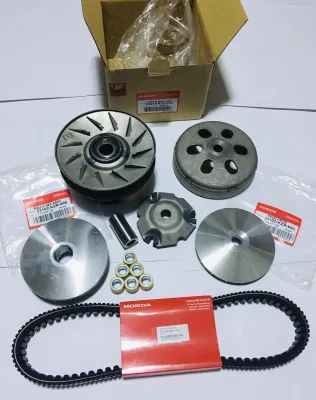
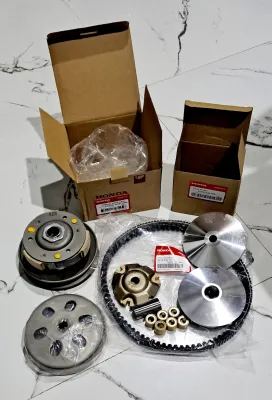
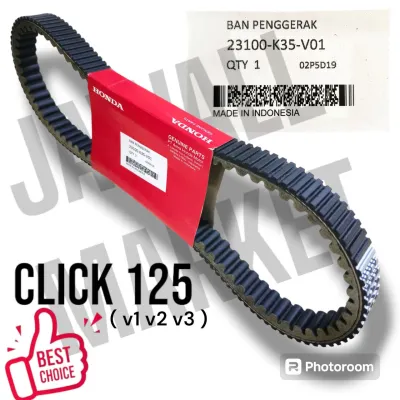
Prices are valid at publication and may change. Please refer to the product page for the latest price.
Comparing OEM and Aftermarket CVT Belts
To make an informed decision, you must evaluate how genuine Honda parts stack up against aftermarket alternatives across several key dimensions. These include material composition, power delivery characteristics, and physical compatibility.

Material Quality and Durability
Genuine Honda OEM belts are manufactured using proprietary rubber compounds reinforced with high-tensile cords. These materials are engineered specifically to handle the exact torque output, operating temperatures, and heat-dissipation requirements of the Click 125’s 125cc liquid-cooled eSP engine. The rubber is formulated to resist the thermal degradation that occurs during long idling periods in tropical heat, ensuring the belt remains flexible and does not crack prematurely.
Aftermarket manufacturers offer a wide range of materials, which can vary significantly in quality. Premium aftermarket options often feature heavy-duty materials like ethylene propylene diene monomer (EPDM) or aramid (Kevlar) fibers. These materials are highly resistant to heat and stretching, making them popular for heavy-duty use. However, the market is also flooded with low-grade, budget aftermarket belts made from cheap chloroprene rubber. These cheaper alternatives tend to harden, crack, and lose their structural integrity rapidly when exposed to the high operating temperatures of daily city riding.
To ensure your safety, always refer to the official owner’s manual for the recommended replacement interval. Do not rely on generic mileage claims from third-party sellers, as actual belt wear depends heavily on load, riding style, and environmental factors. Under local riding conditions, regular visual inspections are essential to detect early signs of material degradation.
Performance and Power Transfer
The genuine Honda belt is engineered to provide smooth, predictable throttle engagement and consistent power delivery throughout the RPM range. The factory-tuned friction characteristics of the OEM belt match the stock variator rollers and clutch springs perfectly. This ensures that the transition from a standstill to cruising speed is linear, without unexpected jerks or flat spots in acceleration.
Some aftermarket brands advertise performance upgrades, claiming their belts offer stiffer sidewalls or enhanced grip to reduce slippage. While these claims sound appealing, a stiffer belt can alter the transmission’s engagement RPM. This modification can lead to a sluggish start or require you to change your roller weights to restore balanced performance.
Furthermore, an excessively rigid aftermarket belt can accelerate wear on the aluminum faces of your drive and driven pulleys. If the belt material is harder than the pulley faces, it will gradually wear grooves into the metal over time. For standard daily commuting, keeping the transmission system within its original factory parameters ensures the most predictable, balanced, and fuel-efficient ride.
Fitment and Installation
A major advantage of choosing an OEM belt is the guarantee of exact physical dimensions. The length, width, thickness, and cog angle are matched precisely to the Click 125’s pulley angles. This precise fitment ensures that the belt rides at the correct height within the pulleys, maintaining the scooter’s designed gear-ratio range.
Aftermarket belts must be cross-referenced with extreme care. Even a tiny variance—such as a single millimeter in width or a slight difference in length—can drastically affect how the belt sits in the pulleys. A belt that is too wide may not drop fully into the pulleys, reducing your top-end speed, while a belt that is too narrow will slip, causing overheating and rapid wear.
Before purchasing any aftermarket alternative, you must verify the exact part number against the official service manual for your specific Click 125 model year. Be aware that different generations of the Honda Click 125 may use slightly different belt lengths or widths. Never assume a belt is compatible simply because it is labeled for a Honda scooter.
Evaluating Price and Long-Term Value
Genuine Honda OEM belts sit at a premium price point compared to budget aftermarket options. This price difference reflects the rigorous quality control, testing, and material standards required to meet manufacturer specifications. When purchasing an OEM belt from an authorized dealer, you are paying for a component that is guaranteed to perform reliably for its entire rated lifespan.
While a cheap aftermarket belt might cost significantly less upfront, it can represent a false economy. If a low-quality belt fails prematurely, you will face the cost of another replacement belt much sooner than expected. Additionally, you must factor in the labor cost of opening the CVT casing. Unless you are performing the replacement yourself and possess the necessary specialized tools, a professional mechanic will charge a service fee for the installation.
When you calculate the total cost of ownership—including labor fees, potential towing costs if a cheap belt snaps on the road, and the risk of damage to surrounding transmission components—the price premium of a genuine OEM belt becomes a highly reasonable investment. A snapped belt can whip inside the casing, damaging the plastic cooling fan, the variator face, or even the expensive stator assembly. Investing in a reliable belt protects these adjacent parts from catastrophic damage.
Decision Framework: Which Belt Should You Buy?
To finalize your choice, consider your specific riding habits, budget constraints, and long-term plans for your scooter. Use the following guidelines to select the best option for your situation.
- Choose the OEM Honda Belt if:
- You prioritize absolute reliability and peace of mind for daily commuting.
- You frequently carry heavy passenger loads or cargo, such as for delivery services.
- You want to maintain the scooter's factory warranty and original riding characteristics.
- You prefer a straightforward purchase without the need to cross-reference technical specifications.
- Choose a Reputable Aftermarket Belt if:
- You are working within a strict budget and need an immediate, affordable replacement.
- You use your scooter primarily for short, light-duty trips in your local neighborhood.
- You are planning to sell or trade in the scooter in the near future.
- You are experienced in verifying part dimensions and are buying from an established, trusted brand.
- Avoid Unbranded or Suspiciously Cheap Belts if:
- You rely on your Click 125 for daily long-distance travel or professional courier work.
- You cannot afford the downtime or safety risks associated with a sudden roadside breakdown.
- The seller cannot provide clear compatibility documentation or a verifiable manufacturer part number.
Inspection and Maintenance After Installation
Replacing the CVT belt is only part of the job; the surrounding components must also be inspected to ensure the longevity of your new belt. Before installing any replacement, the CVT casing should be thoroughly cleaned of rubber dust, road grime, and old grease. A buildup of debris can cause the new belt to slip or wear unevenly.
Inspect the pulley faces for any signs of wear, deep grooves, or scoring. Installing a brand-new belt onto worn or damaged pulleys will cause the new belt to wear out rapidly, regardless of whether it is OEM or aftermarket. The rough surfaces of a worn pulley act like sandpaper, grinding down the sides of the belt and reducing its lifespan.
Additionally, check the condition of the slide pieces, variator rollers, and the clutch lining. If these parts are worn or have flat spots, they should be replaced alongside the belt to ensure smooth transmission operation. Always check the original vehicle service manual for specific torque specifications when tightening the pulley nuts. Under-tightening can cause the pulleys to come loose while riding, while over-tightening can strip the crankshaft threads.
If you notice any signs of oil leaks inside the CVT casing—which usually indicates a failing engine seal or transmission seal—or if you lack the specialized tools required for safe disassembly, consult a qualified professional mechanic before proceeding. A contaminated belt will slip constantly, causing rapid failure.
Frequently Asked Questions (FAQ)
How often should I replace the CVT belt on my Honda Click 125?
To determine the exact replacement interval, always consult the official Honda owner’s manual or maintenance schedule for your specific model year. Generally, Honda recommends inspecting the drive belt at regular service intervals and replacing it around every 24,000 kilometers under normal riding conditions. However, severe operating environments—such as navigating heavy stop-and-go traffic in hot, dusty, or humid conditions—can accelerate wear. If you notice signs of cracking, fraying, or a reduction in belt width during a routine inspection, you should replace the belt immediately, regardless of the current mileage.
Can I use a CVT belt from another Honda scooter model on my Click 125?
You should not use a CVT belt from another scooter model unless the official Honda parts catalog explicitly lists it as a direct, interchangeable part for your specific Click 125 variant. Visually, belts from models like the Honda Beat, PCX, or ADV may look similar, but they often have different lengths, widths, thickness profiles, or cog angles. Using an incompatible belt can alter your transmission’s gear ratios, cause severe belt slippage, generate excessive heat, and ultimately lead to premature transmission failure or belt breakage.
Community discussion
Share your experience or ask a question. Comments are reviewed before publication.