
When maintaining your Yamaha Mio Sporty, choosing the right drive belt is critical to keeping your scooter running smoothly. The debate between OEM parts and aftermarket alternatives comes down to how you use your motorcycle. For daily commuters and delivery riders who prioritize predictable factory reliability, a genuine Yamaha OEM drive belt is the best overall choice. It is engineered specifically for the exact dimensions and tolerances of your scooter’s transmission system.
Reputable aftermarket belts offer a compelling alternative for riders on a strict budget or those seeking performance modifications. Branded aftermarket options from established manufacturers can deliver excellent durability, but they require careful selection to ensure proper fitment. However, generic or unbranded aftermarket belts carry a high risk of premature failure and should be avoided to protect your transmission from sudden damage.
Ultimately, your decision depends on your daily mileage, budget, and tolerance for unexpected mechanical issues. While an OEM belt offers peace of mind, a high-quality aftermarket belt can serve as a dependable alternative if you choose a trusted brand.
Products mentioned in this guide
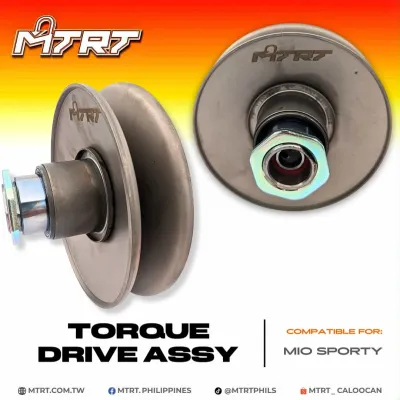
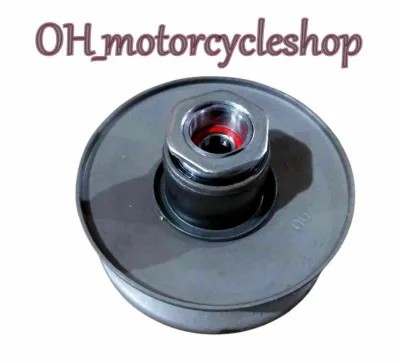
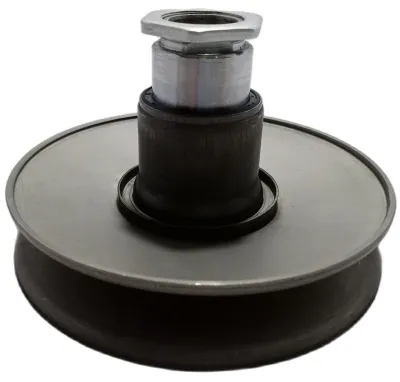
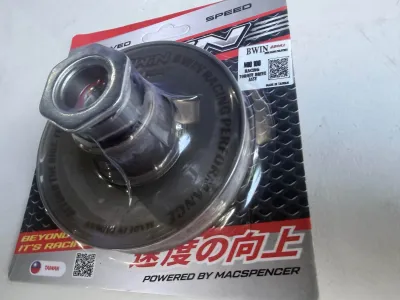
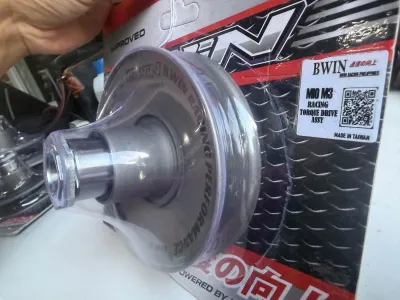
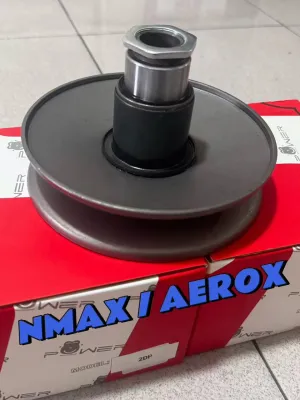
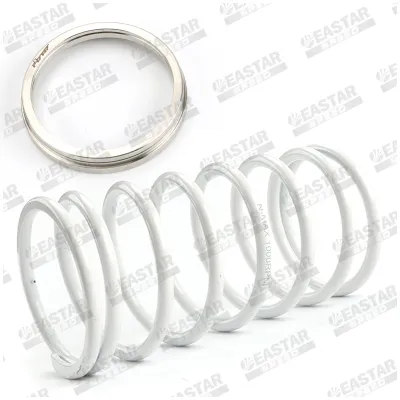
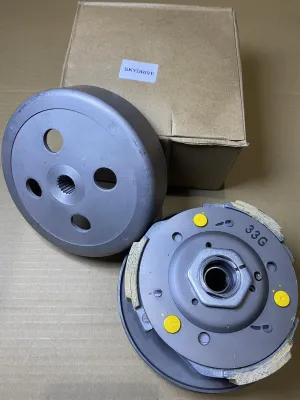
Prices are valid at publication and may change. Please refer to the product page for the latest price.
How the Torque Drive System Works in the Mio Sporty
To understand why your choice of drive belt is so important, it is helpful to look at how the Continuously Variable Transmission (CVT) operates. The Mio Sporty relies on a rubber V-belt to transfer power from the engine’s crankshaft to the rear wheel. This belt sits between two variable pulleys: the primary sheave (or variator) at the front and the secondary sheave (often associated with the torque drive mio sporty system) at the rear. As you twist the throttle, centrifugal force pushes the rollers in the front pulley outward, squeezing the belt to a wider diameter, while the rear pulley opens up to let the belt drop deeper.
This continuous movement allows your scooter to accelerate smoothly without manual gear shifts. However, this process subjects the drive belt to immense physical stress. The belt must constantly endure high friction as it grips the metal pulley faces, extreme heat generated by continuous spinning, and rapid tension changes during sudden acceleration and braking.
In the tropical climate of the Philippines, ambient heat and high humidity put additional strain on these rubber components. Stop-and-go traffic in urban areas prevents optimal airflow inside the CVT casing, causing internal temperatures to soar. Under these conditions, a drive belt must possess exceptional heat resistance to prevent the rubber compound from drying out, cracking, or slipping.
Furthermore, the physical dimensions of the belt are incredibly precise. Even a tiny deviation of less than a millimeter in width, length, or the angle of the V-shape can disrupt the entire transmission system. An incorrect fit can cause the belt to ride too high or too low in the pulleys, which alters the scooter’s gear ratio, reduces top speed, and accelerates wear on the pulley faces.
OEM vs Aftermarket Drive Belts: A Detailed Comparison
Deciding between a genuine Yamaha OEM belt and an aftermarket alternative requires comparing several key factors beyond the initial price tag. While Yamaha guarantees a baseline of performance that matches how the scooter rolled off the showroom floor, the aftermarket landscape is highly diverse. It ranges from premium, high-performance belts made with advanced synthetic fibers to cheap, unbranded imitations that mimic the look of genuine parts but lack structural integrity.

To make an informed decision, you must evaluate both options across specific dimensions. Analyzing material composition, expected lifespan, power transfer efficiency, and long-term ownership costs will help you determine which belt fits your riding style and financial plan.
Material Quality and Manufacturing Standards
Genuine Yamaha OEM belts are manufactured to strict factory tolerances using high-grade rubber compounds and reinforced with internal tension cords. These cords, typically made of aramid or fiberglass, are designed to resist stretching under heavy loads. This ensures the belt maintains its exact length and width throughout its service life, keeping your CVT shifting predictably. The rubber compound is also formulated to withstand the high operating temperatures common in tropical environments.
In contrast, aftermarket belts vary wildly in material quality. Premium aftermarket manufacturers often use advanced materials like Kevlar or heavy-duty aramid fibers to reinforce their belts. These materials can offer superior tensile strength and heat resistance compared to standard rubber, making them highly attractive for modified scooters.
However, the lower end of the aftermarket spectrum is filled with generic, unbranded belts. These budget options often utilize cheap, low-grade rubber compounds with minimal reinforcement. Under the extreme heat of a tropical commute, these inferior materials degrade rapidly, leading to stretching, structural softening, and eventual cord separation. When shopping for aftermarket parts, always inspect the packaging for clear manufacturing certifications and material specifications rather than relying solely on brand names.
Durability and Expected Lifespan
The durability of a drive belt directly affects how often you will need to open your CVT casing for maintenance. An OEM Yamaha belt is engineered to meet the manufacturer’s recommended service intervals under normal riding conditions. Because the materials are matched to the engine’s power output, you can expect predictable wear patterns and a reliable service life, provided the rest of your transmission is in good working order.
Generic aftermarket belts, by comparison, often suffer from unpredictable lifespans. They are prone to glazing—a condition where the sides of the belt become smooth and shiny due to heat and slipping—which drastically reduces grip. In worst-case scenarios, cheap belts can crack or fray within a few thousand kilometers, posing a constant risk of sudden failure.
To ensure your safety, always consult your Mio Sporty owner’s manual for the official replacement intervals and maintenance schedules. Regardless of whether you install an OEM or aftermarket belt, regular visual inspections are vital. You should check the belt every few thousand kilometers for signs of cracking on the inner ribs, fraying along the outer edges, missing teeth, or uneven wear on the sides. Catching these warning signs early prevents a catastrophic belt snap while riding.
Performance and Power Transfer
A high-quality drive belt ensures that the power produced by your engine is efficiently transferred to the rear wheel. OEM belts provide the exact friction coefficient and flexibility required for smooth, predictable acceleration. This factory-standard performance ensures your Mio Sporty retains its original fuel efficiency and reaches its designed top speed without unnecessary engine strain.
Premium aftermarket belts, especially those designed for sport or racing applications, are sometimes constructed with stiffer compounds or slightly different side angles. These modifications can alter how the belt grips the pulleys, sometimes shifting the power band to provide quicker throttle response. However, installing a high-performance belt on an otherwise stock scooter can sometimes result in a rougher ride or require you to tune your CVT rollers and clutch springs to achieve a balanced setup.
On the other end, low-quality generic belts often slip under heavy load, such as when carrying a passenger or climbing steep inclines. This slippage causes the engine to rev excessively without a corresponding increase in speed, wasting fuel and generating excessive heat. Over time, this constant slipping can glaze your pulley faces, leading to permanent transmission vibrations and reduced riding comfort.
Price and Overall Value
When comparing costs, it is important to look beyond the initial purchase price and calculate the total cost of ownership. Genuine Yamaha OEM belts carry a premium upfront price, which reflects the rigorous quality control and guaranteed fitment. For many riders, this higher cost is a worthwhile investment for the peace of mind and predictable longevity it provides.
Generic aftermarket belts are highly appealing because they are significantly cheaper than OEM parts. However, if a cheap belt wears out twice as fast or snaps unexpectedly, you will end up spending more money in the long run. You must factor in the cost of replacement belts, repeated mechanic labor fees, and the potential cost of towing your scooter if you are stranded on the road.
Premium aftermarket belts occupy a middle ground, offering robust durability and performance that can equal or sometimes exceed OEM standards at a slightly lower or comparable price point. When evaluating overall value, consider your daily routine. If your scooter is your primary tool for work or daily commuting, investing in an OEM or premium aftermarket belt is almost always the most cost-effective choice over time.
Which Drive Belt Should You Choose? (Decision Framework)
To help you make the right choice for your Mio Sporty, consider how your riding habits, budget, and scooter setup align with the following profiles:
Choose an OEM (Genuine Yamaha) Belt If:
- You use your Mio Sporty for daily commuting or as a primary tool for your livelihood, such as delivery services, where reliability is non-negotiable.
- You prefer a straightforward installation with zero compatibility guesswork or the need to adjust other CVT components.
- You want to maintain your scooter according to factory specifications and value predictable, long-term performance.
- You want to ensure your vehicle remains compliant with any existing manufacturer warranties or service guidelines.
Choose a Premium After aftermarket Belt If:
- You have modified your Mio Sporty’s engine, changed the pulley angles, or upgraded the clutch system, and require a belt designed to handle increased torque.
- You are looking for specific performance characteristics, such as improved acceleration, and are willing to tune your CVT rollers and springs to match the belt.
- Genuine OEM parts are temporarily out of stock at your local dealership, and you need a high-quality, branded alternative from a reputable manufacturer immediately.
Avoid Generic or Unbranded Aftermarket Belts If:
- You cannot verify the manufacturer, or the product packaging lacks clear branding, batch numbers, or material specifications.
- You frequently ride in heavy, stop-and-go urban traffic where CVT temperatures run exceptionally high.
- You carry heavy loads or frequently travel on steep, hilly terrain where belt slippage can quickly lead to catastrophic failure.
Verify Your CVT Condition First: Before installing any new belt, always inspect the condition of your primary and secondary pulleys. If your pulley faces are grooved, warped, or worn out, they will act like sandpaper on your new belt. Installing even the most expensive OEM belt on damaged pulleys will cause it to wear out and fail within a fraction of its normal lifespan.
Installation, Maintenance, and Safety Guidelines
Replacing a drive belt on a Mio Sporty involves working with the delicate components of the CVT system. This process requires specialized tools, including a pulley holder or fly-wheel holder, a clutch spring compressor, and most importantly, a calibrated torque wrench. Securing the variator nut and clutch bell nut to the manufacturer’s exact torque specifications is critical; under-tightening can cause the pulleys to come loose while riding, while over-tightening can strip the crankshaft threads.
Because of these technical requirements, it is highly recommended to have your drive belt replaced by a professional mechanic at an authorized Yamaha service center or a reputable motorcycle repair shop. If you choose to perform the replacement yourself, always consult the official Mio Sporty service manual for step-by-step instructions and torque values.
Neglecting belt maintenance or installing an incorrect part carries serious safety risks. If a drive belt snaps while you are traveling at high speeds, the sudden loss of power can leave you vulnerable in fast-moving traffic. More dangerously, loose fragments of a shredded belt can easily become wedged between the rear pulley and the CVT casing, locking up the rear wheel and causing a sudden, uncontrollable slide.
To keep your transmission running safely, follow this simple maintenance checklist during every belt inspection:
- Clean the CVT Casing: Use a dedicated brake and parts cleaner to remove accumulated rubber dust, road grime, and old grease from the inside of the housing.
- Inspect the Pulley Faces: Run your finger along the smooth faces of the pulleys to check for deep grooves, scoring, or uneven wear.
- Check the Roller Weights: Inspect the variator rollers for flat spots, which can prevent smooth shifting and put uneven tension on the belt.
- Examine the Seals: Look for any signs of engine oil or gear oil leaking past the crankshaft or input shaft seals, as oil contamination will cause any belt to slip and degrade rapidly.
Frequently Asked Questions (FAQ)
How do I know if my Mio Sporty torque drive needs replacement?
Several physical and performance symptoms indicate that your drive belt or torque drive components are failing. You may notice sluggish acceleration from a complete stop, a significant drop in top speed, or a hesitation when climbing hills. Squealing, slapping, or rattling noises coming from the left side of the engine casing are also common indicators of a loose or worn belt.
The only definitive way to assess the belt is through a physical inspection. Remove the CVT cover and look for deep cracks between the inner cogs, fraying fibers along the edges, or a smooth, shiny glaze on the contact sides, which indicates slipping and heat damage.
Can I use a drive belt from another Yamaha scooter model on my Mio Sporty?
No, you should never use a drive belt designed for a different scooter model on your Mio Sporty unless it is explicitly listed as a cross-compatible part in the official Yamaha parts catalog. Even if a belt from another 115cc or 125cc scooter looks identical in hand, minor differences in length, width, or V-angle will prevent it from seating properly in the pulleys.
Using an incorrectly sized belt will disrupt your gear ratios, cause severe belt slippage, generate excessive heat, and lead to rapid wear. In the worst case, the incorrect tension can snap the belt prematurely or damage the costly pulley shafts, leading to expensive transmission repairs.
Community discussion
Share your experience or ask a question. Comments are reviewed before publication.