
Quick Answer: Which Pulley Set Should You Choose?
If you want a reliable, low-maintenance daily commuter that preserves your manufacturer warranty and delivers predictable fuel efficiency, choose the Original Equipment Manufacturer (OEM) Honda pulley set. This factory setup is engineered to provide a balanced, long-lasting ride under standard operating conditions without requiring frequent adjustments or specialized tuning.
If you want to customize your scooter’s acceleration, climb steep hills more easily, or adjust top-speed characteristics, an aftermarket pulley set allows you to tune these parameters to your liking. However, this route requires more frequent inspections, accelerates wear on your drive belt, and may void your manufacturer warranty.
Before making a purchase, verify your specific riding conditions and mechanical comfort. For instance, heavy-load delivery riders or those navigating stop-and-go city traffic must carefully weigh the immediate performance gains of aftermarket kits against the long-term durability and parts availability of genuine components.
Products mentioned in this guide
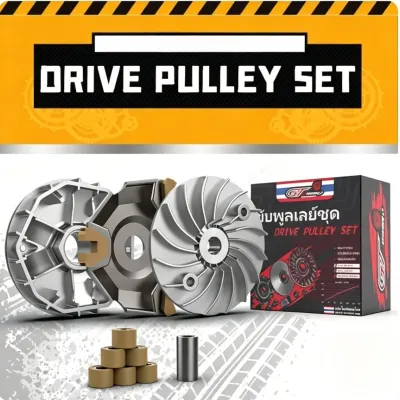
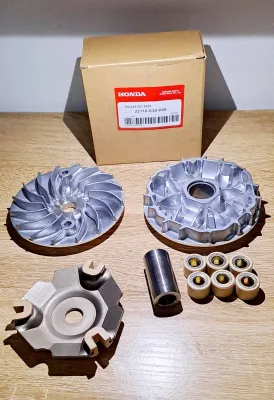
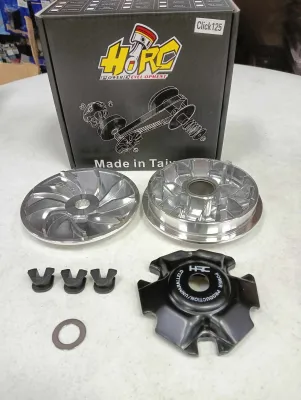
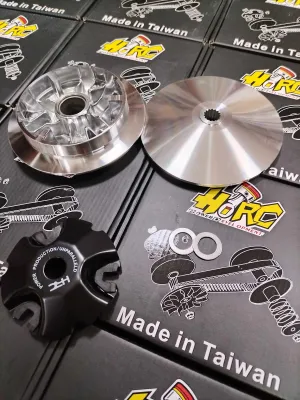
Prices are valid at publication and may change. Please refer to the product page for the latest price.
How the Pulley Set Affects Your Honda Click 125 V3
The Continuously Variable Transmission (CVT) in your scooter relies on a system of pulleys and a drive belt to transfer power from the engine to the rear wheel. Unlike a geared motorcycle, the CVT changes gear ratios seamlessly based on engine speed and centrifugal force, ensuring the engine stays in its optimal power band.

The front pulley assembly, often called the variator, consists of the drive face, the movable drive face, and the roller weights housed inside. As the engine spins faster, centrifugal force pushes the roller weights outward along the ramp angles, forcing the movable drive face closer to the stationary face.
This movement squeezes the drive belt, forcing it to ride higher on the front pulley while simultaneously pulling it deeper into the rear driven pulley. This shift in belt position continuously alters the transmission ratio, transitioning from a low gear for starting to a high gear for cruising.
Roller weights and the design of the pulley ramp angles directly dictate how quickly and smoothly this transition occurs. Lighter rollers require higher engine speeds to move outward, keeping the transmission in a lower gear longer to boost initial acceleration.
Conversely, heavier rollers move outward at lower engine speeds, lowering the operating RPM and shifting the transmission into higher ratios sooner for better fuel economy and cruising comfort. The ramp angles inside the pulley guide this movement, determining the curve of your acceleration.
Altering any part of this system requires a balanced approach. If you change the pulley set without ensuring the drive belt, clutch springs, and center spring are compatible, you risk belt slippage, uneven wear, and a loss of overall transmission efficiency.
OEM Pulley Sets: Factory Tuning for Daily Reliability
The genuine Honda OEM pulley set is engineered specifically for the Click 125 V3 to balance fuel economy, durability, and smooth power delivery. Honda design engineers optimize this setup for typical daily commuting, ensuring the engine operates within its safest and most efficient RPM range.
One of the primary benefits of sticking with the OEM pulley set is the predictable lifespan of its components. Under normal riding conditions in tropical climates, genuine rollers, slide pieces, and pulley faces wear down at a slow, uniform rate, minimizing the risk of sudden transmission failure.
Maintenance intervals for the OEM system are highly standardized, making it easy to plan your service schedule. You can easily source genuine replacement parts from authorized Honda dealers and service centers across the Philippines, ensuring you do not have to wait for specialized shipping.
The OEM setup also minimizes vibration at cruising speeds, providing a comfortable ride during long commutes. The materials used in genuine parts are selected to withstand high humidity and ambient temperatures without premature degradation.
However, the factory tuning has clear limitations if you have specific performance goals. The standard roller weights and ramp angles prioritize fuel conservation over aggressive throttle response, which might feel sluggish when carrying heavy cargo or climbing steep inclines.
If you frequently ride with a pillion passenger or use your scooter for commercial delivery services, you might find the OEM acceleration leaves you wanting more immediate power when overtaking or starting from a complete stop.
Aftermarket Pulley Sets: Tuning for Performance and Trade-offs
Aftermarket pulley sets are designed to modify the factory transmission characteristics by altering the physical geometry of the variator. Manufacturers of these kits often change the ramp angles and include lighter or heavier roller weights to shift the power band of your scooter.
By installing a kit with steeper ramp angles and lighter rollers, you can achieve quicker throttle response and faster initial acceleration. This setup is particularly useful for navigating dense city traffic where quick bursts of speed are necessary to merge safely.
Some aftermarket pulleys also feature a wider diameter or modified face angles designed to allow the drive belt to travel higher on the pulley face. This modification can potentially increase your scooter’s top speed, provided the engine has enough power to pull the higher ratio.
These performance gains come with distinct trade-offs that you must consider before upgrading. Lighter rollers keep the engine running at higher RPMs during normal riding, which can increase fuel consumption and elevate engine operating temperatures.
The increased friction and higher operating speeds associated with aftermarket kits often lead to accelerated wear on the drive belt and slide pieces. You may find yourself inspecting and replacing these components much more frequently than you would with an OEM setup.
Increased idle vibration and transmission noise are also common when using non-standard pulley geometries. It is crucial to select kits from reputable manufacturers who specify compatibility with the Click 125 V3 engine variant to avoid severe alignment issues.
Comparing OEM and Aftermarket Options for Your Needs
To make the right choice, evaluate your daily riding profile and determine what you value most from your scooter. If your daily route consists of long highway cruises or predictable city commuting where fuel budget is your main concern, the OEM pulley set is the most practical option.
For riders who use their Click 125 V3 for heavy-load delivery work or frequent travel through hilly regions, an aftermarket pulley set tuned for low-end torque can make the ride much more manageable. The improved acceleration helps handle the extra weight without straining the engine at low speeds.
Budget considerations should extend beyond the initial purchase price in ₱. While an aftermarket pulley kit might seem like an affordable upgrade, the long-term cost of ownership includes more frequent belt replacements, roller weight wear, and potential professional labor fees for tuning.
Compare the initial cost of a genuine Honda replacement set against the price of a complete aftermarket tuning kit at your local motorcycle shop. Factor in how often you are willing to open the CVT case for maintenance and cleaning, especially during the rainy season when road grime can enter the housing.
Before purchasing any aftermarket kit, use this checklist to verify compatibility and completeness:
- Confirm the kit is explicitly designed for the Honda Click 125 V3 engine casing to ensure proper shaft alignment.
- Check the included roller weight specifications to ensure they match your desired performance outcome (e.g., lighter for acceleration, heavier for top speed).
- Verify that the kit includes high-quality slide pieces and a matching ramp plate to prevent uneven wear on the variator boss.
- Ensure the pulley face angle matches the angle of your drive belt to prevent premature belt shredding.
Installation, Warranty, and Safety Boundaries
Modifying your scooter’s transmission carries inherent safety and financial risks that require careful preparation. Installing any aftermarket CVT component will typically void the official Honda manufacturer warranty on the transmission and engine assembly.
If your Click 125 V3 is still within its warranty period, sticking to genuine parts installed by an authorized service center is the only way to preserve your coverage. For older scooters out of warranty, self-installation or third-party shop work becomes a more viable path.
CVT work requires specialized tools to prevent catastrophic damage to the engine crankshaft and transmission shaft. Never use makeshift locking methods, such as jamming screwdrivers into the pulley teeth, as this can bend the shaft or chip the aluminum pulley faces.
Always use a proper variator holding tool or a universal holder clutch wrench alongside a calibrated torque wrench. Tightening the variator nut to the manufacturer’s exact torque specification is critical; an undertightened nut can back off during operation, destroying the splines and casing.
Before purchasing any parts, read your vehicle’s service manual to understand the disassembly steps and safety precautions. If you lack the proper tools or mechanical experience, have the pulley set installed by a qualified motorcycle technician.
After installing a new pulley set, perform a thorough post-installation test ride in a safe, low-traffic area. Listen closely for abnormal transmission noises, check for signs of belt slippage such as delayed acceleration, and monitor the engine for overheating during the first few kilometers.
Frequently Asked Questions (FAQ)
Can I mix OEM and aftermarket pulley components?
Mixing components from different manufacturers is generally not recommended because CVT parts are engineered to work as a cohesive system. Combining an OEM drive face with an aftermarket movable face can lead to mismatched angles, causing rapid belt wear and slippage.
However, replacing only the roller weights within an OEM pulley housing is a common and acceptable way to fine-tune performance. If you choose this route, ensure the new rollers match the physical dimensions of the OEM housing and are installed in the correct direction.
Will a lighter pulley set damage my Click 125 V3 engine?
A lighter pulley set itself will not directly damage a healthy engine, but it does alter the transmission ratio to keep the engine running at higher RPMs. This sustained high-speed operation can accelerate oil degradation and increase engine operating temperatures over time.
To prevent damage, monitor your scooter for observable signs of distress, such as excessive engine vibration, a sudden drop in fuel efficiency, or a screaming engine sound without a corresponding increase in speed. Regular oil changes and CVT cleanings are essential when running a high-RPM setup.
Community discussion
Share your experience or ask a question. Comments are reviewed before publication.