
Quick Answer: Which Radiator Fits Your Needs?
Choosing between an Original Equipment Manufacturer (OEM) and an aftermarket radiator for your Honda ADV 160 depends on your riding environment, budget, and modification goals. If your primary concerns are absolute reliability, a guaranteed perfect fit, and preserving your factory warranty, the genuine Honda OEM radiator is your best option. It is engineered specifically to handle the thermal demands of the 157cc eSP+ engine under standard operating conditions.
On the other hand, an aftermarket radiator may be the right choice if you are facing a tight repair budget or looking for specific upgrades, such as an all-aluminum construction for enhanced durability. However, you must verify the specifications of any aftermarket part carefully, as lower-grade alternatives can introduce fitment issues or inadequate cooling. Additionally, if your scooter is currently overheating, keep in mind that replacing the radiator will not resolve underlying issues like a failing water pump, a stuck thermostat, or blown head gaskets.
OEM vs Aftermarket Radiators: Core Differences Explained
To make an informed decision, it is essential to understand what sets these two categories apart. A genuine Honda OEM radiator is the exact component that came with your ADV 160 from the factory. Sourced through authorized Honda parts distributors, these radiators are manufactured under strict quality control standards to match the precise engineering requirements of your scooter. They feature a standardized part number, come in official Honda packaging, and are backed by the manufacturer’s limited parts warranty.
Products mentioned in this guide
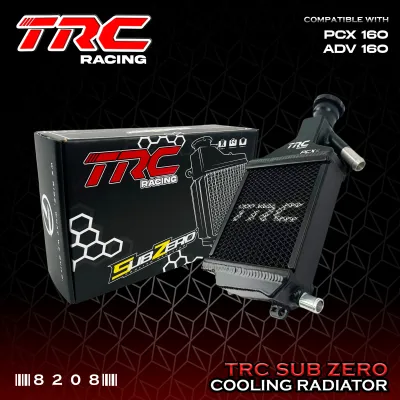
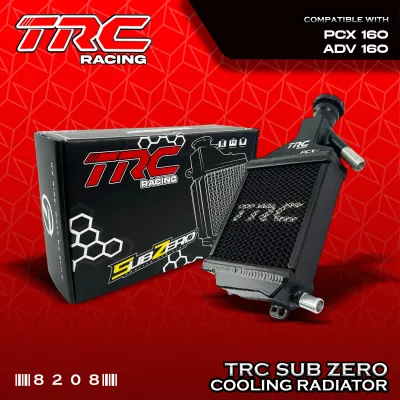
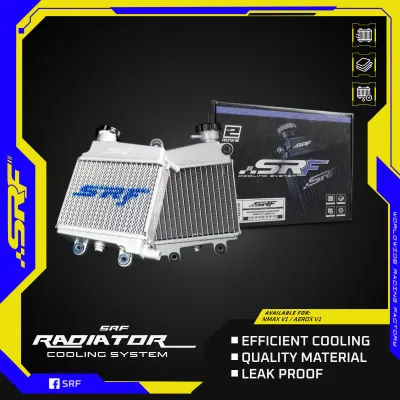
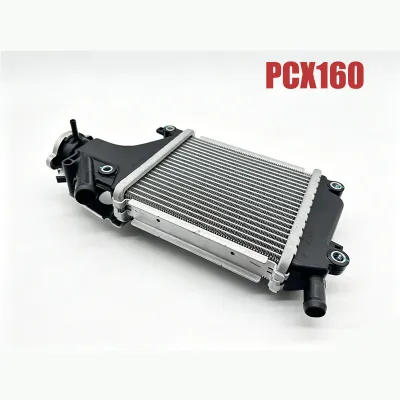
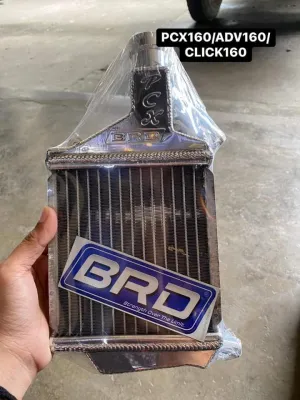
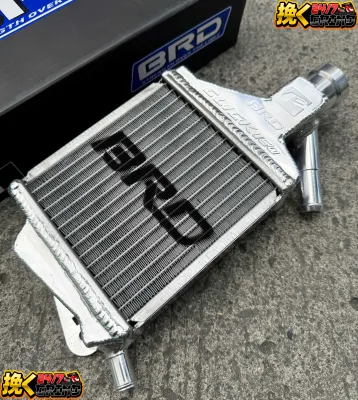
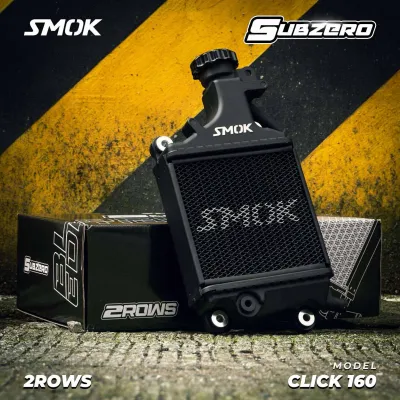
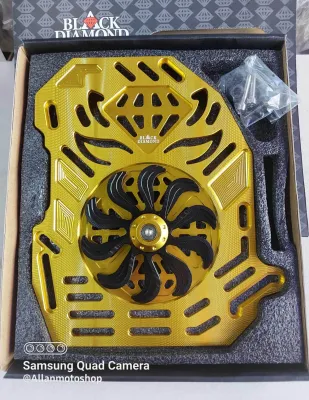
Prices are valid at publication and may change. Please refer to the product page for the latest price.

Aftermarket radiators encompass any cooling unit produced by third-party manufacturers. This category is highly diverse, ranging from premium, brand-name performance radiators to budget-friendly, unbranded replacements sold on online marketplaces. While some reputable aftermarket brands focus on upgrading the structural integrity of the radiator—often using fully welded aluminum end tanks instead of the OEM plastic-and-aluminum crimped design—unbranded options may compromise on material thickness or fin density to lower production costs.
Fitment and Installation: Direct Bolt-On vs Modifications
One of the most critical factors in choosing a radiator is how easily it installs onto your Honda ADV 160. The ADV 160 features a compact, tightly packaged chassis where space behind the front fairings is extremely limited. A genuine OEM radiator guarantees a direct bolt-on installation. Every mounting bracket, hose inlet, outlet, and fan shroud boss is positioned exactly where it belongs, ensuring that the radiator aligns perfectly with the frame and does not rub against the bodywork.
Aftermarket radiators, particularly budget-friendly or generic models, frequently present installation challenges. Even minor manufacturing variances can result in misaligned mounting holes, requiring you to bend brackets or use custom spacers. Furthermore, you must ensure that the aftermarket radiator provides adequate clearance for the cooling fan to spin freely without contacting the radiator fins or the surrounding fairings. Excessive vibration from a poorly fitted radiator can lead to premature metal fatigue, coolant leaks, or damage to the electrical connectors of the cooling fan.
Build Quality and Cooling Efficiency: What to Verify
When evaluating any radiator, you should look past marketing claims and focus on observable physical characteristics. The cooling efficiency of a radiator is determined by its ability to transfer heat from the coolant to the passing air. To assess this, compare the core thickness and the number of cooling tube rows between your stock radiator and the replacement candidate. While a thicker core can hold more coolant, it also requires sufficient airflow to draw the heat away effectively.
Pay close attention to the fin density, which is measured in fins per inch (FPI). High fin density increases the surface area for heat dissipation but can become easily clogged with road debris, especially when riding on unpaved roads or during the rainy season in the Philippines. Additionally, inspect the construction of the end tanks. OEM radiators typically use plastic end tanks crimped onto an aluminum core, which is lightweight and cost-effective but can degrade over years of heat cycles. All-aluminum aftermarket radiators feature welded end tanks, which offer superior resistance to cracking under pressure but must be checked for weld quality and pinhole leaks. Finally, verify that the radiator neck is compatible with the stock pressure cap rating to prevent premature boiling or system leaks.
Price and Long-Term Value Assessment
In the local market, financial considerations play a major role in parts selection. Genuine Honda OEM parts generally command a price premium, reflecting their guaranteed compatibility and strict quality control. When purchasing an OEM radiator through local authorized dealers in the Philippines, you are paying for peace of mind, though you may occasionally face stock availability issues that require waiting for backordered parts to arrive.
Aftermarket radiators present a wide pricing spectrum. Basic replacement units are often significantly cheaper than OEM parts, making them highly attractive if you need to get your scooter back on the road quickly without spending a fortune. However, when calculating the total cost, you must factor in potential shipping fees, import duties for overseas orders, and the cost of any additional hardware or modifications required for installation. Furthermore, consider the warranty: while authorized Honda parts carry official backing, aftermarket warranties depend entirely on the policies of the local distributor or online seller, which may be difficult to claim in the event of a premature failure.
Decision Framework: When to Choose OEM vs Aftermarket
To finalize your choice, align your purchase with your specific riding profile and scooter condition.
Choose an OEM radiator if:
- Your Honda ADV 160 is still covered by the manufacturer's new-vehicle warranty.
- You use your scooter for daily commuting in heavy, stop-and-go urban traffic where cooling system reliability is non-negotiable.
- You prefer a straightforward, plug-and-play installation without the need for custom modifications or professional workshop assistance.
Choose an aftermarket radiator if:
- Your scooter is out of warranty, and you are working within a strict repair budget.
- You are building a customized project and want a specific aesthetic, such as a polished aluminum finish.
- You are sourcing a verified, high-performance radiator from a reputable brand known for producing heavy-duty cooling components.
Before making any purchase, always verify the seller’s return policy and ask for detailed dimensional drawings if you are buying an aftermarket unit online. If a seller cannot provide basic specifications or clear compatibility guarantees, it is safest to look elsewhere.
Pre-Purchase Verification and Safety Checklist
Before ordering a replacement radiator and beginning the installation process, perform these essential checks to protect your engine and ensure a successful repair:
- Verify the Part Number: Cross-reference the exact Honda part number for your specific ADV 160 model year. Do not assume that parts for the older ADV 150 or other 160cc Honda models (like the PCX 160 or Click 160) will share identical mounting points or hose configurations.
- Inspect the Entire Cooling System: A leaking or damaged radiator is often a symptom rather than the root cause of a cooling failure. Inspect the radiator hoses for cracks, check the thermostat operation, verify that the water pump is circulating fluid, and test the cooling fan motor.
- Consult the Service Manual: Always refer to the official Honda ADV 160 service manual for the correct coolant specifications, system capacity, and torque values for all mounting bolts.
- Use the Correct Coolant: Use only high-quality, ethylene glycol-based silicate-free aluminum-compatible coolant. Mixing incompatible coolant types can lead to gel formation, clogged passages, and severe engine overheating.
- Bleed the System Properly: After installation, follow the manufacturer's instructions to bleed all trapped air from the cooling system. An airlock can prevent coolant from circulating, leading to localized hot spots and catastrophic engine damage.
- Know When to Seek Professional Help: If you notice that the mounting brackets do not line up, the hoses do not seal tightly, or the engine continues to run hot after installation, stop immediately. Consult a qualified motorcycle mechanic to diagnose the issue before riding.
Frequently Asked Questions (FAQ)
Can I use a radiator from a different Honda scooter model on the ADV 160?
No, you should not attempt to install a radiator from a different Honda scooter model unless it is explicitly verified as compatible by the manufacturer. Even though the ADV 160 shares the 157cc eSP+ engine platform with models like the PCX 160, the frame geometry, fairing clearances, mounting brackets, and hose routing are unique to each model. Attempting to force an incompatible radiator can lead to severe clearance issues, pinched hoses, and inadequate airflow.
Does installing an aftermarket radiator void my Honda warranty?
Yes, installing an aftermarket radiator can void the manufacturer’s warranty on your scooter’s cooling system and any engine components affected by a cooling failure. Authorized Honda dealers may deny warranty claims for engine damage if they determine that an aftermarket radiator caused overheating, coolant leaks, or improper system pressure. If your ADV 160 is still under warranty, it is highly recommended to stick with genuine OEM parts installed by an authorized service center.
How often should I flush the coolant after installing a new radiator?
You should follow the maintenance schedule outlined in your official Honda ADV 160 owner’s manual, which typically recommends replacing the coolant every two years or at specific mileage intervals. However, whenever you install a new radiator, you must perform a complete system flush to remove any manufacturing residues, metal shavings, or old contaminated fluid. Always use pre-mixed, aluminum-safe coolant and ensure the system is completely bled of air to maintain optimal thermal performance.
Community discussion
Share your experience or ask a question. Comments are reviewed before publication.