
Choosing the right rear brake pads for your Honda ADV 160 comes down to balancing predictable performance, durability, and your maintenance budget. Original Equipment Manufacturer (OEM) rear brake pads are designed specifically to match the scooter’s weight distribution and hydraulic system, offering a highly predictable, linear braking feel straight out of the box. On the other hand, reputable aftermarket alternatives allow you to customize your braking characteristics—such as opting for a stronger initial bite or better heat resistance during long, steep descents in mountainous regions—often at a different price point.
For riders who prefer a straightforward replacement process without researching material specifications, genuine Honda OEM pads remain a highly reliable choice. However, if you are willing to verify compatibility, check material labels, and purchase from established brands, aftermarket options can serve as excellent alternatives. The key is understanding how different friction materials interact with your rear brake rotor and ensuring that any part you install meets strict safety standards.
Understanding OEM and Aftermarket Brake Pad Differences
To make an informed decision, you must first understand what sets genuine components apart from third-party alternatives. OEM rear brake pads are manufactured to the exact specifications laid out by Honda’s engineering team for the ADV 160. These pads are designed to work harmoniously with the stock rear caliper and disc rotor, taking into account the scooter’s specific weight, engine braking characteristics, and intended use on both paved roads and light unpaved paths. Because they are standardized, they offer a consistent baseline of safety and performance under typical tropical riding conditions, including heavy rain and high humidity.
Products mentioned in this guide
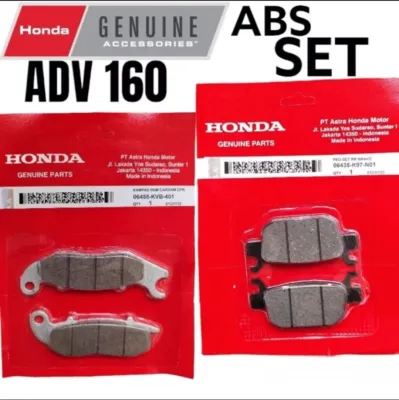
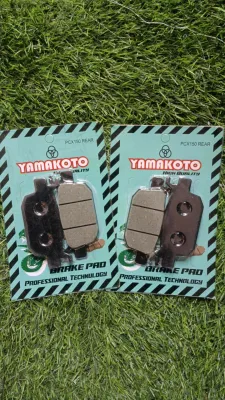
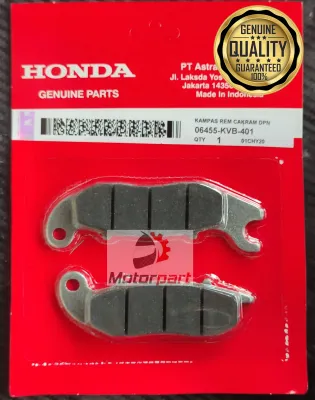
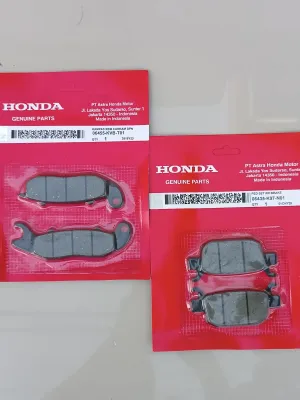
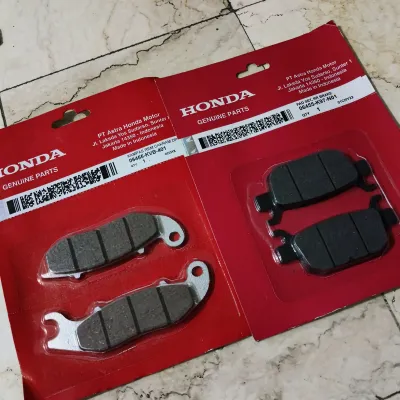
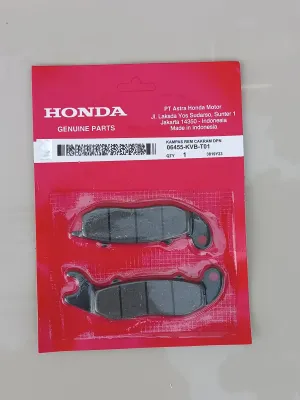
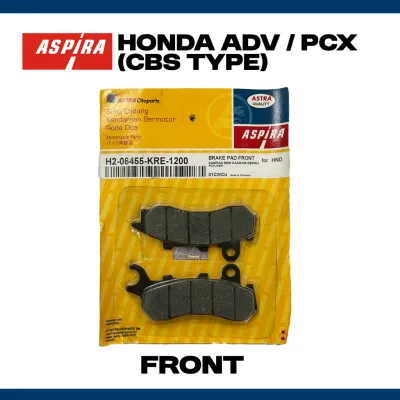
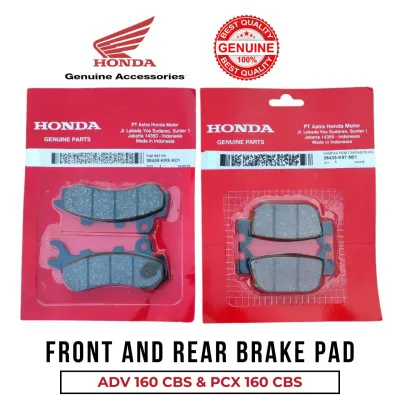
Prices are valid at publication and may change. Please refer to the product page for the latest price.
Aftermarket brake pads are produced by independent manufacturers and are designed to fit a wide variety of motorcycle and scooter models that share the same caliper dimensions. Because these manufacturers cater to different riding preferences, they offer pads in several distinct friction material compositions. The three most common types you will encounter are organic, semi-metallic, and sintered metallic compounds. Each of these materials behaves differently when subjected to heat, moisture, and pressure.
Organic pads are typically made from a mix of fibers and resins, offering a soft feel and quiet operation, though they tend to wear down faster under heavy use. Semi-metallic pads combine synthetic fibers with metallic elements, providing a balanced middle ground with improved heat tolerance and a firmer lever feel. Sintered metallic pads are created by fusing metallic particles under high pressure and temperature, resulting in exceptional durability and strong stopping power, especially in wet conditions.
It is crucial to recognize that material composition directly dictates how your brakes will perform. You cannot assume a pad’s performance characteristics based solely on the brand name; instead, you must carefully read the product label and specifications to verify the friction material type. For instance, putting highly abrasive sintered pads on a rotor designed only for organic or semi-metallic pads can lead to rapid, premature wear of your rear brake disc.
Key Comparison Dimensions for the ADV 160 Rear Brake
When evaluating OEM versus aftermarket rear brake pads for your ADV 160, you need to weigh three primary dimensions: braking feel, component durability, and overall financial value.

The braking feel, or modulation, is the most immediate difference you will notice on the road. Genuine Honda OEM rear brake pads are engineered for a linear response, meaning the stopping force increases smoothly and predictably in direct proportion to how hard you squeeze the left brake lever. This predictable modulation is highly beneficial for daily commuting through dense city traffic, where sudden, jerky braking can cause traction loss on slippery or dusty asphalt. Some aftermarket compounds, particularly sintered or high-performance semi-metallic options, offer a much sharper initial bite. While this can feel reassuringly powerful, it requires a more delicate touch to avoid locking up the rear wheel, especially on wet roads during the monsoon season.
Durability involves a trade-off between the lifespan of the brake pads and the wear on your rear brake rotor. OEM pads use a balanced compound designed to maximize pad life while preserving the rotor’s thickness over tens of thousands of kilometers. If you opt for harder aftermarket compounds like sintered metal, you will likely enjoy a very long pad lifespan and excellent resistance to brake fade during prolonged descents. However, this harder material is highly abrasive, which can accelerate the wear on your rear brake disc, leading to an earlier and more expensive rotor replacement. Conversely, softer organic aftermarket pads will protect your rotor and offer quiet operation, but they will wear down much faster, requiring more frequent maintenance intervals.
Evaluating price and value requires looking beyond the initial purchase cost. While genuine Honda parts often require a larger investment in ₱ at authorized dealers, they offer guaranteed compatibility and performance without requiring extra research. Reputable aftermarket brands can offer excellent value by providing comparable or specialized performance at a lower price point. However, you must exercise extreme caution when encountering unusually cheap, unbranded brake pads on online marketplaces or local shops. These substandard products often use inferior bonding agents and low-grade friction materials that can delaminate or fail entirely under thermal stress, posing a severe safety risk to you and other road users.
Verifying Fitment, Authenticity, and Safety Standards
Because your brakes are the most critical safety component on your scooter, verifying the fitment and authenticity of your replacement pads is non-negotiable. The Honda ADV 160 utilizes a specific rear caliper design, and assuming a pad will fit simply because it is labeled for Honda scooters can lead to dangerous installation errors. Always cross-reference the exact OEM part number found in your owner’s manual or official parts catalog before making a purchase. When buying aftermarket pads, check the manufacturer’s official application guide to confirm that the specific model year of your ADV 160 is explicitly listed as compatible.
Counterfeit parts are a significant concern in the motorcycle maintenance market, particularly when shopping on online marketplaces. When purchasing genuine Honda OEM pads, inspect the packaging closely for high-quality printing, intact security holograms, and clear, correct labeling. Genuine packaging typically includes specific batch numbers and clear manufacturing details. For aftermarket brands, look for sealed packaging, clear friction material ratings (such as the two-letter friction coefficient code, like HH), and the inclusion of any necessary mounting hardware or shims. If the price of a premium brand’s product seems too good to be true, it is highly likely a counterfeit clone that lacks proper safety testing.
The safety boundary for brake maintenance is absolute: improper installation can lead to complete brake failure. When replacing your rear brake pads, you must strictly follow the procedures outlined in the official Honda ADV 160 service manual. This includes cleaning the caliper pistons, checking the slide pins for smooth movement, applying appropriate high-temperature brake grease to the correct contact points (never on the friction material), and ensuring the caliper is properly aligned. If you are unsure about any part of this process, such as bleeding the brake fluid or properly torqueing the caliper mounting bolts, do not attempt the installation yourself. Consult a qualified professional mechanic at an authorized service center to perform the work safely.
Decision Framework: Choosing the Right Pad for Your Ride
To help you decide which rear brake pad path to take, consider how your riding habits and maintenance preferences align with the following scenarios.
You should choose OEM rear brake pads if you want a hassle-free ownership experience with zero guesswork. If your daily ride consists of standard city commuting, occasional highway cruising, and you prefer the exact braking feel that came with your scooter from the showroom, genuine Honda parts are the ideal choice. They guarantee perfect physical fitment, predictable wet and dry performance, and a balanced wear rate that protects your rear rotor, all without requiring you to decode complex material specifications.
You should choose reputable aftermarket brake pads if you have specific performance goals or want to optimize your maintenance budget. For example, if you frequently ride with a heavy payload or navigate steep, mountainous terrain where brake fade is a concern, upgrading to a high-quality semi-metallic or sintered pad from an established brand can provide better thermal stability. This route is also excellent if you are looking to save on maintenance costs, provided you are willing to spend the time verifying the brand’s reputation, checking the friction material specs, and ensuring the pad is designed for your specific rotor type.
You must avoid and verify first if you encounter brake pads that are priced significantly lower than the market average, lack clear brand markings, or come in generic packaging without material specifications. Never purchase pads from sellers who cannot confirm the exact fitment for the ADV 160 rear caliper, or if the backing plate dimensions look even slightly different from your stock pads. Saving a small amount of money on unverified brake components is never worth compromising your safety on the road.
Frequently Asked Questions (FAQ)
How often should I replace the rear brake pads on my Honda ADV 160?
There is no fixed mileage interval for replacing your rear brake pads, as wear rates depend heavily on your riding style, typical payload, and road conditions. To determine when a replacement is necessary, you should visually inspect the pad thickness through the rear caliper window at regular intervals, such as during every oil change. Most brake pads feature a wear indicator groove cut into the friction material; once this groove is no longer visible, or if the friction material thickness drops below two millimeters, the pads must be replaced immediately to prevent metal-on-metal contact with the rotor.
Do I need to replace the brake rotors when changing the pads?
You do not need to replace your rear brake rotor every time you change your brake pads, but you must inspect its condition during every pad swap. Use a micrometer or caliper to measure the rotor’s thickness and compare it to the minimum thickness specification stamped directly on the rotor itself. If the rotor is worn below this limit, is warped, or exhibits deep grooves and severe scoring across its surface, it must be replaced alongside the new pads to ensure proper braking performance and safety.
Is it safe to mix OEM front brake pads with aftermarket rear pads?
Yes, it is generally safe to use OEM brake pads on the front wheel while using reputable aftermarket pads on the rear, provided both sets are correctly installed and compatible with your ADV 160. However, you must be aware that mixing different friction compounds can alter the overall braking balance and lever feel of your scooter. After installing a mixed setup, ride cautiously in a safe, controlled environment to familiarize yourself with how the brakes respond under various pressures before returning to your normal riding routine.

Community discussion
Share your experience or ask a question. Comments are reviewed before publication.