
Quick Answer: Which Rotor Disc is Right for Your Sniper 155?
When replacing the rotor disc on your Suzuki Sniper 155, the decision boils down to your riding environment, performance needs, and budget. Choosing an Original Equipment Manufacturer (OEM) rotor disc guarantees perfect fitment, predictable daily commuting performance, and maximum safety peace of mind. Conversely, selecting a reputable aftermarket rotor disc is ideal if you require specific performance upgrades—such as wave or slotted designs for improved heat dissipation—or if you are working within a strict budget, provided you choose a verified, certified brand.
Consider this straightforward decision framework:
- Choose OEM if: You prioritize factory-spec safety, ride mostly in standard stop-and-go city traffic, and want a hassle-free, direct-fit installation without any modifications.
- Choose Aftermarket if: You are upgrading your motorcycle for aggressive riding, need a specific aesthetic like wave or petal designs, or are replacing a damaged disc on a tight budget using a known, certified brand.
- Verify first if: You are considering a larger diameter or different shape aftermarket rotor, as this will require aftermarket caliper bracket modifications and may impact your motorcycle's handling, road legality, and safety boundaries.
Understanding the Basics: OEM vs. Aftermarket Brake Rotors
To make an informed decision, it is essential to understand what sets these two categories of rotor discs apart, particularly in the context of the Suzuki Sniper 155.
Products mentioned in this guide
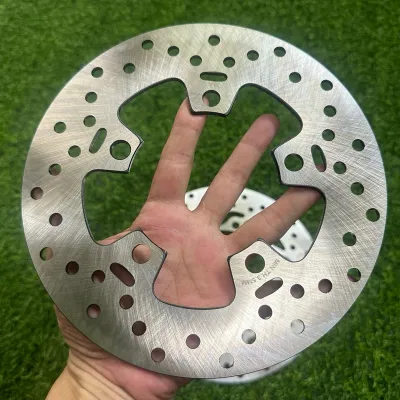
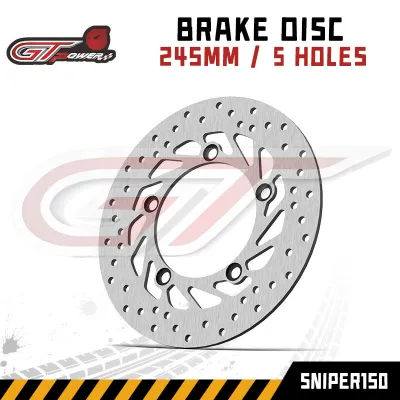
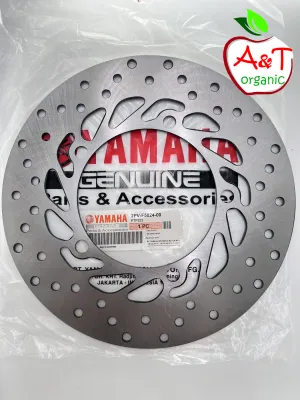
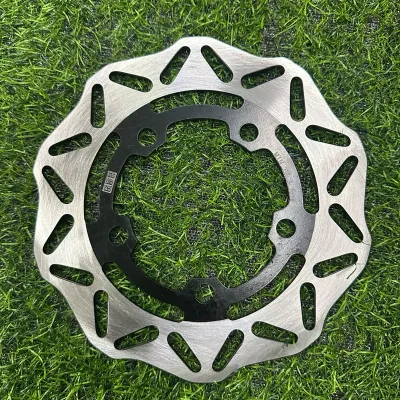
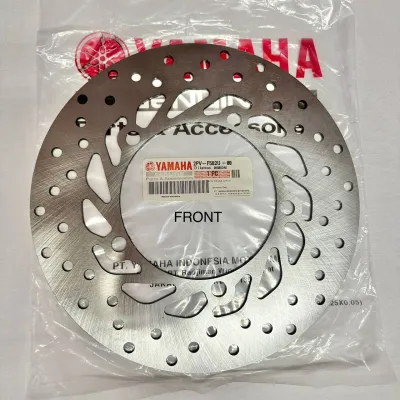
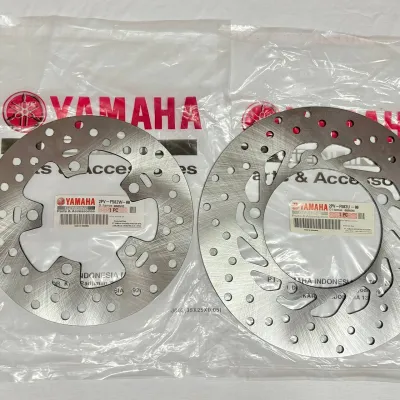
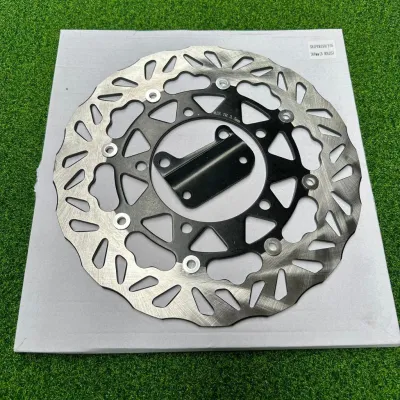
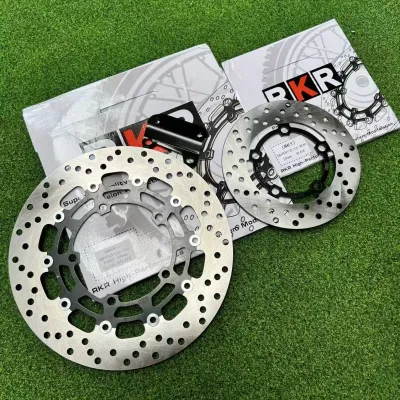
Prices are valid at publication and may change. Please refer to the product page for the latest price.

OEM (Original Equipment Manufacturer) rotor discs are manufactured to Suzuki’s exact metallurgical and dimensional specifications for the Sniper 155. These parts undergo rigorous quality control and stress testing to ensure they perform consistently under a wide range of operating temperatures. They serve as the baseline for the motorcycle’s engineered braking performance, ensuring that the calipers, brake pads, master cylinder, and anti-lock braking systems work in perfect harmony.
Aftermarket rotor discs are produced by third-party manufacturers. These components range from high-end performance upgrades—such as slotted, drilled, or wave rotors—to budget-friendly direct replacements. Reputable aftermarket brands often use advanced engineering and alternative materials to target specific performance attributes, such as weight reduction or enhanced heat dissipation.
It is crucial to clarify that “aftermarket” does not automatically mean “fake” or “low quality.” Many established aftermarket brands produce highly engineered components that meet or exceed factory standards. However, the motorcycle parts market in the Philippines is heavily saturated with unbranded, untested, and counterfeit options. These low-quality parts pose severe safety risks, as they lack the structural integrity required to withstand the high forces of emergency braking.
Key Comparison Factors for Sniper 155 Rotor Discs
The choice between an OEM and an aftermarket rotor disc goes beyond the initial price tag. To determine which option is best for your Suzuki Sniper 155, you must evaluate several critical dimensions. These include braking feel, material longevity, heat management, and safety margins under local Philippine riding conditions.
Daily commuting through flooded streets, navigating steep mountain passes like the Marilaque Highway, and surviving intense tropical heat all place distinct demands on your motorcycle’s braking system. A rotor disc that performs well in cool, dry conditions might struggle when subjected to the extreme thermal cycles and high humidity of a tropical climate.
Braking Performance and Safety
The OEM rotor disc delivers a highly predictable, linear braking feel. It is specifically tuned to match the friction coefficient of stock brake pads and the clamping force of the stock calipers on the Suzuki Sniper 155. This predictable feedback is crucial for daily commuting, especially when navigating wet, slippery roads during the monsoon season. When you pull the brake lever, the stopping power scales smoothly, allowing you to modulate your speed precisely without the risk of sudden, accidental wheel lockups.
High-quality aftermarket performance variants, such as slotted or drilled rotors, offer distinct advantages under demanding riding conditions. Slotted rotors feature shallow grooves that help channel away water, gas, and brake dust from the contact patch, while drilled holes increase the surface area for rapid cooling. This design results in a stronger initial bite and better heat dissipation during heavy, repeated braking, such as when descending steep roads in mountainous regions.
On the other hand, cheap, unbranded aftermarket options often fail to deliver consistent friction. Under hard braking, these substandard discs can warp rapidly due to uneven thermal expansion. A warped rotor disc causes the caliper pistons to push back, leading to a spongy brake lever, severe brake fade, and dangerous vibrations that compromise your control over the motorcycle.
Your braking system is a critical, life-saving assembly. Never compromise on the structural integrity of your rotor disc for the sake of aesthetics or minor cost savings. Always refer to the original-vehicle instructions and consult a qualified mechanic to ensure any replacement part maintains the required safety boundaries.
Durability and Material Quality
Suzuki’s OEM rotor discs are manufactured using consistent metallurgy, typically high-carbon stainless steel alloys. This material is specifically formulated to resist warping and cracking under the intense thermal cycles of stop-and-go city traffic in high-ambient-temperature environments like Manila or Cebu. It ensures even wear across the disc surface over thousands of kilometers, preserving the flat profile needed for optimal pad contact.
Reputable aftermarket manufacturers also utilize high-grade steel alloys and advanced heat-treatment processes to ensure durability and resistance to thermal stress. However, low-cost, unbranded discs often use softer, inferior metals. These budget materials wear down prematurely, score your brake pads, and are highly susceptible to rust when exposed to the high humidity, road salt, and frequent rain common in the Philippines.
When shopping for aftermarket options, do not rely on visual shine or chrome-like finishes, which are often superficial coatings that wear off quickly. Instead, guide your decision by checking the material specifications, hardness ratings (such as Rockwell hardness), and heat-treatment claims printed on the product packaging or official documentation. A quality rotor will often have its minimum wear thickness (e.g., “MIN. TH. 3.0mm”) clearly stamped on the outer edge or carrier.
Price and Long-Term Value
OEM parts generally carry a fixed, premium price tag and are sold through authorized dealerships or certified parts distributors. While the initial cost is higher, it represents a known, stable investment backed by manufacturer quality control and warranty support.
Aftermarket options span a massive price spectrum. While premium aftermarket rotors from established brands can cost as much as or more than OEM parts, budget unbranded options are available at a fraction of the cost.
To calculate true long-term value, you must look beyond the initial purchase price. A cheap, low-quality rotor disc often accelerates brake pad wear, requiring you to replace pads much sooner. Furthermore, if the cheap rotor warps or cracks within a few months, you will face the recurring costs of buying another rotor and paying for professional installation labor again. Investing in a durable OEM or reputable aftermarket disc is almost always more cost-effective over the lifespan of your motorcycle.
OEM vs. Aftermarket Rotor Disc Comparison Matrix
The following matrix summarizes the key differences between OEM, reputable aftermarket, and budget aftermarket rotor discs to help you make a quick, informed decision.
| Feature | OEM Rotor Disc | Reputable Aftermarket | Budget/Unbranded Aftermarket |
|---|---|---|---|
| Fitment Guarantee | Perfect, direct-fit out of the box | Excellent (for model-specific options) | Poor; often requires modification |
| Braking Feel | Predictable, smooth, and linear | Consistent; often with stronger bite | Inconsistent; prone to vibration |
| Heat Dissipation | Standard; sufficient for daily use | Enhanced (slotted/drilled designs) | Poor; highly susceptible to warping |
| Price Tier | Premium | Moderate to Premium | Low |
| Warranty Support | Full manufacturer warranty | Brand-specific warranty | None |
Critical Safety and Installation Checks Before You Buy
Before purchasing any rotor disc, you must verify that the bolt pattern (including the exact hole count, pitch circle diameter, and bolt spacing) and the inner hub diameter match your specific Suzuki Sniper 155 variant perfectly. Never infer compatibility simply from a generic category term or online listing title. Always cross-reference the product specifications with your motorcycle’s technical manual.
If you decide to upgrade to a larger, thicker, or wave-style aftermarket rotor, you must verify that your stock brake caliper and mounting bracket can accommodate the new dimensions. A larger rotor will require an aftermarket caliper bracket adapter to reposition the caliper. Ensure there is adequate clearance so that the rotor and caliper do not rub against the wheel spokes, front forks, or suspension components during operation.
Because the braking system directly impacts your physical safety on the road, we strongly recommend having a qualified mechanic perform the installation. The mounting bolts must be torqued to the manufacturer’s exact specifications using a calibrated torque wrench. Additionally, mechanics typically apply a medium-strength thread-locking compound (such as blue threadlocker) to the bolt threads to prevent them from loosening due to engine and road vibrations. Failing to torque the bolts evenly can lead to rotor warping, bolt shearing, or the catastrophic detachment of the rotor while riding.
After installing a new rotor disc and brake pads, a proper bed-in (or burnishing) procedure is critical. This process involves executing a series of gradual, controlled stops from moderate speeds (e.g., slowing down from 50 km/h to 10 km/h) without coming to a complete stop, repeating this 10 to 15 times, and allowing the brakes to cool down naturally. This allows a uniform layer of brake pad material to transfer onto the new rotor surface, ensuring optimal friction, preventing brake judder, and maximizing the lifespan of both parts.
How to Spot Fake or Low-Quality Aftermarket Rotors
Inspect the rotor closely for manufacturing flaws. Look for rough machining marks, uneven beveling, inconsistent thickness, or a complete lack of stamped branding and part numbers along the rotor’s edge or carrier. Genuine parts and reputable aftermarket products feature clean, laser-etched, or stamped identification marks.
Low-quality counterfeits often cut corners on raw materials. If a replacement rotor feels unusually light or measures thinner than the stock specifications, it is highly likely made from inferior, porous metals. These thin discs cannot handle the heat generated by the Sniper 155’s weight and speed, leading to rapid warping or cracking under sudden braking.
Reputable brands invest in secure, high-quality packaging to protect their products during transit. Genuine OEM parts feature specific manufacturer holograms, clear barcodes, and official part number labels that can be verified. Be suspicious of plain cardboard boxes, plastic wrap without labels, or packaging with misspelled brand names.
To protect yourself from dangerous counterfeit parts, avoid buying from unverified online marketplace sellers offering suspiciously low prices. Purchase your braking components only from authorized dealerships, official brand flagship stores, or highly rated, established physical motorcycle specialty shops in your local area.
Frequently Asked Questions (FAQ)
Can I use a Sniper 150 rotor disc on a Sniper 155?
While the Suzuki Sniper 150 and Sniper 155 share some design similarities, they may have differences in wheel hub dimensions, bolt patterns, or offset thicknesses depending on the specific model year and market variant. You should never assume that parts are interchangeable. To ensure safe operation and proper fitment, always check the exact OEM part numbers or consult an authorized mechanic before attempting to swap rotor discs between different generations of the motorcycle.
Do I need to change my brake pads when installing a new rotor disc?
Yes, it is highly recommended to install a fresh set of brake pads whenever you replace your rotor disc. Old brake pads develop wear patterns, grooves, and glaze that match the old rotor’s surface. If you pair used pads with a brand-new rotor, the uneven contact will prevent the brakes from bedding in properly, leading to reduced stopping power, excessive squealing, and premature scoring or warping of your new rotor disc.
Are slotted or drilled aftermarket rotors better for daily commuting?
For daily commuting in typical stop-and-go traffic, standard solid OEM or high-quality flat aftermarket rotors are generally the more practical choice. While slotted or drilled rotors look sporty and excel at dissipating extreme heat during high-speed track riding, they can cause faster brake pad wear and slightly more operating noise in daily city riding. A solid rotor provides maximum pad contact area, quieter operation, and more than enough stopping power for daily commuting.
Community discussion
Share your experience or ask a question. Comments are reviewed before publication.