
Choosing between original equipment manufacturer (OEM) Yamaha R1 calipers and aftermarket alternatives is not a simple matter of which option possesses more raw clamping force. The factory OEM R1 caliper setup delivers a highly predictable, validated safety baseline specifically engineered to integrate with the motorcycle’s weight, suspension dynamics, and factory anti-lock braking system (ABS) mapping. For the vast majority of riders, particularly those navigating the demanding, high-humidity road conditions of the Philippines, the stock calipers offer exceptional reliability and more than enough stopping power for daily commuting and spirited weekend rides.
Conversely, premium aftermarket calipers from reputable motorsport manufacturers can provide superior ultimate stopping power, sharper tactile feedback, and enhanced thermal stability under extreme conditions. However, these high-end upgrades only deliver on their safety and performance promises when they are installed as part of a complete, matching system upgrade that includes a compatible master cylinder, braided stainless steel lines, and high-spec brake fluid. Installing cheap, unbranded, or counterfeit aftermarket calipers sourced from unverified online marketplaces represents a catastrophic safety risk, as these components lack the metallurgical standards required to withstand the immense pressures generated during high-speed braking. Ultimately, the safest choice depends entirely on your specific riding environment, your willingness to invest in supporting hydraulic modifications, and your access to professional mechanical tuning.
Stopping Power and Lever Feel: Translating Caliper Specs to the Track
To understand how a caliper swap affects your ride, you must first examine how factory engineering differs from aftermarket motorsport design. The OEM R1 caliper—typically a high-specification, radial-mount monoblock unit—is engineered with a focus on progressive bite and linear lever feel. Yamaha’s engineers design these calipers to be forgiving yet powerful, ensuring that a sudden, panicked grab of the front brake lever on wet asphalt does not immediately upset the chassis or overwhelm the electronic rider aids. The piston diameters and total hydraulic volume within the OEM caliper are meticulously matched to the master cylinder’s piston size, creating a balanced hydraulic ratio that delivers predictable deceleration across a wide temperature range.
Products mentioned in this guide
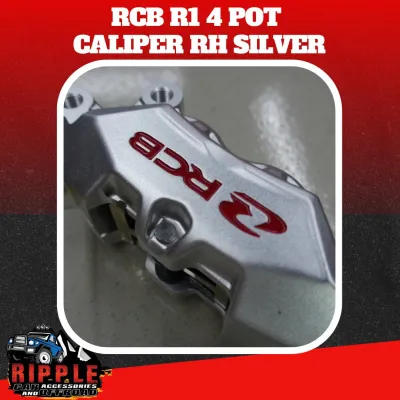
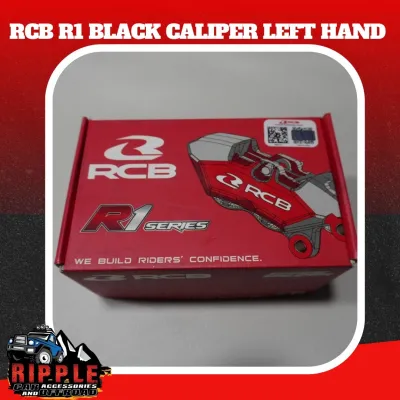
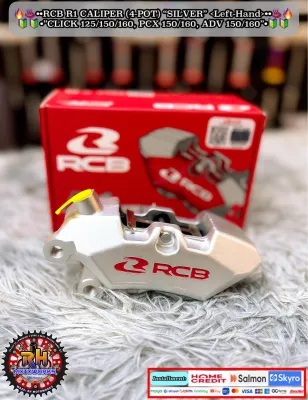
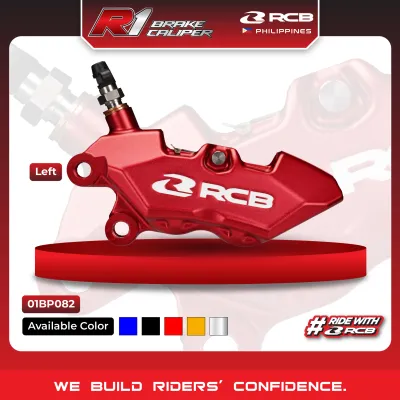
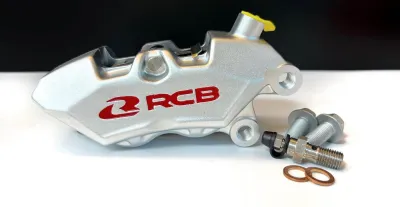
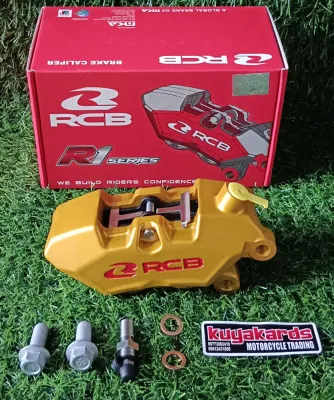
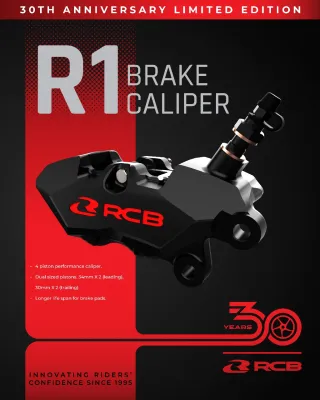
Prices are valid at publication and may change. Please refer to the product page for the latest price.
Premium aftermarket calipers, such as those engineered for competitive racing, alter this braking profile significantly. These high-performance units often employ different piston configurations, utilizing varying piston diameters or highly rigid body constructions to minimize caliper flex under extreme hydraulic pressure. This structural rigidity translates into an incredibly firm, communicative lever feel and a much more aggressive initial bite. For a professional racer or an advanced track-day enthusiast, this immediate response allows for late, deep braking into corners. However, on public roads where traction can be highly unpredictable due to sudden rain showers, loose gravel, or uneven pavement, such an aggressive initial bite can require immense rider focus to avoid destabilizing the motorcycle.
A common pitfall when upgrading to aftermarket calipers is ignoring the hydraulic system bottleneck. If you install aftermarket calipers with a larger total piston surface area while retaining the stock OEM master cylinder, the master cylinder will have to displace more fluid to push those larger pistons against the brake rotors. This mismatch almost always results in a spongy, long-travel brake lever that requires you to pull the lever closer to the handlebar before the brakes engage. This hydraulic imbalance directly compromises safety, as it delays brake response and reduces the maximum clamping force you can achieve in an emergency.
Furthermore, any increase in caliper clamping force is strictly limited by the physical boundaries of your motorcycle’s chassis. The ultimate stopping power of your Yamaha R1 is not determined by the caliper alone, but by the friction coefficient of the front tire’s contact patch and the performance of the front suspension. If your front forks dive too rapidly under aggressive braking, or if your front tire lacks the grip to handle the sudden load transfer, upgrading to high-performance calipers will simply trigger the ABS prematurely or cause the front tire to slide. To benefit from upgraded calipers, you must ensure your suspension spring rates, damping settings, and tire compounds are matched to the increased deceleration forces.
Build Quality and Heat Management: Surviving Repeated Hard Braking
The metallurgical differences between OEM and premium aftermarket calipers dictate how they perform under severe thermal stress. OEM R1 calipers are typically manufactured using advanced casting or forging processes, utilizing high-grade aluminum alloys that balance structural strength, weight, and production efficiency. These calipers are designed to handle millions of cumulative miles across diverse climates, resisting structural deformation even after years of heat cycles. Premium aftermarket calipers, on the other hand, are frequently machined from solid billets of aerospace-grade aluminum or forged under extreme pressure. This manufacturing method allows engineers to remove excess material where it is not needed, reducing unsprung weight while maximizing structural stiffness where the caliper experiences the highest bending forces.

Heat management is the primary battleground for braking safety during high-speed riding. When you apply the brakes, kinetic energy is converted into thermal energy, raising the temperature of the brake pads, rotors, fluid, and caliper bodies. If this heat cannot escape, the brake fluid can reach its boiling point, leading to vapor lock—a condition where gas bubbles form in the hydraulic lines, causing a complete loss of lever pressure. OEM calipers manage heat effectively for street riding and occasional track use through calculated body mass and integrated cooling paths. However, under continuous, aggressive track riding, they can eventually suffer from brake fade. Dedicated aftermarket race calipers mitigate this by utilizing specialized piston materials, such as titanium or ventilated stainless steel, which act as thermal barriers to prevent heat from transferring from the brake pads into the hydraulic fluid.
The longevity of internal components is another critical factor distinguishing factory parts from high-performance aftermarket upgrades. OEM calipers are equipped with robust, long-lasting rubber dust seals and fluid seals designed to prevent road grime, water, and brake dust from entering the piston bores. In contrast, some pure racing aftermarket calipers omit dust seals entirely to reduce friction and save weight, requiring frequent teardowns, cleaning, and rebuilds after every few track sessions. For a street-ridden R1, using a caliper without proper dust seals is highly dangerous, as road debris will quickly damage the fluid seals, leading to fluid weeping, uneven piston extension, or stuck pistons that cause the brakes to drag and overheat.
Environmental factors, particularly in tropical regions like the Philippines, place severe demands on a caliper’s exterior finish. The combination of high humidity, coastal salt air, and heavy seasonal rainfall can rapidly accelerate corrosion on unprotected metals. OEM calipers feature highly durable anodized or painted coatings designed to resist chemical degradation from road grime and brake fluid. Premium aftermarket calipers often feature beautiful nickel-plated or hard-anodized finishes that provide exceptional corrosion resistance and a striking appearance. However, budget-grade aftermarket calipers often use low-quality anodizing that fades quickly under UV exposure or thin coatings that chip easily, leaving the underlying aluminum vulnerable to oxidation and structural degradation over time.
True Cost of Ownership: Upfront Prices and Hidden System Upgrades
Upgrading your braking system requires a clear-eyed look at the total financial investment, which extends far beyond the initial purchase price of the calipers themselves. Sourcing a pair of genuine OEM replacement calipers for a Yamaha R1 can range from approximately ₱25,000 to ₱50,000, depending on the specific model year and whether you purchase them directly from an authorized dealership. While this price reflects a premium for factory assurance, it is a complete, plug-and-play solution that requires no additional modifications. In comparison, a pair of premium aftermarket calipers from reputable motorsport brands can cost anywhere from ₱45,000 to over ₱120,000 for top-tier racing units.
The true hidden cost of aftermarket calipers lies in the mandatory supporting modifications required to make them function safely. As established, pairing high-volume aftermarket calipers with a stock master cylinder compromises safety. To correct this, you must install a matching radial master cylinder, which typically adds an additional ₱15,000 to ₱35,000 to your budget. Furthermore, you will need to replace the stock rubber brake lines with high-performance, stainless steel braided lines (approximately ₱5,000 to ₱10,000) to prevent line expansion under the increased hydraulic pressures. When you factor in premium high-temperature brake fluid and specialized brake pads, a proper, safe aftermarket caliper upgrade can easily exceed ₱80,000 to ₱150,000 in total parts and professional labor.
Long-term maintenance and the availability of replacement parts are critical considerations for the lifetime cost of ownership. Because the Yamaha R1 is a highly popular supersport platform, genuine OEM rebuild kits, including fresh rubber seals, boot covers, and replacement pistons, are widely available and relatively inexpensive. Any local motorcycle shop can easily source these parts. Conversely, sourcing rebuild kits for niche or older aftermarket calipers can be exceptionally difficult, often requiring international shipping, long wait times, and premium pricing. If a seal fails on a rare aftermarket caliper, your motorcycle could be sidelined for weeks while you wait for specialized replacement parts to arrive from overseas.
Finally, you must consider the impact of these modifications on your motorcycle’s resale value. In the Philippine motorcycle market, many buyers view extensive aftermarket modifications with skepticism, fearing poor installation quality or aggressive track usage. Retaining your original OEM calipers in a box allows you to easily restore the bike to its factory configuration should you decide to sell it in the future. A completely stock motorcycle, or one with a fully documented, professionally installed braking system, will always command higher buyer confidence and a better resale price than a bike fitted with mismatched or unbranded aftermarket components.
Decision Framework: Which R1 Caliper Setup Matches Your Riding Style?
To determine the safest and most effective path for your Yamaha R1, you must objectively evaluate your primary riding environment, technical expertise, and performance requirements.
Choose OEM if:
- Your riding consists primarily of daily commuting, highway touring, and spirited weekend runs through mountain passes like Marilaque.
- You participate in occasional, casual track days but do not push the bike to the absolute limit of thermal brake fade.
- You want a plug-and-play system that integrates seamlessly with your factory ABS, traction control, and lift-control systems without requiring electronic recalibration.
- You prefer predictable, standardized maintenance schedules and want the convenience of sourcing replacement pads and rebuild kits from local dealerships.
- You do not want to modify your master cylinder, brake lines, or mounting hardware.
Choose Premium Aftermarket if:
- You are a dedicated track-day enthusiast or active racer who has consistently experienced brake fade with the stock setup under extreme, repeated high-speed braking.
- You have the budget to purchase not just the calipers, but the entire matching hydraulic system, including a high-spec radial master cylinder and braided lines.
- You work with a qualified motorcycle technician who can professionally install, bleed, and tune the system, including adjusting your front suspension to handle the increased braking forces.
- You are willing to perform more frequent brake system inspections, cleanings, and rebuilds to ensure the high-performance components remain in peak operating condition.
Verify First if:
- You are considering an aftermarket caliper that is priced significantly lower than established motorsport brands, as this is a primary indicator of counterfeit or substandard manufacturing.
- The aftermarket calipers require custom-fabricated adapter brackets to mount to your R1's fork bottoms; custom brackets introduce potential flex points and alignment errors that can cause catastrophic brake failure.
- The manufacturer does not provide clear, written documentation specifying compatibility with your exact Yamaha R1 model year and ABS configuration.
Neither May Fit if:
- Your current dissatisfaction with your R1's braking performance stems from neglected maintenance. If your brake fluid is dark and moisture-contaminated, your brake pads are glazed, or your rotors are warped or contaminated with oil, installing new calipers will not solve your problems. Always address baseline maintenance—such as flushing the hydraulic fluid, cleaning the rotors, and installing high-quality fresh pads—before deciding to replace the calipers entirely.
Critical Safety Boundaries: ABS Integration and Installation Rules
Modifying the braking system of a modern, high-horsepower supersport motorcycle like the Yamaha R1 introduces serious technical risks that directly impact rider safety. Modern R1 models rely on an advanced Inertial Measurement Unit (IMU) that continuously monitors wheel speed, lean angle, pitch, and deceleration rates. The factory ABS pump is programmed to modulate hydraulic pressure based on the specific fluid displacement and mechanical leverage of the OEM braking components. If you alter the caliper piston volume or use mismatched components, the hydraulic feedback loop is disrupted. This can cause the ABS to cycle too slowly, delay vital intervention during an emergency stop, or trigger dashboard error codes that disable your electronic rider aids entirely.
Because of these complexities, brake caliper installation must never be treated as a casual, trial-and-error DIY project. Every single fastener in the braking system has a critical safety function. Mounting bolts must be torqued to the exact manufacturer-specified limits using a calibrated torque wrench; under-tightening can allow the caliper to vibrate loose, while over-tightening can strip the aluminum threads on your fork bottoms. Banjo bolts must be secured with fresh, single-use copper or aluminum crush washers to prevent slow hydraulic leaks. Furthermore, bleeding a modern ABS-equipped braking system requires meticulous procedures to ensure that absolutely no air bubbles remain trapped in the complex internal valves of the ABS modulator pump, which would otherwise result in sudden brake failure.
The danger of pairing high-volume aftermarket calipers with a stock master cylinder cannot be overstated. This mismatch creates an unfavorable hydraulic leverage ratio. While you might expect larger caliper pistons to provide more stopping power, the stock master cylinder simply cannot move enough fluid per millimeter of lever stroke to actuate those pistons efficiently. The result is a dangerous amount of lever travel, where you must pull the lever nearly to the grip before the pads make firm contact with the rotors. In a high-speed emergency scenario, this delay can make the difference between a safe stop and a severe accident.
Before taking a modified braking system onto public roads or a race track, you must perform a series of rigorous pre-ride safety verifications. First, conduct a static inspection: pull the brake lever repeatedly to confirm it feels rock-solid and does not slowly creep toward the handlebar under sustained pressure. Inspect all hydraulic connections, banjo bolts, and bleed nipples for any signs of fluid weeping. Next, perform low-speed dynamic tests in a controlled, empty parking lot. Apply the brakes gently at 10 to 20 km/h to confirm immediate engagement, uniform pad contact, and the absence of unusual vibrations or noises. Only after verifying that the system behaves predictably at low speeds should you gradually increase speeds and braking loads.
Frequently Asked Questions (FAQ)
Do I need to upgrade my master cylinder when installing aftermarket R1 calipers?
Yes, in most cases, upgrading the master cylinder is highly recommended or mandatory when installing high-performance aftermarket calipers. The stock master cylinder is precisely sized to match the fluid displacement requirements of the OEM caliper pistons. If your new aftermarket calipers feature larger piston diameters or a different total piston volume, retaining the stock master cylinder will alter the hydraulic ratio. This mismatch typically results in a soft, spongy lever with excessive travel, reducing your ability to modulate braking force accurately and safely. To maintain a firm, responsive lever feel and ensure maximum stopping power, you should pair the aftermarket calipers with a compatible, high-quality radial master cylinder of the correct bore size as specified by the caliper manufacturer.
Will changing the calipers affect my Yamaha R1's ABS and traction control systems?
Yes, altering your calipers can significantly impact how your R1’s ABS and electronic rider aids function. The motorcycle’s ABS and IMU-driven safety systems are calibrated around the hydraulic pressure curves, fluid displacement, and mechanical bite characteristics of the factory braking setup. When you install aftermarket calipers with different piston volumes or highly aggressive pad compounds, the rate of deceleration and hydraulic pressure change will differ from what the factory ECU expects. While the wheel speed sensors will continue to read data normally, the ABS pump may modulate pressure less effectively, potentially leading to delayed intervention, increased stopping distances, or system error codes. For safety, always verify compatibility with ABS-equipped models and consult a professional technician experienced with modern motorcycle electronics.
Can I just upgrade the brake pads instead of replacing the entire R1 caliper?
Absolutely. For approximately 90% of street riders and intermediate track-day enthusiasts, upgrading the brake pads is a far more practical, cost-effective, and safer way to improve stopping power. Installing high-quality sintered or carbon-ceramic brake pads, replacing old rubber lines with braided stainless steel lines, and performing a thorough flush with fresh, high-temperature brake fluid will dramatically improve initial bite, lever feel, and fade resistance. This approach achieves a noticeable performance upgrade for a fraction of the cost of a full caliper swap, while completely preserving the factory hydraulic balance, ABS calibration, and long-term reliability of your Yamaha R1.
Community discussion
Share your experience or ask a question. Comments are reviewed before publication.