
Choosing the right brake pad for sniper 150 is one of the most critical decisions you can make for your motorcycle’s safety and performance. The ideal choice depends entirely on your daily riding conditions, typical load, and personal braking habits, rather than one material being universally superior. In the Philippines, where riders frequently transition from congested city streets to open highways, understanding how different friction materials behave under varying temperatures and weather conditions is essential.
The Yamaha Sniper 150 is a highly capable underbone motorcycle, often subjected to demanding daily commutes, weekend touring, and unpredictable tropical weather. To maintain optimal stopping power, riders must choose between two primary brake pad categories: organic (often referred to as resin) and sintered (metallic). Each material possesses distinct physical properties that alter how your motorcycle responds when you pull the brake lever.
While general material characteristics provide a helpful starting point, remember that exact friction coefficients, wear rates, and overall lifespan vary significantly between manufacturers. Formulations differ, meaning that a premium organic pad from one brand might perform differently than an entry-level organic pad from another. Therefore, riders should always verify the specific product specifications and compatibility details on the packaging before making a purchase.
Products mentioned in this guide
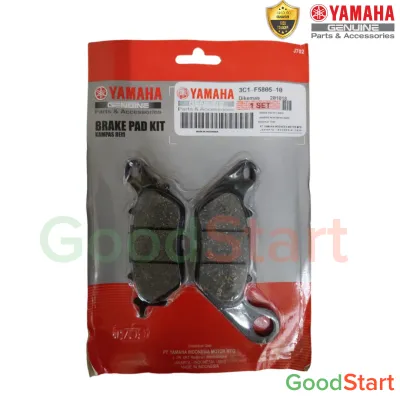
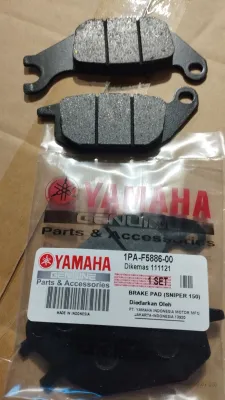
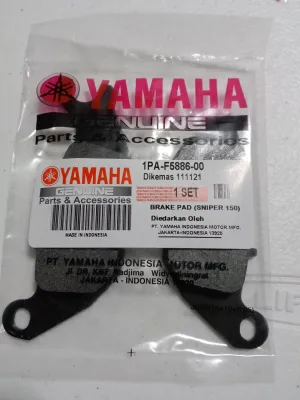
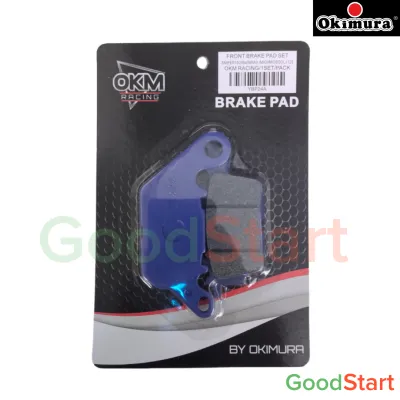
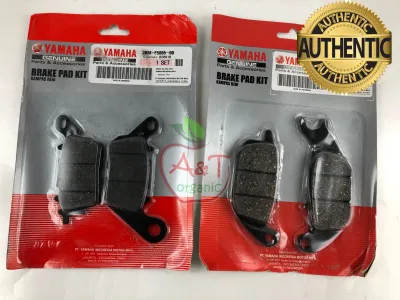
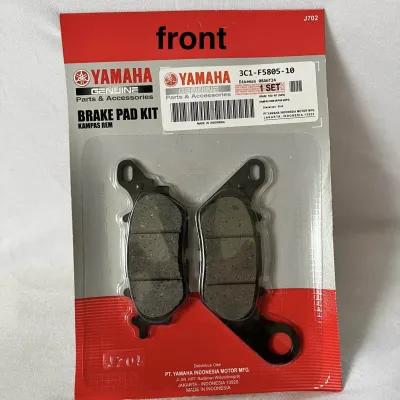
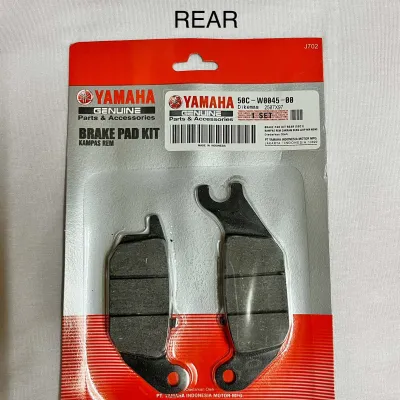
Prices are valid at publication and may change. Please refer to the product page for the latest price.
Decoding Organic and Sintered Brake Pads for the Sniper 150
Organic brake pads are manufactured using a blend of non-asbestos fibers, rubber, glass, and high-temperature resins bound together. These materials are softer than their metallic counterparts, which directly influences how they interact with your motorcycle’s brake rotors. Because of this softer composition, organic pads typically offer a quieter operation, minimizing the squealing noises that can occur during low-speed stops.
Another notable characteristic of organic pads is their gentle interaction with brake rotors. They cause less abrasive wear on the steel discs over time, which can help prolong the life of your rotors. Additionally, organic pads provide a predictable, progressive initial bite. This means that when you first apply pressure to the brake lever, the stopping force builds smoothly, giving you excellent modulation and control in standard riding conditions.
Sintered brake pads are created through a process called sintering, where metallic particles—such as copper, bronze, and iron—are fused together under intense heat and pressure. This metallic composition makes the pads significantly harder and denser than organic alternatives. Sintered pads are specifically engineered to withstand extreme heat and maintain consistent braking performance under heavy, sustained use.
The primary advantage of sintered pads lies in their high thermal stability. When brakes are applied repeatedly or held down over long distances, friction generates intense heat. Sintered materials resist brake fade, a dangerous condition where the pads lose their gripping power due to thermal overload. They are designed to operate efficiently across a much wider temperature range, making them highly reliable when the braking system is pushed to its limits.
Despite these general category definitions, riders must avoid assuming that all pads within a category perform identically. Manufacturers constantly refine their chemical compounds to balance noise, wear, and stopping power. Always check the manufacturer’s technical data sheets or product labels to verify the intended operating temperature range and friction rating of the specific brake pad for sniper 150 you are considering.
Matching Brake Pad Material to Your Riding Style
To determine which brake pad material best suits your Yamaha Sniper 150, you must carefully analyze your typical riding environment and habits. For many riders in urban centers, daily travel consists of low-to-moderate-speed commuting through dense, stop-and-go traffic. In these congested scenarios, organic brake pads are often highly practical.

Because organic pads do not require high operating temperatures to achieve their optimal grip, they provide immediate, reliable stopping power from the moment you start your ride. The smooth, progressive bite of organic pads is highly forgiving on slippery city streets, reducing the likelihood of accidentally locking up the wheels during sudden stops. Furthermore, the quiet operation of organic pads enhances riding comfort during long hours spent idling and crawling through traffic.
Conversely, if your riding style involves long-distance touring, carrying heavy cargo, or riding with a pillion passenger, your braking system faces much higher physical demands. Sintered brake pads are typically preferred for these high-load scenarios. The added weight increases the kinetic energy that must be converted into heat during deceleration, making the heat-resistant properties of sintered pads crucial.
Sintered pads are also highly advantageous for riders who frequent mountainous regions with steep downhills, where continuous braking is necessary to control speed. Under these conditions, organic pads can overheat quickly, leading to a soft lever feel and reduced stopping power. Sintered pads maintain their structural integrity and friction levels even when the rotors turn hot, ensuring you have dependable braking power when descending winding roads.
However, choosing sintered pads comes with specific trade-offs that you must consider. The harder metallic compound is more abrasive, which generally accelerates the wear rate of your brake rotors, potentially requiring more frequent rotor replacements. Additionally, some sintered formulations can exhibit a slightly delayed initial bite when completely cold or wet, requiring a brief moment of friction to reach their optimal operating temperature. By weighing these trade-offs against your typical travel distances, average speeds, and local weather patterns, you can select the material that aligns with your practical needs.
Key Selection Criteria and Safety Checks
Before purchasing any replacement brake pad for sniper 150, conducting thorough compatibility and safety checks is non-negotiable. Your first step should always be to consult the Yamaha Sniper 150 owner’s manual. The manual contains essential specifications regarding the original equipment manufacturer (OEM) pad dimensions, approved friction materials, and recommended part numbers for both the front and rear calipers.
When shopping for replacement pads, carefully inspect the product packaging and manufacturer documentation. Ensure the pads are explicitly labeled as compatible with your specific model year of the Yamaha Sniper 150, as caliper designs can occasionally change between production runs. Look for recognized safety and quality certifications on the packaging, which indicate that the friction material has undergone standardized testing for performance and durability.
Equally important is the physical condition of your motorcycle’s brake rotors. Installing brand-new brake pads on worn, deeply grooved, or warped rotors is a serious safety hazard. Uneven rotor surfaces prevent the new pads from making full contact, significantly reducing your stopping power and causing the new pads to wear down prematurely or unevenly. Use a micrometer or vernier caliper to check if the rotor thickness is still within the safe service limits specified by Yamaha.
Finally, avoid the temptation to select brake pads based solely on brand popularity, aesthetic appeal, or low price. A high-end racing pad designed for closed-circuit track use may perform poorly on a daily commuter bike because it never reaches the high operating temperatures required to bite effectively. Always prioritize matching the specific compound’s intended use case to your actual, daily riding conditions.
Installation Boundaries and Professional Consultation
Maintaining your motorcycle’s braking system requires a clear understanding of what tasks you can safely perform yourself and when you must seek professional assistance. Basic maintenance steps, such as visually inspecting the pad wear, cleaning the caliper body with a dedicated brake cleaner spray, and checking the brake fluid level through the reservoir sight glass, are safe and beneficial tasks for most owners to perform regularly.
However, the actual replacement of brake pads involves critical mechanical steps that directly impact your safety. Compressing the caliper pistons to fit new, thicker pads must be done carefully to avoid damaging the delicate rubber dust seals. If your brake system requires bleeding to remove air bubbles, or if you need to disassemble the caliper slide pins for lubrication, you must use the correct specialized tools and follow the precise torque specifications outlined in the official service manual.
If you encounter resistance during installation, or if the new pads do not slide into the caliper bracket perfectly without force, stop immediately. Forcing components can cause the pads to bind, leading to brake drag, extreme overheating, and potential wheel lockup. If your brake lever feels spongy after installation, this indicates air in the hydraulic lines or improper alignment, requiring immediate professional attention.
Brakes are a critical life-safety system on any motorcycle. If you lack the proper tools, a calibrated torque wrench, or the technical confidence to complete the installation to factory standards, always take your Yamaha Sniper 150 to a qualified motorcycle mechanic. Investing in professional installation ensures that your braking system is fully optimized, giving you peace of mind on every journey.
Frequently Asked Questions (FAQ)
Can I mix organic and sintered brake pads on the front and rear brakes?
Yes, you can use different brake pad materials on the front and rear calipers of your Yamaha Sniper 150, but you must understand how it affects handling. The front brake provides the majority of stopping power, while the rear brake is used for stability. Some riders run a sintered pad on the front for heat resistance and stopping power, while keeping an organic pad on the rear for a softer, more controllable bite to prevent rear-wheel lockup. Always check the manufacturer’s recommendations regarding mixed compounds. If you are unsure how altering this balance affects stability during emergency braking, consult a professional mechanic.
How do I know when my Sniper 150 brake pads need replacing?
You can identify worn brake pads through several clear indicators. First, perform a visual inspection of the brake caliper; most pads feature a wear indicator groove, and if this groove is nearly flush or completely gone, replace them immediately. Second, listen for auditory cues like high-pitched squealing or harsh grinding noises when applying the brakes, which indicate the friction material has worn down to the metal backing plate. Finally, pay attention to changes in lever feel; a spongy sensation, longer pull distance, or reduced stopping power indicates it is time for an inspection.
Do I need to change the brake fluid when switching pad types?
Switching brake pad materials does not inherently require a brake fluid flush. However, because installing new pads requires pushing the caliper pistons back into their bores, the fluid level in your master cylinder reservoir will rise; monitor it to ensure it does not overflow. While a fluid change is not mandatory, brake fluid should be replaced according to the service intervals in your Yamaha Sniper 150 owner’s manual—typically every two years—or sooner if the fluid appears dark or contaminated. Checking fluid condition is a vital safety step during any brake maintenance.

Community discussion
Share your experience or ask a question. Comments are reviewed before publication.