
Quick Answer: Should You Buy Otaka or OEM?
Choosing between an Otaka clutch cable and an Original Equipment Manufacturer (OEM) cable depends on your motorcycle’s age, your budget, and immediate availability. OEM cables are the gold standard for guaranteed fitment, factory-specified lever feel, and preserving any active manufacturer warranties. They are engineered precisely for your specific bike, ensuring maximum safety and longevity.
Conversely, Otaka clutch cables serve as a highly reliable, cost-effective aftermarket alternative. They offer excellent value, especially for out-of-warranty motorcycles, older commuter models, or riders facing sudden cable snaps who need an immediate replacement. If you ride a high-performance machine or value a plug-and-play installation with zero adjustments, OEM is your best bet. If you operate a daily commuter or utility bike in the Philippines and want to keep maintenance costs low without sacrificing basic operational safety, Otaka is a highly practical choice.
Understanding the Contenders: OEM vs. Aftermarket
To make an informed decision, it is essential to understand what sets these two options apart. An OEM clutch cable is produced by or directly for the motorcycle manufacturer (such as Honda, Yamaha, Suzuki, or Kawasaki). These components are built to the exact engineering specifications, material grades, and strict tolerances of the original bike design. Every dimension, from the thickness of the inner wire to the heat resistance of the outer sleeve, is tailored to match the vehicle’s factory configuration.
Products mentioned in this guide
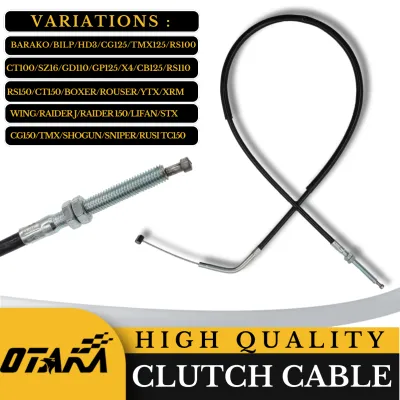
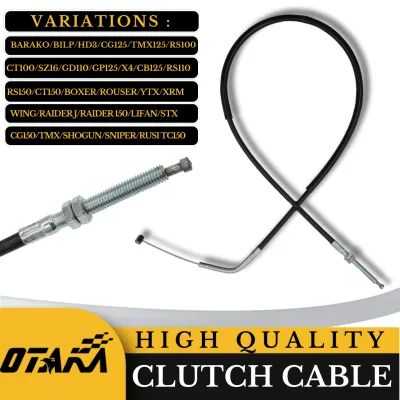
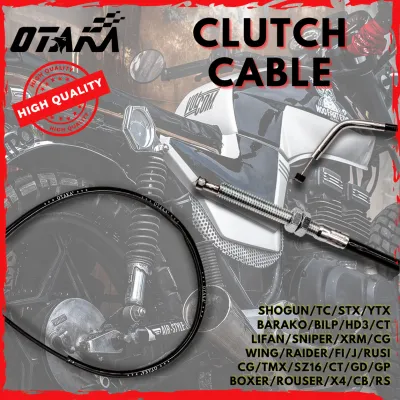
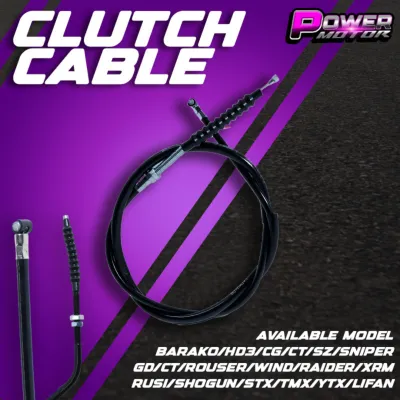
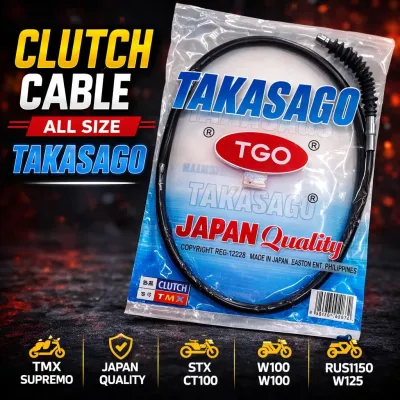
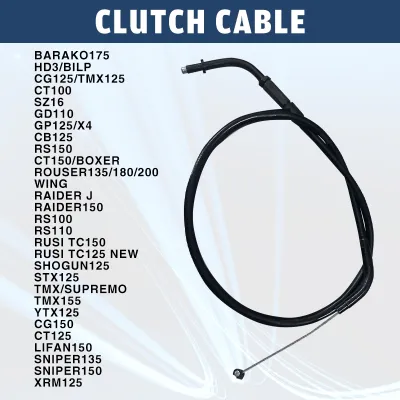
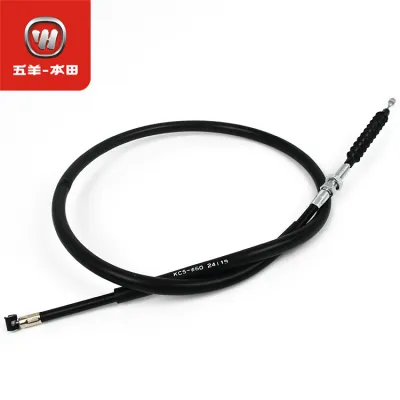
Prices are valid at publication and may change. Please refer to the product page for the latest price.

On the other hand, Otaka is a prominent aftermarket brand widely recognized in the Philippine motorcycle community. The brand specializes in producing replacement control cables, including clutch, throttle, and brake cables, for a diverse range of underbones, scooters, and backbone motorcycles. Rather than designing a unique cable from scratch, Otaka reverse-engineers factory cables to replicate their dimensions and function at a more accessible price point. While OEM parts represent the absolute factory standard, reputable aftermarket brands like Otaka aim to provide a comparable level of daily utility for riders looking to manage their upkeep expenses.
Key Comparison Dimensions for Clutch Cables
Choosing the right clutch cable involves evaluating how each option performs under real-world riding conditions. In the Philippines, where motorcycles endure intense tropical heat, heavy monsoon rains, and punishing stop-and-go traffic, a clutch cable is subjected to continuous stress. To determine which cable suits your riding habits, we must compare them across four critical dimensions: material quality, fitment, lever feel, and local market availability.
Material Quality and Durability
The internal construction of a clutch cable dictates how long it will last before fraying or snapping. OEM cables typically feature high-tensile steel inner wires that undergo specialized heat treatments to resist stretching over time. They are often paired with low-friction inner linings, such as Teflon or specialized pre-lubricated sleeves, which protect the wire from wearing against the outer housing. This premium construction ensures that the cable remains highly resistant to moisture intrusion and internal corrosion.
Otaka clutch cables utilize robust, standard-grade steel wires wrapped in durable protective outer housings. While they may not always feature the proprietary low-friction coatings found in premium OEM cables, they are built to withstand standard operating loads. When purchasing any aftermarket cable, it is vital to inspect the quality of the end-fittings, specifically the lead or brass barrels, and the integrity of the solder joints. Weak solder joints at the barrel ends are a common failure point in lower-grade cables.
Environmental factors in the Philippines play a massive role in cable longevity. The combination of high humidity, coastal salt air, and heavy seasonal downpours can accelerate rust inside the housing of any cable. While OEM cables generally offer superior sealing against water ingress, both OEM and Otaka cables require regular lubrication to prevent internal binding and premature failure.
Fitment and Routing Compatibility
A clutch cable must follow a highly specific routing path from the handlebar lever down through the frame to the engine’s clutch release arm. OEM cables guarantee a perfect fit because they are cut to the exact millimeter required for your specific model year. The outer housing diameter, metal guide curves, and barrel dimensions match the factory brackets perfectly, eliminating any risk of binding when you turn the handlebars.
Otaka covers a vast catalog of popular Philippine motorcycle models, from commuter underbones to standard manual bikes. However, because aftermarket manufacturers often group similar models together, riders must carefully verify the exact part number and compare it to their old cable before installation. Even a minor discrepancy of a few millimeters in length or a slightly different angle on the metal guide tube can lead to severe routing issues.
Improperly routed cables are highly dangerous. If a cable is too short or routed too tightly, turning the handlebars fully to one side can pull the cable taut, accidentally engaging the clutch or changing the engine idle speed. Furthermore, tight bends increase internal friction, which accelerates wear on both the inner wire and the outer casing, leading to a much shorter service life.
Lever Feel and Engagement
The tactile feedback of your clutch lever directly affects your riding comfort, especially during long city commutes. OEM cables are designed to deliver the exact lever pull weight and smooth engagement point intended by the motorcycle’s engineers. This consistency allows for precise modulation, making it easier to find neutral and manage smooth gear transitions.
Aftermarket options like Otaka may exhibit slight variations in inner wire thickness or housing flexibility. These minor differences can result in a marginally stiffer or softer lever feel compared to the original factory setup. Some riders report a slightly “mushy” feel during the initial break-in period as the aftermarket outer housing compresses slightly under load.
To achieve a smooth lever pull and consistent engagement with either brand, proper lubrication during the installation process is indispensable. Applying a dedicated cable lubricant helps reduce friction, minimizes lever effort, and ensures that the inner wire glides smoothly within the housing, regardless of whether you chose an OEM or an Otaka replacement.
Pricing and Local Availability
Cost and convenience are where the differences between these two options become most apparent. OEM clutch cables are premium products and carry a matching price tag, often ranging from ₱500 to over ₱1,500 depending on the brand and motorcycle displacement. Sourcing OEM parts usually requires visiting authorized dealership service centers, which may not always have the exact part in stock, resulting in waiting times that can stretch from days to weeks.
Otaka cables offer a highly competitive pricing structure, typically retailing between ₱100 and ₱300. This makes them exceptionally budget-friendly for daily riders and fleet operators who need to keep running costs to an absolute minimum. In terms of availability, Otaka products are widely distributed across the Philippines, making them easy to find in local neighborhood motorcycle parts shops, roadside repair garages, and local e-commerce platforms.
For a rider stranded with a snapped cable, the immediate availability of an Otaka cable at a nearby shop is often the deciding factor. It eliminates the downtime associated with ordering OEM parts, allowing the motorcycle to return to service almost immediately.
The Decision Framework: Which Should You Choose?
To help you make the right choice for your specific situation, use the following decision framework based on your motorcycle’s status, your riding requirements, and your budget.
Choose OEM if:
- Your motorcycle is still covered by the manufacturer's warranty, as installing non-OEM control parts could potentially void certain warranty claims.
- You ride a high-performance, high-displacement, or specialized motorcycle where precise clutch control is critical for safety and performance.
- You prefer a seamless, plug-and-play installation process with zero modifications or routing adjustments required.
- You want the absolute longest possible service life and are willing to pay a premium upfront for factory-tested materials.
Choose Otaka if:
- You ride an older, out-of-warranty commuter motorcycle, underbone, or utility bike where minimizing maintenance costs is your primary goal.
- You need an immediate replacement to get your bike back on the road, and the OEM part is currently out of stock or on backorder.
- You manage a fleet of delivery or utility motorcycles where frequent, low-cost maintenance is required to keep operations profitable.
- You want a dependable backup cable to keep in your under-seat compartment or tool bag for emergency roadside repairs.
Verify first if:
- You have modified your motorcycle's handlebars, such as installing aftermarket risers, clip-ons, or wider bars. Modified setups alter the distance between the lever and the engine, meaning both standard OEM and standard Otaka cables may be too short or too long. In these scenarios, you will need to measure the required length manually and source custom-length cables rather than relying on standard part numbers.
Safe Installation and Adjustment Guidelines
Because the clutch cable is a critical safety component, improper installation can lead to sudden cable failure, clutch slippage, or an inability to disengage the clutch, which can cause accidents. Before starting any work, consult your motorcycle’s official service manual to understand the correct routing path, bracket locations, and torque specifications. If you are not comfortable performing mechanical work, always have the cable installed by a qualified professional mechanic.
Before routing the new cable through the frame, thoroughly lubricate the inner wire. You can use a dedicated cable lube tool or slowly drip light machine oil into the top of the housing until it runs out the bottom. This step is vital for reducing internal friction and protecting the metal wire from moisture-induced rust.
When feeding the cable through the motorcycle, follow the exact path of the old cable. Avoid forcing the cable around sharp corners, hot engine components, or moving parts like the front forks. Never force the end-barrels into the clutch lever or the engine’s release arm; if they do not fit smoothly, verify that you have the correct part number. Forcing these connections can stress the solder joints, leading to premature snapping while riding.
Once the cable is routed and connected, you must adjust the clutch lever free play. Refer to your service manual for the exact specifications, which typically require 10mm to 20mm of play at the lever tip.
- If the cable is too tight: The clutch may remain partially disengaged, leading to clutch slippage, rapid wear of the clutch plates, and power loss.
- If the cable is too loose: The clutch will not fully disengage when you pull the lever, causing clutch drag, difficult gear shifts, and a tendency for the motorcycle to creep forward while stopped in gear.
After making the adjustments, turn the handlebars fully from lock to lock while the engine is idling to ensure the cable does not bind, pull tight, or alter the engine speed.
Frequently Asked Questions (FAQ)
How often should a motorcycle clutch cable be replaced?
There is no fixed mileage or time interval for replacing a clutch cable, as its lifespan depends heavily on your riding environment, usage frequency, and maintenance habits. Instead, replacement should be based on regular visual inspections. You should inspect your clutch cable at least once a month or during every oil change.
Look for clear signs of wear, such as fraying metal strands near the lever or engine barrels, a cracked or melted outer housing, or visible rust bleeding out of the cable ends. A clutch lever that feels increasingly stiff, gritty, or slow to return is also a primary indicator of internal cable damage. If you observe any of these conditions, replace the cable immediately to prevent it from snapping during a ride.
Can I use an Otaka clutch cable on a scooter with a manual clutch?
Yes, you can use an Otaka clutch cable on manual-clutch scooters and underbones, provided you match the cable to the vehicle’s exact make, model, and production year. Aftermarket brands design specific cables to match the unique dimensions of various scooter and underbone models popular in the local market.
Never purchase a cable based solely on visual similarity or generic model names, as manufacturers often make minor design updates mid-year that alter the required cable length, housing thickness, or barrel size. Always cross-reference the manufacturer’s part number or bring your old cable to the parts store to ensure a precise match before purchasing.
Community discussion
Share your experience or ask a question. Comments are reviewed before publication.