
Choosing the right engine oil requires understanding the specifications printed on the label, particularly the viscosity grade. For drivers using pertua apex gasoline oil, these numbers dictate how the lubricant behaves under extreme heat and during initial engine startup. Selecting the correct grade is essential to maintain engine efficiency, prevent wear, and ensure long-term reliability.
Understanding What Viscosity Actually Means
Viscosity is a fluid’s internal resistance to flow, commonly understood as its thickness. In an automotive engine, oil must act as a dynamic barrier between moving metal surfaces. It forms a microscopic, high-strength film that prevents components like pistons, crankshafts, and camshafts from grinding directly against one another.
If the oil is too thin, this protective film can rupture under pressure, leading to direct metal-on-metal contact and rapid engine wear. Conversely, if the oil is too thick, it creates excessive internal drag. This drag forces the engine to work harder, which wastes fuel and slows down the delivery of critical lubrication to vital components during startup.
Products mentioned in this guide
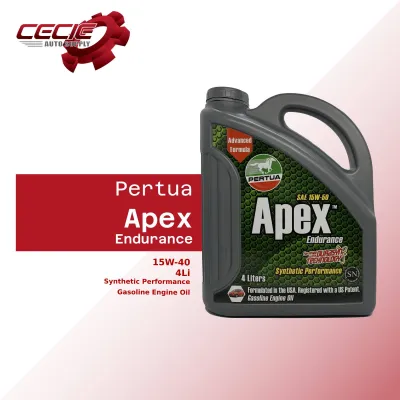
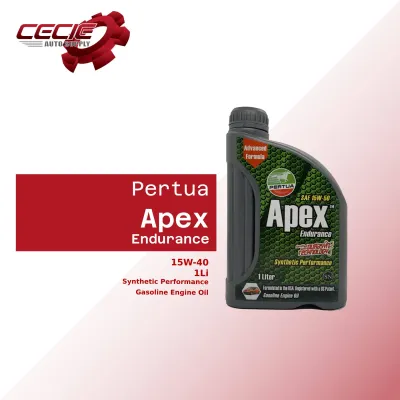
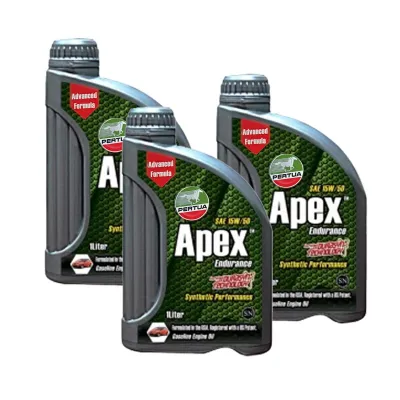
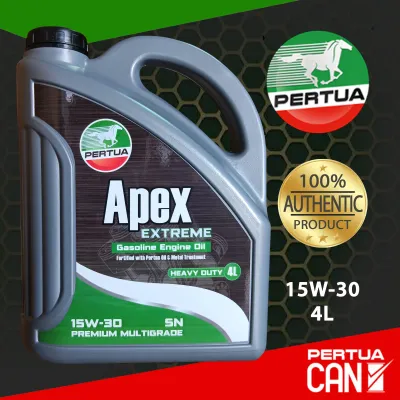
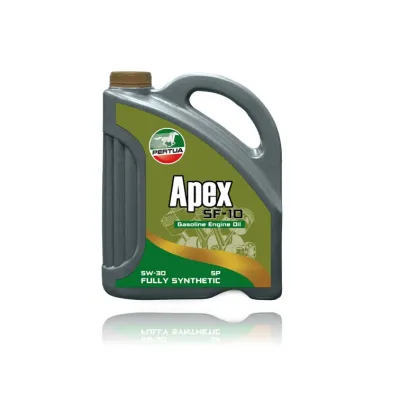
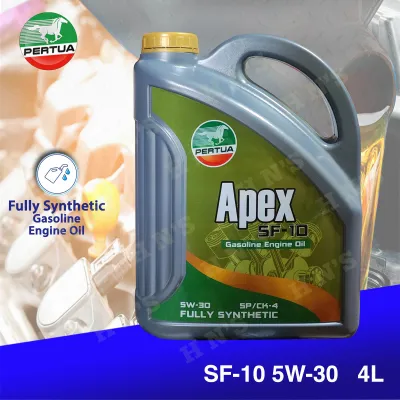
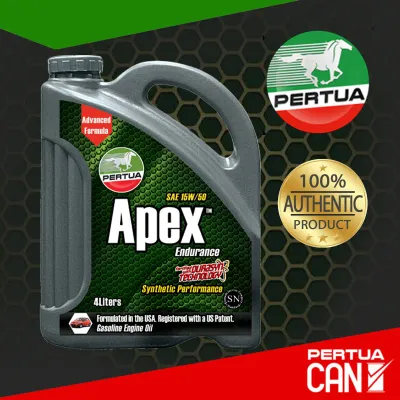
Prices are valid at publication and may change. Please refer to the product page for the latest price.
Pertua Apex gasoline engine oils are engineered to balance these competing demands by adhering strictly to the Society of Automotive Engineers (SAE) standards. The viscosity grade listed on the bottle serves as the primary indicator of how the lubricant will flow and protect under different operating temperatures.
Decoding the SAE Viscosity Numbers on Your Pertua Apex Bottle
When looking at a bottle of Pertua Apex gasoline oil, you will see alphanumeric designations such as 5W-30, 10W-40, or 15W-40. These are multi-grade oils, designed to perform efficiently across a wide range of temperatures.

The "W" Rating and Cold Start Protection
The first part of the viscosity grade consists of a number followed by the letter “W”. A common misconception is that “W” stands for “weight,” but it actually stands for “Winter.” This rating measures the oil’s flow resistance at low temperatures, with a lower number indicating that the oil remains highly fluid and pumps quickly upon ignition.
Even though the Philippines does not experience freezing winter conditions, cold start protection remains highly relevant to local drivers. In a tropical climate, a “cold start” refers to starting your vehicle in the morning after it has sat idle overnight, with ambient temperatures typically ranging from 24°C to 30°C. During these initial seconds of ignition, the engine experiences the highest rate of wear because gravity has pulled most of the oil back down into the oil pan.
A lower “W” rating, such as 5W or 10W, ensures that the Pertua Apex oil reaches the topmost components of your engine almost instantly. This rapid lubrication minimizes dry-start friction and protects delicate valve train components from premature wear.
The Operating Temperature Rating and Heat Protection
The second number in the SAE designation, such as 30 or 40, represents the oil’s viscosity when the engine reaches its normal operating temperature, which is typically around 100°C. This rating measures how effectively the oil resists thinning out under intense heat.
A higher operating temperature rating indicates a thicker, more robust oil film at operating temperatures. For instance, a 40-grade oil will remain thicker at 100°C than a 30-grade oil, providing a sturdier cushion under heavy loads, steep climbs, or high RPMs.
This rating dictates how well the oil resists thinning out when the engine is fully warmed up. It ensures that the oil film does not shear or collapse under mechanical pressure, keeping your internal engine components safely separated during extended drives.
How Viscosity Affects Engine Protection in Philippine Traffic and Heat
The unique driving environment in the Philippines places extraordinary demands on engine lubricants. With year-round tropical heat and ambient temperatures frequently exceeding 35°C, engines run naturally hotter than they would in temperate climates. This constant thermal load means your motor oil relies heavily on its high-temperature viscosity rating to prevent thermal breakdown.
Furthermore, severe urban congestion—such as the stop-and-go traffic in Metro Manila, Metro Cebu, and other major urban hubs—compounds this stress. In bumper-to-bumper traffic, your vehicle lacks the cooling airflow that comes with highway driving, turning the engine bay into a high-heat environment. Under these harsh conditions, a premium lubricant like Pertua Apex gasoline oil must resist shearing—the permanent loss of viscosity caused by mechanical stress—to keep protecting your engine.
While it might seem logical to choose the thickest oil available to combat this heat, doing so can backfire. Modern engines are built with incredibly tight clearances and tolerances. Using an excessively thick oil in an engine designed for a thinner grade increases internal drag, which degrades fuel economy and can actually cause the engine to run hotter due to increased fluid friction.
Matching the Right Pertua Apex Grade to Your Vehicle
Selecting the correct Pertua Apex gasoline oil grade is not a matter of guesswork. The ultimate authority on which viscosity grade your vehicle requires is always the original equipment manufacturer (OEM), detailed in your vehicle’s owner’s manual.
When purchasing Pertua Apex gasoline oil, match the SAE viscosity grade on the bottle directly to the specifications recommended by your car’s manufacturer. Do not assume that older or high-mileage vehicles automatically require a thicker oil; while some older engines with wider tolerances might benefit from a slightly higher viscosity to control oil consumption, modern tight-clearance engines must stick to their designated grades to prevent oil starvation.
Additionally, check the American Petroleum Institute (API) service category printed on the Pertua Apex bottle (such as API SP or SN) to ensure it meets or exceeds your engine’s emission control and wear protection standards. These ratings guarantee the oil’s compatibility with modern catalytic converters and turbochargers.
Before making any changes to your vehicle’s recommended oil viscosity, or if your engine is showing signs of oil consumption or unusual noise, consult a qualified mechanic. Always refer to your vehicle’s original documentation, and if any instructions conflict with aftermarket recommendations, defer to the vehicle manufacturer’s guidelines.
Frequently Asked Questions (FAQ)
Can I mix two different viscosity grades of Pertua Apex oil?
It is highly recommended that you avoid mixing different viscosity grades of Pertua Apex oil. Mixing two different grades alters the carefully engineered flow characteristics and can compromise the effectiveness of the oil’s additive package. If you find yourself in an emergency situation where your oil level is dangerously low and you must top up, use the closest available grade to prevent engine damage. However, you should schedule a complete oil and filter change as soon as possible to restore the proper, uniform viscosity grade recommended for your engine.
Does a higher viscosity number mean better engine protection?
No, a higher viscosity number does not automatically translate to better engine protection. While a thicker oil provides a stronger film at high temperatures, using a grade higher than what your OEM specifies can lead to sluggish oil flow during cold starts, increased internal engine drag, and reduced fuel efficiency. The highest level of protection is achieved by using the exact viscosity grade that matches your engine’s internal clearances, ensuring rapid lubrication during startup and optimal film strength at operating temperatures.
Community discussion
Share your experience or ask a question. Comments are reviewed before publication.