
Choosing the right 5W-30 full synthetic motor oil in the Philippines depends on your vehicle manufacturer’s specifications, your typical driving environment, and your budget. There is no single “best” oil that fits every car on the road. Instead, the optimal choice is the one that aligns with your vehicle’s engineering requirements while addressing the specific challenges of your daily commute.
To help you decide, consider this high-level summary of how these four prominent brands compare. Petron Blaze 5W-30 offers excellent local accessibility and competitive value tailored for tropical climates. Shell Helix focuses on advanced base oil purity and active engine cleanliness to prevent sludge. Castrol emphasizes robust physical wear protection and strong oil film strength under pressure. Motul delivers high-temperature thermal stability and shear resistance suited for performance engines or demanding driving conditions.
Before purchasing or performing any oil change, always consult your vehicle’s owner’s manual. The oil you choose must strictly match the viscosity grade and the industry certifications (such as API, ILSAC, or ACEA) prescribed by your vehicle manufacturer. Using an incompatible oil can lead to accelerated engine wear, reduced fuel efficiency, or voided warranty coverage.
Products mentioned in this guide
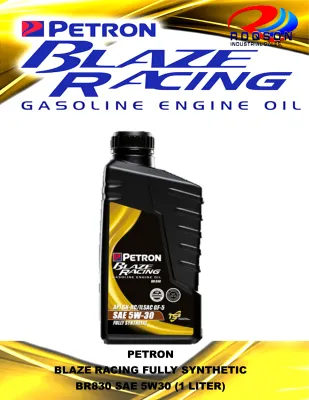
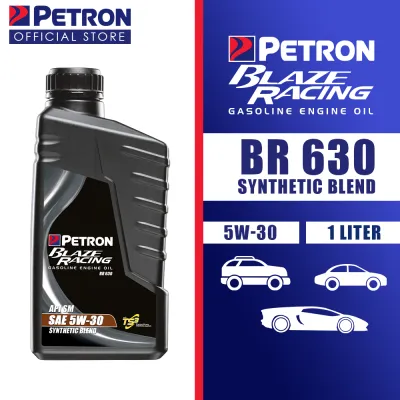
Prices are valid at publication and may change. Please refer to the product page for the latest price.
Understanding 5W-30 Full Synthetic: The Baseline for Comparison
To make an informed comparison, it is essential to understand what a 5W-30 viscosity rating signifies. The “5W” portion (where the “W” stands for winter) indicates the oil’s flow characteristics at low temperatures. While freezing winter temperatures are not a concern in the tropical climate of the Philippines, a lower winter rating still plays a critical role. It ensures that the oil remains fluid enough to circulate rapidly to vital engine components immediately upon startup, which is when a significant percentage of engine wear occurs.
The “30” represents the oil’s kinematic viscosity at standard engine operating temperature (100°C). This viscosity level is engineered to maintain a protective lubricating film over moving parts without being so thick that it creates excessive parasitic drag. Consequently, 5W-30 has become a highly popular viscosity grade for modern passenger cars, balancing reliable component protection with optimized fuel economy.
Full synthetic motor oils offer distinct advantages over conventional mineral or semi-synthetic alternatives. They are formulated using highly refined Group III, Group IV (Polyalphaolefins), or Group V (Esters) base stocks, which feature uniform molecular structures. This chemical consistency provides superior thermal stability, higher resistance to oxidation, and minimized volatility under intense heat.
These characteristics are particularly beneficial in the Philippines, where high ambient humidity and severe traffic congestion subject engines to prolonged idling. Under these harsh conditions, conventional oils degrade more rapidly, leading to the formation of harmful sludge and carbon deposits. Full synthetics maintain their protective properties and viscosity stability over longer drain intervals, ensuring continuous engine protection.
However, you must verify if your specific engine actually requires 5W-30. Some modern, highly efficient engines are designed for thinner grades like 0W-16 or 0W-20 to maximize fuel savings, while older or heavy-duty diesel engines might specify thicker oils like 10W-40 or 15W-40. Using 5W-30 in an engine designed for a different viscosity can result in inadequate lubrication, increased fuel consumption, or high oil pressure issues.
Brand Engineering Focus: Petron vs. Shell, Castrol, and Motul
Each lubricant manufacturer employs a distinct engineering philosophy and targets specific performance priorities. Understanding these differences allows you to choose an oil that matches your driving style and vehicle needs.

Petron Blaze (Local Value and Accessibility)
Petron is the largest oil refining and marketing company in the Philippines, giving its products a highly dominant local presence. Petron Blaze 5W-30 is formulated with the specific challenges of the local driving environment in mind, such as extreme tropical heat and the stop-and-go patterns of urban traffic in major metropolitan areas. This local formulation focus aims to deliver reliable thermal protection and oxidation resistance at a highly competitive price point.
Because Petron operates an extensive network of service stations nationwide, finding Petron Blaze 5W-30 is exceptionally easy. This widespread availability makes it highly convenient for routine maintenance, emergency top-ups, or unexpected servicing. It offers a practical, cost-effective solution for motorists who want the protection of a full synthetic oil without paying the premium import costs associated with foreign brands.
When choosing Petron Blaze, it is important to inspect the physical product label to confirm its active specifications. Ensure that the specific bottle of Petron Blaze 5W-30 carries the API and ILSAC ratings required for your engine model, as formulations are periodically updated to meet evolving industry standards.
Shell (Engine Cleanliness and Base Oil Technology)
Shell’s engineering focus centers heavily on base oil purity and active engine cleansing. A key highlight of Shell’s premium synthetic line is its proprietary Gas-to-Liquid (GTL) technology, which synthesizes crystal-clear base oil from natural gas rather than crude oil. This process results in a base oil that is virtually free of the impurities commonly found in crude oil, providing exceptional resistance to thermal degradation.
This pure base oil is combined with active cleansing agents designed to prevent the accumulation of sludge, lacquer, and carbon deposits. In the high-humidity, stop-and-go driving environments of the Philippines, engines are highly susceptible to moisture condensation and soot buildup. Shell’s formulations work to actively lock away these contaminants, keeping them suspended in the oil so they cannot settle on critical engine surfaces.
When purchasing Shell 5W-30, pay close attention to the specific product variant, such as Shell Helix Ultra or Shell Helix HX8. Different variants are engineered with distinct additive packages to meet specific OEM requirements, so you must verify that the chosen bottle carries the exact approvals specified by your vehicle manufacturer.
Castrol (Wear Protection and Additive Packages)
Castrol has built its reputation on engineering lubricants that provide high film strength and robust metal-to-metal wear protection. The brand’s development focus is geared toward modern, downsized, turbocharged engines, which operate under higher internal pressures and temperatures than older, naturally aspirated engines.
Many Castrol 5W-30 products, such as those in the Castrol EDGE or Castrol Magnatec lines, utilize specialized additive packages designed to cling to engine components even when the engine is turned off. This physical oil barrier provides immediate protection during the critical startup phase, reducing friction before the oil pump can fully pressurize the system. For motorists who frequently carry heavy loads, commute on steep terrains, or operate vehicles in demanding commercial roles, this emphasis on physical film strength offers robust durability.
Always check the back label of the specific Castrol 5W-30 product you are considering. Ensure that the industry certifications, such as API SP or ACEA C3, align perfectly with the requirements of your engine and emissions systems.
Motul (High Performance and Thermal Stability)
Motul is a premium French lubricant brand with a deep heritage in motorsports and high-performance engineering. Its formulation philosophy prioritizes extreme thermal stability and shear resistance under high-stress conditions, frequently utilizing advanced synthetic base stocks, including ester technology.
Esters possess natural polar properties that allow the oil molecules to bond tightly to metal surfaces, providing a highly resilient protective barrier. This makes Motul 5W-30 highly resistant to thinning out or breaking down under extreme heat, making it popular among car enthusiasts, track-day participants, and owners of modified or high-performance turbocharged vehicles. In the tropical climate of the Philippines, where engine temperatures can rise rapidly during aggressive driving or prolonged heavy loads, Motul’s high thermal threshold helps prevent oil consumption and maintains consistent oil pressure.
This specialized performance engineering comes at a premium price point, making Motul generally more expensive than standard daily-driving synthetics. Motorists should review the specific Motul 5W-30 product label (such as Motul 8100 or Motul H-Tech) to ensure it aligns with their vehicle’s daily driving requirements and manufacturer specifications.
How to Compare Specifications on the Product Label
To make an objective comparison between these brands, look past marketing slogans and examine the standardized performance specifications printed on the back of the oil bottle.
API and ILSAC Standards
The American Petroleum Institute (API) rating is represented by a circular “donut” symbol. The current highest standard for gasoline engines is API SP, which was introduced to provide superior protection against low-speed pre-ignition (LSPI) in modern turbocharged direct-injection engines, as well as enhanced timing chain wear protection. The International Lubricant Standardization and Approval Committee (ILSAC) standard, such as GF-6A, runs parallel to API SP and indicates excellent fuel economy and engine protection. Ensure the oil you choose meets these latest standards if your car specifies them.
ACEA Sequences
European vehicles often require oils that meet European Automobile Manufacturers’ Association (ACEA) standards. For instance, ACEA A3/B4 specifies stable, stay-in-grade oil for high-performance gasoline and direct-injection diesel engines. Conversely, ACEA C-series standards (like C2, C3, or C4) are designed for vehicles equipped with modern exhaust after-treatment devices, such as diesel particulate filters (DPFs) or three-way catalysts. Using a non-compliant oil in a DPF-equipped vehicle can clog the filter and lead to costly repairs.
OEM Approvals
Many manufacturers (including Toyota, Honda, Mitsubishi, Ford, BMW, Mercedes-Benz, and Volkswagen) have proprietary oil specifications. If your vehicle is under factory warranty, you must use an oil that explicitly lists your manufacturer’s specific approval code (e.g., VW 502.00/505.00 or MB-Approval 229.5) on the back label. Failing to do so can void your warranty coverage in the event of an engine failure.
Technical Data Sheets (TDS)
For a deeper comparison, search online for the product’s Technical Data Sheet. Key metrics to compare include:
- Viscosity Index: A higher number indicates the oil resists thinning at high temperatures and thickening at low temperatures.
- Flash Point: The temperature at which the oil's vapors will ignite. A higher flash point (typically above 220°C) indicates better thermal stability and lower oil consumption under high heat.
- Pour Point: The lowest temperature at which the oil remains fluid. While less critical in the Philippines, it indicates the oil's overall flow characteristics.
Decision Framework: Which 5W-30 Oil Should You Buy?
To finalize your choice, evaluate your vehicle’s requirements and your typical driving habits against this practical decision framework:
- Choose Petron Blaze 5W-30 if: You want a cost-effective, readily available full synthetic oil that handles daily tropical commuting, and you prefer the convenience of purchasing and servicing your vehicle at local Petron stations.
- Choose Shell 5W-30 if: Your primary concern is engine cleanliness and preventing sludge in heavy stop-and-go traffic, and the specific Shell variant carries the exact OEM approval your vehicle requires.
- Choose Castrol 5W-30 if: You prioritize strong wear protection for an engine with higher mileage or frequently carry heavy loads, provided the specific product matches your car's API or ACEA requirements.
- Choose Motul 5W-30 if: You drive a high-performance or turbocharged vehicle, frequently operate at high RPMs, or want maximum thermal stability under extreme heat, and you are comfortable paying a premium price.
Before proceeding with any maintenance, verify if your vehicle is under a manufacturer warranty, which requires strict adherence to OEM-approved oil specifications. Additionally, if your vehicle is a modern common-rail direct-injection (CRDi) diesel equipped with a diesel particulate filter (DPF), ensure you select a low-SAPS (sulfated ash, phosphorus, and sulfur) formulation (such as ACEA C3) to prevent premature filter clogging.
When performing an oil change, ensure the engine is completely cool to avoid severe burns from hot oil or components. Always torque the drain plug and oil filter according to your vehicle’s service manual to prevent leaks, and dispose of used motor oil safely at an authorized recycling center or service station. If you lack the necessary tools or experience, seek the assistance of a qualified professional mechanic.
Frequently Asked Questions (FAQ)
Can I mix Petron Blaze 5W-30 with Shell or Castrol?
While mixing different brands of the same viscosity (5W-30) and similar API ratings will not cause immediate mechanical failure in an emergency, it is highly discouraged for routine use. Each brand formulates its oil with a unique, carefully balanced package of proprietary additives (such as detergents, dispersants, and anti-wear agents). Mixing brands can disrupt this chemical balance, reducing the overall effectiveness of the lubrication and deposit-control properties. For optimal engine protection, stick to a single brand for top-ups, and perform a complete oil flush and filter replacement when switching from one brand to another.
Does a higher price mean Motul is better than Petron for daily driving?
Not necessarily. The premium price of brands like Motul often reflects specialized engineering, imported base oils, and advanced additive packages (such as esters) designed to withstand the extreme thermal and mechanical stresses of motorsports or high-performance driving. For standard daily commuting, family road trips, and typical stop-and-go city driving in the Philippines, a fully certified and more affordable synthetic oil like Petron Blaze 5W-30 is entirely sufficient. The most critical factor is not the price tag, but whether the oil’s certifications (API, ILSAC, or OEM approvals) align perfectly with the requirements specified in your vehicle’s owner’s manual.
Community discussion
Share your experience or ask a question. Comments are reviewed before publication.