
Selecting the correct drivetrain lubricant is vital for preserving the lifespan of your vehicle’s manual transmission, transaxle, or differential. When browsing automotive fluids in the Philippines, you will frequently encounter Petron GEP SAE 90. This specific lubricant is a monograde gear oil designed to handle heavy mechanical loads and high-temperature environments. Understanding what these specifications mean—specifically the “SAE 90” viscosity rating and the “GEP” designation—is the first step in ensuring your vehicle receives the exact protection it requires.
Drivetrain components operate under immense friction and pressure. Unlike engine oil, which must flow rapidly through tight passages at high speeds, gear oil focuses on maintaining a robust physical barrier between heavy, slow-moving, or high-torque gear teeth. Using the wrong fluid can lead to accelerated wear, noisy operation, or catastrophic component failure.
What SAE 90 Viscosity Means for Gear Protection
The “SAE 90” designation on a bottle of gear oil refers to its viscosity grade, as defined by the Society of Automotive Engineers (SAE) J306 standard. Viscosity measures a fluid’s resistance to flow. Because this product is a monograde oil, it does not carry a “W” (winter) prefix, meaning it is formulated primarily for stable performance in warm operating conditions or heavy-duty applications where low-temperature flow is not a critical design constraint.
Products mentioned in this guide
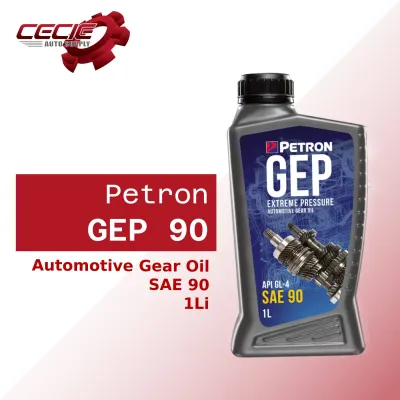
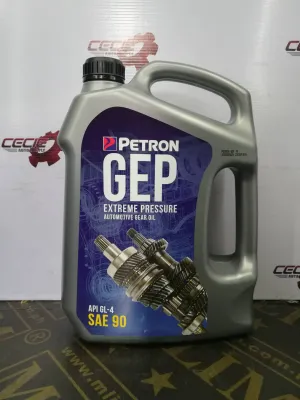
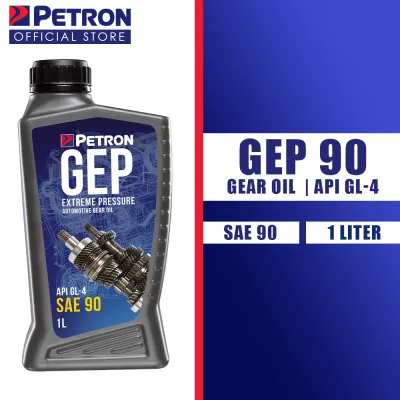
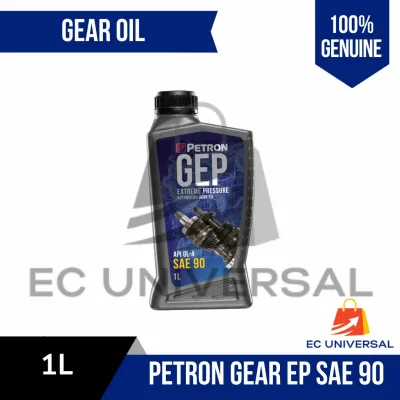
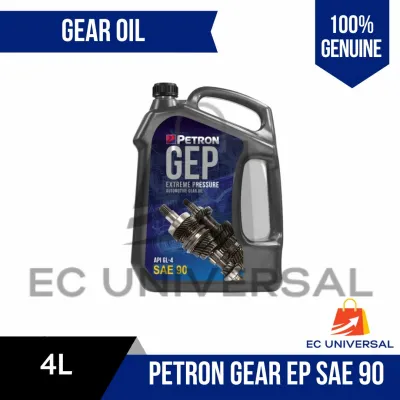
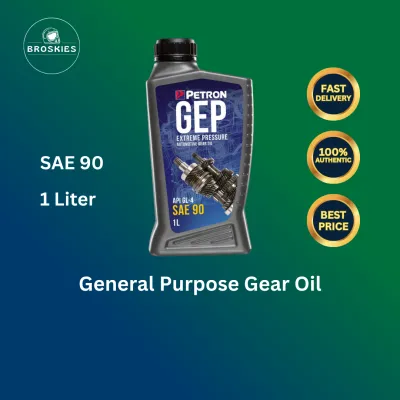
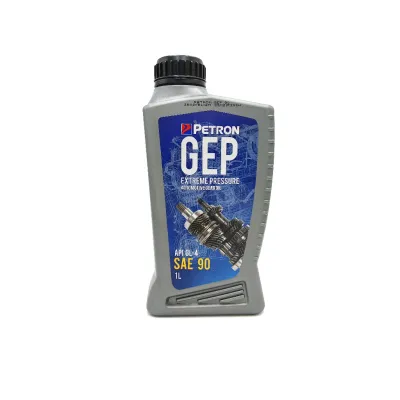
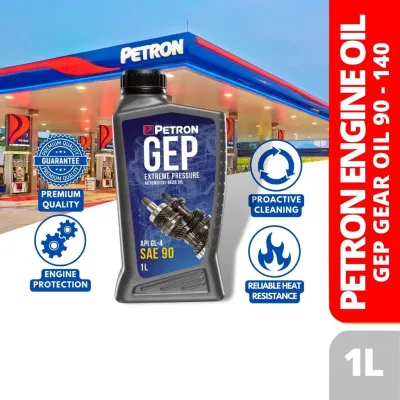
Prices are valid at publication and may change. Please refer to the product page for the latest price.
In the tropical climate of the Philippines, where ambient temperatures remain high throughout the year, maintaining a stable oil film is highly critical. Under high operating temperatures and heavy mechanical loads, the gear oil must not thin out excessively. If the oil becomes too thin, the protective film collapses, leading to direct metal-to-metal contact, localized welding, and rapid gear tooth wear. Conversely, if the oil is too thick for the system’s engineering specifications, it introduces excessive fluid drag, which increases operating temperatures, reduces fuel efficiency, and hinders proper oil circulation.
Always remember that a higher viscosity does not automatically translate to better protection for every vehicle. Modern drivetrains are engineered with incredibly precise internal clearances. While an older utility vehicle or a heavy-duty truck differential might thrive on an SAE 90 lubricant, a modern manual car designed for a thinner multi-grade fluid could suffer from severe starvation and overheating if filled with a monograde SAE 90. You must always defer to your vehicle manufacturer’s specific viscosity recommendations rather than assuming a thicker oil is universally better.
The Role of GEP (Extreme Pressure) Additives
The letters “GEP” in Petron GEP SAE 90 stand for Gear Extreme Pressure. This designation indicates that the fluid is formulated with specialized chemical additives designed to protect metal surfaces under extreme mechanical stress. In standard operating conditions, a simple oil film is enough to keep moving parts separated. However, when gears mesh under heavy acceleration, towing, or steep climbs, the pressure at the contact points can easily squeeze ordinary oil out of the way.

To combat this, GEP lubricants contain extreme pressure (EP) additives, typically utilizing sulfur and phosphorus compounds. When localized temperatures and pressures spike at the contact points of mating gear teeth, these additives chemically react with the metal surface. This reaction forms a microscopic, sacrificial chemical barrier. Instead of the metal gear teeth welding together or tearing chunks out of one another—a process known as scuffing or pitting—the sacrificial additive layer shears away harmlessly under the load, preserving the structural integrity of the gears.
While extreme pressure additives are indispensable for high-load components like hypoid gears found in rear differentials, they are not a universal upgrade for every manual gearbox. Many manual transmissions utilize synchronizers made of soft yellow metals, such as brass. Certain aggressive EP additives can chemically attack and corrode these soft metals at high operating temperatures, leading to rough shifting and synchronizer degradation. For this reason, the presence of GEP additives means the oil is highly capable under stress, but you must verify its specific chemical compatibility with your exact gearbox type.
How to Verify Compatibility With Your Vehicle
To determine if Petron GEP SAE 90 is suitable for your car, truck, or utility vehicle, you must consult your vehicle’s Owner’s Manual. The manual serves as the non-negotiable source of truth for all fluid specifications, outlining both the required viscosity and the necessary performance standards.
Matching the SAE 90 viscosity is only half of the compatibility equation. You must also match the API (American Petroleum Institute) Service Classification specified by your vehicle’s manufacturer. Gear oils are commonly rated as API GL-4 or API GL-5:
- API GL-4: Formulated with moderate levels of EP additives, typically specified for manual transmissions with synchronizers containing soft yellow metals.
- API GL-5: Contains a higher concentration of EP additives, designed for highly loaded hypoid differentials where extreme sliding action occurs.
A common and costly misconception is that API GL-5 is a universal upgrade over GL-4. If you put a high-sulfur GL-5 oil into a manual transmission that specifically requires GL-4, the active sulfur additives can corrode the brass synchronizers over time, resulting in difficult gear engagement and expensive transmission rebuilds. Before purchasing or pouring Petron GEP SAE 90, physically inspect the product label to confirm its exact API rating and ensure it aligns perfectly with the requirements of your vehicle’s specific make, model, and production year.
Safety and Handling Before You Change Gear Oil
Replacing gear oil is a hands-on maintenance task that carries specific safety boundaries. The process requires lifting the vehicle safely, locating and removing heavily torqued drain and fill plugs, and handling potentially hot, viscous fluids.
Before attempting to change your gear oil, ensure you have the proper equipment. Never work under a vehicle supported only by a hydraulic jack; always use high-quality, properly rated jack stands and secure the wheels with wheel chocks on a flat, level surface. A critical mechanical rule of thumb is to always locate and remove the fill plug before removing the drain plug. If you drain the old gear oil first only to discover that the fill plug is seized or stripped, your vehicle will be rendered completely inoperable.
If you lack the specialized tools, proper safety gear, or mechanical experience required for this procedure, you should seek a qualified professional mechanic to perform the service. Additionally, never rely on visual inspections or unverified “finger-rub tests” to judge the condition or compatibility of your gear oil. Always follow the vehicle manufacturer’s recommended service intervals. When the service is complete, ensure that the used gear oil is collected in a clean container and disposed of in accordance with local environmental regulations in the Philippines, such as delivering the waste oil to an authorized recycling center.
Frequently Asked Questions (FAQ)
Can I use SAE 90 gear oil in an automatic transmission?
No. Automatic transmissions require specialized Automatic Transmission Fluids (ATF), which have completely different viscosity profiles, friction modifiers, and hydraulic properties. Automatic transmissions rely on these fluids to operate hydraulic valves, engage wet clutches, and transfer torque through a torque converter. Using a thick, high-viscosity gear oil like SAE 90 will clog internal passages, prevent proper clutch engagement, and cause immediate, catastrophic transmission failure.
Does a higher viscosity like SAE 90 mean better protection?
Not necessarily. While an SAE 90 viscosity grade provides an exceptionally robust oil film capable of sustaining heavy loads, it is only protective if your vehicle’s drivetrain was engineered to use it. If you put SAE 90 into a modern manual gearbox designed for a thinner fluid, such as an SAE 75W-80, the oil will not flow quickly enough during cold starts, leading to localized starvation. It will also generate excess heat due to internal fluid friction, reducing fuel efficiency and accelerating component wear. Protection is only optimal when the fluid’s viscosity matches the exact clearances designed by the manufacturer.
Community discussion
Share your experience or ask a question. Comments are reviewed before publication.