
Determining whether Prestone Blue Coolant is suitable for your vehicle in the Philippines requires looking beyond the brand name and the color of the fluid. While Prestone is a widely recognized brand in the local automotive market, its blue-colored coolant formulation is designed for specific vehicle requirements rather than a one-size-fits-all solution for tropical climates.
In the Philippines, where ambient temperatures frequently exceed 35°C and urban traffic congestion creates prolonged periods of low-airflow idling, your engine’s cooling system operates under extreme stress. To protect your engine from overheating and costly repairs, you must verify that the chemical properties of this specific coolant align with your vehicle manufacturer’s original equipment manufacturer (OEM) specifications.
Understanding Tropical Climate Demands on Engine Coolant
Operating a vehicle in a tropical environment like the Philippines presents unique challenges that directly impact engine health. Unlike temperate regions where antifreeze properties are critical for preventing frozen engine blocks in winter, tropical climates demand a fluid that excels at heat dissipation and boiling point elevation. When you are stuck in slow-moving traffic along major thoroughfares like EDSA or C-5, your vehicle lacks the natural ram-air cooling that occurs at highway speeds. Under these conditions, the radiator relies entirely on the cooling fan to draw air across its fins, significantly reducing the efficiency of heat transfer.
Products mentioned in this guide
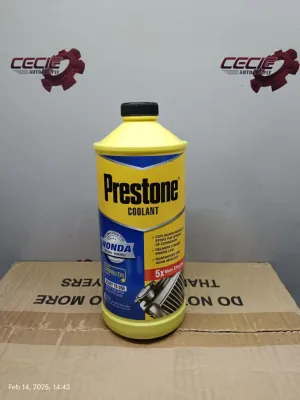
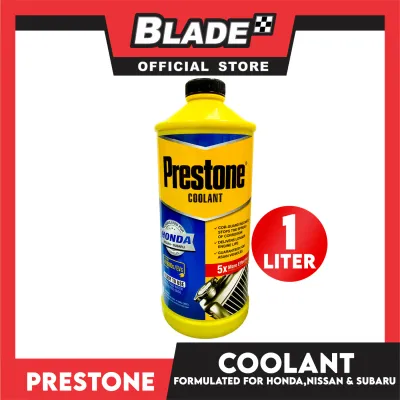
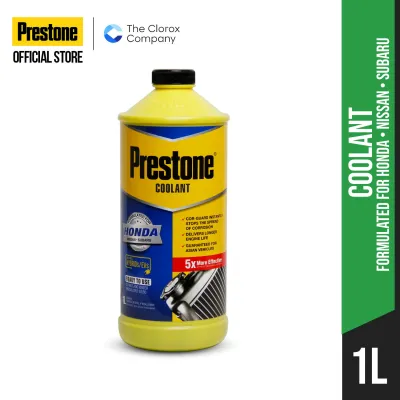
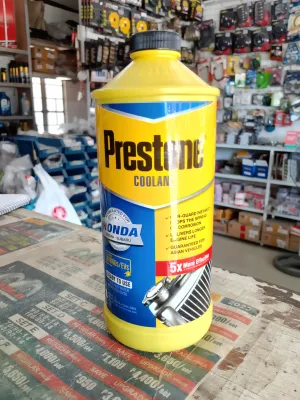
Prices are valid at publication and may change. Please refer to the product page for the latest price.
This sustained high-heat environment forces the engine to run near its upper thermal limits. If your cooling system is filled with plain water or an substandard fluid, the liquid can easily reach its boiling point, leading to vaporization. Vaporized coolant creates air pockets within the engine block and cylinder head, preventing heat from transferring away from critical metal surfaces. This localized overheating can warp cylinder heads, blow head gaskets, and lead to catastrophic engine failure. A high-quality coolant formulated with a high boiling point remains in a liquid state under pressure, ensuring continuous heat absorption and dissipation even during prolonged idling in midday heat.
Beyond thermal management, tropical humidity and constant heat cycles accelerate chemical reactions inside the cooling system. Without adequate corrosion inhibitors, the mixture of water and metals (such as aluminum, copper, brass, and cast iron) inside your radiator and engine block will undergo rapid galvanic corrosion. This process creates scale deposits that clog the narrow passages of the radiator core and heater core, further restricting coolant flow. Additionally, the rubber hoses, water pump seals, and plastic thermostat housings are subject to constant thermal stress, making them prone to hardening, cracking, and leaking. A suitable coolant must contain robust corrosion inhibitors that form a protective microscopic barrier over these diverse materials, preserving the integrity of the entire system over years of operation.
How to Verify Prestone Blue Coolant Specifications for Your Vehicle
To determine if Prestone Blue Coolant is the right choice for your car, you must carefully examine the product label and technical specifications rather than relying on visual cues alone. Start by checking whether the product is sold as a pre-diluted 50/50 mixture or as a concentrated formula. In the Philippines, pre-diluted coolants are highly popular because they eliminate the risk of using contaminated tap water, which contains minerals that can cause scale buildup inside your radiator. If you purchase a concentrate, you must mix it with demineralized or distilled water according to the manufacturer’s instructions to achieve the correct concentration.

Next, identify the specific chemical technology used in the formulation. Modern coolants generally fall into three categories: Inorganic Additive Technology (IAT), Organic Acid Technology (OAT), and Hybrid Organic Acid Technology (HOAT). Prestone Blue Coolant is typically formulated as an OAT or HOAT fluid, often designed specifically for certain Asian vehicle makes (such as Honda, Subaru, Nissan, or Mitsubishi) that require phosphate-enhanced organic acid technology (P-OAT). You must verify that the chemical base listed on the bottle matches the chemistry required by your vehicle’s cooling system. Using the wrong chemistry can lead to rapid depletion of corrosion inhibitors or chemical reactions that damage internal seals.
Finally, look for recognized industry standards and OEM approvals printed on the back of the bottle. Standards such as ASTM D3306 or ASTM D4985 indicate that the fluid has undergone standardized testing for corrosion protection and thermal performance. Many vehicle manufacturers also publish specific approval codes (for example, Honda Type 2 or Nissan Blue L250). If the Prestone Blue bottle explicitly lists the exact specification code found in your vehicle’s documentation, it confirms that the fluid is chemically compatible and capable of protecting your engine under the demanding driving conditions of the Philippines.
Matching Coolant to Your Car's OEM Requirements
Your vehicle manufacturer’s specifications must always take absolute priority over general climate advice, retail recommendations, or brand marketing. Every engine is engineered with specific metallurgy and sealing materials, and the factory fill coolant is selected to protect those exact components. To find the correct specification for your car, consult your owner’s manual under the maintenance or fluid specifications section. In many modern vehicles, you can also find the required coolant type or specification code printed directly on the radiator cap or the plastic coolant reservoir tank in the engine bay.
Mixing incompatible coolant chemistries is one of the most common causes of cooling system failure. For example, if your vehicle currently uses an older IAT coolant (often green) and you top it off with a modern P-OAT coolant (such as Prestone Blue), the different corrosion inhibitors can react chemically. This reaction often results in “gelling,” where the fluid thickens into a sludge-like consistency. This sludge restricts flow through the radiator tubes, coats the temperature sensors, and clogs the water pump, leading to rapid overheating and severe engine damage. The cost to flush a gelled system and replace damaged components can easily run into thousands of pesos, making compatibility verification a critical step before adding any fluid.
If you find that your owner’s manual is missing, or if the listed specification code is confusing or unavailable at local auto supply shops, do not guess. In such cases, it is highly recommended to consult a certified mechanic or visit an authorized dealership service center. They can access professional databases to identify the exact fluid requirements for your specific vehicle model, year, and engine type. Taking the time to verify this information prevents costly diagnostic and repair bills later on.
Maintenance and Monitoring in High-Temperature Conditions
Maintaining your vehicle’s cooling system in a tropical climate requires regular, proactive inspections to catch minor issues before they escalate into major breakdowns on the road. Before performing any inspection, you must observe strict safety boundaries. Never open the radiator cap or the coolant reservoir cap while the engine is hot or running. The cooling system operates under high pressure, and opening a hot cap can cause boiling liquid and steam to spray out violently, resulting in severe burns. Always allow the engine to cool completely—typically for at least a few hours—before opening any part of the system.
Once the engine is cold, perform a visual check of the coolant level in the plastic expansion reservoir. The fluid level should sit between the “Min” and “Max” (or “Low” and “Full”) markings on the side of the tank. While you are under the hood, inspect the upper and lower radiator hoses, heater hoses, and bypass hoses. Squeeze the hoses gently to check for soft spots, swelling, or extreme stiffness, which indicate that the rubber has degraded from constant exposure to high engine temperatures. Look closely at the hose connections and the radiator seams for any signs of crusty, colored residue, which is a clear indicator of a slow coolant leak.
Be alert to early warning signs of cooling system distress while driving. A sweet, maple-syrup-like odor inside or outside the cabin often indicates a coolant leak spraying onto hot engine components. Keep a close eye on your dashboard’s temperature gauge or warning lights; any unusual fluctuations or a steady climb toward the red zone demand immediate attention. Given the severe driving conditions in the Philippines—characterized by high humidity, dusty roads, and heavy traffic—you should consider adhering to the manufacturer’s “severe service” maintenance schedule. This often involves more frequent coolant flushes and replacements than the standard interval, ensuring that the corrosion inhibitors remain active and the system stays free of debris.
Frequently Asked Questions (FAQ)
Can I mix Prestone Blue with the existing coolant in my radiator?
You should avoid mixing Prestone Blue Coolant with the existing fluid in your radiator unless you are absolutely certain that both fluids share the exact same chemical formulation and OEM specification. Mixing different inhibitor technologies—such as combining an organic acid technology with an inorganic silicate technology—can cause the additives to drop out of solution. This chemical incompatibility leads to the formation of gel, sludge, and scale, which block the narrow passages of your radiator and water pump. If you are transitioning your vehicle to Prestone Blue from a different coolant type, the safest procedure is to perform a complete system flush. This process involves draining the old fluid, flushing the system thoroughly with distilled water to remove all traces of the previous chemistry, and then refilling the system with the new coolant.
Does the color of the coolant guarantee it is safe for my car?
No, the color of a coolant does not guarantee its compatibility or safety for your vehicle. Historically, coolant colors were somewhat standardized, with green representing traditional inorganic formulas and orange representing organic acid formulas. Today, however, coolant manufacturers use dyes arbitrarily, and there is no universal industry standard linking color to chemical composition. A blue coolant from one brand may have a completely different chemical base and additive package than a blue coolant from another brand. Relying solely on color to choose a coolant can lead to severe engine damage from chemical incompatibility. The only reliable way to confirm that a coolant is safe for your car is to match the specific OEM approval codes and chemical standards listed on the product label with those specified in your vehicle’s owner’s manual.
Community discussion
Share your experience or ask a question. Comments are reviewed before publication.