
Choosing the correct brake fluid is one of the most critical decisions you can make for your vehicle’s safety and performance. While many drivers assume that a higher number automatically translates to better performance, the choice between a standard prestone brake fluid dot 3 formulation and a higher-temperature DOT 4 alternative is dictated by your vehicle’s engineering. Using the wrong fluid can compromise your braking efficiency, damage internal seals, or even lead to sudden brake failure under demanding driving conditions.
In the tropical climate of the Philippines, where high ambient humidity and intense stop-and-go city traffic place immense thermal stress on your braking system, maintaining fluid purity is essential. Understanding the physical and chemical differences between these two standards will help you make an informed decision, protect your vehicle’s hydraulic components, and ensure your brakes respond reliably when you need them most.
Quick Answer: Which Prestone Brake Fluid Should You Choose?
To keep your vehicle operating safely, your decision framework must prioritize your vehicle manufacturer’s guidelines over generic performance claims. There is no universal “better” fluid; instead, there is only the correct fluid specified for your vehicle’s hydraulic system.
Products mentioned in this guide
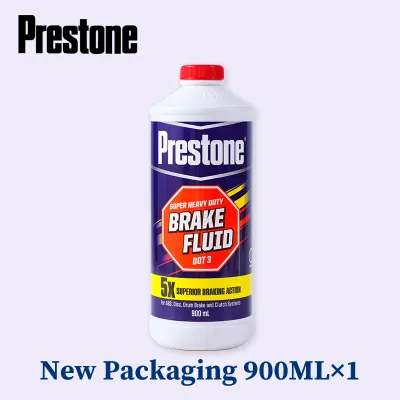
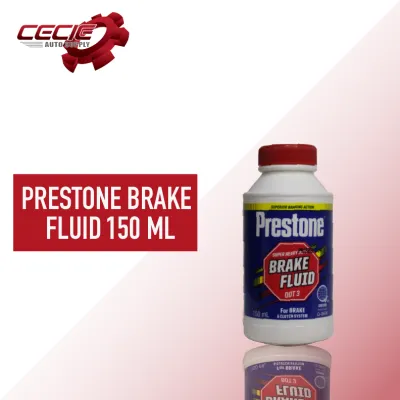
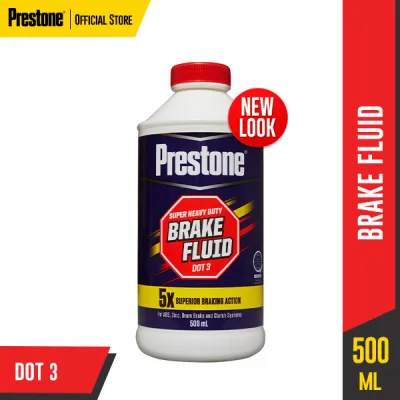
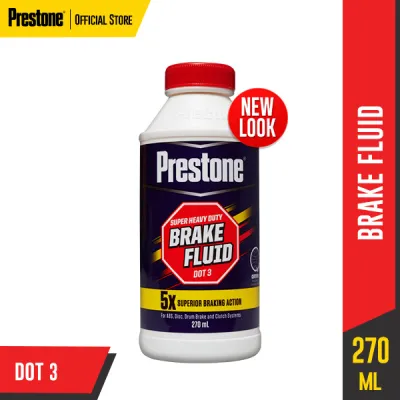
Prices are valid at publication and may change. Please refer to the product page for the latest price.
- Choose Prestone DOT 3 if: Your vehicle's owner's manual or the brake fluid reservoir cap explicitly specifies DOT 3, and you are maintaining the original factory braking system. This is common in many older passenger cars, compact hatchbacks, and light sedans.
- Choose Prestone DOT 4 if: Your manufacturer specifies DOT 4, or if you operate a heavier vehicle, such as an SUV, pickup truck, or van, that is subjected to demanding driving conditions like towing or steep mountain descents, provided the manufacturer explicitly approves or lists DOT 4 as an acceptable specification.
- Verify first if: You are unsure of the current fluid in your system, if the fluid in the reservoir appears dark or contaminated, or if any aftermarket modifications have been made to your braking system.
It is important to understand that using a higher DOT rating does not automatically translate to sharper or more responsive braking. The physical feel of your brake pedal is determined by the mechanical and hydraulic design of the braking system, not the boiling point of the fluid. Upgrading to a DOT 4 fluid in a system designed strictly for DOT 3 will not make your car stop faster under normal driving conditions, but failing to use the manufacturer-specified fluid can lead to serious mechanical risks.
Understanding DOT 3 and DOT 4 Brake Fluid Standards
To make an informed decision, it is helpful to understand what these classifications actually represent. The acronym “DOT” stands for the Department of Transportation, a regulatory body that establishes minimum safety and performance standards for motor vehicle brake fluids. These classifications—such as DOT 3, DOT 4, and DOT 5.1—are not proprietary formulas owned by brands like Prestone; rather, they are public standards that any manufacturer’s fluid must meet or exceed to be legally sold.

The primary role of brake fluid is to act as an incompressible hydraulic medium. When you press your brake pedal, this action forces fluid through the brake lines to the calipers or wheel cylinders, pressing the brake pads against the rotors to slow your vehicle. Because this friction generates intense heat, the fluid must remain in a liquid state under extreme temperatures. If the fluid reaches its boiling point, it turns into gas bubbles, which are highly compressible, leading to a spongy pedal and a dangerous loss of braking force.
Both Prestone DOT 3 and DOT 4 are typically glycol-ether based fluids. This chemical composition is chosen for its excellent lubricating properties, viscosity stability across a wide temperature range, and compatibility with the natural and synthetic rubber seals used throughout automotive braking systems. However, this chemical base also gives them a shared characteristic that directly impacts how they behave over time: they are highly hygroscopic, meaning they naturally absorb moisture from the surrounding atmosphere.
Key Differences Between Prestone DOT 3 and DOT 4
While they share a similar chemical foundation, Prestone DOT 3 and DOT 4 are formulated to meet different performance thresholds. The primary differences lie in how they manage heat and interact with moisture over their service life.
Boiling Point and Heat Resistance
When comparing brake fluids, you will encounter two critical metrics: the “dry boiling point” and the “wet boiling point.” The dry boiling point refers to the temperature at which brand-new, uncontaminated fluid from a freshly sealed bottle will begin to boil. The wet boiling point is a much more realistic measure of real-world performance; it represents the boiling temperature of the fluid after it has absorbed a specific volume of water (typically around 3.7% by volume) from the atmosphere.
DOT 4 brake fluid is formulated with borate esters in addition to glycol ethers, which significantly raises its minimum boiling point requirements compared to DOT 3. Under standard regulatory definitions, DOT 3 fluids must have a minimum dry boiling point of 205°C (401°F) and a minimum wet boiling point of 140°C (284°F). In contrast, DOT 4 fluids must meet a minimum dry boiling point of 230°C (446°F) and a minimum wet boiling point of 155°C (311°F).
Because formulations can vary, you should always check the specific Prestone product labels for the exact boiling points of the fluids you are considering. Prestone often engineers its fluids to exceed these minimum standards, providing an extra margin of safety. For example, a premium Prestone formulation may offer boiling points well above the regulatory minimums, which can be highly beneficial during prolonged braking scenarios.
The wet boiling point is the most practical metric for long-term vehicle maintenance. As you drive your vehicle over months and years, moisture slowly permeates the flexible rubber hoses and seals of your braking system. If your fluid has a low wet boiling point, the intense heat generated during sudden stops or heavy braking down steep mountain passes can cause the moisture in the fluid to boil, leading to vapor lock—a condition where the brake pedal sinks to the floor without slowing the vehicle.
Moisture Absorption in Humid Climates
The hygroscopic nature of glycol-ether based fluids means they act like a sponge, naturally drawing moisture out of the air. This characteristic is actually a deliberate safety design: by absorbing water and holding it in suspension, the fluid prevents pools of pure water from collecting at low points in the braking system, which would freeze in cold climates or boil instantly at just 100°C, while also causing rapid localized rusting of steel brake lines.
However, this moisture absorption dictates a strict maintenance schedule. In tropical and highly humid environments, such as the Philippines, the rate of moisture absorption can accelerate significantly. High ambient humidity means there is more water vapor in the air to penetrate the microscopic pores of the brake hoses and the reservoir cap seal.
As the water content in your Prestone brake fluid increases, its boiling point drops continuously. A DOT 4 fluid that has absorbed too much water can easily perform worse than a fresh, dry DOT 3 fluid. Furthermore, once the moisture content exceeds safe limits (typically around 3% to 4%), the fluid’s corrosion inhibitors become overwhelmed, leading to internal rust and sludge that can damage expensive anti-lock braking system (ABS) modulators and calipers.
Because neither fluid is immune to water contamination, regular inspections are essential regardless of whether you use DOT 3 or DOT 4. Failing to replace contaminated fluid can lead to internal corrosion that is incredibly costly to repair.
Compatibility and Mixing: Can You Use DOT 4 in a DOT 3 System?
A common question among vehicle owners is whether these two fluids can be mixed, or if DOT 4 can be used to top up a system currently filled with DOT 3. The general industry consensus is that glycol-based DOT 3 and DOT 4 fluids are chemically compatible. If you add Prestone DOT 4 to a system that contains DOT 3, it will not cause a chemical reaction that immediately destroys your rubber seals or corrodes your metal lines.
However, there is a critical caveat to this compatibility: mixing the two fluids lowers the overall boiling point of the entire system. When you mix DOT 4 into a DOT 3 system, the resulting mixture will not perform at the higher DOT 4 standard. Instead, the performance characteristics will degrade toward the lowest common denominator—the DOT 3 level. Therefore, you do not gain the thermal benefits of DOT 4 simply by topping up a DOT 3 system with it.
It is absolutely vital to distinguish these glycol-based fluids from silicone-based fluids. You must never mix DOT 3 or DOT 4 with DOT 5 brake fluid. DOT 5 is silicone-based and completely incompatible with glycol-ether fluids. Mixing them will cause the fluids to separate, turn into a thick, jelly-like sludge, and lead to immediate and catastrophic failure of your entire braking system.
Topping up your reservoir with a different DOT rating should be treated strictly as a temporary emergency measure. If you find your brake fluid level dangerously low while driving and only have access to a different glycol-based rating, using it to reach a safe location is acceptable. However, you should schedule a complete professional system flush as soon as possible to restore the system to a single, uniform fluid specification.
If you have purchased a pre-owned vehicle and the current fluid type is unknown, or if you suspect the wrong fluid has been added, a complete professional system flush is the safest course of action. This ensures that the system contains only clean, uncontaminated fluid of the correct specification.
How to Verify Your Vehicle's Exact Brake Fluid Requirement
To avoid costly mistakes and maintain the safety of your vehicle, you must verify the exact brake fluid specification required by your manufacturer. Never guess the fluid type based on your vehicle’s age, make, or model year, as braking systems are highly specialized and can vary widely even within different trim levels of the same model.
Use these three reliable steps to identify your vehicle’s requirements:
- Consult the Owner's Manual: Navigate to the "Specifications," "Maintenance," or "Fluids and Capacities" section of your vehicle's manual. This document will list the precise fluid standard required for safe operation.
- Inspect the Reservoir Cap: Open your vehicle's hood and locate the translucent plastic brake fluid reservoir. In almost all modern vehicles, the required fluid specification (such as "Use only DOT 3" or "DOT 4") is stamped directly into the plastic of the yellow or black reservoir cap.
- Look for Under-Hood Stickers: Check the underside of the hood or the radiator support area for manufacturer specification stickers, which often list approved engine oils, coolants, and brake fluids.
If you encounter conflicting information, or if the markings on your reservoir cap have worn away over time, consult an authorized dealership or a certified professional mechanic to verify the correct specification before adding any fluid. Never rely on advice from unauthorized online forums or general assumptions.
Safe Practices for Inspecting and Topping Up Brake Fluid
Inspecting your brake fluid is a simple, low-risk maintenance task that you can perform regularly. However, because the braking system is critical to your safety, you must adhere to strict guidelines to avoid introducing contamination or damaging your vehicle.
To perform a safe visual inspection, locate the translucent reservoir under your hood. You do not need to open the cap to check the fluid level. Instead, shine a flashlight through the side of the plastic tank and compare the fluid level against the molded “MIN” (Minimum) and “MAX” (Maximum) lines. The fluid level should ideally sit near the MAX line. If the level is near or below the MIN line, it may indicate that your brake pads are heavily worn (as more fluid enters the calipers to compensate for thinner pads) or that there is a leak in the system that requires immediate professional diagnosis.
You can also assess the health of your fluid by observing its color through the plastic reservoir. Fresh Prestone brake fluid is clear to light amber. Over time, as it absorbs moisture and is exposed to high heat, the fluid will darken. If the fluid appears dark brown, cloudy, or black, or if you see visible black sediment settling at the bottom of the reservoir, it is heavily contaminated and degraded. This is a clear indicator that your system requires a professional flush and replacement, regardless of how long the fluid has been in service.
If you must open the reservoir cap to top up the fluid, you must observe strict safety and property precautions:
- Avoid Paint Damage: Glycol-ether based brake fluids act as highly effective paint strippers. Even a small drip can rapidly bubble, lift, and ruin your vehicle's clear coat and paint. Always place protective rags around the reservoir before opening it, and keep a bottle of clean water and a clean cloth nearby. If you spill any fluid on a painted surface, flush it immediately with copious amounts of water and wipe it clean.
- Prevent Contamination: Never open the reservoir cap in a dusty, windy, or dirty environment. Microscopic particles of dust or dirt falling into the fluid can damage the sensitive seals inside your master cylinder or ABS modulator. Wipe the outside of the cap and the surrounding reservoir surface completely clean before removing the cap.
- Keep the Cap Sealed: Only open the cap for the brief moment required to pour in the fresh fluid, then seal it tightly. Leaving the reservoir open exposes the highly hygroscopic fluid to ambient humidity, instantly starting the moisture absorption process.
While topping up your brake fluid is a straightforward DIY task, you must recognize the boundaries of home maintenance. Bleeding the brakes to remove trapped air bubbles or performing a complete system flush requires specialized tools, precise procedures, and proper disposal of toxic waste. Because any air trapped in the lines can cause sudden brake pedal fade or complete loss of braking power, these procedures should always be performed by a qualified professional mechanic to ensure your safety-critical system is not compromised.
Frequently Asked Questions (FAQ)
How often should I flush my brake fluid?
You should always defer to the maintenance schedule specified in your vehicle’s owner’s manual, which typically recommends a complete fluid flush every two to three years, or every 40,000 to 60,000 kilometers, whichever comes first. However, in highly humid tropical climates like the Philippines, it is wise to have your fluid tested annually. A professional mechanic can use a digital moisture analyzer to measure the exact water content of your fluid. If the moisture level exceeds 3%, a flush is highly recommended to prevent internal corrosion and ensure your brakes perform reliably under high-temperature driving conditions.
Does the color of the fluid indicate its DOT rating?
No, the color of brand-new brake fluid is not a reliable indicator of its DOT rating. Both Prestone DOT 3 and DOT 4 fluids are formulated to be clear, pale yellow, or light amber when fresh out of the bottle. There is no industry-wide color-coding system that distinguishes DOT 3 from DOT 4. Instead, a change in the fluid’s color from light amber to dark brown or black is a clear indicator of age, thermal degradation, and moisture contamination, signaling that the fluid has reached the end of its service life and must be replaced.
Community discussion
Share your experience or ask a question. Comments are reviewed before publication.