
Deciding whether to invest in professional wheel alignment equipment or rely on a DIY kit depends entirely on your mechanical experience, the types of vehicles you service, and how often you perform suspension work. For many home mechanics and hobbyists working in a residential garage, a basic DIY alignment kit or manual measurement setup is sufficient for routine maintenance and baseline checks. However, if you run a commercial workshop, service modern vehicles with advanced driver-assistance systems (ADAS), or require rapid, highly repeatable measurements, investing in professional-grade alignment machinery is necessary to ensure safety and precision.
Assessing Your Garage Needs and Mechanical Skill Level
To determine the right path, start by evaluating how often you actually need to perform alignments. If you only adjust your suspension after an occasional parts replacement or a rough drive over pothole-ridden roads, a simple manual setup is highly practical. Conversely, a busy shop servicing multiple vehicles daily requires the speed and automated data retrieval of commercial systems to remain productive. The types of vehicles you handle also matter, as modern multi-link suspensions and vehicles with active steering systems require much more precise adjustments than older, solid-axle utility vehicles or basic commuter cars.
Your familiarity with suspension geometry is another critical factor. Performing a manual alignment requires a solid understanding of caster, camber, and toe, as well as how adjustments to one angle affect the others. You must be comfortable identifying steering linkages, adjusting tie rods, and manipulating eccentric bolts on control arms. Without this foundational knowledge, using basic manual tools can lead to confusing results, incorrect steering wheel centering, or accelerated tire wear.
Products mentioned in this guide
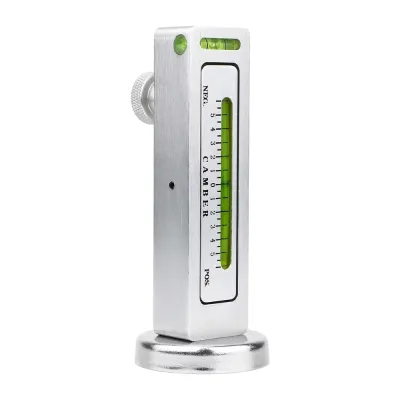
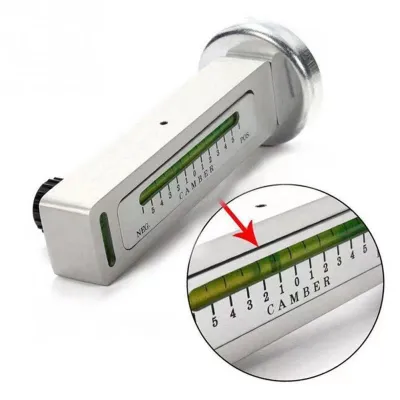

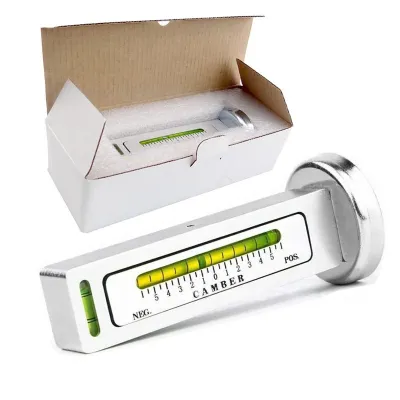
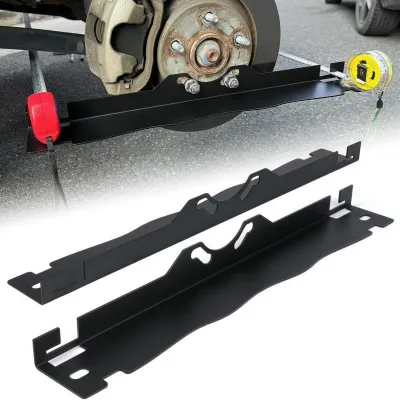
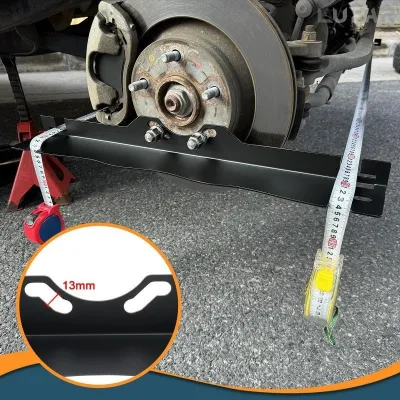
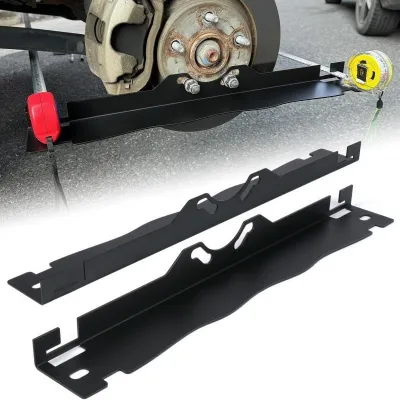
Prices are valid at publication and may change. Please refer to the product page for the latest price.
Physical space and environmental conditions in your garage also dictate what equipment you can use. Professional 3D alignment systems require a dedicated, perfectly level bay, substantial overhead clearance, and stable power sources. In contrast, DIY tools are highly portable and can be stored on a shelf, though they still require a flat, level surface to yield accurate measurements. High humidity and tropical heat in a typical home garage can also affect the storage and calibration of sensitive electronic components, making simpler mechanical tools more resilient for home use.
What DIY Wheel Alignment Tools Can and Cannot Do
Common DIY wheel alignment tools include digital camber gauges, toe plates, turn plates, and string alignment systems. These tools rely on physical measurements and basic geometry to help you check and adjust your vehicle’s alignment. When used carefully on a flat surface, string lines and toe plates can provide surprisingly accurate toe-in and toe-out measurements for standard passenger cars or project vehicles. They allow enthusiasts to perform basic adjustments in their own time without relying on commercial shop schedules.

However, manual tools have clear limitations when it comes to precision and advanced suspension systems. They struggle to measure caster accurately, and verifying thrust angle—the direction the rear wheels are pointing relative to the vehicle’s centerline—is incredibly difficult without advanced equipment. Furthermore, manual tools cannot interface with modern steering angle sensors or calibrate the electronic systems that govern stability control and lane-keeping assist. This makes them less suitable for modern vehicles that require electronic resets alongside physical adjustments.
Safety must always be your primary concern when performing DIY adjustments. Because wheel alignment directly impacts tires, steering, and vehicle stability, you must verify your vehicle’s model, year, and specific suspension specifications in the original-vehicle documentation before attempting any work. Always consult the manufacturer’s instructions for torque specifications, safety boundaries, and adjustment procedures. If you lack the proper training or tools, seek qualified professional installation and adjustment, as incorrect alignment can cause unpredictable handling, poor braking performance, and rapid tire degradation. If you notice persistent steering pull, unusual vibration, or uneven tire wear after a DIY alignment, stop driving and take the vehicle to a professional facility for verification.
When Professional Wheel Alignment Equipment Is Justified
Professional wheel alignment systems utilize high-resolution 3D cameras, wheel targets, and extensive vehicle specification databases to deliver instant, highly accurate measurements. These systems guide the technician through the adjustment process step-by-step, automatically calculating the necessary corrections for all four wheels simultaneously. This level of precision is essential for modern vehicles equipped with ADAS, where even a minor alignment error can cause safety sensors to malfunction.
The main trade-off for this level of performance is the substantial investment required. Beyond the high purchase cost of the machine itself, professional setups demand precise installation, regular professional calibration, and a dedicated workshop bay. For a commercial garage, this cost is justified by the rapid turnaround times, high-volume capability, and the ability to provide customers with printed, certified alignment reports that build trust.
For a home garage or a small hobby shop, the financial return on a professional machine is rarely justifiable. The equipment requires constant use to offset maintenance and calibration costs, and the physical footprint is simply too large for standard residential spaces. Unless you are operating a high-volume commercial business, the investment is better directed toward high-quality manual tools or professional outsourcing.
Choosing the Right Alignment Strategy for Your Garage
Choosing the right strategy involves matching your actual usage volume and precision requirements to the appropriate tier of equipment. If you occasionally work on older project cars, off-road rigs, or simple daily drivers, a high-quality DIY kit consisting of a digital camber-caster gauge and precision toe plates is a practical, cost-effective choice. This setup allows you to perform reliable baseline adjustments without spending thousands of pesos on commercial services.
A hybrid approach often works best for serious home mechanics and enthusiast garages. You can use portable DIY tools to set a rough baseline after replacing suspension components like control arms or tie rods, allowing you to drive the vehicle safely to a professional shop. Once there, a technician can use a calibrated 3D alignment machine to perform the final, high-precision adjustments and reset any electronic steering sensors.
Before purchasing any alignment tools, verify their compatibility with your specific vehicle models, wheel sizes, and suspension designs by checking the manufacturer’s documentation. Ensure you have a flat, level workspace and the necessary safety gear, such as jack stands and wheel chocks, before attempting any under-car adjustments. By understanding the limits of your tools and your skills, you can maintain safe vehicle handling and protect your tire investment.
Frequently Asked Questions (FAQ)
Can I align my wheels using only a smartphone app?
Smartphone apps cannot replace dedicated wheel alignment tools because mobile device sensors lack the physical mounting stability and precision required for accurate suspension measurements. While some apps use the phone’s internal gyroscope to estimate camber when held against a wheel, any slight variation in how you hold the device or the shape of the tire sidewall will distort the reading. These apps should only be used as a very rough reference check, and you must always verify your adjustments with dedicated physical gauges or professional equipment to ensure safe vehicle handling.
How often should I check wheel alignment in a home garage?
You should inspect your wheel alignment immediately if you experience handling issues such as the vehicle pulling to one side, a crooked steering wheel, or unusual tire wear patterns. For routine maintenance, checking your alignment once or twice a year, or every 10,000 kilometers, is a good practice, especially if you regularly drive on rough, uneven roads. Additionally, always perform an alignment check after installing new tires or replacing any steering and suspension components to prevent premature wear and maintain proper safety.
Community discussion
Share your experience or ask a question. Comments are reviewed before publication.