
Riding a motorcycle with a child requires the highest standard of head protection, which in the Philippines is legally and practically verified by official safety certifications. When searching for a reliable motorcycle helmet for kids boy or girl, parents must look beyond attractive cartoon graphics and focus on the presence of genuine safety marks. These certifications ensure that the helmet has undergone rigorous testing to shield a child’s vulnerable skull from severe impact.
In the Philippine market, navigating safety labels can be confusing due to the presence of both local and international standards. While some premium imported helmets carry regional marks like Singapore’s PSB (Product Productivity and Standards Board), the legally mandated certifications for road use in the Philippines are the Philippine Standard (PS) and the Import Commodity Clearance (ICC) marks. Understanding what these standards mean and how to verify them is the most critical step in keeping young pillion riders safe.
Why Safety Marks Matter for Children's Helmets
Children are not simply miniature adults; their anatomical structure is still developing. A child’s neck muscles, ligaments, and cervical spine are significantly weaker than those of an adult, while their head-to-body ratio is much larger. During a sudden stop, sharp turn, or collision, the forces exerted on a child’s head are disproportionately high, making proper head protection absolutely non-negotiable.
Products mentioned in this guide
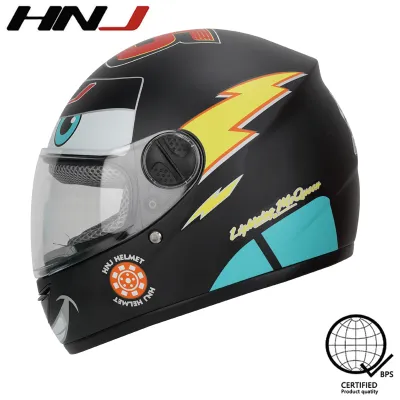
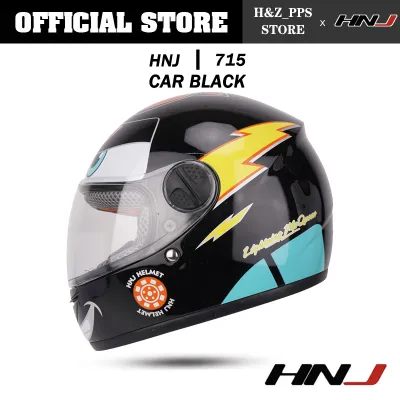
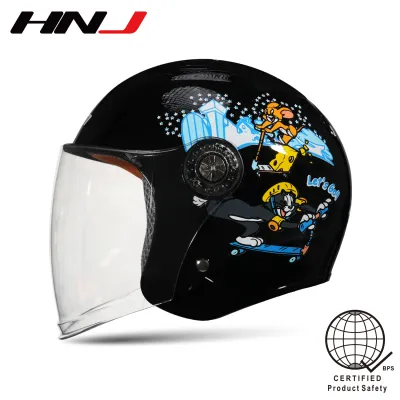
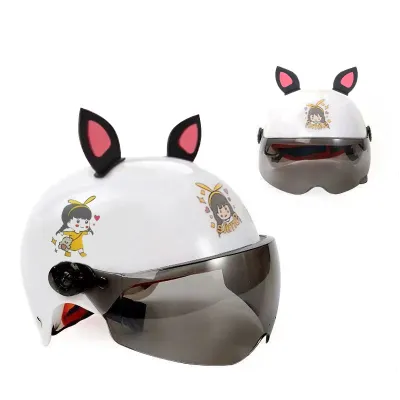
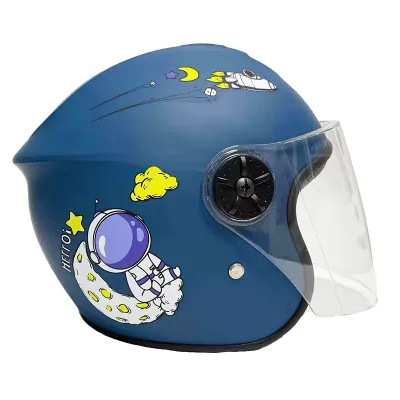
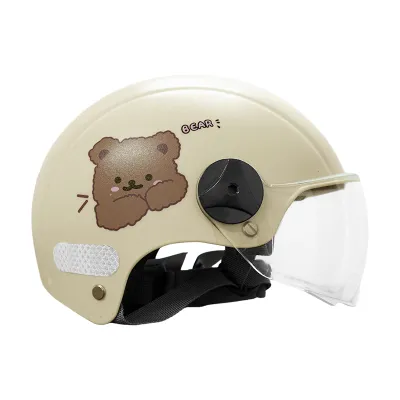
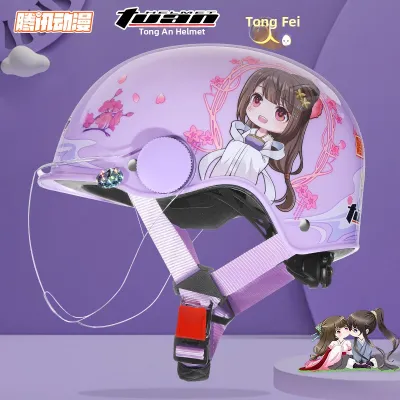
Prices are valid at publication and may change. Please refer to the product page for the latest price.
It is common to see children’s helmets adorned with bright colors, popular cartoon characters, or superhero designs. While these aesthetic features make the helmet appealing to a young boy or girl, they offer absolutely zero structural protection. A cheap, uncertified plastic shell might look robust, but it can easily crack or shatter under moderate impact, failing to cushion the child’s brain.
To address these safety risks, the Department of Trade and Industry (DTI) and the Bureau of Philippine Standards (BPS) strictly regulate protective gear. These government bodies ensure that riding gear distributed in the local market meets established safety thresholds designed to absorb and distribute impact energy. Without these official safety marks, there is no guarantee that a helmet will perform its life-saving function during an accident.
When choosing a motorcycle helmet for kids boy or girl, parents are making a decision that directly impacts their child’s survival. Relying on unverified gear exposes a young passenger to catastrophic head injuries. Checking for official safety certifications must always be the very first step in the purchasing process, taking absolute priority over price, style, or color.
Decoding the PS and ICC Certification Marks
To make an informed purchase, parents must understand the specific safety marks used in the Philippines. The official regulatory framework under the DTI-BPS utilizes two primary marks to certify that a helmet is road-legal and safe: the Philippine Standard (PS) quality mark and the Import Commodity Clearance (ICC) sticker.

The PS Quality Mark
- This mark is issued to local manufacturers whose production facilities and helmet models have been directly audited and tested by the BPS. It guarantees that the helmet was produced under consistent quality control standards within the country.
The ICC Sticker
- This sticker is applied to imported helmets. Because the vast majority of motorcycle helmets sold in the Philippines are manufactured abroad, the ICC sticker is the most common safety mark you will encounter. It signifies that the imported batch has undergone verification testing upon arrival to ensure it complies with local safety standards.
What about the “PSB” mark often mentioned by riders? The PSB mark is a safety certification from Singapore. While many premium, high-quality helmets imported from Singapore carry this mark, it does not automatically replace the legal requirement for a local DTI-BPS certification. For a helmet to be fully road-legal and recognized by traffic law enforcement in the Philippines, it must bear either the official PS mark or the ICC sticker.
To earn these certifications, a helmet model must pass a series of rigorous laboratory tests. These include shock absorption tests to measure how well the inner liner cushions the head, penetration resistance tests to ensure sharp road debris cannot pierce the outer shell, and retention system tests to verify that the chin strap stays securely fastened under extreme tension. The helmet’s field of vision is also assessed to ensure the child’s peripheral sight is not dangerously obstructed.
It is crucial to remember that safety certifications are granted to specific helmet models and individual sizes, not to a brand as a whole. A manufacturer might produce a certified adult helmet, but their children’s models must undergo separate, independent testing to receive their own PS or ICC marks. Never assume a child’s helmet is safe simply because it carries a well-known brand name.
How to Verify a Helmet's Compliance Before Purchase
With counterfeit safety labels circulating in the market, parents must know how to physically verify a helmet’s compliance. Whether shopping in a physical store or browsing online, taking a few minutes to inspect the product can prevent you from buying a dangerous counterfeit.
When shopping in a physical motorcycle accessory store, always perform a close physical inspection of the helmet. Locate the ICC sticker or PS mark, which is typically placed on the back of the helmet shell. A genuine ICC sticker is a high-quality hologram that reflects light uniquely and contains a distinct serial number. It should be firmly adhered to the shell, often under a protective clear coat, making it impossible to peel off without damaging the sticker.
Next, look inside the helmet and pull back the comfort padding to inspect the inner labels. Legitimate, certified helmets feature a permanent fabric label sewn into the retention strap or glued directly to the inner EPS (expanded polystyrene) foam liner. This label must display the manufacturer’s name, the specific model designation, the manufacturing date, and the helmet size. If these inner details are missing, blurry, or contradict the outer sticker, the helmet is likely non-compliant.
If you are purchasing a motorcycle helmet for kids boy online via e-commerce platforms, you must exercise extra caution. Many online listings use generic stock photos or make unverified claims of being “safety approved.” Before checking out, message the seller directly and request high-resolution, live photos of the actual helmet showing the holographic ICC sticker and the inner safety labels. If a seller is unable or unwilling to provide these photos, do not buy the product.
Finally, always request and keep an official sales receipt from a legitimate dealer. A reputable business will readily provide documentation that matches their registered business details. This receipt is essential not only for verifying the seller’s legitimacy but also for handling potential warranty claims, returns, or safety recalls if a manufacturing defect is discovered later.
The Hidden Dangers of Uncertified and "Toy" Helmets
Many general merchandise stores, toy shops, and roadside stalls across the Philippines sell cheap, colorful helmets marketed for children. These items are classified as toys or novelty helmets. They are typically constructed from thin, brittle plastic shells with soft sponge padding, offering absolutely no energy absorption during a crash.
Some parents attempt to use bicycle, skateboarding, or construction helmets for children on motorcycle rides. This is a highly dangerous practice. Bicycle and skate helmets are engineered to protect against low-velocity falls from a standing or self-propelled height. They do not cover the back of the head or the jaw adequately, and their retention straps are not rated to withstand the extreme pulling forces of a motorcycle accident.
Using a helmet with a counterfeit safety sticker is another major hazard. Fake ICC stickers often feature low-quality printing, dull colors instead of a true hologram, misspelled words, or missing serial numbers. Relying on a counterfeit helmet gives parents a false sense of security while leaving their child completely unprotected against severe head trauma.
There are also legal consequences to consider. Under the Motorcycle Helmet Act of 2009 (Republic Act No. 10054) in the Philippines, all motorcycle riders, including child pillion passengers, are legally required to wear standard protective motorcycle helmets that bear the official PS or ICC marks. Riding with a child who is wearing a toy helmet, an uncertified bicycle helmet, or no helmet at all is a direct violation of the law, resulting in heavy fines and the potential impounding of your motorcycle.
Ensuring Proper Fit and Safe Usage for Kids
An official safety certification is only effective if the helmet fits the child’s head correctly. An ill-fitting helmet, even one with a genuine ICC sticker, can easily shift or fly off during an impact, leaving the child completely unprotected.
To perform a proper fit check, place the helmet level on the child’s head. It should sit about an inch above the eyebrows, covering the forehead completely. It must not tilt backward, exposing the forehead, or slide forward over the eyes. The cheek pads must fit snugly against the child’s face without causing pain or pinching, and there should be no gaps between the helmet liner and the child’s temples.
The retention system must be adjusted and fastened securely for every single ride. Once the chin strap is buckled, you should only be able to fit one or two fingers between the strap and the underside of the child’s chin. If the strap is too loose, the helmet can easily slip off during a fall, failing to protect the head during secondary impacts with the road.
A common mistake is purchasing a larger helmet for a child to “grow into” to save money. This is a critical safety hazard. An oversized helmet will wobble during a ride, causing neck strain and impairing the child’s balance and vision. In a crash, a loose helmet will fail to absorb the impact correctly and can cause severe rotational injuries to the child’s neck.
Parents must also pay attention to the physical weight of the helmet. While a certified helmet requires a robust outer shell and dense inner EPS foam, excessively heavy helmets can cause rapid neck fatigue, especially during long rides in humid Philippine weather. Look for certified, youth-specific helmets that optimize safety while keeping the overall weight manageable for a young child’s neck muscles.
Additionally, always follow the manufacturer’s care instructions for maintaining the helmet. Avoid using harsh chemical cleaners, solvents, or unapproved adhesives on the shell or visor, as these can degrade the protective polycarbonate or ABS plastic. Clean the helmet only with mild soap and water, and store it in a cool, dry place away from direct sunlight to preserve the integrity of the safety materials.
Frequently Asked Questions (FAQ)
Can my child use a certified bicycle helmet for short motorcycle rides?
No, a bicycle helmet is not a safe or legal substitute for a certified motorcycle helmet. Bicycle helmets are engineered for much lower speed impacts and do not provide the coverage, shell strength, or retention system security required for motorcycle travel. Under Philippine law, only helmets bearing the official DTI PS or ICC marks specifically certified for motorcycle use are permitted.
What should I do if the helmet's ICC sticker is damaged or peeling?
If you already own the helmet and the sticker is peeling due to humidity or cleaning, the helmet remains safe to use as long as you have the original purchase receipt and the inner manufacturer labels are intact and legible. However, if you are purchasing a new or used helmet and the sticker is missing, damaged, or peeling, it is highly recommended to avoid the purchase, as you cannot easily verify its authenticity.
Are there specific helmet styles required for children?
Both full-face and open-face (three-quarter) helmets can carry valid PS or ICC certifications in the Philippines. While full-face helmets offer the maximum level of protection by shielding the chin and face, open-face helmets are often chosen for better ventilation in hot, tropical weather. Whichever style you choose, ensure the specific model and size are officially certified.
Community discussion
Share your experience or ask a question. Comments are reviewed before publication.