
Determining whether your Nissan Skyline R34 caliper is safe to use or requires immediate replacement is a critical decision that directly impacts your road safety. Because the R34 platform spans various trim levels—ranging from naturally aspirated models with sliding single-piston calipers to high-performance GT-T and GT-R variants equipped with multi-piston Sumitomo or Brembo systems—the mechanical demands on your braking system are exceptionally high. If your vehicle exhibits uneven braking, fluid leaks, or severe pedal sponginess, your calipers may be compromised. Continuing to drive with a failing caliper risks total hydraulic pressure loss, catastrophic rotor damage, or localized brake fires.
To ensure your vehicle remains safe on the road, you must be able to diagnose early warning signs from the driver’s seat, perform targeted visual inspections, and identify the exact thresholds where a caliper can no longer be serviced and must be replaced. Always consult your specific R34 model’s factory service manual for exact specifications, and verify all replacement components, mounting dimensions, and torque values before performing any brake work.
Recognizing Safety-Critical Signs of R34 Caliper Failure
Detecting a failing r34 caliper early requires paying close attention to changes in your vehicle’s handling and braking dynamics during daily driving. One of the most common indicators of a sticking or seized caliper piston is the vehicle pulling to one side when you apply the brakes. When a caliper piston on one side of an axle becomes immobilized by corrosion or debris, it cannot exert the necessary clamping force against the brake rotor. Consequently, the functioning caliper on the opposite side grabs more effectively, causing the steering wheel to tug toward the side with the working brake.
Products mentioned in this guide
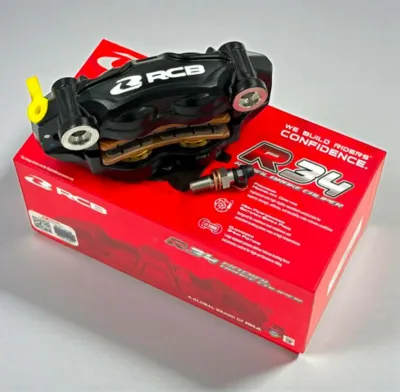
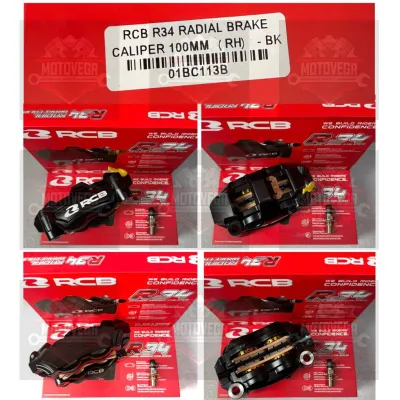
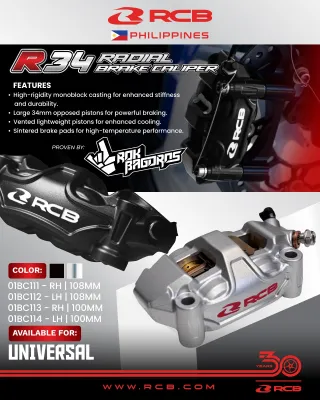
Prices are valid at publication and may change. Please refer to the product page for the latest price.
Brake drag is another severe symptom of caliper failure that manifests both dynamically and physically. This occurs when a caliper piston or its sliding mechanism fails to retract after you release the brake pedal, keeping the brake pads in constant contact with the spinning rotor. You may notice a distinct drag that reduces your vehicle’s overall acceleration and fuel efficiency. After driving, a seized caliper will generate intense thermal energy, resulting in a strong burning smell or even visible smoke rising from the affected wheel well.
Changes in brake pedal feel provide direct clues about the hydraulic and mechanical state of your calipers. A spongy, soft, or sinking brake pedal typically indicates that air has entered the hydraulic lines or that brake fluid is actively leaking past a degraded piston seal. Conversely, an abnormally hard brake pedal that requires excessive foot pressure to slow the vehicle often points to a mechanically seized caliper piston or slide pin that is refusing to move despite receiving full hydraulic pressure.
Unusual acoustic feedback should never be ignored when evaluating brake safety. If you hear a continuous high-pitched squealing or metallic scraping sound that persists while driving but temporarily changes or stops when you apply the brakes, a pad may be dragging due to a stuck caliper. A heavy clunking noise during braking can also indicate that a caliper mounting bracket or slide pin has worn excessively, allowing the caliper assembly to shift under load.
These symptoms are significantly magnified by challenging driving environments, such as stop-and-go traffic in congested urban areas or prolonged driving in high ambient temperatures. Under these conditions, the thermal load on a dragging brake system escalates rapidly. This extreme heat can boil the brake fluid within the caliper, leading to sudden vapor lock and a complete loss of braking assistance when you need it most.
Critical Visual Inspection Points for the R34 Caliper
A thorough visual inspection allows you to identify physical degradation before it results in a complete mechanical failure. For safety, limit your initial inspection to looking through the wheel spokes or removing the wheel while the vehicle is securely supported on jack stands. Do not attempt to disassemble the caliper, disconnect the hydraulic lines, or force a stuck piston back into its bore without specialized tools, proper safety gear, and the original vehicle manufacturer’s service instructions.

- Hydraulic Fluid Leaks: Examine the area surrounding the caliper piston dust boots, the bleeder valve, and the brake line banjo bolt. Any signs of wetness, dripping fluid, or a dark, crusty residue of dirt mixed with brake fluid indicate a breach in the hydraulic system. Even a microscopic leak can introduce air into the lines and compromise system pressure.
- Rubber Dust Boot Integrity: Inspect the rubber dust boots surrounding each caliper piston. These boots act as the primary barrier against road grime, water, and abrasive debris. If you spot tears, dry rot, cracking, or missing sections, moisture will inevitably penetrate the piston bore, leading to internal corrosion and eventual piston seizure.
- Slide Pins and Mounting Brackets: On sliding-type calipers, check the rubber boots protecting the slide pins. Verify that the pins are clean, straight, and properly lubricated with high-temperature silicone brake grease. Heavy rust buildup or dried-out lubrication restricts the floating movement of the caliper, preventing it from self-centering over the rotor.
- Brake Pad Wear Patterns: Compare the thickness of the inner and outer brake pads on the same wheel, as well as the pads across the same axle. If the inner pad is worn down to the metal backing plate while the outer pad has ample friction material remaining, the caliper is not sliding or retracting correctly. Uneven, tapered pad wear is a classic sign of a binding caliper assembly.
When R34 Caliper Replacement Is Non-Negotiable
While some caliper issues can be resolved with basic maintenance or a seal refresh, certain damage profiles make immediate caliper replacement absolute and non-negotiable. Driving a vehicle with any of the following structural or severe hydraulic defects risks catastrophic brake failure and puts your safety at extreme risk.
First, any physical cracks, warping, or structural damage to the caliper housing itself requires immediate replacement. The caliper body must withstand thousands of pounds of hydraulic clamping force; any structural compromise can cause the housing to flex, distort, or fracture under emergency braking. This type of damage typically stems from severe thermal shock, road debris impacts, or improper servicing techniques.
Second, if you find that the caliper pistons are heavily pitted, scored, or corroded, the caliper assembly or the affected pistons must be replaced. Installing fresh rubber seals over a pitted or rough metal piston surface is a temporary and highly dangerous fix. The rough texture of the damaged metal will rapidly tear the new seals as the piston cycles, causing a recurring and potentially sudden hydraulic leak.
Third, active and uncontainable brake fluid leaks from the main piston seal demand that you take the vehicle out of service immediately. A compromised piston seal allows pressurized fluid to spray onto the hot brake rotor, which can instantly vaporize the fluid, eliminate friction, and potentially ignite a fire. Furthermore, the loss of fluid will rapidly deplete the master cylinder reservoir, leading to a complete loss of pedal pressure.
Finally, check the condition of the slide pin bores within the caliper mounting bracket. If these bores have become ovalized, stripped, or deeply gouged due to a lack of lubrication or metal-on-metal friction, the slide pins will bind. This cannot be safely repaired by using oversized pins or makeshift sleeves. Replacing the bracket and caliper assembly is the only way to restore the precise alignment required for safe, even brake application.
Safe Next Steps and Professional Service Boundaries
If your inspection reveals any signs of caliper failure, you must follow a strict safety protocol to address the issue. Use the following decision matrix to determine whether your R34 is safe to drive to a service center or if it must be transported via a flatbed tow truck:
- Drive with Caution: You may drive the vehicle directly to a nearby professional workshop only if the symptom is minor, such as a small tear in a slide pin dust boot, with absolutely no fluid leaks, no burning smells, and no pulling or pedal sponginess.
- Tow Immediately: You must tow the vehicle if you detect any active fluid leaks, a spongy or sinking brake pedal, visible smoke or extreme heat coming from a wheel, or a severely dragging brake that noticeably resists vehicle movement.
When replacing or servicing an r34 caliper, always use the correct DOT-rated brake fluid specified in your vehicle’s owner’s manual—typically DOT 3 or DOT 4 for standard street use. Because brake fluid is highly hygroscopic (meaning it absorbs moisture from the air), always use fluid from a freshly opened, sealed container. After installing a new caliper, the entire brake system must be meticulously bled to remove any trapped air bubbles, starting from the wheel furthest from the master cylinder and working your way forward.
Because the Nissan Skyline R34 is a high-performance vehicle with precise suspension and braking geometry, caliper installation must be executed to exact factory specifications. Always use a calibrated torque wrench to tighten the caliper mounting bolts and banjo bolts to the values specified in the factory service manual. Additionally, new brake pads must be properly bedded-in to the rotors according to the manufacturer’s instructions to establish an even transfer layer of friction material and prevent future brake squeal or uneven wear.
Avoid temporary fixes, makeshift hardware, or unverified aftermarket components. Your braking system is your vehicle’s most critical safety feature. If you lack the specialized tools, a flat, stable workspace, or the mechanical experience required to perform these checks and installations safely, always entrust the work to a qualified professional mechanic.
Frequently Asked Questions (FAQ)
Can I just rebuild my R34 calipers instead of replacing them?
Rebuilding your R34 calipers is a highly effective and cost-efficient option, but only under specific conditions. A rebuild kit—which typically includes new rubber piston seals, dust boots, and slide pin boots—is suitable if the metal caliper housing, the piston bores, and the pistons themselves are completely free of pitting, deep scratches, or corrosion. If you disassemble the caliper and find that the pistons are scored or the internal cylinder walls are corroded, a simple seal replacement will not suffice. In those cases, you must replace the entire caliper assembly or install professionally remanufactured units to ensure reliable hydraulic sealing.
How does the humid climate in the Philippines affect R34 brake calipers?
The tropical climate in the Philippines presents unique challenges for high-performance braking systems. High relative humidity, heavy seasonal rainfall, and exposure to coastal salt air significantly accelerate the oxidation of unprotected metal components. Under these conditions, cast-iron caliper brackets and steel slide pins can rust rapidly, leading to binding or seizing. Additionally, high ambient temperatures combined with intense stop-and-go traffic in metropolitan areas subject the caliper’s rubber dust boots and seals to severe thermal cycling, causing them to dry out, crack, and fail prematurely. Owners of R34 vehicles in these regions should perform visual brake inspections more frequently to catch moisture intrusion before it causes internal caliper corrosion.
Community discussion
Share your experience or ask a question. Comments are reviewed before publication.