
Selecting the right footwear is one of the most critical decisions a motorcycle rider can make. While many riders are drawn to the aggressive styling and high-tech look of racing boots for motorcycle use, these specialized boots are engineered for a highly specific environment: the closed-circuit racetrack. On the track, the primary threats are high-speed slides, violent impacts, and crushing forces, which require maximum structural rigidity. In contrast, daily commuting and long-distance touring introduce entirely different challenges, such as stop-and-go traffic, unpredictable weather, walking off the bike, and hours of sustained riding in an upright posture.
To make an informed decision, you must understand how different boot designs prioritize safety, comfort, and utility. Racing boots offer unmatched impact protection and structural stiffness to prevent ankle fractures, but they severely limit mobility. Commuting boots focus on daily walkability, quick wearability, and high airflow, making them ideal for short urban trips where you need to transition easily to an office or retail environment. Touring boots are engineered to balance long-distance ergonomic comfort, robust safety features, and weather protection, keeping your feet dry and supported over hundreds of kilometers. Choosing the right boot requires analyzing your primary riding environment and deciding whether your immediate need is track-level safety, daily urban convenience, or all-weather highway endurance.
Key Feature Differences: Racing vs. Commuting vs. Touring
When comparing motorcycle footwear, it is easy to be misled by marketing terminology. A boot labeled as a “sport” or “street” boot may look like a racing boot, but it might lack the internal bracing and certified protection of a true track boot. To make a safe and practical choice, you must look past the aesthetic design and analyze the specific engineering features of each category. Always verify manufacturer specifications, check the physical construction of the boot, and inspect the safety certification labels rather than relying solely on product names or retail classifications.
Products mentioned in this guide
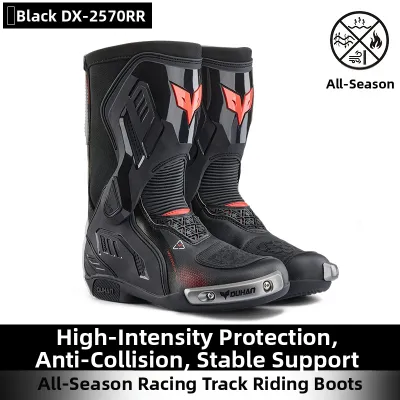
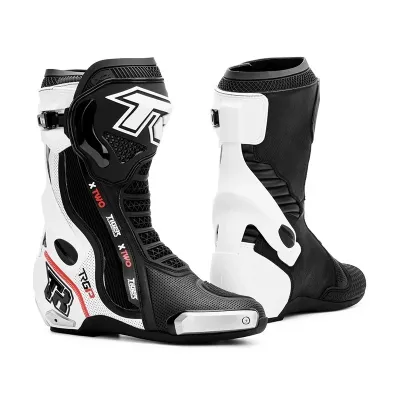
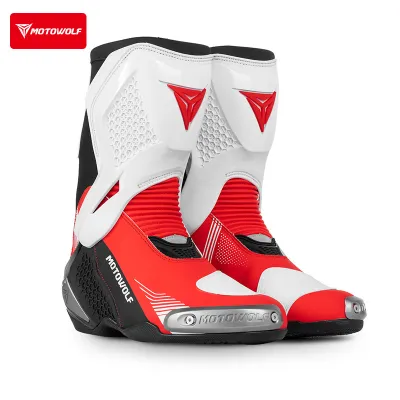
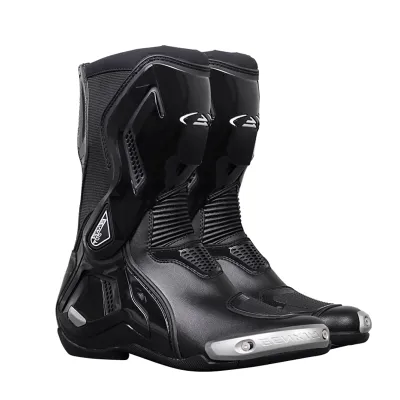
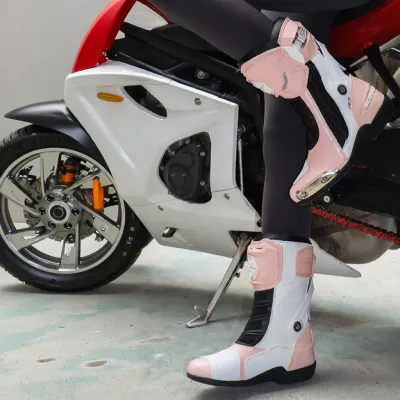
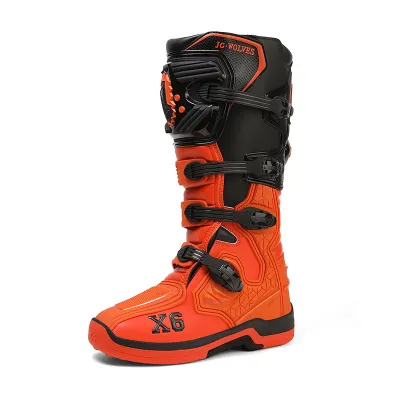
Prices are valid at publication and may change. Please refer to the product page for the latest price.
Evaluating riding gear requires an objective framework. By breaking down footwear into three core pillars—protection, walkability, and climate adaptability—you can see exactly how racing, commuting, and touring boots differ in their construction and intended use.
Ankle Protection and Structural Support
The level of mechanical protection varies significantly across these three boot categories, reflecting the different speeds and crash scenarios of track, city, and highway riding. Racing boots are built as protective suits for your feet, featuring external torsion control systems, rigid thermoplastic polyurethane (TPU) ankle braces, molded heel cups, and heavy-duty shin plates. These rigid components are designed to lock the ankle joint within a safe range of motion, preventing hyperextension, hyperflexion, and lateral twisting during a high-speed tumble. Many premium racing boots even feature a separate internal bootie with independent bracing to isolate the foot from impact energy.
Commuting boots, by contrast, prioritize flexibility and a low profile. Instead of external plastic skeletons, they typically rely on internal, dual-density foam discs (such as D3O or SAS-TEC) positioned over the medial and lateral malleolus (ankle bones). While these inserts absorb impact energy quite well during a low-speed tip-over, commuting boots lack the structural bracing needed to prevent severe rotational injuries or crushing forces if a heavy motorcycle lands on your leg. The shin protection on commuting boots is also minimal, often consisting of a simple padded tongue or a low-cut collar that leaves the upper shin completely exposed.
Touring boots occupy a robust middle ground. They feature sturdy internal reinforcement around the heel, toe box, and ankle, alongside integrated shin guards hidden beneath a durable leather or textile exterior. While they lack the aggressive, replaceable plastic sliders found on racing boots, they offer excellent abrasion resistance and structural support. The ankle support is designed to be firm yet slightly flexible, allowing you to support the weight of a fully loaded touring bike on uneven ground without straining your joints.
To verify the actual protection level of any motorcycle boot, look for the physical CE EN 13634 certification label sewn into the tongue or inner lining. This European safety standard subjects boots to rigorous laboratory testing, measuring performance across four critical areas: boot height, abrasion resistance, impact cut resistance, and transverse rigidity (the boot’s ability to resist being crushed side-to-side). The certification label displays a grid of four numbers, which will be either a “1” (Level 1, representing basic protection) or a “2” (Level 2, representing high performance). Racing boots almost universally aim for Level 2 across all categories, particularly in transverse rigidity, whereas commuting boots often receive Level 1 ratings due to their shorter height and more flexible soles.
Sole Flexibility and Walkability
The construction of a boot’s sole directly dictates how comfortable it is to walk in, as well as how much feedback you receive from your motorcycle’s footpegs, rear brake pedal, and gear shifter. Racing boots utilize extremely stiff soles reinforced with internal metal, nylon, or composite shanks. This extreme rigidity is intentional; it prevents the sole from wrapping around the footpeg during a hard landing and provides a stable platform for standing on the pegs at high speeds. However, this lack of flex makes walking in racing boots incredibly awkward. The rigid sole prevents a natural heel-to-toe stride, leading to early fatigue in your calves and arches, while the external plastic hinges often squeak loudly with every step.
Commuting boots are engineered with walkability as a primary requirement. Many of these boots are styled like casual high-top sneakers or work boots, utilizing flexible rubber outsoles that allow you to walk naturally for hours. While they still contain a protective shank to prevent the sole from folding completely in half, the shank is shorter and more flexible than those in racing boots. This design provides excellent comfort when walking around an office, a university campus, or a shopping mall, but it offers less protection against crushing forces and can cause your feet to feel sore or fatigued after standing on narrow footpegs for extended periods.
Touring boots feature a balanced sole design optimized for long-distance riding and light exploration. The soles are semi-rigid, utilizing a supportive shank that reduces foot fatigue during long hours on the pegs, combined with a highly textured, slip-resistant rubber outsole. This deep tread pattern is essential for maintaining grip on wet asphalt, gravel, oil-slicked toll booths, or muddy roadside stops. While you would not want to hike a mountain trail in touring boots, they allow for comfortable, natural walking during rest stops, sightseeing, and fuel breaks without causing joint strain.
Ventilation and Weather Resistance
Climate adaptability is a major point of divergence among these boots, especially when riding in tropical regions like the Philippines, where high temperatures, intense humidity, and sudden heavy downpours are daily realities. Racing boots are designed for maximum airflow during high-exertion track sessions. They often feature extensive leather perforations, mesh panels, and dedicated air intake vents on the heel or shin plates. This open design allows heat and sweat to escape rapidly, keeping your feet cool. However, this high level of ventilation means they have zero water resistance. A sudden afternoon downpour will instantly saturate the boot, leaving you with wet, cold feet for the remainder of your ride.
Commuting boots are available in various styles to suit different weather conditions. For hot, humid urban riding, many commuters opt for highly breathable textile or mesh boots that maximize airflow at lower city speeds, preventing sweat buildup and fungal issues. Some commuting boots feature light water-resistant coatings or internal liners, but these are generally intended to withstand only light drizzles or short commutes rather than sustained rain.
Touring boots are built to conquer unpredictable weather over long distances. They typically incorporate a specialized waterproof and breathable membrane (such as Gore-Tex, Drystar, or D-WP) sandwiched between the outer leather and the inner lining. These membranes feature billions of microscopic pores that are small enough to block liquid water droplets from entering, yet large enough to allow hot sweat vapor to escape.
However, this weatherproofing involves a distinct trade-off. In the extreme heat and stop-and-go traffic of Metro Manila, even the most advanced breathable waterproof membrane can restrict airflow compared to a fully perforated racing boot. The trapped heat can cause your feet to sweat heavily, leading to moisture buildup from the inside. When choosing a touring boot for tropical climates, you must weigh the necessity of absolute wet-weather protection against your tolerance for heat buildup during dry, sunny rides.
Can You Use Racing Boots for Commuting or Touring?
While it is technically possible to wear racing boots for commuting or touring, doing so introduces significant practical challenges, physical discomfort, and potential safety hazards. Racing boots are highly specialized tools, and using them outside their intended environment quickly reveals their limitations.

The most immediate issue you will face is physical fatigue. Racing boots are pre-curved and structurally optimized for an aggressive, forward-leaning sport riding posture, where your knees are sharply bent and your feet are positioned high and back on rearset footpegs. When you wear these boots on a standard commuter bike, an underbone, a scooter, or an adventure touring motorcycle, your body is in an upright position with your ankles bent at a different angle. The rigid, unyielding shin plates and ankle braces of a racing boot can press painfully into your lower leg, pinch the front of your ankle, and restrict blood circulation during extended rides, leading to numbness and muscle cramps.
Walkability is another major hurdle in daily scenarios. Navigating a flight of stairs, walking through a grocery store, or commuting on foot for even a few hundred meters in rigid racing boots is exhausting. The lack of sole flex forces an unnatural gait that strains your knees and hips. Furthermore, the metal or hard plastic toe sliders and heel plates can slip easily on polished indoor floors, tile, or wet pavement, creating a slipping hazard. The loud, mechanical squeaking produced by the protective hinges can also be highly distracting in professional or quiet environments.
Weather vulnerability is a critical concern for long-distance touring. If you choose to wear perforated racing boots on a multi-day trip, a sudden rainstorm will leave you with soaked feet. Wet leather loses its structural integrity over time if not dried properly, and the internal linings can take days to dry completely in humid conditions, leading to unpleasant odors and bacterial growth. Additionally, road grime, salt, and water can cause metal components on racing boots—such as buckle screws, cable tensioners, and toe slider mounts—to rust or seize if they are not meticulously cleaned and lubricated after every wet ride.
Finally, using a boot that is too rigid for your motorcycle can actually compromise your active safety. Active safety refers to your ability to avoid an accident in the first place. If a racing boot is so stiff that it dampens your tactile feel of the rear brake pedal or makes it difficult to slip your toe under the gear shifter on an upright bike, your reaction times and control inputs will be compromised. While the passive safety (crash protection) of a racing boot is unmatched, the ergonomic mismatch on a commuter or touring bike can make your ride more difficult and less safe overall.
How to Choose the Right Motorcycle Boots for Your Needs
To select the perfect footwear, you must match the boot’s engineering features to your specific riding habits, budget, and comfort requirements. Rather than choosing based on style alone, use this structured decision framework to guide your purchase.
Choose Racing Boots if:
- Your primary focus is track days or spirited sport riding: You ride a sportbike with aggressive ergonomics and frequently navigate winding mountain roads where high-speed slide protection is paramount.
- You prioritize maximum impact and crush protection: You want the highest possible level of ankle bracing, shin armor, and abrasion resistance, and you are willing to sacrifice comfort off the bike to get it.
- You do not need to walk in your boots: You plan to ride directly to your destination and change into regular shoes immediately, or your walking is limited to the pit lane and short rest stops.
- You ride primarily in dry weather: You are comfortable avoiding rain or carrying external waterproof boot covers to protect your gear.
Choose Commuting Boots if:
- Your rides consist of short urban trips: You use your motorcycle for daily transportation, navigating dense city traffic, running errands, or traveling to work or school.
- You require normal walkability at your destination: You need a boot that allows you to walk comfortably for extended periods, blend in visually with casual clothing, and fit under regular jeans.
- You ride in extreme heat and humidity: You prioritize high ventilation and lightweight construction to keep your feet cool and dry during stop-and-go city riding.
- You accept moderate safety protection: You understand that while these boots offer essential ankle and abrasion protection, they do not provide the heavy-duty structural bracing of track or touring boots.
Choose Touring Boots if:
- You ride long highway distances: You frequently embark on multi-day tours, long-distance highway cruises, or adventure riding across different provinces.
- You face unpredictable weather conditions: You need reliable, built-in waterproofing to handle sudden tropical downpours without stopping to change your footwear.
- You need a balance of safety and comfort: You want robust ankle, heel, and shin protection that remains comfortable to wear for eight or ten hours straight, both on and off the bike.
- You require excellent grip on varied terrain: You need a durable, deeply treaded sole that provides secure footing on slippery asphalt, dirt, gravel, and wet grass.
Verify These Details Before You Buy:
- Check the physical CE certification label: Look inside the boot for the EN 13634 label. Read the four-digit rating code to verify the tested protection levels. For highway riding, look for Level 2 ratings in height, abrasion, and transverse rigidity.
- Inspect the shift pad reinforcement: Ensure the toe area features a durable, integrated rubber, TPU, or double-layered leather shift pad. This prevents the gear lever from wearing through the boot material and ensures smooth, positive gear changes.
- Test the fit with your riding pants: Try the boots on while wearing your typical riding pants. Racing boots are designed with slim ankle profiles to fit inside the cuffs of leather track suits, whereas touring and commuting boots are often bulkier and are meant to be worn underneath textile or denim riding pants. Ensure there is a secure overlap with no exposed skin when you are seated on your bike.
- Budget for quality: Expect to invest between ₱8,000 and ₱25,000 for high-quality, certified riding boots. Premium materials, advanced waterproofing membranes, and mechanical ankle braces drive the cost up, but they represent a direct investment in your safety and long-term comfort.
Frequently Asked Questions (FAQ)
Are short motorcycle boots safe enough for highway touring?
Short motorcycle boots, often styled as riding shoes, are generally not recommended for high-speed highway touring. While they offer convenient walkability and basic protection for low-speed city riding, they leave your upper ankle, lower calf, and shin completely exposed to road debris, engine heat, and severe twisting or crushing forces during a high-speed accident. For highway speeds, a tall boot with dedicated shin protection and high transverse rigidity is essential to prevent severe injuries. Always check the boot’s CE certification height classification to confirm the physical coverage area.
How should motorcycle boots fit compared to regular shoes?
Motorcycle boots should fit snugly around your heel, ankle, and instep to prevent your foot from sliding or pulling out of the boot during a crash, but they must still allow you to wiggle your toes freely. There should be no painful pressure points, pinching, or restricted blood flow, which can cause coldness or numbness during a ride. Because your feet naturally swell throughout the day due to heat and gravity, it is best to try on riding boots in the afternoon while wearing the exact technical riding socks you plan to use on the road.
Can I treat leather racing boots to make them waterproof for touring?
Applying aftermarket leather conditioners, waxes, or waterproofing sprays can improve the water repellency of solid leather racing boots, but these treatments cannot make perforated racing boots waterproof. Water will still easily penetrate the ventilation holes, mesh panels, stretch fabric, and standard zippers. Furthermore, always check the manufacturer’s specific care instructions before applying any chemicals. Using improper products can clog the leather’s natural pores, damage synthetic materials, degrade plastic sliders, or compromise the structural adhesives holding the sole together.
Community discussion
Share your experience or ask a question. Comments are reviewed before publication.