
When selecting a colant for radiator use in the Philippines’ demanding tropical climate, the specifications that matter most are the boiling point under pressure, the glycol-to-water concentration ratio, and the corrosion inhibitor formulation (such as OAT or HOAT) specified by your vehicle’s manufacturer. These properties dictate how well the fluid can absorb and dissipate heat under extreme ambient temperatures while protecting internal metal components from rust and cavitation.
Why High Ambient Temperatures Change Your Coolant Requirements
Continuous tropical heat significantly reduces the temperature difference between your vehicle’s radiator and the surrounding air. During the hottest months in the Philippines, this smaller temperature gradient makes it much harder for the cooling system to shed heat. The radiator must work harder to transfer thermal energy away from the engine block, leaving very little margin for error if any component underperforms.
In congested urban areas, stop-and-go traffic deprives the radiator of natural airflow. The cooling system must rely entirely on the radiator fan to pull air through the core, placing immense thermal load on the engine. Under these conditions, the coolant temperature can quickly rise toward its physical limits, making high-performance specifications a necessity rather than an upgrade.
Products mentioned in this guide
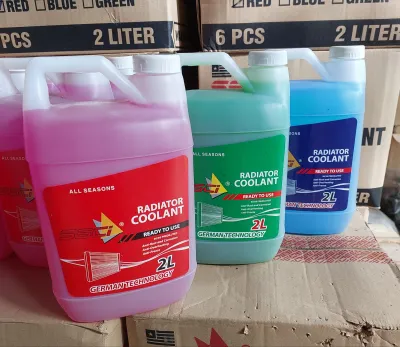
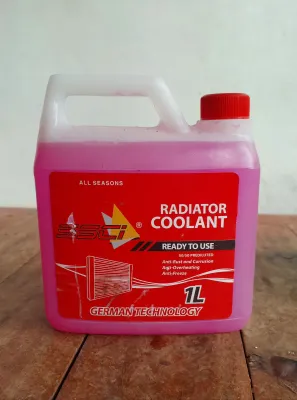
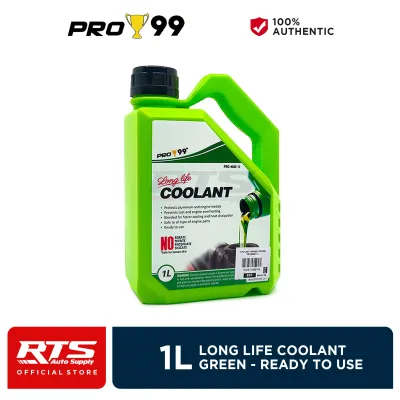
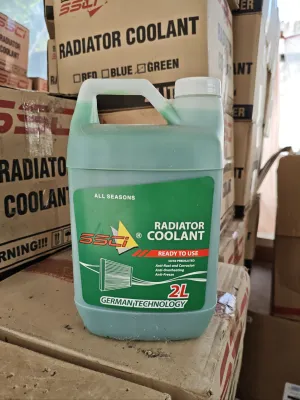
![[Iwas Overheat]TOP Premium Radiator Coolant Liquid 1L 2L 4L 5L Iwas Kalawang Anti-Boil Anti-Corrosion For Motorcycle Car Tricycle SUV Heavy Duty Long Ride Safe Maintenance Motor Accessories Piliin Sa Variation Exact Fit Upgrade PnP COD](https://img.lazcdn.com/g/p/4cda15846b3330e03886747125d49c67.jpg_400x400q80.jpg_.webp)
![[YAMAS] 4 LITERS COOLANT TOP BEST BRAND](https://img.lazcdn.com/g/p/9ff3d1b1a6e8cb25c9e096e5aebd7e42.png_400x400q80.png_.webp)
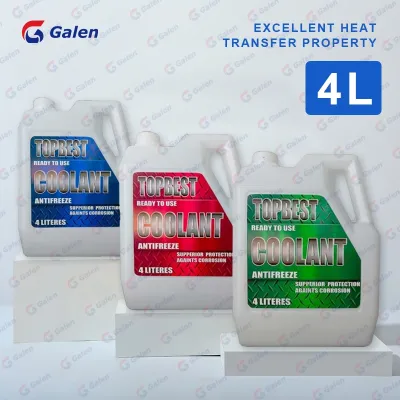
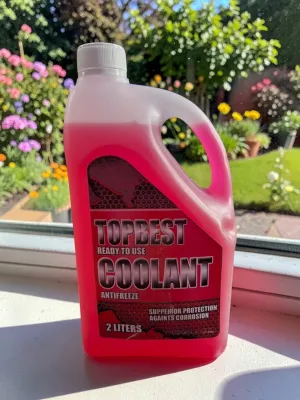
Prices are valid at publication and may change. Please refer to the product page for the latest price.
To prevent the fluid from boiling under these extreme thermal loads, the cooling system relies on pressure. The radiator cap acts as a pressure relief valve, keeping the system pressurized to physically raise the boiling point of the liquid. If the coolant boils, it turns into steam pockets that cannot transfer heat away from critical engine components, leading to localized hot spots and catastrophic engine failure.
Continuous high-heat operation also accelerates the slow evaporation of water from the expansion tank. Over time, this evaporation alters the ratio of glycol to water, which can reduce the fluid’s overall heat transfer efficiency. Regular monitoring is required to ensure the concentration remains balanced for optimal heat dissipation.
Critical Coolant Specifications to Check on the Label
When purchasing coolant, the boiling point specification on the product label is a primary indicator of its thermal capacity. A high-quality coolant should have a boiling point that exceeds the normal operating temperature of your engine by a wide margin when pressurized. Always verify that the coolant’s boiling point matches or exceeds the requirements listed in your vehicle’s service manual to ensure it can handle sudden temperature spikes.

Glycol concentration ratios directly affect both heat capacity and boiling protection. Most commercial coolants are sold as either concentrated or pre-diluted, typically in a 50/50 mix of ethylene glycol and demineralized water. While pure water transfers heat more efficiently than glycol, it lacks the boiling point elevation and corrosion protection required for modern engines. A 50/50 ratio is generally the standard recommendation for tropical climates, providing an elevated boiling point while maintaining excellent thermal conductivity.
Corrosion inhibitors are another critical specification to verify on the label. High temperatures accelerate chemical reactions, including oxidation and rust formation inside the cooling passages. The inhibitor package prevents scale buildup and galvanic corrosion, which can insulate the engine block and prevent efficient heat transfer to the coolant.
Formulation Types and Radiator Material Compatibility
Inorganic Additive Technology (IAT) is the traditional formulation that relies on silicates and phosphates to provide a fast-acting protective layer over metal surfaces. While highly effective for older vehicles with copper or brass radiators, these inhibitors deplete rapidly under continuous thermal stress. This rapid depletion typically requires a complete fluid replacement every two years to maintain protection.
Organic Acid Technology (OAT) formulations are frequently required by modern vehicles. These formulations use organic acids to provide long-lasting corrosion protection, often lasting up to five years. OAT coolants are highly stable under high temperatures and are designed specifically to protect aluminum components, which are common in modern engines and radiators.
Hybrid Organic Acid Technology (HOAT) combines organic acids with a small amount of silicates or phosphates. This formulation offers the rapid protection of IAT and the longevity of OAT. Many Asian and European vehicle manufacturers specify distinct HOAT formulations tailored to their specific alloy compositions, making it vital to match the exact specification rather than buying a generic fluid.
Mixing different formulation types can cause a severe chemical reaction inside your cooling system. The contrasting inhibitor packages can neutralize each other, causing the additives to precipitate out of the liquid and form a thick, jelly-like sludge. This sludge quickly clogs the narrow passages of the radiator core, completely blocking coolant flow and causing rapid, severe engine overheating.
How to Verify Vehicle Requirements and Avoid Mixing Errors
To find the correct coolant for your vehicle, always consult your owner’s manual first. The manual will list the exact specification standard, such as an ASTM, JIS, or manufacturer-specific code, rather than just a generic type. Purchasing a fluid that explicitly lists these standards on the label ensures chemical compatibility with your engine’s internal seals and metals.
Never rely on the color of the fluid to determine its chemical composition or quality. While many OAT coolants are pink or orange and IAT coolants are green, there is no industry-wide standardization for coolant colors. A manufacturer can dye any formulation any color, and relying on visual identification can easily lead to catastrophic mixing errors.
Before performing any cooling system maintenance, ensure the engine is completely cold. Opening a hot radiator cap can release highly pressurized, boiling liquid and steam, causing severe burns. Always let the vehicle sit for several hours and squeeze the upper radiator hose to verify there is no residual pressure before slowly loosening the cap.
If you are switching formulation types or are unsure of the fluid currently in your system, a complete system flush is mandatory. Drain the old fluid, flush the system thoroughly with distilled water until it runs completely clear, and then fill it with the new, pre-mixed coolant. This process ensures no chemical cross-contamination occurs between incompatible inhibitor packages.
Maintenance and Monitoring Practices for Hot Weather
Regularly checking the concentration of your coolant is essential for maintaining its protective properties. While hydrometers are common, a refractometer provides a much more accurate reading in tropical climates by measuring how light bends through the fluid. This tool allows you to verify that your glycol-to-water ratio remains within the safe operating range specified by the manufacturer.
Inspecting the radiator cap and hoses should be part of your routine maintenance schedule. The radiator cap is a critical pressure-control valve; inspect its rubber gasket for cracks, swelling, or hardening, and ensure the spring mechanism moves freely. Additionally, squeeze the radiator hoses when the engine is cold to check for soft spots, bulging, or brittleness that could lead to a sudden pressure loss.
Inspect the coolant reservoir regularly for visual indicators of fluid breakdown. The fluid should be clear and bright; any cloudiness, rust-colored discoloration, or suspended dark particles indicate that the corrosion inhibitors have depleted and the fluid is actively breaking down. If you notice a milky, frothy appearance, this could indicate engine oil contamination, which requires immediate professional diagnostic attention.
Frequently Asked Questions (FAQ)
Can I use distilled water instead of coolant in an emergency?
Yes, in an emergency situation where you have lost coolant due to a leak, using distilled water is acceptable to safely drive the vehicle to a repair shop. However, plain water has a lower boiling point than a proper coolant mixture and contains no corrosion inhibitors, leaving your engine vulnerable to rapid boiling and internal rust. Once you reach safety, the system must be professionally repaired, flushed, and refilled with the correct coolant specification.
Does coolant color indicate its temperature rating or quality?
No, coolant color is purely a cosmetic dye added by the manufacturer and does not indicate the fluid’s temperature rating, quality, or chemical formulation. Always ignore the color of the fluid and instead read the technical specifications, standards, and manufacturer approvals printed on the product label to ensure compatibility with your vehicle.

Community discussion
Share your experience or ask a question. Comments are reviewed before publication.