
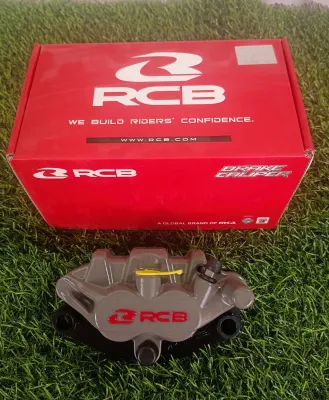
Daily commuting on roads in the Philippines presents a unique set of challenges, from navigating dense, stop-and-go urban traffic in intense tropical heat to managing sudden stops on wet asphalt during the monsoon season. Upgrading your motorcycle’s braking system is a common way to improve safety and control, with the RCB R1 caliper frequently highlighted as a popular aftermarket option. However, achieving better stopping power is not determined by the caliper alone, but by the synergy of the entire braking system, including the master cylinder, brake lines, pads, rotors, and tire grip. Without controlled, empirical testing data, no single caliper can be declared the absolute winner for every rider. Instead, finding the right setup depends on verifying technical specifications, ensuring proper hydraulic matching, and executing a professional installation.
When evaluating aftermarket calipers, riders must look beyond aesthetic appeal and focus on how a component integrates with their specific motorcycle model. A caliper upgrade should only be undertaken after confirming that the modification complies with local road safety regulations and matches the original manufacturer’s system requirements. Because brakes are a primary safety-critical component, any mismatch in dimensions or hydraulic pressure can lead to poor lever response, accelerated wear, or sudden braking failure.
Understanding the RCB R1 Caliper's Design and Specifications
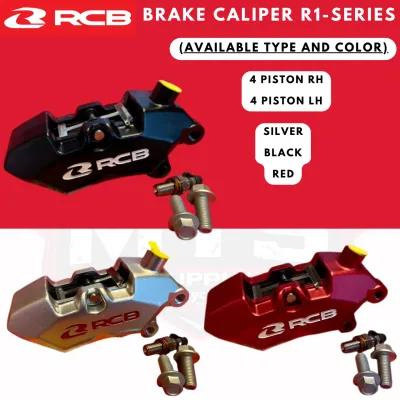
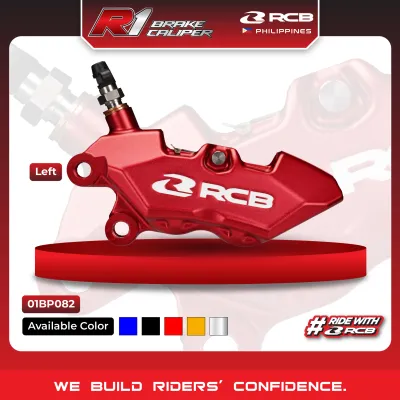
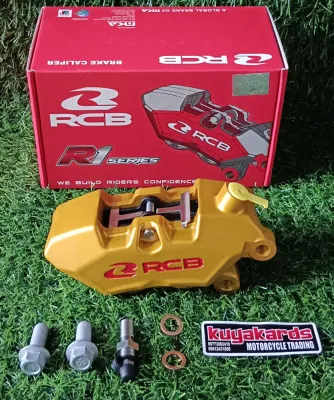
To establish a baseline for comparison, you must first understand how to read and interpret the technical specifications of the RCB R1 caliper. The manufacturer’s packaging and official documentation provide essential details regarding the caliper’s piston configuration and mounting style. Typically, these calipers are offered in two-piston or four-piston configurations, which directly influences the surface area applying pressure to the brake pads. Understanding these numbers helps you determine whether the caliper is a direct replacement or if it requires a modified hydraulic setup.
Products mentioned in this guide
![RCB BRAKE CALIPER E-SERIES [F] EGO S/LC4S RED (9803-678)](https://img.lazcdn.com/g/p/f8b03779714d59e2a6b66054b26b8ade.png_400x400q80.png_.webp)
Prices are valid at publication and may change. Please refer to the product page for the latest price.
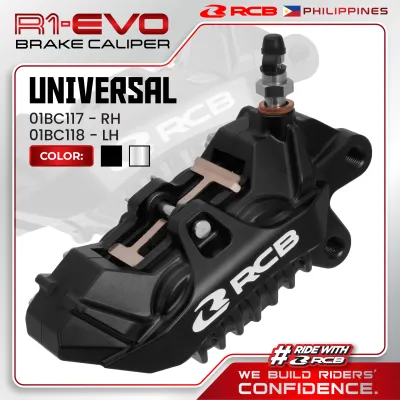
Mounting style is another critical factor to identify on the product label. Calipers generally fall into two categories: axial mount and radial mount. Axial calipers bolt parallel to the brake rotor radius, often requiring a model-specific bracket to align correctly with the motorcycle’s fork legs. Radial calipers, on the other hand, bolt perpendicular to the axle, offering a more direct and rigid connection. Knowing which mounting style your motorcycle uses by default prevents purchasing incompatible parts that cannot be safely secured to your front forks.
In this tier of aftermarket components, manufacturers typically utilize cast aluminum alloy for the caliper body. Aluminum alloy is selected for its favorable strength-to-weight ratio and its ability to conduct heat away from the brake pads and fluid. During prolonged daily riding in high ambient temperatures, efficient heat dissipation is vital to prevent brake fade—a condition where heat buildup reduces friction and causes a temporary loss of braking power. The anodized finishes often applied to these cast bodies also help protect the metal from corrosion caused by road grime and heavy rain.
Finally, refer to the official application guide to identify the intended motorcycle classes for the caliper. The RCB R1 is generally engineered for small-displacement motorcycles, including underbones and scooters that dominate daily commuting. Attempting to install a caliper designed for a light commuter onto a heavier, high-displacement motorcycle can overload the caliper’s structural limits, leading to body flex, uneven pad wear, and compromised safety.
Key Dimensions for Evaluating Aftermarket Brake Calipers
To make an objective comparison between different aftermarket calipers, you must evaluate specific mechanical dimensions rather than relying on subjective marketing claims. The first and most critical dimension is the total piston area and its relationship to fluid displacement. When you squeeze the brake lever, the master cylinder piston pushes brake fluid through the lines, which in turn forces the caliper pistons outward. This hydraulic relationship must remain balanced to ensure safe operation.

Piston Area and Hydraulic Leverage
If you install a caliper with a significantly larger total piston area than your stock unit without upgrading the master cylinder, you will alter the hydraulic leverage ratio. This imbalance typically results in a spongy brake lever that requires a long pull to engage the brakes, reducing your ability to make quick emergency stops. Conversely, if the caliper pistons are too small for the master cylinder’s bore, the lever will feel incredibly stiff and wooden, making it difficult to modulate the braking force smoothly on slippery roads.
Caliper Body Rigidity
Caliper body rigidity is another essential factor that directly impacts stopping power. Under heavy braking, the hydraulic pressure inside the caliper exerts outward force on the housing. If the caliper body is not structurally rigid, it will flex outward. This flex absorbs a portion of the hydraulic energy that should be directed into squeezing the brake rotor, resulting in a soft lever feel and decreased braking efficiency. High-quality casting, reinforced structural ribbing, and robust bridge bolts are key design features that minimize flex under load.
Brake Pad Availability and Maintenance
For a daily commuter, long-term maintenance is just as important as initial performance. Before choosing any aftermarket caliper, verify the availability of replacement brake pads. Some aftermarket calipers use proprietary or uncommon pad shapes that can be difficult to source from local motorcycle shops. Opting for a caliper design that utilizes standard, widely available pad shapes ensures that you can easily purchase high-quality organic, semi-metallic, or sintered replacement pads when your current set wears down, preventing unnecessary vehicle downtime.
RCB R1 vs. Common Alternatives: A Specification Breakdown
To help you compare the RCB R1 against other popular aftermarket options, it is helpful to organize their physical characteristics into a structured framework. Because specific performance data is highly dependent on your individual motorcycle setup, you should use the following table as a template to fill in and verify using official product packaging, manufacturer specification sheets, or authorized dealer documentation.
| Caliper Model | Mounting Type | Piston Configuration | Recommended Master Cylinder Ratio |
|---|---|---|---|
| RCB R1 Caliper | Axial or Radial (Model Specific) | 2-Piston or 4-Piston | Refer to manufacturer spec sheet |
| Alternative A (Standard Axial) | Axial | 2-Piston | 11mm to 12.7mm Bore |
| Alternative B (Premium Radial) | Radial | 4-Piston | 14mm to 15mm Bore |
When filling out this comparison for your specific upgrade path, avoid relying on unverified online forum rumors or social media posts regarding compatibility. Always cross-reference the physical dimensions, thread pitches, and piston sizes with the official documentation provided by the respective manufacturers. This disciplined approach ensures that you are making decisions based on verifiable engineering data rather than subjective opinions.
There are distinct trade-offs between entry-level upgrades and higher-tier aftermarket alternatives. Entry-level options often provide a cost-effective way to replace a damaged or worn-out stock caliper while offering a slight aesthetic upgrade. However, higher-tier alternatives may feature advanced manufacturing techniques, such as forged aluminum bodies or specialized piston coatings, which offer greater rigidity and smoother piston retraction. You must weigh these benefits against the higher initial purchase price and the potential need for more expensive specialized maintenance parts over the lifespan of the caliper.
Critical Compatibility and Safety Checks Before Upgrading
Before purchasing any aftermarket brake caliper, you must perform several physical and hydraulic compatibility checks to ensure the modification is safe for road use. Never assume that a caliper will fit your motorcycle simply because it is marketed for your general vehicle category. Physical clearances must be measured manually to prevent catastrophic mechanical interference while riding.
Fork Leg and Axle Clearance
Begin by measuring the physical space around your front wheel assembly. You must ensure there is adequate clearance between the new caliper body, the fork leg, the wheel spokes, and the brake rotor. A caliper that is too wide can rub against the wheel spokes, which can cause severe damage to the wheel structure or lead to an immediate wheel lockup. Additionally, verify that the caliper mounting bracket aligns the brake pads perfectly with the rotor’s friction surface; pads that overhang the edge of the rotor or do not make full contact will wear unevenly and reduce braking force.
Hydraulic Balance and Master Cylinder Matching
Hydraulic compatibility is equally vital for rider safety. If you are upgrading from a single-piston stock caliper to a multi-piston aftermarket caliper, you must verify if your stock master cylinder has a sufficient bore size to displace enough fluid. Pairing a large-piston caliper with an undersized stock master cylinder is a dangerous combination that can cause the brake lever to bottom out against the handlebar grip before full braking force is achieved. Always consult the manufacturer’s guidelines to determine if a master cylinder upgrade is required to match your new caliper.
Professional Installation and Safety Boundaries
Because the braking system is your motorcycle’s most critical safety feature, all installation work should be handled by a qualified professional mechanic. Proper installation involves precise steps that directly affect road legality and safety:
- Brake Line Routing: Ensure the brake lines are routed without kinks, sharp bends, or tension when the front forks are fully compressed or extended.
- Banjo Bolt Torque: Use a torque wrench to tighten banjo bolts to the exact manufacturer-specified torque limits to prevent fluid leaks or stripped threads.
- Sealing Washers: Always use new copper or aluminum crush washers on both sides of the brake line fitting to ensure a reliable, high-pressure seal.
- Complete Hydraulic Bleeding: The brake lines must be completely bled to remove all trapped air bubbles. Air is compressible, and even a tiny pocket of air in the system will cause a spongy lever and a dangerous loss of braking power.
How to Choose the Right Caliper for Your Daily Riding Needs
Selecting the right aftermarket caliper requires a realistic assessment of your daily riding conditions, your motorcycle’s specifications, and your budget. There is no universal solution, and the best choice is the one that aligns with your specific operational requirements and safety needs.
When to Choose the RCB R1 Caliper
The RCB R1 caliper is highly suitable if you are upgrading a light commuter motorcycle or scooter from its stock setup and are looking for a reliable, budget-friendly improvement within standard entry-level pricing in ₱. When paired with the correct mounting bracket and a compatible master cylinder, it offers a solid balance of daily reliability and straightforward maintenance. It is an excellent choice for riders who prioritize a cost-effective replacement for a worn stock caliper without needing to re-engineer their entire front suspension and braking geometry.
When to Consider Higher-Tier Alternatives
You should consider higher-tier aftermarket alternatives if you ride a heavier motorcycle, frequently carry heavy cargo or pillion passengers, or regularly navigate steep, mountainous terrain. These demanding conditions generate extreme heat and require precise brake modulation to maintain traction. Higher-tier calipers with forged bodies and advanced piston designs provide the structural rigidity needed to prevent brake fade and deliver consistent lever feedback under continuous, heavy use.
What to Verify Before Making a Purchase
Before spending money on a new caliper, take the time to inspect your current braking components. If your brake pads are worn down, your brake fluid is dark and contaminated, or your rotors are warped, your braking performance will be poor regardless of which caliper you install. Often, flushing your old brake fluid with fresh fluid from a sealed container and installing high-quality replacement pads can restore your stock system’s stopping power. If you decide to proceed with an upgrade, always verify your master cylinder ratio, measure your fork clearances, and schedule the installation with a qualified mechanic to ensure your motorcycle remains safe, legal, and reliable on the road.
Community discussion
Share your experience or ask a question. Comments are reviewed before publication.