
Upgrading your scooter’s braking system is one of the most impactful modifications you can make for safety and performance. If you are looking to improve the stopping power of your Honda PCX 160, installing a larger 260mm disc pcx 160 rotor is a highly popular upgrade. However, choosing the right brand is not about finding a single “best” option; instead, it requires balancing your riding style, budget, and mechanical requirements.
To make the right choice, you should evaluate options based on a clear, conditional decision-making framework:
- Choose OEM-equivalent or certified direct replacements if you prioritize daily commuting reliability, want a predictable factory-like brake feel, and wish to avoid complex modifications.
- Choose premium international aftermarket brands if you frequently ride on steep mountain passes, carry heavy loads or pillion passengers, or engage in spirited riding where maximum heat dissipation is required.
- Choose reputable regional aftermarket brands if you want an affordable performance or aesthetic upgrade but are willing to perform strict quality checks and pair the rotor with high-quality brake pads.
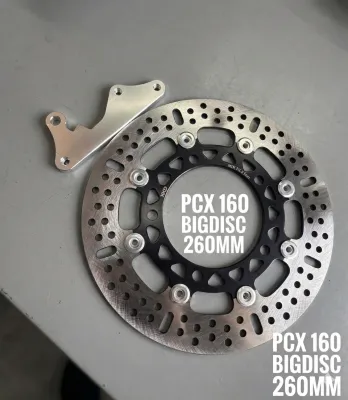
It is important to note that upgrading from the stock front disc size to a 260mm rotor is not a simple drop-in replacement. This modification alters the geometry of your braking system and requires additional hardware, such as a caliper relocation bracket, to position the brake caliper correctly. Understanding these technical requirements is essential before selecting a brand.
Products mentioned in this guide
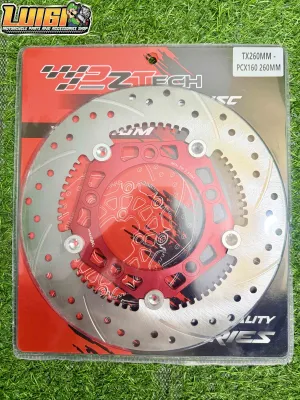
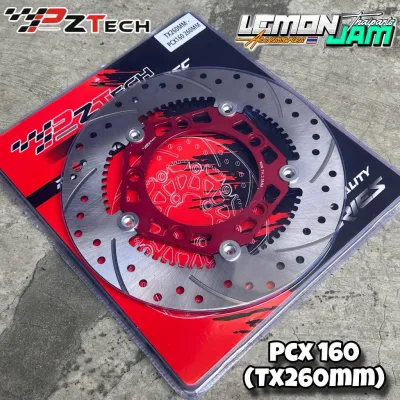
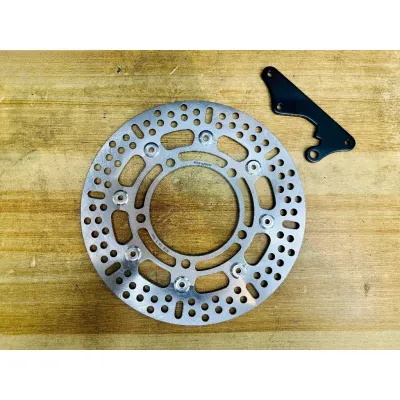
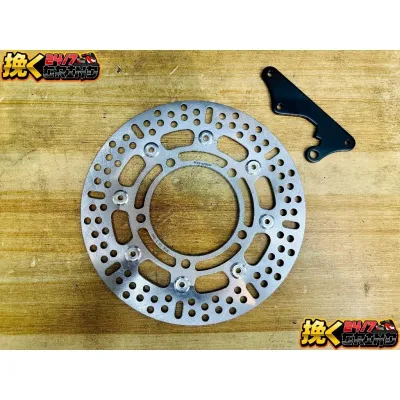
Prices are valid at publication and may change. Please refer to the product page for the latest price.
Critical Fitment and Safety Checks Before Upgrading to 260mm
Before purchasing any aftermarket brake disc, you must verify several physical dimensions and compatibility factors specific to your Honda PCX 160. The PCX 160 is sold in different model variants globally, most notably the Anti-lock Braking System (ABS) and Combi Brake System (CBS) versions. These variants often use different front wheel hub designs. You must check the exact mounting hole pattern—such as whether your hub requires a 4-hole or 5-hole mounting configuration—as well as the bolt circle diameter (BCD) and the inner hub pilot hole clearance. A disc designed for a CBS model will not fit an ABS hub correctly, and forcing a mismatched fitment can lead to catastrophic hub damage.
Another critical area of concern is caliper clearance. Because a 260mm disc has a larger radius than the stock rotor, your factory caliper must be moved outward to align with the new outer edge of the disc. To achieve this, you must install a high-quality, model-specific caliper relocation bracket. Never attempt to use universal washers, improvised spacers, or modified stock brackets to bridge this gap. Improvised mounting hardware can flex under heavy braking loads, leading to caliper misalignment, uneven pad wear, or complete brake failure.
For ABS-equipped PCX 160 models, you must pay close attention to the wheel speed sensor and the ABS pulse ring. The ABS ring must mount flush against the new rotor or hub without any warping. The distance between the ABS sensor tip and the pulse ring—known as the sensor gap—must remain within the manufacturer’s specified tolerance (typically less than a millimeter). If the new 260mm disc alters this gap or causes the sensor ring to wobble, your scooter’s ECU will detect a fault, trigger the ABS warning light, and disable the anti-lock braking function entirely.
Given the safety-critical nature of the braking system, we highly recommend consulting a qualified motorcycle mechanic before purchasing or installing these components. A professional can inspect your front suspension, wheel speed sensor alignment, and brake hose tension to ensure that the larger rotor does not rub against the front fender, fork bottoms, or speed sensor cables during full suspension compression.
Key Dimensions for Comparing 260mm Brake Disc Options
When evaluating different brake disc brands, you should look past marketing buzzwords and focus on objective, observable engineering criteria. These factors directly influence how the disc performs under thermal stress and how long it will last.

Material Composition
Most budget and OEM-equivalent brake discs are manufactured from standard SUS420 stainless steel. This material offers excellent corrosion resistance, which is highly beneficial in humid, tropical climates with heavy rainfall. However, premium performance brands often utilize high-carbon steel alloys. High-carbon steel provides a higher coefficient of friction, resulting in a more immediate and aggressive brake “bite.” It also boasts superior thermal conductivity, allowing heat to flow away from the braking surface more rapidly. Always verify the material specifications provided by the manufacturer rather than relying solely on the visual appearance of the metal.
Rotor Design and Heat Dissipation
Brake discs generally come in drilled, slotted, or wave designs.
- Drilled rotors feature holes through the braking surface to reduce weight and allow water to escape quickly during sudden downpours. However, if the holes are poorly machined or chamfered, they can act as stress concentration points where micro-cracks can form over time.
- Slotted rotors use shallow channels on the disc surface to scrape away glazed pad material, gas buildup, and road debris, ensuring clean contact between the pad and disc.
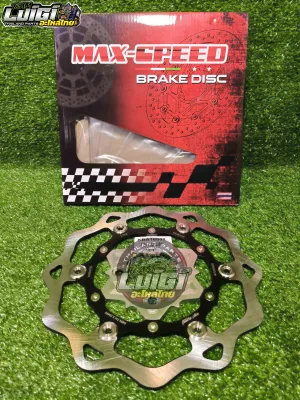
- Wave designs alter the outer perimeter of the disc to help shed mud and water while offering a unique, sporty aesthetic.
Fixed vs. Floating Rotors
This is one of the most important mechanical distinctions in brake upgrades:
- Fixed rotors are constructed from a single, solid piece of steel. They are highly durable, cost-effective, and perfectly adequate for daily city commuting. However, under extreme braking, the outer ring heats up and expands while the inner mounting tabs remain cool, which can cause the disc to warp.
- Floating rotors separate the outer steel braking ring from an inner aluminum carrier, connecting them with metal bobbins or rivets. This design allows the outer ring to expand and contract independently as temperatures rise, virtually eliminating the risk of thermal warping during long descents or heavy stop-and-go traffic.
Weight and Rotational Mass
A larger 260mm rotor naturally weighs more than the stock disc. This increase in unsprung weight can slightly affect your front suspension’s responsiveness and increase rotational inertia. Premium brands offset this by using lightweight aluminum alloys for the inner carriers of floating rotors, keeping the overall weight as close to stock as possible. Conversely, ultra-lightweight, thin discs should be avoided, as they lack the thermal mass needed to absorb and dissipate heat safely.
Manufacturing Tolerances
A high-quality brake disc must run perfectly flat, with lateral runout typically restricted to less than 0.1mm. Consistent thickness across the entire braking surface is also crucial. When you receive a new disc, visually inspect the machining quality. Look for smooth, clean edges on the drilled holes, consistent slot depths, and a perfectly flat profile. Any minor warping or uneven thickness from the factory will manifest as a pulsating sensation in your brake lever.
Evaluating Brake Disc Brand Categories for the PCX 160
To simplify your search, aftermarket brake discs available for the Honda PCX 160 can be divided into three distinct brand categories. Each category serves a different type of rider and budget.
OEM and Certified Direct Replacements
Because Honda does not manufacture an official 260mm upgrade disc for the PCX 160, this category consists of certified aftermarket manufacturers who produce larger rotors adhering strictly to OEM quality standards. Brands in this space focus on producing highly durable, single-piece stainless steel discs designed to work seamlessly with factory brake calipers and standard organic or semi-metallic brake pads.
These discs offer a highly predictable, progressive braking feel that matches the original factory setup. They are highly resistant to corrosion, require minimal maintenance, and are designed for maximum longevity. This makes them the ideal choice for daily commuters in urban areas who prioritize reliability, low maintenance, and a stock-like riding experience over high-performance track capabilities.
Premium International Aftermarket Brands
This category includes world-renowned braking specialists such as Brembo, Galfer, and EBC. These brands are famous for their advanced metallurgy, extensive dynamometer testing, and precision engineering. When you buy a 260mm disc from a premium international brand, you are typically purchasing a fully floating rotor featuring a high-carbon steel outer ring and a CNC-machined aerospace-grade aluminum inner carrier.
These premium rotors offer exceptional heat management, preventing brake fade even under extreme thermal loads. Many of these brands also supply complete upgrade kits that include a precisely engineered caliper relocation bracket, ensuring perfect alignment and fitment. While these options require a substantial investment—often ranging from ₱4,000 to ₱8,000 or more—they are highly recommended for riders who frequently travel on steep mountain roads, carry heavy loads, or demand the absolute highest level of performance and safety.
Regional and Value-Oriented Brands
In Southeast Asian markets, including the Philippines, regional brands like RCB (Racing Boy), TDR, and Mutarru are highly popular. These brands offer 260mm brake disc upgrades that strike an appealing balance between sporty aesthetics, improved stopping power, and affordability, with prices typically ranging from ₱1,500 to ₱3,500.
Many of these regional brands produce floating and wave-style rotors that look excellent on customized scooters. However, quality control can vary more widely in this segment compared to premium international brands. It is critical to purchase these products only from authorized local dealers to avoid counterfeit items, which are prevalent in online marketplaces. When opting for a budget-friendly regional brand, perform a meticulous physical inspection upon delivery, check for flat machining, and pair the rotor with high-quality, reputable brake pads to ensure safe and reliable stopping performance.
Safe Installation and Bedding-In Best Practices
Even the most expensive, high-end brake disc will perform poorly—and could fail catastrophically—if it is installed incorrectly or not properly bedded-in. Following correct mechanical procedures is vital for your safety.
Installation Safety
Before mounting the new rotor, use a wire brush and brake cleaner to thoroughly clean the wheel hub’s mounting surface. Any speck of dirt, rust, or old threadlocker trapped between the hub and the disc will cause the rotor to sit at a slight angle, resulting in severe lateral runout and brake pulsation.
Always use new rotor mounting bolts if recommended by the manufacturer. If reusing the original bolts, clean their threads thoroughly and apply a medium-strength threadlocker (such as blue threadlocking compound) to prevent the bolts from backing out due to engine and road vibrations. You must use a calibrated torque wrench to tighten the rotor bolts in a star pattern to the manufacturer’s exact torque specifications (typically around 20 to 25 Nm, though you must verify this in your Honda PCX 160 service manual). Ensure the caliper relocation bracket is also torqued correctly. If you do not have the proper tools or mechanical experience, have the installation performed by a professional mechanic.
The Bedding-In Process
Once the new disc and pads are installed, you must perform a bedding-in (or burnishing) procedure. This process mates the flat surface of the new rotor with the new brake pads and transfers a microscopic, even layer of pad material onto the disc, which is essential for achieving full braking friction.
To bed in your new brakes safely:
- Find a quiet, flat, and safe stretch of road away from heavy traffic.
- Accelerate your scooter to approximately 40 to 50 km/h.
- Apply the front brake lever with moderate, progressive pressure to slow the scooter down to about 10 km/h. Do not bring the scooter to a complete stop, and do not squeeze the lever aggressively.
- Release the brake and ride for a short distance to allow the components to cool slightly.
- Repeat this process 10 to 15 times.
Avoid hard, aggressive braking or emergency stops during the first 100 kilometers of riding. Additionally, never bring the scooter to a complete stop and hold the brake lever tightly while the rotors are extremely hot; doing so can cause uneven pad material transfer, leading to permanent “hot spots” and disc warping.
Routine Maintenance
Keep your new braking system clean by regularly washing off accumulated brake dust, road grime, and salt residue using a dedicated, non-corrosive brake cleaner. Avoid using harsh household detergents, degreasers, or high-pressure washers directly on the wheel bearings, caliper slide pins, and rubber piston seals. Periodically inspect the rotor for deep grooves, uneven wear, blue discoloration (which indicates severe overheating), or any unusual play in the rivets of a floating rotor.
Frequently Asked Questions (FAQ)
Do I need a caliper bracket to install a 260mm disc on a stock PCX 160?
Yes, a caliper relocation bracket is absolutely necessary. The factory front brake caliper is positioned to grip the smaller stock rotor. Because a 260mm disc has a larger diameter, the caliper must be moved outward radially to align perfectly with the wider braking surface. You must use a high-quality bracket designed specifically for the Honda PCX 160 and your specific caliper type. Never attempt to use generic spacers or washers, as they cannot handle the intense shear forces generated during braking.
Will a larger 260mm brake disc affect my PCX 160 ABS or battery?
A brake disc is a passive mechanical component, so it has absolutely no impact on your scooter’s battery, charging system, or electrical load. However, it can affect your ABS if installed incorrectly. The ABS wheel speed sensor relies on a highly precise distance (sensor gap) between the sensor tip and the rotating pulse ring. If the new 260mm disc or its mounting bracket alters this spacing, or if the ABS ring is warped during installation, the ABS computer will register an error, illuminate the dashboard warning light, and disable the system. Always verify that the sensor gap remains within factory specifications after installation.
Can I reuse my stock brake pads with a new aftermarket 260mm disc?
While it is physically possible to reuse your old brake pads if they still have friction material left, it is highly discouraged. Used brake pads have developed unique wear patterns, ridges, and microscopic debris deposits from your old rotor. If you pair them with a brand-new, perfectly flat 260mm disc, the pads will not make full contact with the rotor surface. This will result in significantly reduced stopping power, excessive squealing, and uneven heat distribution that can permanently warp or score your new disc. Always install a fresh set of high-quality brake pads whenever you replace a brake rotor.
Community discussion
Share your experience or ask a question. Comments are reviewed before publication.