
When navigating the chaotic, fast-paced streets of Metro Manila or driving along provincial highways, having a reliable dash cam 360 view setup is no longer a luxury—it is a necessity for self-protection. However, if you are shopping for a 360-degree security solution, you will quickly realize that “360 degrees” means two completely different things in the automotive accessory market. One option relies on a single camera that physically pivots on its mount to capture different angles on demand, while the other uses four strategically placed external cameras to stitch together a continuous, digital bird’s-eye view of your surroundings. Choosing between them is not just a matter of price; it dictates how much protection you have in active traffic, how difficult the installation will be, and whether the system can actively help you park in tight spaces.
Quick Answer: Which 360 Dash Cam System Fits Your Car?
Choosing the right 360-degree system depends entirely on your vehicle’s size, your budget, and how much installation effort you are willing to invest. A rotating dash cam is a budget-friendly, single-unit camera that mounts to your windshield and physically swivels to record the road, the cabin, or the side windows. It is ideal for sedans, hatchbacks, and rideshare drivers who want flexible coverage without complex wiring.
Conversely, a 4-channel surround view system uses four separate cameras mounted around your vehicle’s exterior to stitch together a real-time, digital bird’s-eye view. This advanced setup is best for larger vehicles like SUVs, pickup trucks, and vans, where eliminating blind spots and assisting with tight parking maneuvers are high priorities. While a rotating camera offers physical flexibility, only a 4-channel system provides true, simultaneous 360-degree visual awareness.
Products mentioned in this guide
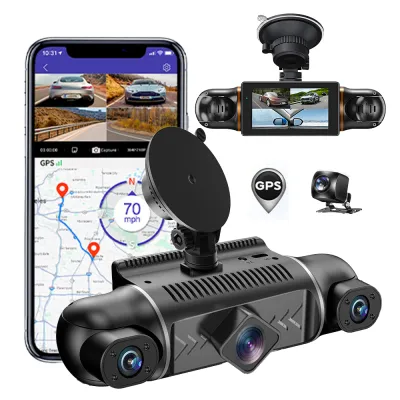
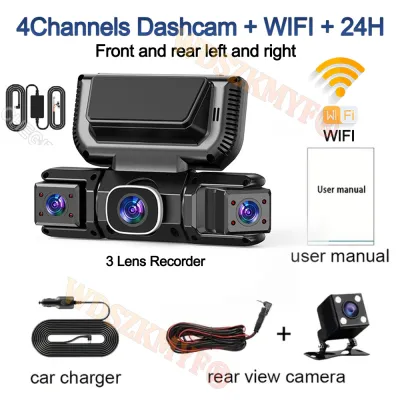
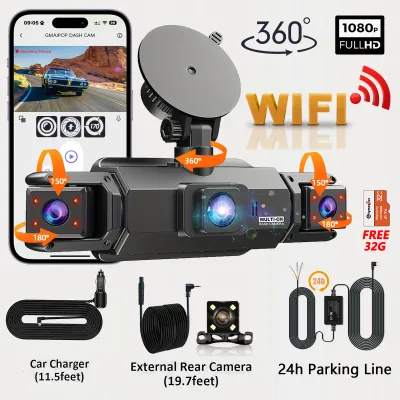
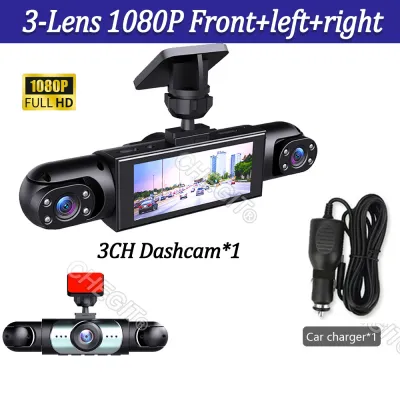
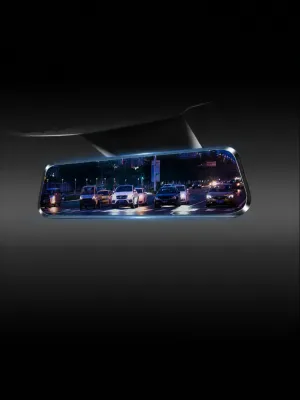
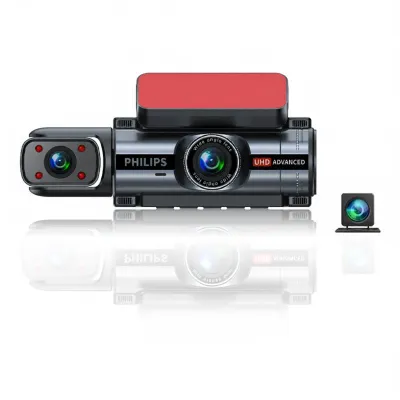
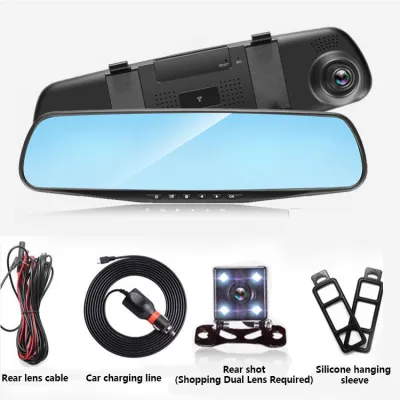
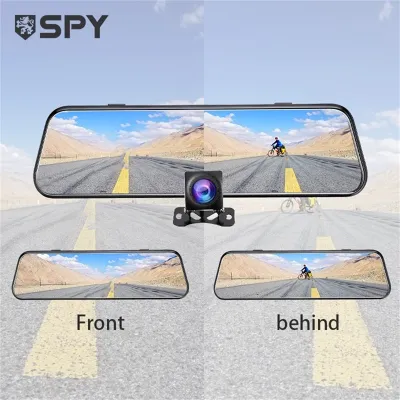
Prices are valid at publication and may change. Please refer to the product page for the latest price.
How Rotating Dash Cams and 4-Channel Systems Actually Work
To make an informed decision, you must first understand the fundamental hardware and software differences that drive these two distinct product categories.

The Mechanics of a Rotating Dash Cam
A rotating dash cam features a compact, single- or dual-lens design mounted on a physical swivel or magnetic base. This allows the lens to be turned manually or electronically via a smartphone app or voice commands.
When needed, you pivot the lens to capture a specific angle. For example, if you are pulled over, you can turn the camera toward the driver-side window. During normal driving, it points forward. This setup does not capture a simultaneous panoramic view; it offers a flexible, single-direction viewpoint that you adjust on the fly.
The Mechanics of a 4-Channel Surround View System
A 4-channel surround view system uses four independent, ultra-wide-angle cameras mounted on the front grille, the rear license plate, and under both side mirrors. These cameras wire directly into a central electronic control unit (ECU) hidden under the dashboard.
The ECU runs real-time digital stitching algorithms. It takes the wide-angle feeds, corrects perspective distortion, and blends the edges to create a seamless, top-down bird’s-eye view on your aftermarket head unit or dashboard monitor. Processing four continuous feeds requires substantial electrical power and dedicated hardware.
Head-to-Head Comparison: What Matters Most for Your Drive
To determine which dash cam 360 view approach aligns with your daily commute, we must compare how they perform across the most critical real-world driving dimensions.
Field of View and Blind Spot Coverage
The primary difference lies in spatial awareness. A rotating dash cam offers sequential coverage, meaning it only records where the lens points. If a motorcycle side-swipes your passenger door while the camera points forward, the lens will not capture the impact directly. However, it is exceptionally useful for interior cabin recording, making it a favorite for rideshare drivers documenting passenger behavior.
A 4-channel surround view system provides simultaneous, uninterrupted perimeter coverage. It acts as an active driving aid rather than just a passive recorder. When squeezing through narrow, tricycle-packed provincial streets or parking a large SUV in a cramped garage in Makati, the real-time bird’s-eye dashboard display is invaluable, showing exactly how close your wheels are to curbs and low obstacles.
Installation Complexity and Cabin Wiring
A rotating dash cam is a straightforward, DIY-friendly installation. You mount the camera to your windshield, route a single power cable along the headliner and down the A-pillar, and plug it into the 12V accessory socket. The entire process takes under thirty minutes.
Conversely, installing a 4-channel surround view system is a highly invasive process. It requires removing interior trim panels, pulling door cards apart to route wiring through door bellows, and drilling mounting holes under side mirrors. Furthermore, the exterior cameras must be meticulously sealed. In the Philippines, where vehicles face torrential monsoon downpours and deep street flooding, poorly sealed cameras or loose wiring will quickly lead to electrical short circuits.
Safety Warning: Incorrectly routing wires along the A-pillars can interfere with your vehicle’s SRS airbags. Always consult your vehicle’s original service manual and seek professional installation from a certified auto electrician before proceeding.
Video Resolution and Nighttime Clarity
Because a rotating dash cam only manages one or two image sensors, manufacturers can equip them with premium, high-resolution sensors. This allows them to capture crisp 2K or 4K footage with excellent Wide Dynamic Range (WDR), critical for reading license plates at night or dealing with glare on unlit provincial roads.
A 4-channel system must split its processing power and bandwidth across four separate feeds. To prevent overheating, these systems often use lower-resolution sensors, typically 720p or 1080p per camera. When stitched together, fine details like distant license plates can become blurry. Do not rely on generic ‘Ultra HD’ marketing claims; look closely at camera specifications and prioritize systems with physical low-light optimization sensors.
Budgeting for Your 360 Dash Cam Setup in the Philippines
The financial commitment for these systems varies dramatically once you factor in hardware, professional labor, and accessories.
Rotating dash cams are highly cost-effective, typically priced between ₱3,000 and ₱8,000. Because installation is DIY-friendly, professional labor costs are zero, unless you spend ₱500 to ₱1,000 to hardwire the unit to your fuse box for parking mode.
A 4-channel surround view system is a premium investment. Hardware kits range from ₱12,000 to over ₱35,000. Because of the complex wiring and calibration, professional installation is highly recommended. Specialized auto electrical shops in Banawe or Quezon City typically charge between ₱3,000 and ₱8,000 for labor.
Regardless of the system, you must factor in high-endurance storage. Standard microSD cards degrade rapidly under intense tropical cabin heat. For a rotating cam, a high-endurance card (64GB to 128GB) costs ₱800 to ₱1,500. For a 4-channel system writing four streams simultaneously, a premium high-endurance card (128GB to 256GB, rated Class 10, U3, V30) is mandatory, costing ₱1,800 to ₱3,500. Cheap cards will fail, leaving you without footage when an incident occurs.
The Decision Framework: Matching the System to Your Vehicle
To finalize your choice, you should evaluate your vehicle type, driving habits, and technical comfort level against the following practical criteria.
Choose a Rotating Dash Cam If…
- You drive a smaller vehicle: Sedans, hatchbacks, and compact crossovers have relatively small blind spots and good natural visibility, making a full surround-view system less of a necessity.
- You prioritize high-quality video evidence: If your primary goal is capturing clear license plates in hit-and-run incidents or documenting road trips, the superior resolution of a dedicated front-facing rotating lens is the better choice.
- You are a rideshare or taxi driver: The ability to quickly pivot the lens to record the interior cabin provides invaluable security and evidence during passenger disputes.
- You prefer a simple, non-invasive setup: If you lease your vehicle or simply do not want technicians dismantling your door panels and dashboard, the plug-and-play nature of a rotating camera is ideal.
Choose a 4-Channel Surround View If…
- You drive a large or modified vehicle: SUVs, pickup trucks, large vans, and lifted off-road rigs have massive blind spots directly in front of the hood, behind the tailgate, and along the passenger sides.
- You frequently navigate high-risk environments: If your daily commute involves tight parking spaces, narrow alleys, or areas heavily congested with pedestrians, motorcycles, and active traffic, the real-time 360 assistance is a lifesaver.
- You want active parking assistance: If you struggle with parallel parking or reversing into tight slots, the stitched bird's-eye view acts as an invaluable visual guide.
- You are comfortable with a larger upfront investment: You are willing to pay for both the premium hardware and the professional installation required to set up and calibrate the system correctly.
Verify First If…
Before purchasing any 360-degree camera hardware, you must perform several compatibility checks to avoid costly compatibility issues:
- Check ADAS and factory camera placement: If your car is equipped with advanced driver-assistance systems (ADAS) or factory-mounted cameras near the rearview mirror, ensure that a bulky aftermarket dash cam will not block these sensors or violate local road safety regulations regarding windshield obstructions.
- Verify head unit compatibility: For 4-channel systems, check if your existing dashboard head unit supports aftermarket video inputs (such as AHD or RCA). If it does not, you will need to purchase a system that includes its own standalone monitor, which will add clutter to your dashboard.
- Inspect side mirror mechanisms: Ensure that mounting exterior cameras under your side mirrors will not interfere with their automatic folding mechanisms, door handles, or puddle lights.
- Consult your warranty guidelines: Tapping into your vehicle's fuse box or modifying door wiring can sometimes affect your manufacturer's electrical warranty. Always review your vehicle's documentation and consult an authorized dealer if your car is still under warranty.
Frequently Asked Questions (FAQ)
Can I use a 4-channel surround view system as a parking dash cam?
Yes, but you must take specific power management precautions. Because a 4-channel system utilizes four separate cameras and a central processing unit, its electrical power draw is significantly higher than that of a standard single-lens dash cam. If you leave the system running continuously while parked, it can drain your vehicle’s starter battery within a matter of hours.
To use a 4-channel system safely for parking surveillance, you must hardwire the system using a dedicated smart hardwire kit equipped with an adjustable low-voltage cutoff. This safety device automatically cuts power to the camera system if your car battery’s voltage drops below a safe threshold (typically 11.8V or 12V). Alternatively, you can install a dedicated, high-capacity lithium-iron-phosphate (LiFePO4) dash cam battery pack that charges while you drive and powers the cameras independently when the engine is off.
Do rotating dash cams record the front and cabin at the same time?
No, standard single-lens rotating dash cams cannot record both the road ahead and the interior cabin simultaneously. Because they rely on a single physical lens, they can only capture the direction in which the lens is currently pointed. If you rotate the camera to face the cabin to record an interaction, you will temporarily stop recording the road ahead.
If you require simultaneous front and cabin recording, you should look for a dual-lens dash cam system. These models typically feature a fixed, high-resolution front-facing lens combined with a secondary, independently rotatable cabin lens. This dual-sensor configuration ensures that you never have to sacrifice road-facing protection while monitoring the interior of your vehicle.
Community discussion
Share your experience or ask a question. Comments are reviewed before publication.