
Deciding between the RS8 aftermarket center spring and the stock Yamaha Aerox V2 center spring comes down to how and where you ride your scooter. The stock spring is engineered for balanced fuel economy, smooth low-speed acceleration, and standard solo commuting. In contrast, an aftermarket option like the RS8 center spring offers higher stiffness ratings designed to increase belt tension, reduce belt slippage under heavy loads, and alter the transmission’s shift characteristics. Neither spring is a universal upgrade; instead, each serves a distinct riding style and operational environment.
To make an informed decision, you must understand how changing this single component alters the delicate balance of your scooter’s Continuously Variable Transmission (CVT). Modifying the center spring affects everything from engine RPM and fuel consumption to the wear rate of your drive belt. By evaluating your daily routes, passenger loads, and performance expectations, you can determine whether sticking with the reliable stock setup or upgrading to an RS8 spring will deliver the best riding experience.
Understanding the Center Spring's Role in CVT Performance
The center spring, also known as the compression or secondary spring, is a critical component housed within the rear pulley assembly of your Yamaha Aerox V2. Its primary job is to apply constant lateral pressure on the secondary sliding sheave, forcing the rear pulley halves together. This clamping force keeps the drive belt tight and prevents it from slipping against the pulley faces, especially when you suddenly twist the throttle. Without sufficient spring tension, the belt would slip, leading to wasted engine power, excessive heat, and rapid belt wear.
Products mentioned in this guide
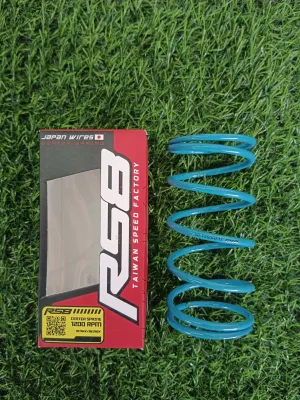
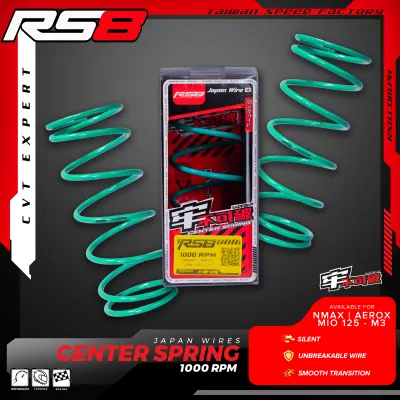
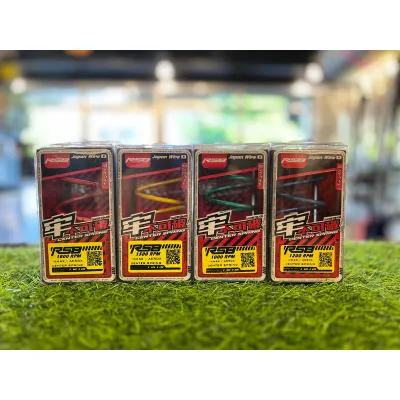
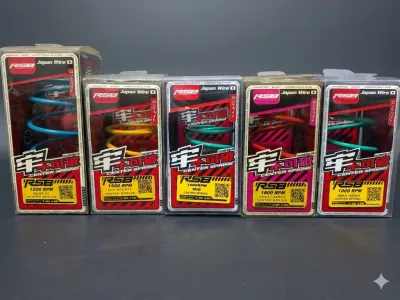
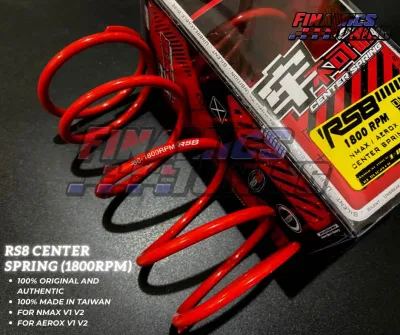
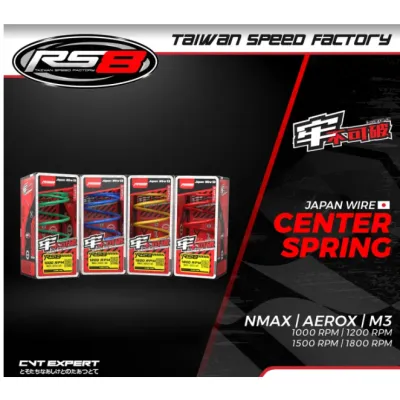
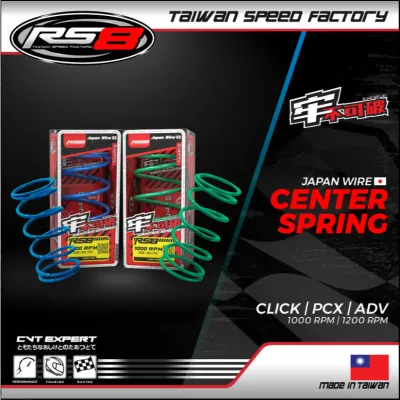
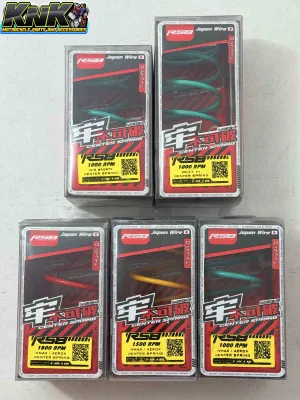
Prices are valid at publication and may change. Please refer to the product page for the latest price.
In a CVT system, the center spring acts as the mechanical opponent to the roller weights located in the front pulley (variator). As engine speed increases, centrifugal force pushes the roller weights outward, forcing the front pulley to close and pull the drive belt inward. This action pulls the belt deep into the rear pulley, overcoming the resistance of the center spring and forcing the rear sheave open. The balance between the weight of the rollers and the stiffness of the center spring determines the transmission’s shift timing and overall gear ratio at any given speed.
When you install a stiffer center spring, you increase the resistance against the front roller weights. This keeps the rear pulley closed longer, effectively holding the transmission in a lower gear ratio for a longer duration. Consequently, the engine must rev higher before the transmission shifts up. This higher operating RPM can improve throttle response and acceleration, but it also means the engine works harder at cruising speeds, which directly influences fuel consumption and engine vibration.
Comparing the RS8 Aftermarket Spring and the Stock Option
When comparing the stock Aerox V2 center spring to an aftermarket RS8 spring, the differences begin with physical construction and material specifications. The stock spring is manufactured to meet general factory standards, balancing longevity, comfort, and fuel efficiency for the average rider. It features a standard wire diameter, free length, and coil count designed to work seamlessly with the stock 13-gram roller weights. Over time, however, heat and constant compression can cause the stock spring to fatigue, leading to a softer spring rate and sluggish acceleration.

RS8 aftermarket springs are engineered with high-tensile materials designed to resist heat fatigue and maintain consistent tension under demanding conditions. Visually, you may notice differences in wire thickness, overall free length, and the spacing of the coils. RS8 springs are typically categorized by stiffness ratings, such as 1000 RPM, 1200 RPM, 1500 RPM, or 2000 RPM. These ratings indicate how much more resistance the spring offers compared to the stock baseline, allowing riders to fine-tune their CVT characteristics.
Upgrading to an RS8 spring changes the riding dynamics of your Aerox V2. A stiffer spring, such as a 1200 RPM or 1500 RPM variant, provides quicker back-shifting. When you decelerate and then quickly twist the throttle again, the stiffer spring forces the rear pulley to close rapidly, putting the scooter back into its optimal powerband instantly. This eliminates the lag or “bogging” sensation often experienced with a worn or soft stock spring.
However, these performance adjustments come with clear trade-offs. The increased clamping force of a stiffer RS8 spring generates more friction between the drive belt and the pulley sheaves. In the tropical climate of the Philippines, where ambient temperatures are already high, this extra friction translates to increased heat inside the CVT casing. Excessive heat can accelerate the degradation of the drive belt and the sliding pieces. Additionally, because the engine must run at higher RPMs to overcome the stiffer spring, you will likely observe a decrease in fuel economy during relaxed cruising.
Choosing the Right Spring for Your Riding Needs
Selecting the ideal center spring requires a realistic assessment of your daily riding habits, typical routes, and load requirements. There is no single configuration that excels in every scenario, so you must weigh the benefits of each option against your specific needs. While a new center spring is a relatively affordable upgrade, typically costing between ₱300 and ₱800 depending on the brand and specifications, the labor or additional tools required should also be factored into your decision.
You should stick with or replace your worn spring with a new Stock Spring if your daily ride consists primarily of solo commuting through flat, stop-and-go city traffic. The stock spring keeps engine RPMs low at low speeds, which minimizes engine vibration, reduces wear on CVT components, and maximizes fuel efficiency. If your priority is keeping your daily fuel expenses low and enjoying a quiet, smooth ride, the factory-tuned setup is your best option.
Conversely, you should consider upgrading to an RS8 Center Spring if you frequently carry a passenger (backrider), transport heavy delivery cargo, or regularly navigate steep inclines like those found in mountainous regions. Under heavy loads or steep climbs, the stock spring can allow the belt to slip or cause the transmission to upshift too quickly, leaving the engine struggling at low RPMs. A stiffer RS8 spring keeps the engine in its peak powerband, providing the necessary torque to climb hills and carry heavy loads without losing momentum.
Before making a purchase, you must verify how a new center spring will interact with your existing CVT setup. If you have already modified your roller weights, variator pulley, or clutch lining, installing a stiffer spring without adjusting these components can lead to poor performance. For example, pairing a very stiff center spring with lightweight rollers may cause the engine to rev excessively high without a corresponding increase in speed. Always treat the CVT as a complete, balanced system rather than a collection of isolated parts.
Installation Checks and Safety Boundaries
Replacing a CVT center spring is a task that requires specific tools, mechanical patience, and strict adherence to safety protocols. Because the center spring is under high compression inside the rear pulley assembly, attempting to disassemble it without the proper equipment can result in severe personal injury or damaged components.
Before beginning the installation, ensure you have the essential tools: a proper clutch bell holder (Y-tool) or an impact wrench to safely remove the clutch bell nut, and a dedicated clutch spring compressor tool. The spring compressor is vital; it holds the clutch assembly securely under compression while you remove the large retaining nut, allowing you to release the spring tension slowly and safely. Never attempt to remove the clutch nut using only your hands or feet to hold the spring down.
While the CVT is disassembled, take the opportunity to inspect adjacent components for wear. Check the clutch bell for discoloration (blueing from excessive heat), inspect the clutch shoes for adequate lining thickness, and examine the drive belt for cracks, frayed edges, or excessive wear. If you notice any signs of damage, replace these parts before reassembling the system. Additionally, inspect the torque drive pins and apply high-temperature CVT grease to ensure smooth sliding action.
If you encounter stripped threads, seized nuts, or are unsure about the compatibility of the RS8 spring with your specific Aerox V2 model year, stop immediately and consult a qualified motorcycle mechanic. Professional installation ensures that all fasteners are torqued to factory specifications, reducing the risk of component failure at high speeds. After installation, always conduct a cautious test ride in a safe, low-traffic area to verify proper belt tracking, smooth clutch engagement, and the absence of unusual noises.
Frequently Asked Questions (FAQ)
Will a stiffer center spring increase the top speed of my Aerox V2?
No, a stiffer center spring will not increase the top speed of your scooter. The center spring primarily controls the rate of shifting and belt tension, not the final gear ratio of the transmission. In some cases, an excessively stiff spring can actually decrease top speed because the front pulley may struggle to overcome the spring’s resistance to achieve full belt expansion.
Do I need to change my roller weights when installing the RS8 spring?
You will often need to adjust your roller weights when changing to a stiffer center spring. Because a stiffer spring resists the outward movement of the rollers, you may need to install slightly heavier roller weights to restore a balanced shift point, or lighter weights if you are tuning specifically for high-RPM acceleration. Consulting tuning guidelines or testing different combinations is recommended.
How often should I inspect or replace the center spring?
It is best to inspect the center spring every 10,000 to 15,000 kilometers, or during routine CVT cleaning and belt inspections. Look for physical signs of fatigue, such as a reduction in the spring’s uncompressed free length compared to a new unit, or inconsistent acceleration performance that suggests the spring has lost its tension.
Community discussion
Share your experience or ask a question. Comments are reviewed before publication.