
Choosing between rubber and braided stainless steel brake hoses for your motorcycle is a decision that directly impacts your safety, riding comfort, and maintenance budget. There is no single option that suits every rider perfectly; instead, the ideal choice depends on your specific riding style, budget, and willingness to perform regular upkeep. While rubber hoses offer cost-effective, flexible performance for daily commuting, braided stainless steel alternatives provide a firmer lever feel and greater resistance to environmental wear. Ultimately, ensuring safety, proper fitment, and compliance with local transport regulations must guide your final purchasing decision.
How Rubber and Braided Stainless Steel Hoses Are Built
To understand how these two components perform on the road, it helps to look at how they are constructed. Standard original equipment manufacturer (OEM) motorcycles typically come fitted with rubber brake hoses. These hoses are built using multiple layers of synthetic rubber, often reinforced internally with a woven fabric mesh such as nylon or polyester. This multi-layer design provides the hose with the flexibility needed to route through tight spaces around the motorcycle’s forks and swingarm, allowing the suspension to move freely without binding the hydraulic lines.
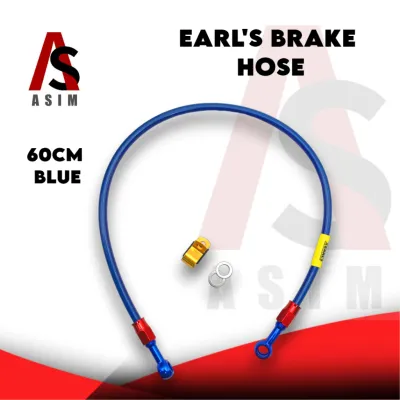
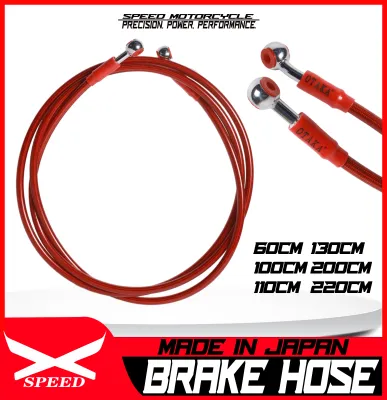
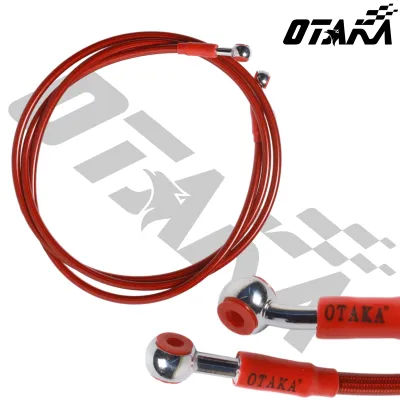
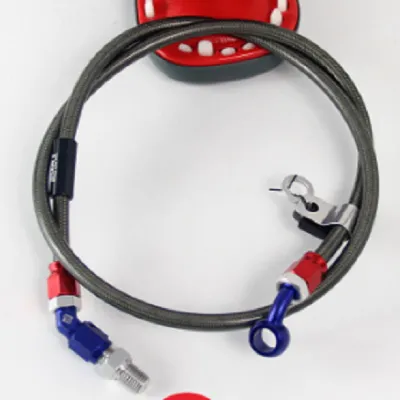
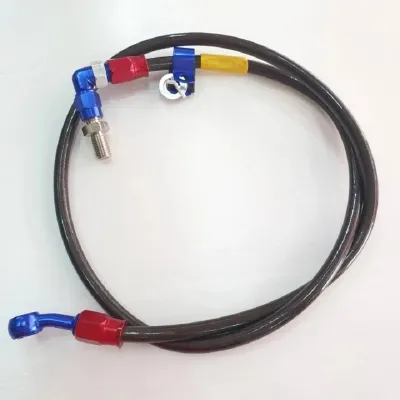
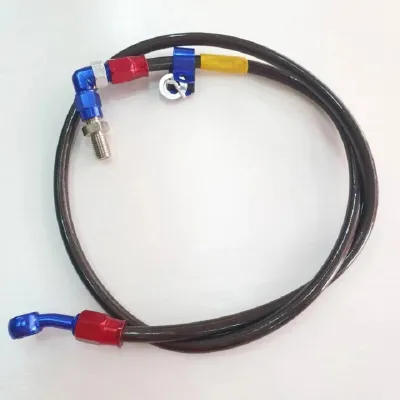
In contrast, braided stainless steel brake hoses utilize a fundamentally different structural design. At the core of a braided hose is a flexible inner tube, typically made of polytetrafluoroethylene (PTFE) or a similar fluoropolymer. This inner core is wrapped in a tightly woven sleeve of high-tensile stainless steel wire. To protect the motorcycle’s paintwork and surrounding components from being scratched by the abrasive metal braid, manufacturers usually cover the entire assembly with a thin, protective outer polymer coating.
Products mentioned in this guide
Prices are valid at publication and may change. Please refer to the product page for the latest price.
These structural differences directly influence how each hose behaves under hydraulic pressure. When you squeeze your motorcycle’s brake lever, the master cylinder forces brake fluid through the hose to actuate the caliper pistons. Because synthetic rubber is inherently compliant, a rubber hose can expand slightly outward under high pressure. Braided stainless steel, however, acts as a rigid physical barrier around the inner PTFE tube. This metal sleeve restricts outward expansion, ensuring that more of the hydraulic force exerted at the lever is transmitted directly to the brake calipers.
Real-World Trade-Offs: Brake Feel, Lifespan, and Upkeep
The physical differences in hose construction translate directly into how your motorcycle handles on the road, particularly during sudden stops or prolonged riding. The slight expansion of rubber hoses under pressure can result in a softer, more progressive brake lever feel. Some riders prefer this feedback because it allows for a forgiving modulation of braking force during casual daily commutes. However, under heavy or repeated braking, this expansion can lead to a spongy lever sensation, requiring you to pull the lever closer to the handlebar to achieve the same stopping power.

Braided stainless steel hoses virtually eliminate this volumetric expansion, resulting in a much firmer and more consistent lever feedback. When you apply pressure, the response is immediate and direct, which is highly valued during aggressive riding, track days, or when navigating steep descents. This immediate feedback allows for precise trail braking and better control over tire traction. However, some riders transitioning from rubber to braided lines may find the initial bite surprisingly sharp, requiring a brief adjustment period to avoid over-braking.
Environmental factors also play a critical role in the lifespan of your braking system, especially in tropical climates. In regions like the Philippines, where motorcycles are regularly exposed to intense sunlight, high humidity, heavy monsoon rains, and coastal salt air, rubber hoses face accelerated degradation. Over time, UV rays and ozone break down the synthetic rubber compounds, leading to micro-cracks, hardening, and eventual structural weakness. Braided stainless steel hoses are highly resistant to these environmental stressors, as the stainless steel mesh and protective outer coating shield the inner PTFE core from UV damage and physical abrasion.
Regardless of which material you choose, regular inspection is a non-negotiable part of motorcycle ownership. For rubber hoses, you must routinely check for visible surface cracking, localized bulging under pressure, soft spots, or wetness near the crimped fittings. For braided stainless steel hoses, the inspection process involves looking for frayed metal wires, signs of corrosion on the fittings, or damage to the outer protective sleeve. Because the inner PTFE core is hidden beneath the metal braid, any physical damage to the outer sleeve or a kink in the hose warrants immediate replacement to prevent sudden hydraulic failure.
Critical Safety Checks and Installation Rules
Before purchasing any aftermarket brake hose, you must verify its safety certifications and compliance with local road regulations. Look for hoses that carry recognized safety standards, such as Department of Transportation (DOT) compliance markings, TÜV certification, or approvals from local transport authorities. These markings indicate that the hose assembly has undergone rigorous pressure, whip, and tensile testing to ensure it can withstand the extreme demands of emergency braking without bursting or leaking.
Fitment verification is another critical step that requires precise attention to detail. You must never assume a brake hose is compatible based solely on a generic product category or a broad motorcycle type. Always verify that the hose length, banjo bolt sizes, bend angles, and thread pitches match your specific motorcycle make, model, and production year. A hose that is too short can pull taut when the suspension fully extends, leading to catastrophic failure, while a hose that is too long can rub against moving parts like the tires or brake rotors.
Because the braking system is your motorcycle’s most critical safety component, professional installation is highly recommended. Working on hydraulic brakes carries inherent risks; improper assembly, incorrect torque, or air bubbles in the system can lead to a complete loss of braking power. If you choose to perform the work yourself, you must strictly adhere to the manufacturer’s torque specifications for all banjo bolts and use fresh crush washers to ensure a leak-free seal. Additionally, a complete and thorough brake fluid bleed must be performed using the fluid type specified on your master cylinder reservoir cap to remove all trapped air from the lines.
Which Brake Hose Should You Choose?
Selecting the right brake hose comes down to matching the component’s characteristics with your riding habits, motorcycle type, and budget. If you primarily use your motorcycle for daily commuting, prioritize cost-effectiveness, and prefer to stick with original factory specifications, rubber hoses are an excellent choice. They are generally more affordable to purchase initially, with standard replacement lines often costing under ₱1,000, making them highly accessible for budget-conscious riders who prefer a comfortable and progressive lever feel in city traffic.
On the other hand, if you ride aggressively, participate in track days, carry heavy cargo, or frequently tour through mountainous terrain, braided stainless steel hoses are a worthwhile investment. The firmer lever feedback and consistent performance under high temperatures provide a significant confidence boost when navigating challenging roads. While the initial purchase price of braided lines is higher, their superior resistance to environmental degradation and physical wear can make them a more durable long-term option for riders willing to invest in premium components and professional installation.
Before making your final decision, always verify how aftermarket modifications might affect your motorcycle’s active warranty. Some manufacturers may void the warranty on your braking system or related components if non-OEM parts are installed. Additionally, check the latest guidelines from the Land Transportation Office (LTO) or other local regulatory bodies in the Philippines to ensure that any aftermarket brake modifications comply with current vehicle inspection and road safety standards.
Frequently Asked Questions (FAQ)
Can I mix rubber and stainless steel hoses on the same motorcycle?
While it is technically possible to use a braided stainless steel hose on the front brake and a rubber hose on the rear, it is generally recommended to keep your motorcycle’s hydraulic system uniform. Mixing materials can create an inconsistent braking feel between your front lever and rear pedal, as one will feel significantly firmer and more responsive than the other. This uneven feedback can complicate your muscle memory during emergency stopping situations. If you decide to upgrade to braided stainless steel, replacing both the front and rear lines simultaneously ensures balanced, predictable hydraulic performance across the entire motorcycle.
How often should I inspect or replace my motorcycle brake hoses?
You should perform a visual inspection of your brake hoses before every ride, looking closely for any signs of fluid weeping, cracking, or physical wear. As a general rule, many motorcycle manufacturers recommend replacing standard rubber brake hoses every four years, regardless of mileage, due to the natural degradation of the rubber compounds. Braided stainless steel hoses do not have a universally mandated replacement interval because of their durable construction, but they must still be replaced immediately if you detect any fraying of the metal mesh, damage to the fittings, or leaks. Always consult your motorcycle’s specific service manual for the manufacturer’s recommended maintenance schedule.
Community discussion
Share your experience or ask a question. Comments are reviewed before publication.