
Quick Answer: Which Brake Hose Material Is Right for You?
When maintaining or upgrading a motorcycle’s braking system, choosing the right brake hose is critical for both safety and performance. The two primary options available to riders are standard rubber hoses and stainless steel braided hoses. Each material serves a distinct purpose, and selecting the right one depends on your riding style, budget, and performance expectations.
Rubber brake hoses are the industry standard for most production motorcycles. They offer a cost-effective, reliable solution that is perfectly suited for daily commuting, city riding, and casual touring. When properly maintained, rubber hoses provide dependable stopping power and a progressive, forgiving lever feel that many riders find comfortable for everyday scenarios.
In contrast, stainless steel braided brake hoses are engineered for riders seeking a firmer, more immediate brake lever response. By resisting expansion under high hydraulic pressure, these hoses deliver consistent performance during aggressive riding, mountain descents, or track days. They are highly favored by enthusiasts who want to eliminate the spongy feel that can occur when brakes are heavily worked.
Products mentioned in this guide
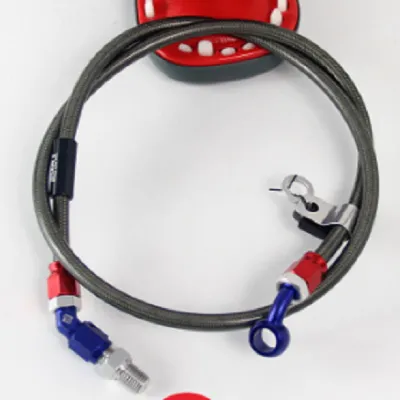
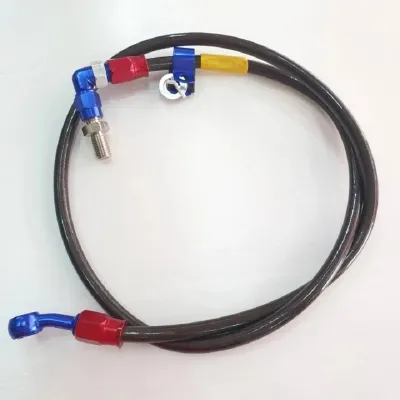
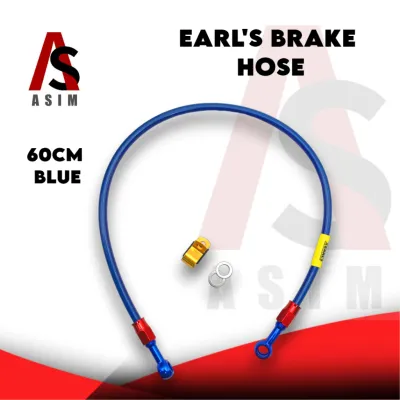
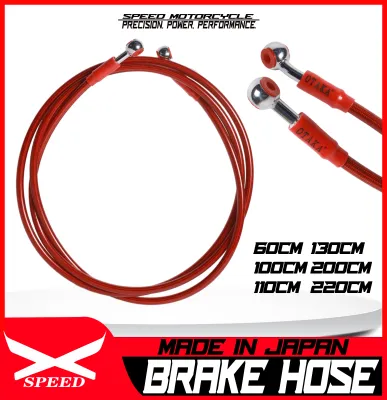
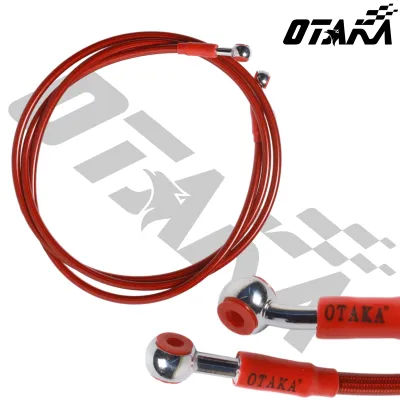
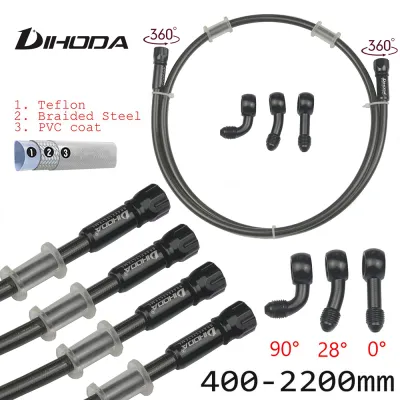
Prices are valid at publication and may change. Please refer to the product page for the latest price.
It is important to understand that neither material inherently guarantees a shorter stopping distance on its own. Both rubber and stainless steel braided hoses must meet rigorous safety standards, such as DOT compliance, to be legally and safely used on public roads. Proper installation, correct fitment, and regular maintenance are far more critical to your safety than the material alone.
How Rubber and Stainless Steel Braided Brake Hoses Differ
To make an informed decision, it helps to understand the physical construction of these two hose types. A motorcycle brake hose is not just a simple tube; it is a multi-layered hydraulic component designed to withstand extreme pressures, chemical exposure, and external wear.

At the core of every brake hose is the inner liner. This tube is in direct contact with the brake fluid and must be chemically inert to prevent degradation from hydraulic fluids like DOT 3, DOT 4, or DOT 5.1. In traditional rubber hoses, this inner liner is typically made of synthetic rubber, such as ethylene propylene diene monomer (EPDM). In stainless steel braided hoses, the inner liner is usually constructed from polytetrafluoroethylene (PTFE), commonly known as Teflon. PTFE is highly resistant to chemical breakdown and has an incredibly smooth inner surface, which minimizes fluid friction.
The primary structural difference lies in the reinforcement layer that surrounds the inner liner. Rubber brake hoses utilize a woven textile or synthetic fiber mesh, such as nylon or polyester, wrapped tightly around the inner tube. This mesh is then encased in a thick, outer protective layer of synthetic rubber. This design provides excellent flexibility and impact resistance, but the textile mesh allows for a small degree of radial expansion when internal hydraulic pressure spikes.
Stainless steel braided hoses replace the textile mesh with a tightly woven sleeve of high-tensile stainless steel wire. This metal braid acts as a rigid sheath around the PTFE inner liner, virtually eliminating radial expansion under pressure. To protect the motorcycle’s paint, bodywork, and neighboring components from being scratched by the abrasive metal braid, manufacturers usually wrap the entire hose in a thin, clear or colored polyvinyl chloride (PVC) or polyurethane (PU) outer jacket.
Comparing Performance, Durability, and Maintenance
Brake Feel and Lever Response
The mechanical differences in construction translate directly to how the brake lever feels in your hand. When you squeeze the brake lever, the master cylinder piston forces brake fluid through the hose to push the caliper pistons against the brake rotors. According to physical principles of hydraulics, pressure applied to a confined fluid is transmitted throughout the fluid. However, if the walls of the container are flexible, some of that energy is spent expanding the container rather than moving the pistons.
Because rubber hoses are reinforced with flexible textile fibers, they expand slightly under heavy braking pressure. This expansion is often felt by the rider as a soft, progressive, or spongy lever. While this can be forgiving for casual riders—reducing the likelihood of accidentally locking up the front wheel during a sudden panic stop—it can feel vague and unresponsive during spirited riding.
Stainless steel braided hoses, with their rigid metal sheaths, resist this radial expansion almost entirely. The hydraulic force is transferred directly and instantly to the brake calipers. This results in a firm, highly tactile lever feel with minimal free play. Riders can modulate braking force more precisely because the relationship between lever pressure and braking deceleration is highly linear. However, it is vital to remember that actual stopping power is ultimately limited by the friction between your brake pads and rotors, as well as the grip of your tires on the road surface.
Durability and Environmental Resistance
The environmental conditions in the Philippines present unique challenges for motorcycle components. High tropical humidity, intense UV exposure, heavy monsoon rains, and salt-laden air in coastal regions all accelerate the aging process of rubber and metal alike.
Rubber hoses are highly susceptible to environmental degradation. Over time, exposure to atmospheric ozone and solar UV radiation causes the outer rubber layer to lose its elasticity, leading to dry rot and micro-cracking. Heat cycles from the engine and the hot tropical asphalt further accelerate this wear. Furthermore, rubber is slightly porous at a microscopic level, allowing moisture from the highly humid air to slowly permeate the hose walls over several years. This moisture contaminates the glycol-based brake fluid, lowering its boiling point and increasing the risk of brake fade.
Stainless steel braided hoses offer superior resistance to these environmental factors. The PTFE inner liner is completely impervious to moisture intrusion, helping to maintain the integrity of your brake fluid for longer periods. The stainless steel outer braid is highly resistant to abrasion, road debris, and UV damage. However, they are not entirely immune to wear. If the protective PVC outer jacket becomes cracked or worn through, road grit and moisture can get trapped between the jacket and the stainless steel braid. In coastal areas, this trapped saltwater can cause crevice corrosion of the stainless steel wire over time, potentially weakening the hose’s structural integrity without being immediately visible.
Inspection and Maintenance Requirements
Regular inspection of your motorcycle’s braking system is a non-negotiable safety practice. The way you inspect your brake hoses depends heavily on which material is installed on your bike.
Rubber hoses are relatively easy to diagnose during a visual inspection. Because the outer layer is made of solid rubber, signs of wear are usually obvious. You should look for visible surface cracks, dry rot, deep abrasions from rubbing against the chassis, or any soft spots and bulging when the brake lever is squeezed hard. Any sign of weeping fluid or dampness around the hose body indicates an immediate need for replacement.
Inspecting stainless steel braided hoses requires a more meticulous approach because the metal braid can mask internal damage. A minor leak in the inner PTFE liner might seep fluid into the braid, where it spreads out and evaporates before forming a visible drip. To inspect these hoses, run a clean, dry microfiber cloth along the entire length of the line, paying close attention to the areas near the crimped collars and fittings. If the cloth picks up any oily residue, the hose must be replaced. You must also inspect the stainless steel braid for any frayed, broken, or protruding wire strands, which can compromise the hose’s pressure-handling capability and scratch surrounding components.
Critical Safety, Compatibility, and Installation Rules
Your motorcycle’s braking system is its most critical safety feature. Any modification or replacement of brake components must be approached with extreme caution, adhering strictly to safety standards and manufacturer guidelines.
Before purchasing any aftermarket brake hose, verify that it carries recognized safety certifications, such as DOT FMVSS 106 or equivalent local and international certifications. These standards ensure that the hose has been tested to withstand extreme pressures, tensile loads, and temperature fluctuations without bursting or leaking.
Exact fitment is critical. Never attempt to install a brake hose that is not explicitly designed for your specific motorcycle make, model, and year. You must verify:
- Hose Length: A hose that is too short will stretch and pull tight when the front forks fully extend or when the handlebars are turned to full lock, leading to immediate mechanical failure. A hose that is too long can kink, restrict fluid flow, or catch on moving parts like the front tire or suspension links.
- Banjo Bolt Angles and Thread Pitch: Banjo fittings at the ends of the hoses come in various angles (e.g., straight, 20-degree, 45-degree, 90-degree) to ensure proper routing. Additionally, thread pitches vary between manufacturers (typically M10x1.0 for European brands and M10x1.25 for Japanese brands). Forcing an incorrect thread pitch will ruin the threads on your master cylinder or caliper.
- Mounting Positions: Ensure the hose is routed through the original factory guide loops to prevent it from rubbing against the frame or bodywork.
When performing any brake system work, always refer to your motorcycle’s official service manual for the correct torque specifications for banjo bolts and mounting brackets. Over-tightening a banjo bolt can strip the threads or snap the bolt, while under-tightening will lead to fluid leaks and a sudden loss of braking pressure. Always use brand-new copper or aluminum crush washers on both sides of each banjo fitting; reusing old, compressed washers is a common cause of persistent leaks.
Furthermore, pay close attention to brake fluid compatibility. Never mix glycol-based fluids (DOT 3, DOT 4, and DOT 5.1) with silicone-based fluids (DOT 5), as they will react and form a thick, gelatinous sludge that will clog your braking system. If you are unsure of your ability to properly route, secure, torque, and bleed the brake lines, do not attempt the installation yourself. Seek the assistance of a qualified professional mechanic to ensure your motorcycle remains safe to ride.
Decision Framework: Choosing the Right Brake Hose
To help you decide which material is best for your motorcycle, consider your typical riding scenarios, maintenance habits, and performance needs. Below is a structured framework to guide your choice.
Choose Rubber Hoses if:
- You are a daily commuter or casual rider: If your typical ride consists of navigating city traffic, running errands, or casual weekend cruising at moderate speeds, standard rubber hoses provide more than enough performance and safety.
- You prefer a cost-effective solution: Standard rubber hoses are highly affordable. In the Philippines, high-quality OEM-equivalent rubber replacement hoses typically range from ₱500 to ₱1,500, making them an economical choice for budget-conscious riders.
- You want a forgiving brake feel: The progressive and slightly softer lever feel of rubber hoses can be highly forgiving, especially in wet weather or on slippery road surfaces, by helping to prevent sudden wheel lockups.
- You want simple visual maintenance: The wear signs on rubber hoses are highly visible, allowing for quick and straightforward pre-ride inspections.
Choose Stainless Steel Braided Hoses if:
- You ride aggressively or attend track days: If you frequently ride on demanding winding roads, such as the Marilaque Highway, or participate in track events, braided hoses will prevent brake fade and maintain a consistent lever feel under extreme heat.
- You want immediate, precise feedback: If you prefer a highly responsive, firm brake lever that allows for precise trail braking and excellent tactile communication, braided lines are a significant upgrade.
- You want a long-term investment: While more expensive—ranging from ₱2,500 to over ₱6,000 for complete certified kits—braided lines with PTFE liners do not degrade from UV or ozone exposure, offering a much longer service life if properly cared for.
- You are customizing your bike: Braided hoses often come in various colored protective jackets, allowing you to match your motorcycle's aesthetic while upgrading its performance.
Verify First if:
- Your motorcycle has an Anti-lock Braking System (ABS): ABS-equipped bikes have more complex hydraulic routing, often requiring multiple hose segments running to and from an ABS modulator. You must buy an ABS-specific hose kit that matches your bike's exact plumbing.
- You need to confirm local road legality: Ensure that any aftermarket braided lines you purchase are fully certified and compliant with local land transportation safety guidelines.
Frequently Asked Questions (FAQ)
Do stainless steel braided brake hoses improve stopping distance?
No, installing stainless steel braided brake hoses does not directly reduce your motorcycle’s minimum stopping distance. The maximum stopping force of a motorcycle is limited by the traction of your tires on the asphalt, the friction coefficient of your brake pads, and the diameter of your brake rotors. What braided hoses do improve is the consistency, speed, and precision of that braking force. By eliminating hose expansion, they ensure that the pressure you apply at the lever is transferred instantly and predictably to the calipers, giving you better control during emergency braking maneuvers.
How often should motorcycle brake hoses be replaced?
Most motorcycle manufacturers recommend replacing standard rubber brake hoses every 4 to 5 years, regardless of mileage, because rubber naturally degrades, hardens, and cracks over time due to environmental exposure. Stainless steel braided hoses with PTFE inner liners do not have a strict time-based replacement interval because PTFE is highly stable and does not age like rubber. However, they must be inspected regularly and replaced immediately if you discover any broken wire strands in the metal braid, damage to the protective PVC jacket, loose crimped fittings, or any signs of fluid weeping.
Can I install braided brake hoses on a motorcycle with ABS?
Yes, you can install braided brake hoses on a motorcycle equipped with an Anti-lock Braking System (ABS), but you must use a kit specifically designed and certified for your exact motorcycle model. ABS systems rely on precise hydraulic pressure pulses modulated by an electronic control unit. Installing hoses with incorrect internal diameters, volumes, or lengths can alter the hydraulic volume of the system, potentially interfering with the ABS unit’s ability to modulate pressure correctly during a slide. Additionally, because ABS routing is highly complex, professional installation is strongly recommended to ensure the system is properly bled and free of trapped air.
Community discussion
Share your experience or ask a question. Comments are reviewed before publication.