
Selecting the correct lubricant for your vehicle’s manual transmission, differential, or transfer case is a critical maintenance decision that directly impacts drivetrain longevity, shift quality, and fuel efficiency. There is no single “best” gear oil grade for every vehicle. Instead, the right viscosity depends on your vehicle manufacturer’s original specifications, the design of the internal gears, and the environmental conditions in which you drive.
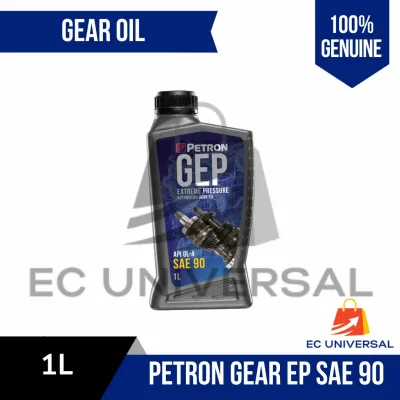
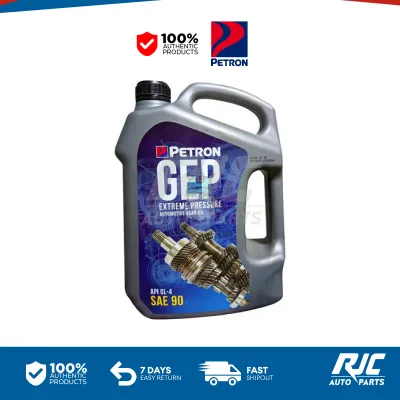
For most modern passenger cars, SUVs, and light utility pickups, a multigrade SAE 80W-90 gear oil is the standard recommendation because it provides reliable flow during cool morning startups and maintains a stable protective film at operating temperatures. In contrast, a monograde sae 90 gear oil is typically specified for older classic vehicles, vintage gearboxes, and certain agricultural or industrial machinery operating in consistently warm climates. Meanwhile, SAE 140 is a highly viscous monograde reserved for heavy-duty commercial truck axles, heavily loaded differentials, or specialized high-temperature applications where extreme film strength is required to prevent metal-to-metal wear.
When selecting a gear oil, matching the SAE viscosity grade is only half the task. You must also pair it with the correct API service classification—typically GL-4 or GL-5. Using the wrong API classification, even in the correct viscosity, can lead to severe mechanical issues, such as the chemical corrosion of yellow-metal synchronizers in manual transmissions or accelerated wear in high-pressure hypoid differentials. Always consult your vehicle’s owner’s manual to verify the exact fluid specifications before purchasing or performing any maintenance.
Products mentioned in this guide
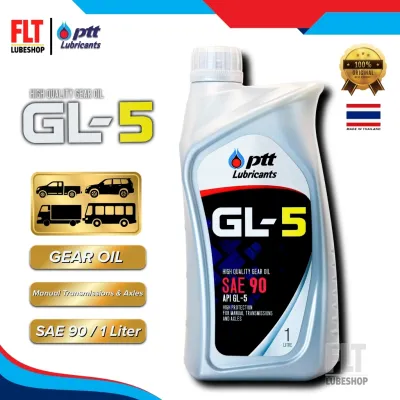
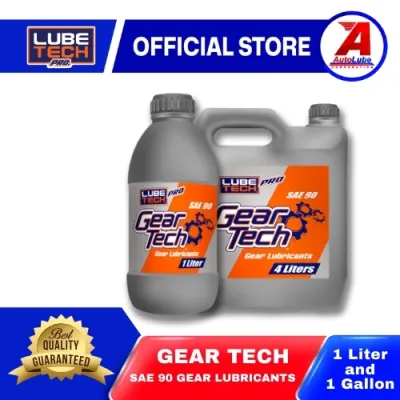
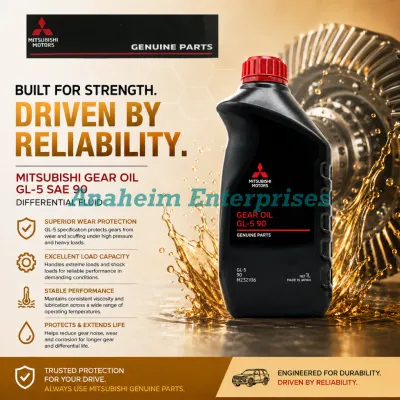
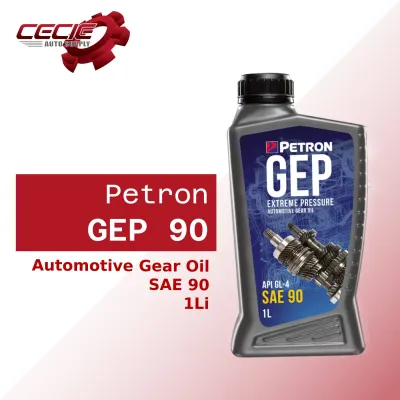
Prices are valid at publication and may change. Please refer to the product page for the latest price.
SAE 90 Gear Oil vs 80W-90 vs 140: What the Viscosity Grades Actually Mean
To make an informed decision, you must first understand how the Society of Automotive Engineers (SAE) classifies gear lubricants. The numbers on the bottle represent the oil’s resistance to flow (viscosity) at specific test temperatures. Understanding these ratings prevents costly mistakes when servicing your drivetrain.
SAE 80W-90 (Multigrade)
An SAE 80W-90 gear oil is a multigrade lubricant, meaning it is formulated to perform across a wide temperature spectrum. The “80W” portion of the designation indicates the oil’s low-temperature flow characteristics (the “W” stands for Winter). This rating ensures that the fluid remains sufficiently fluid at lower temperatures, allowing it to circulate quickly and protect gears immediately upon startup.
The second number, “90,” represents the oil’s kinematic viscosity when measured at 100°C, which represents typical operating temperatures. Multigrade oils achieve this dual-temperature performance through the use of high-quality base stocks and polymer additives known as viscosity index improvers. These polymers expand as temperature rises, preventing the oil from thinning out excessively under operating heat, while allowing it to flow more freely at lower startup temperatures.
SAE 90 (Monograde)
A monograde sae 90 gear oil is a single-grade lubricant that lacks a low-temperature “W” rating. This means the oil is formulated to meet viscosity standards only at the 100°C operating threshold. Because it does not contain the same low-temperature flow additives as a multigrade oil, an SAE 90 fluid is significantly thicker at cooler startup temperatures.
In tropical environments where ambient temperatures rarely drop to freezing, the cold-start limitations of a monograde oil are less pronounced. However, during cooler mornings or in high-altitude regions, an SAE 90 fluid will still exhibit higher initial resistance to flow than an 80W-90 fluid. Historically, this grade was the default specification for older manual gearboxes and differentials before multigrade technology became widely available.
SAE 140 (Heavy-Duty Monograde)
SAE 140 is a heavy-duty monograde gear oil designed for applications subjected to extreme mechanical loads and high operating temperatures. With a kinematic viscosity at 100°C that is substantially higher than that of an SAE 90 fluid, SAE 140 provides an exceptionally thick, robust lubricating film between meshing gear teeth.
This high viscosity makes SAE 140 highly unsuitable for standard passenger car manual transmissions or light-duty differentials. The thick fluid creates significant internal resistance, leading to hard shifting, excessive fluid drag, and increased operating temperatures in smaller components. Its use is generally restricted to heavy commercial truck axles, industrial gearboxes, agricultural equipment, and specialized racing differentials where extreme shock loads are common.
How Viscosity Affects Performance in Real-World Driving
The physical differences between these three gear oil grades translate directly into distinct performance characteristics when your vehicle is on the road. Understanding these trade-offs helps you select the fluid that best matches your daily driving conditions.

Cold-Start Protection and Fluidity
When a vehicle has been parked overnight, the gear oil settles to the bottom of the transmission or differential housing. Upon startup, the gears must splash-lubricate themselves by carrying the oil upward. A multigrade SAE 80W-90 oil flows quickly at startup, ensuring that critical gear faces and bearings receive immediate lubrication, reducing initial startup wear.
An SAE 90 or SAE 140 monograde oil, being thicker at ambient temperatures, resists this initial movement. In cooler climates or during high-altitude driving, this resistance can lead to temporary oil starvation at the top of the gear assembly. In manual transmissions, this cold-start thickness manifests as a stiff, hard-to-shift gear lever until the fluid warms up from mechanical friction.
High-Temperature Film Strength and Load Capacity
Once a vehicle reaches operating temperature, the primary job of the gear oil is to maintain a continuous hydrodynamic film between the gear teeth. Under heavy loads, such as towing a trailer or climbing steep mountain passes under load, the pressure between gear teeth increases dramatically. This pressure threatens to squeeze the oil out from between the contact points.
An SAE 140 gear oil provides the highest film strength of the three, making it exceptionally capable of preventing metal-to-metal contact under extreme shock loads. SAE 90 and 80W-90 provide a thinner, yet highly adequate film for standard passenger and light commercial vehicles. If you use an oil with a viscosity lower than what the manufacturer specifies, the lubricating film may rupture under load, leading to rapid gear pitting, scuffing, and eventual component failure.
Fluid Drag and Fuel Efficiency
Every time a gear spins inside a housing filled with oil, it must overcome the physical resistance of the fluid. This phenomenon is known as churning loss. Thicker fluids like SAE 140 create substantial fluid drag, requiring more engine power to spin the gears. This drag directly reduces fuel economy and can increase the operating temperature of the gearbox due to fluid friction.
Using an SAE 80W-90 or a lighter multigrade oil minimizes these churning losses, contributing to better overall fuel efficiency. For daily drivers and commuter vehicles, avoiding excessively thick gear oils is an easy way to maintain optimal fuel economy and ensure smooth, effortless gear synchronization.
Shear Stability
Shear stability refers to a lubricant’s ability to resist physical breakdown under intense mechanical stress. Gearboxes, particularly those with hypoid gear designs, subject the oil to severe shearing forces as the gear teeth slide across one another.
Because monograde oils like SAE 90 and SAE 140 contain few or no polymer viscosity index improvers, they possess excellent shear stability. They are highly resistant to permanent viscosity loss over long service intervals. Multigrade oils like SAE 80W-90, while highly stable, can gradually shear down over time as the polymer chains break under extreme mechanical stress, slowly reducing the oil’s high-temperature viscosity. This is why adhering to recommended drain intervals is especially important when using multigrade fluids.
Matching the Grade to the Component: Transmissions, Differentials, and Transfer Cases
Different parts of your vehicle’s drivetrain subject the lubricant to distinct operating environments. A fluid that performs perfectly in a rear axle differential can cause catastrophic damage if poured into a manual transmission.
Manual Transmissions
Manual transmissions rely on synchronizers—small cone-shaped clutches often made of brass, bronze, or carbon—to match the speeds of the gears during a shift. For these synchronizers to grip and slide smoothly, the gear oil must have the correct frictional properties and viscosity. A fluid that is too thick, such as an SAE 140, will prevent the synchronizers from displacing the oil quickly enough, resulting in grinding gears and stiff shifting.
Furthermore, manual transmissions are highly sensitive to the chemical additives in the oil. Many API GL-5 gear oils contain high concentrations of sulfur-phosphorus extreme-pressure (EP) additives. At high operating temperatures, these active sulfur compounds can chemically attack and corrode the yellow metals (brass and bronze) used in synchronizers.
- Safety Check: Always verify whether your manual transmission requires an API GL-4 or a GL-5 fluid. If your manual specifies GL-4, never use a standard GL-5 fluid, as doing so can permanently damage the synchronizers. Check the product label and your vehicle's documentation to confirm compatibility.
Differentials
Differentials, particularly those utilizing hypoid gear configurations, present a highly demanding environment for lubricants. Hypoid gears feature offset axes that create a combination of rolling and heavy sliding friction between the teeth. This sliding action generates extreme local heat and pressure, which can easily shear a standard lubricating film.
To protect these gears, differentials require an API GL-5 gear oil, which contains robust extreme-pressure additives that form a sacrificial chemical barrier on the gear teeth. For modern passenger cars, SUVs, and light pickups, an SAE 80W-90 GL-5 fluid is the standard recommendation.
For heavy-duty commercial trucks, agricultural vehicles, or off-road rigs that carry heavy cargo or tow trailers, an SAE 140 or a multigrade equivalent like 85W-140 may be specified for the rear axle. Additionally, if your vehicle is equipped with a Limited-Slip Differential (LSD), you must ensure the gear oil either contains a limited-slip friction modifier additive or that you add an approved aftermarket modifier separately to prevent clutch chatter during tight turns.
Transfer Cases and Heavy-Duty Axles
Four-wheel-drive (4WD) and all-wheel-drive (AWD) vehicles utilize a transfer case to split power between the front and rear axles. It is a common mistake to assume that because a transfer case contains gears, it requires thick gear oil. In reality, many modern transfer cases are designed with internal oil pumps and tight clearances that require low-viscosity fluids, such as Automatic Transmission Fluid (ATF) or specialized low-viscosity transfer case fluids.
Using a thick gear oil like SAE 90 or 140 in a transfer case designed for ATF can restrict internal oil flow, starve bearings of lubrication, and cause rapid component failure. Always verify the exact fluid type specified in your owner’s manual before servicing a transfer case.
For heavy-duty commercial axles, such as those found on large delivery trucks or agricultural tractors, SAE 140 remains a common specification. These heavy axles operate at low speeds but under immense torque, where the sheer physical thickness of an SAE 140 fluid is necessary to maintain a protective barrier between the massive gear teeth.
Decision Framework: Which Grade Should You Buy?
To make the correct purchase, follow this structured decision framework based on your vehicle type, operating conditions, and manufacturer guidelines.
1. Verify Your Vehicle's Specifications First
Before purchasing any gear oil, consult your vehicle’s owner’s manual or official service documentation. Note the following three critical specifications:
- SAE Viscosity Grade: (e.g., 80W-90, 90, 140)
- API Service Classification: (e.g., GL-4, GL-5, MT-1)
- Special Requirements: (e.g., Limited-Slip additives, yellow-metal compatibility)
Never substitute a recommended viscosity or API rating based solely on generic advice. Doing so can void your vehicle’s warranty and lead to premature mechanical wear or failure.
2. Choose SAE 80W-90 If:
- You drive a modern daily-use passenger car, SUV, crossover, or light pickup truck.
- Your vehicle manual explicitly lists 80W-90 or 75W-90 as an acceptable viscosity grade.
- You operate your vehicle in varied driving conditions, including highway cruising, urban stop-and-go traffic, and occasional light towing.
- You want optimal fuel economy and smooth gear synchronization during morning startups.
3. Choose SAE 90 If:
- You are servicing a classic or vintage vehicle, an older agricultural tractor, or stationary industrial machinery.
- Your vehicle's manufacturer documentation specifically mandates a monograde SAE 90 gear oil.
- You operate the vehicle exclusively in consistently warm, tropical climates where cold-start flow is not a primary concern.
- The component being serviced does not feature modern, tightly toleranced synchronizers that require thin, multigrade fluids.
4. Choose SAE 140 If:
- You are servicing a heavy-duty commercial truck axle, a large agricultural tractor differential, or heavy industrial machinery.
- The vehicle is subjected to continuous, extreme loads, heavy towing, or severe off-road driving in high ambient temperatures.
- The manufacturer or aftermarket gear builder explicitly specifies an SAE 140 or 85W-140 viscosity grade.
- You need maximum physical film strength to protect against severe shock loads and metal-to-metal contact.
5. When Neither May Fit
If your vehicle’s manual specifies a modern, low-viscosity manual transmission fluid (MTF), an automatic transmission fluid (ATF), or a specialized synthetic fluid (such as 75W-85 or 75W-90), do not use SAE 90, 80W-90, or 140. Modern drivetrains are engineered with incredibly tight clearances and advanced materials that rely on highly specific fluid chemistry to operate safely and efficiently.
Frequently Asked Questions (FAQ)
Can I mix SAE 90 and 80W-90 gear oils?
Mixing different viscosity grades or brands of gear oil is highly discouraged and should only be done in an absolute emergency to prevent running a component dry. While they may be chemically compatible if they share the same base oil type (mineral vs. synthetic) and API rating, mixing them alters the final viscosity of the fluid in an unpredictable manner.
Furthermore, mixing different brands can disrupt the balance of the chemical additive packages, potentially reducing the fluid’s extreme-pressure protection, anti-foaming properties, and thermal stability. If you must mix fluids in an emergency, schedule a complete drain and refill with the correct, single-grade fluid as soon as possible to ensure optimal protection.
Is thicker gear oil always better for high-mileage or older vehicles?
No, using an excessively thick gear oil is not a proper solution for wear or mechanical noise in aging drivetrains. While a slightly thicker oil within the manufacturer’s approved range (such as moving from a 75W-90 to an 80W-90) might temporarily quiet a whining bearing or slow down a minor seal leak, jumping to an excessively thick grade like SAE 140 in a standard passenger car will cause severe issues.
The excessive thickness of SAE 140 will increase fluid drag, raise operating temperatures, restrict oil flow to critical bearings, and make manual gear shifting incredibly difficult. If your transmission or differential is making loud whining noises or leaking fluid, you should diagnose and repair the physical wear—such as replacing worn bearings or damaged seals—rather than attempting to mask the symptoms with overly thick oil.
Does the API GL rating matter as much as the SAE viscosity?
Yes, the API GL rating is just as critical to component survival as the physical viscosity of the oil. The API rating defines the type and concentration of chemical additives in the fluid, which are designed for specific gear designs and operating pressures.
Using an API GL-5 fluid in a manual transmission that specifies GL-4 can lead to rapid corrosion and degradation of the brass synchronizers due to the aggressive sulfur-phosphorus additives. Conversely, using an API GL-4 fluid in a high-pressure hypoid differential that requires GL-5 will result in rapid gear wear and tooth scoring because the fluid lacks sufficient extreme-pressure protection. Always match both the SAE viscosity and the API service classification specified by your vehicle’s manufacturer.
Community discussion
Share your experience or ask a question. Comments are reviewed before publication.