
Quick Answer: Which 260mm Brake Disc is Safest for Your Honda Click?
When upgrading your scooter, the safest 260mm disc for click models is not defined by a single brand name, but by verified material quality, strict manufacturing tolerances, and professional installation. Reputable aftermarket brands offering clear warranties, verifiable metallurgy, and local distributor support provide the best balance of safety and value for daily riding in the Philippines.
To ensure your safety on the road, you should prioritize established manufacturers like Racing Boy (RCB), TDR, or Nissin. These brands use high-grade, heat-treated stainless steel that can withstand the demanding thermal cycles of daily commuting.
Conversely, you must completely avoid unbranded or suspiciously cheap generic discs. These low-cost alternatives often suffer from inconsistent quality control, poor heat dissipation, and substandard metal composition, which can lead to sudden structural failure or severe brake fade when you need stopping power the most.
Products mentioned in this guide
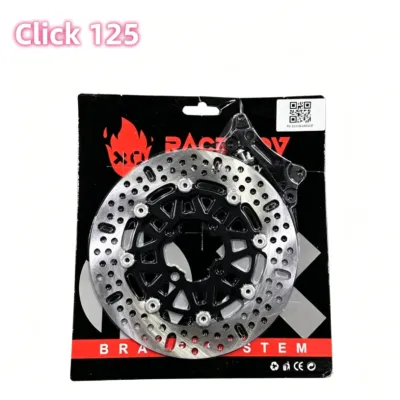
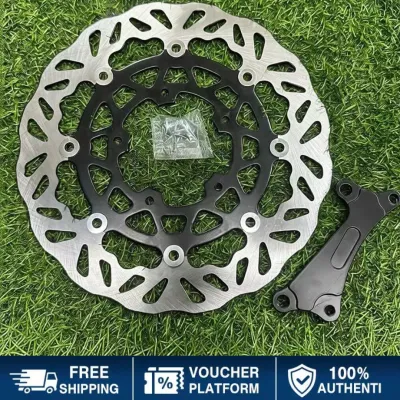
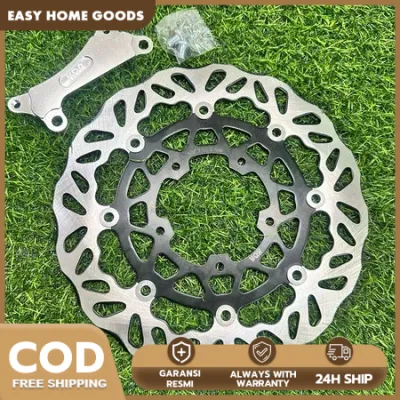
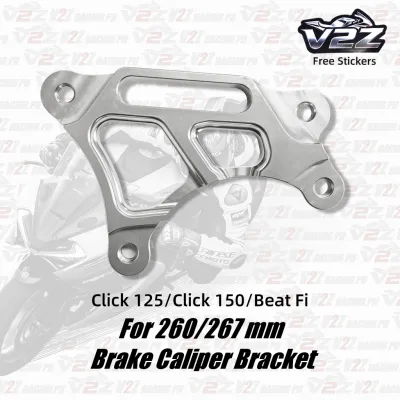
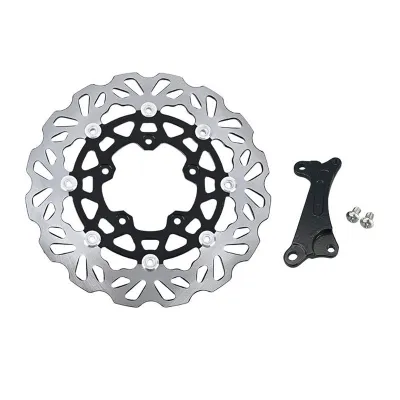
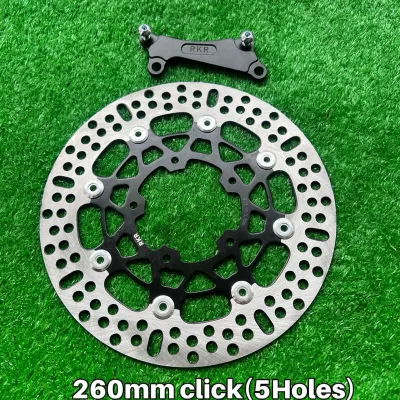
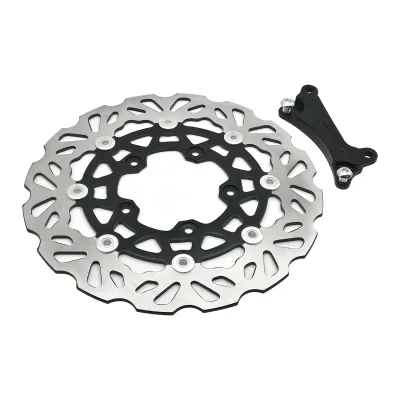
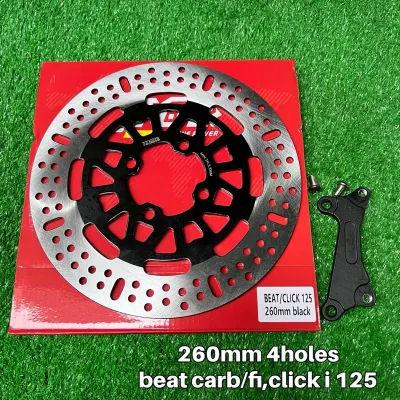
Prices are valid at publication and may change. Please refer to the product page for the latest price.
Why Riders Upgrade to a 260mm Disc for Click Scooters
Upgrading from the stock front rotor to a larger 260mm brake disc is one of the most popular modifications for the Honda Click 125i and 150i. The primary mechanical advantage of a larger rotor is the increase in braking torque.

By moving the brake caliper further outward from the wheel axle, the brake pads grip the disc at a point of greater leverage. This mechanical advantage allows you to bring the scooter to a halt with less physical effort applied to the brake lever.
Another critical advantage of a 260mm disc is improved heat dissipation. During braking, kinetic energy is converted entirely into thermal energy, causing the disc and pads to heat up rapidly.
A larger disc provides a greater surface area to absorb and radiate this heat into the surrounding air. This is highly beneficial for daily commuting in highly congested urban areas, where constant stop-and-go traffic quickly overheats smaller stock braking systems.
For riders who frequently carry a pillion passenger or transport heavy cargo, the extra thermal capacity of a 260mm setup prevents brake fade. Brake fade occurs when the braking components become so hot that the friction coefficient drops dramatically, resulting in a spongy lever and significantly longer stopping distances.
However, this upgrade is not a simple bolt-on procedure. Upgrading to a larger 260mm disc requires a compatible caliper adapter bracket to offset your stock caliper to the correct radial position. You must also verify that your specific wheel design and aftermarket spokes provide sufficient physical clearance for the relocated caliper.
Core Dimensions for Comparing Brake Disc Brands
Material Quality and Construction
When comparing aftermarket brake discs, the chemical composition of the metal is the single most important factor determining safety and longevity. Reputable brands typically manufacture their rotors using high-carbon SUS420 stainless steel.
This specific alloy is heat-treated to achieve an optimal balance of hardness and ductility. The high carbon content ensures excellent wear resistance, while the chromium content provides vital rust resistance in the highly humid and wet tropical climate of the Philippines.
Standard, low-cost steel discs lack these precise alloying elements. As a result, they are highly prone to rapid oxidation, surface pitting, and premature wear, which quickly compromises your braking efficiency.
Another major consideration is the structural construction of the rotor, which is divided into fixed and floating designs. A fixed rotor is stamped or machined from a single piece of metal, making it a rigid and cost-effective option.
While fixed rotors are highly durable for standard daily commuting, they are more susceptible to thermal warping under extreme heat because the metal cannot expand freely.
A floating brake disc features a two-piece construction consisting of an outer stainless steel braking ring connected to an inner aluminum carrier by series of rivets or “buttons.” This design allows the outer ring to expand and contract independently of the inner carrier as temperatures rise.
By permitting micro-movements under thermal stress, floating rotors prevent the uneven expansion that causes disc warping. They also maintain better alignment with the brake pads, ensuring consistent lever feel and stopping power during prolonged braking down steep mountain passes.
Rotor Design and Surface Patterns
Modern aftermarket brake discs come in various eye-catching shapes, but these designs serve functional purposes beyond aesthetic appeal. The wave or petal-shaped outer profile is designed to shed unsprung weight from the front wheel assembly.
Additionally, the wave pattern constantly cleans the surface of the brake pads, scraping away glazed friction material and debris to maintain a fresh biting edge. This self-cleaning action is particularly useful when riding through dusty or muddy road conditions.
Surface drillings and slots are also engineered to manage the interface between the pad and the rotor. Drilled holes provide exit paths for water film during sudden tropical downpours, preventing aquaplaning between the pad and disc and ensuring immediate wet-weather response.
Slotted patterns act as escape channels for high-temperature gas and dust generated by the decomposing brake pad material under heavy braking. By venting these gases, slots prevent a cushion of air from forming, which would otherwise push the pads away from the disc.
For daily street riding, you must remember that structural integrity and consistent thickness are far more critical than aggressive, track-focused surface patterns. Excessively drilled or slotted designs reduce the total surface area available for friction and can accelerate brake pad wear significantly.
Manufacturing Standards and Verification
Safe braking relies on incredibly tight physical tolerances that can only be achieved through high-precision CNC machining. Legitimate manufacturers publish precise specifications for their discs, including nominal thickness and maximum allowable lateral runout.
Lateral runout refers to the side-to-side wobble of the disc as it rotates. High-quality brands keep runout tolerances below 0.1 millimeters, ensuring smooth rotation and preventing annoying brake lever pulsation.
Before purchasing any brake disc, you should inspect the packaging and the product itself for laser-engraved safety markings. Genuine rotors will always have the minimum allowable thickness (often marked as “Min. Th.” followed by a millimeter measurement) clearly engraved on the rotor carrier or blade.
To combat the high volume of counterfeit motorcycle parts in the market, established manufacturers implement anti-counterfeit measures. Look for holographic security stickers, unique serial numbers, or scratch-off QR codes that link directly to the manufacturer’s official verification portal.
If a product is sold in plain packaging, lacks laser-etched specifications, or has no traceable manufacturer information, it is a high-risk item that should never be installed on your vehicle.
Evaluating Market Options for Daily Riding
Reputable Aftermarket Brands
Established aftermarket brands command a price premium because they invest heavily in materials testing, precision engineering, and quality control. Brands like Racing Boy (RCB) and TDR are highly regarded in the local scooter community for delivering consistent, predictable performance.
These manufacturers utilize automated CNC machining to ensure that every disc meets exact dimensional standards, resulting in a perfect fit on your Honda Click’s wheel hub. Their metallurgy is formulated to withstand the high operating temperatures of daily urban riding without cracking or warping.
Furthermore, buying from an established brand gives you access to official manufacturer warranties and reliable customer support through authorized physical motorcycle shops. In the Philippines, purchasing from official flagship stores on major online marketplaces or brick-and-mortar dealers is the only way to guarantee you are receiving an authentic product.
While a genuine, high-quality 260mm disc generally costs between ₱1,500 and ₱4,000 depending on whether it is a fixed or floating model, this investment translates directly into long-term durability and peace of mind on the road.
Budget and Unbranded Discs
On the other end of the spectrum are unbranded, generic, or replica discs that are widely available online for as low as ₱300 to ₱600. While the low price tag and aggressive designs are appealing, these products represent a major safety hazard.
To maintain such low prices, budget manufacturers use cheap, low-grade steel alloys that have not undergone proper heat treatment. These inferior metals have very low resistance to thermal shock, making them highly susceptible to rapid warping.
In worst-case scenarios, the extreme heat generated during emergency braking can cause cheap discs to crack or shatter completely, leading to an immediate lock-up of the front wheel and a catastrophic crash.
Additionally, poor machining standards on budget discs often result in uneven thickness across the rotor surface. This variation causes severe brake pulsation, which vibrates through the handlebars, reduces your braking control, and accelerates wear on your caliper seals and steering head bearings.
Saving money on a critical safety component like your front brake rotor is a false economy. The potential cost of medical bills, body repairs, and towing services far outweighs the initial savings of a cheap, unverified brake disc.
Critical Safety Rules for Installation and Maintenance
Upgrading your braking system is a high-liability task that directly impacts your physical safety on the road. For this reason, you should always have the 260mm brake disc upgrade performed by a qualified mechanic at a reputable service center.
During installation, the mechanic must ensure that the aftermarket caliper adapter bracket aligns the caliper perfectly parallel to the new rotor. Any slight angular misalignment will cause uneven pad wear, reduced braking surface contact, and severe binding.
The mounting bolts securing the disc to the wheel hub must be tightened using a calibrated torque wrench to the exact torque specifications outlined in your Honda Click’s service manual. Applying too much torque can strip the threads in the aluminum wheel hub, while insufficient torque can cause the bolts to back out under vibration.
Always apply a medium-strength thread-locking compound, such as Loctite 242, to the mounting bolt threads before installation to prevent them from loosening. Additionally, the mechanic must spin the front wheel manually to verify that the caliper, bracket, and rotor do not make physical contact with the wheel spokes or fork leg.
Once the physical installation is complete, you must perform a proper bedding-in (or burnishing) process before riding at normal speeds. Bedding-in is the controlled process of mating the new brake pads to the new disc surface.
To bed in your brakes safely, find a quiet, flat road with minimal traffic. Accelerate the scooter to approximately 40 km/h, then apply the front brake smoothly and progressively to slow down to 10 km/h without coming to a complete stop.
Repeat this process 10 to 15 times, allowing the brakes to cool slightly between runs. This procedure transfers an even, microscopic layer of friction material from the brake pads onto the steel rotor, which is absolutely essential for achieving maximum stopping power and preventing localized hot spots that lead to warping.
Routine maintenance is equally vital for keeping your upgraded braking system safe. You should visually inspect your brake disc every week for deep grooves, scoring, or unusual discoloration, which indicates overheating.
Use a digital vernier caliper or micrometer to measure the thickness of the disc at multiple points along the braking track. If the thickness is at or below the engraved minimum limit, you must replace the rotor immediately.
Finally, check your brake fluid level and color regularly. If the fluid appears dark brown or cloudy, it has absorbed moisture from the humid Philippine air and must be flushed and replaced with fresh fluid from a sealed container, adhering strictly to the DOT rating specified on your master cylinder cap.
Decision Framework: Choosing the Right 260mm Disc
To make a safe and cost-effective purchasing decision, you can use the following condition-based rules to guide your selection:
- Choose a reputable floating rotor if your daily commute involves heavy stop-and-go traffic in congested metropolitan areas, if you frequently ride down steep mountain roads, or if you regularly carry a pillion passenger. The floating design will provide superior heat management and prevent warping under these high-stress conditions.
- Choose a high-quality fixed stainless steel rotor from an established brand if you primarily use your Honda Click for standard daily commuting on relatively flat, open roads. A genuine fixed rotor offers excellent durability, low maintenance, and a more accessible price point while maintaining strict safety standards.
- Avoid unbranded, generic, or replica discs entirely, regardless of how attractive their aesthetic design or low price may seem. Your front brake is your primary stopping force, and compromising on its structural integrity is an unacceptable safety risk.
- Verify physical clearance first by consulting with a professional mechanic to confirm that your specific Honda Click model year, aftermarket wheels, and front fork setup can safely accommodate a 260mm rotor and its corresponding caliper adapter bracket before purchasing any parts.
Frequently Asked Questions (FAQ)
Do I need to change my brake pads when installing a new 260mm disc?
Yes, it is highly recommended to install a fresh set of high-quality brake pads whenever you mount a new 260mm brake disc. Your old brake pads have already worn down to match the unique surface wear profile, grooves, and imperfections of your old rotor.
If you reuse these worn pads on a brand-new flat disc, they will not make full contact with the new rotor surface, resulting in poor braking performance and a spongy lever feel. Additionally, uneven pressure from old pads can cause localized overheating on your new disc, which can lead to premature warping or uneven wear patterns.
Will a 260mm brake disc fit all Honda Click models?
While a 260mm brake disc can be adapted to fit most generations of the Honda Click (including the Click 125i, Click 150i, and Click 160), it is not a universal direct-fit part. The front fork legs, wheel hub bolt patterns, and caliper mounting points vary between different model years and engine displacements.
To install a 260mm disc, you must purchase a caliper adapter bracket specifically designed for your exact Honda Click model year and front fork setup. Always verify the physical dimensions, bolt hole spacing, and wheel hub interface against your vehicle’s documentation or consult a professional mechanic before making a purchase.
Community discussion
Share your experience or ask a question. Comments are reviewed before publication.