
Shell Advance Long Ride is formulated to address the specific thermal and mechanical stresses of scooter engines during extended or heavy-duty use. Rather than relying on marketing claims, determining if this oil protects your engine requires verifying its viscosity, base oil type, and industry certifications against your scooter manufacturer’s specifications.
Scooters operate under unique mechanical conditions, running at higher operating temperatures and sustained high revolutions per minute (RPM) compared to standard passenger cars. This makes selecting the correct fluid critical for long-term engine health, especially in hot and humid tropical climates like the Philippines where ambient heat adds to the thermal load.
To determine if this oil is right for your scooter, look past marketing names and verify its technical specifications—such as its SAE viscosity grade, JASO rating, and API classification—against the exact requirements detailed in your vehicle’s owner’s manual.
Products mentioned in this guide
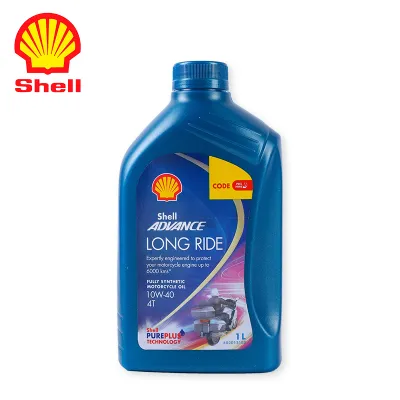
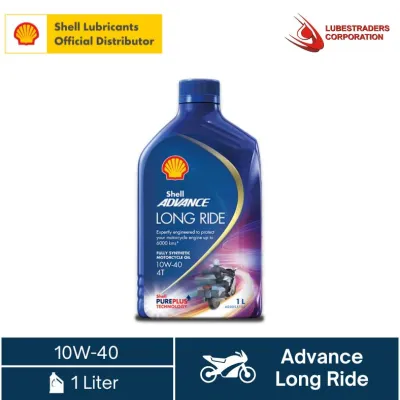
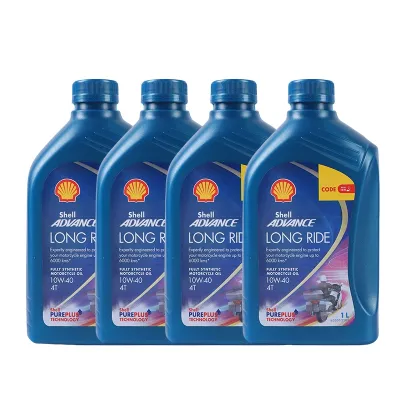
Prices are valid at publication and may change. Please refer to the product page for the latest price.
Decoding Viscosity Grades and Base Oil Formulations
Understanding the Society of Automotive Engineers (SAE) viscosity rating on an engine oil label is the first step in ensuring proper engine protection. A rating like 10W-40 describes how the oil flows at different temperatures. The number preceding the “W” indicates cold-start flow, while the second number represents viscosity at normal operating temperature.
In tropical environments, the high-temperature viscosity rating is critical. An oil that is too thin at high temperatures may fail to maintain a protective film between moving parts, leading to accelerated wear on piston rings and cylinder walls. Conversely, an oil that is too thick increases internal drag, reducing fuel efficiency and making the engine work harder.
The base oil classification also dictates how the fluid handles thermal stress. Fully synthetic and semi-synthetic formulations offer distinct levels of resistance to oxidation. Fully synthetic base oils generally provide superior molecular stability, allowing the oil to maintain its protective properties over longer intervals and under higher operating temperatures without degrading into sludge.
Before purchasing, cross-reference the product label with your scooter’s owner’s manual. Matching the exact viscosity grade specified by the manufacturer is critical for maintaining correct oil pressure and ensuring internal clearances are properly lubricated.
Understanding Additive Technology for Extended Use
While the base oil provides the primary lubrication barrier, the additive package determines how well the oil performs over extended periods. In oils designed for long-distance riding, specific additives are selected to combat the chemical degradation that occurs when an engine runs continuously for hours. These additives work to keep internal components clean and protected.

Anti-wear additives safeguard high-load areas within the engine, such as the valve train and piston assembly. Under sustained high RPMs, these additives form a microscopic sacrificial layer on metal surfaces, preventing direct metal-to-metal contact and minimizing mechanical wear. This protection is vital for maintaining engine compression and power output over long journeys.
Detergents and dispersants manage combustion byproducts. In the compact, high-heat environment of a scooter engine, oil is highly susceptible to oxidation, which can lead to harmful sludge and varnish. Detergents actively clean deposit precursors from hot metal surfaces, while dispersants keep these contaminants suspended in the oil so they can be trapped by the oil filter.
When evaluating a “Long Ride” formulation, check the product label for official manufacturer claims regarding shear stability and heat dissipation. High shear stability ensures that the oil’s viscosity-index improvers do not break down under mechanical stress, preventing the oil from thinning out prematurely.
Verifying Compatibility: JASO Standards and Scooter Transmissions
One of the most critical steps in selecting scooter oil is verifying its Japanese Automotive Standards Organization (JASO) classification. Scooters and motorcycles utilize different transmission designs, which dictates the type of friction modifiers required in their lubricants. Using an oil with the wrong friction characteristics can lead to severe mechanical issues.
Most modern scooters utilize a continuously variable transmission (CVT) and a dry clutch system, meaning the engine oil only lubricates the engine itself. For these vehicles, JASO MB oils are formulated with specific friction modifiers to reduce internal drag and maximize fuel efficiency. Because there is no wet clutch to slip, these low-friction oils are ideal for automatic scooters.
In contrast, standard motorcycles typically feature a wet clutch system where the engine oil also bathes the clutch plates. These vehicles require JASO MA or JASO MA2 oils, which have higher friction coefficients to ensure the clutch plates can grip properly without slipping. Using a JASO MB oil in a wet-clutch motorcycle can cause immediate clutch slippage and accelerated wear.
To ensure compatibility, locate the JASO certification square on the back of the oil bottle and verify whether it displays “MB” or “MA.” Additionally, check the American Petroleum Institute (API) service classification on the label to ensure it meets or exceeds the minimum performance standard required by your scooter’s manufacturer.
Evaluating if This Formulation Fits Your Riding Profile
Deciding whether to invest in a specialized long-ride formulation depends largely on your daily riding habits and maintenance goals. If your routine consists primarily of short, low-speed commutes, a standard high-quality scooter oil changed at regular intervals may be perfectly adequate. However, if you frequently undertake long-distance touring, carry heavy loads, or operate in heavy stop-and-go traffic under intense tropical heat, a specialized formulation offers valuable extra protection.
Before switching to a new oil formulation, review your vehicle’s warranty terms. Some manufacturers require specific oil certifications or brand approvals to maintain warranty coverage. Ensuring that your chosen oil meets all manufacturer-mandated specifications protects both your engine and your financial investment.
If you encounter any conflicting information between the product label specifications and your scooter’s owner’s manual, stop and consult a qualified mechanic or the vehicle manufacturer. Never prioritize marketing designations over the explicit technical requirements provided by the engineers who designed your vehicle.
Frequently Asked Questions (FAQ)
Can I use Shell Advance Long Ride in a motorcycle with a wet clutch?
You must check the specific product label and your motorcycle’s owner’s manual before attempting this. If the specific bottle of Shell Advance Long Ride is certified as JASO MB, it is formulated with friction modifiers designed exclusively for dry-clutch scooters. Using a JASO MB oil in a motorcycle with a wet clutch will likely cause the clutch to slip, leading to poor acceleration, overheating, and potential damage to the clutch plates. Always match the JASO rating on the bottle to the exact specification required by your motorcycle.
How do I determine the correct oil change interval for long-distance riding?
To establish a safe maintenance schedule, consult the severe service schedule in your scooter’s owner’s manual rather than relying on generic mileage recommendations. Operating a scooter under extreme heat, carrying heavy loads, or riding long distances at sustained high speeds qualifies as severe service. Cross-reference your manual’s guidelines with the oil manufacturer’s official label recommendations, and be prepared to perform more frequent oil changes to ensure continuous engine protection under demanding conditions.
Community discussion
Share your experience or ask a question. Comments are reviewed before publication.