
Selecting the right engine oil is one of the most critical maintenance decisions for automatic scooter owners. Unlike standard motorcycles, scooters operate under unique mechanical conditions, including higher running temperatures and dry-clutch configurations. The Shell Advance scooter oil lineup is designed to address these specific demands through a range of variants tailored to different engine designs, riding habits, and budgets.
Understanding the differences between these variants allows you to choose a formulation that matches your vehicle’s requirements. By looking closely at base oil types, viscosity ratings, and industry certifications, you can ensure your engine remains protected during daily commutes, long rides, and challenging weather conditions.
Understanding Base Oil Formulations in Shell Advance Variants
Engine oils are categorized by their base oil formulations, which serve as the foundation for the product’s protective capabilities. The Shell Advance scooter range includes mineral, semi-synthetic, and fully synthetic options. Each tier offers a different level of resistance to thermal breakdown, oxidation, and viscosity loss over time.
Products mentioned in this guide
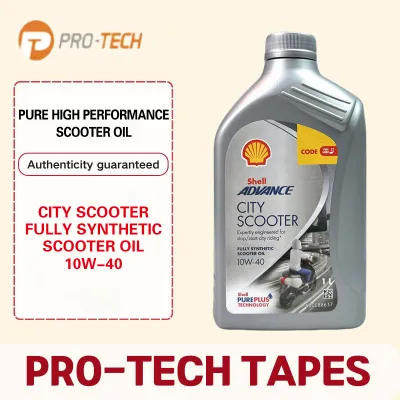
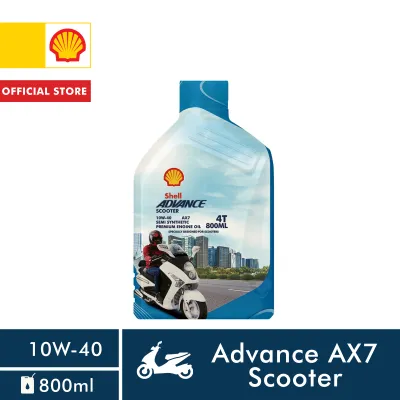
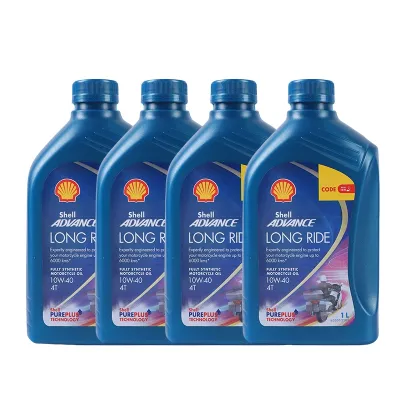
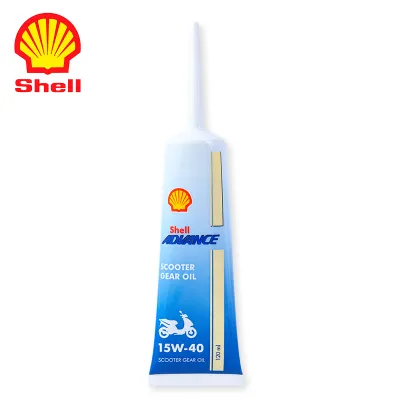
Prices are valid at publication and may change. Please refer to the product page for the latest price.
Mineral formulations, typically found in entry-level variants like Shell Advance AX5 Scooter, are refined directly from crude oil. These oils provide reliable, basic lubrication suitable for older scooter models or riders who perform frequent, short-distance trips. While cost-effective, mineral oils tend to degrade faster under extreme heat than their synthetic counterparts.
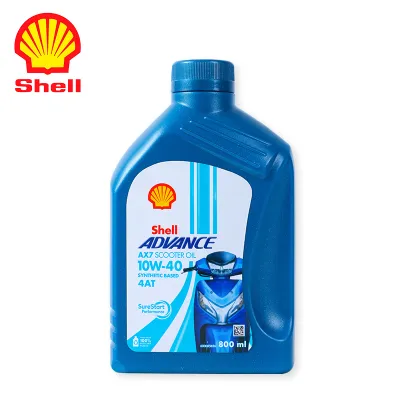
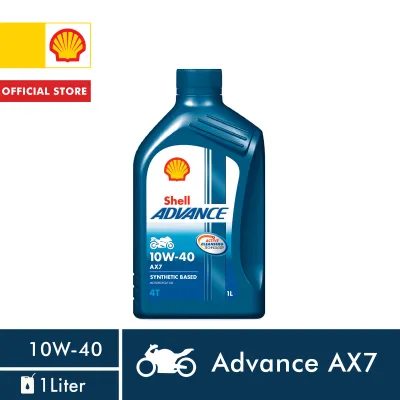
Semi-synthetic variants, such as Shell Advance AX7 Scooter, combine mineral base oils with synthetic stocks. This hybrid formulation offers a balanced middle ground, providing enhanced resistance to oil degradation and better engine cleanliness. It is well-suited for daily commuters navigating moderate traffic in warm climates, offering reliable protection without the premium cost of a full synthetic.
Fully synthetic formulations, represented by premium variants like Shell Advance Ultra Scooter, are engineered entirely from synthetic base stocks. These oils offer the highest level of thermal stability and shear resistance. They maintain their protective film even under extreme operating temperatures, making them ideal for modern, high-performance scooters and long-distance riding.
In hot and humid environments like the Philippines, stop-and-go traffic causes scooter engines to run exceptionally hot. Because scooter engines are typically enclosed by plastic bodywork, they rely heavily on the engine oil to dissipate heat. Synthetic and semi-synthetic formulations help prevent the oil from thinning out excessively, reducing wear on critical internal components.
Before purchasing, always verify the exact base oil composition and variant availability on the current local product packaging. Formulations and product names can occasionally be updated by the manufacturer to meet evolving industry standards.
Decoding Critical Specifications on the Oil Label
Reading the labels on a bottle of Shell Advance scooter oil reveals several technical standards that dictate how the oil will perform inside your engine. The most critical specification for scooter owners is the JASO standard, developed by the Japanese Automotive Standards Organization.

Scooters require oils that meet the JASO MB standard. Because automatic scooters use a Continuously Variable Transmission (CVT) with a dry clutch, the engine oil does not come into contact with the clutch plates. JASO MB oils contain friction modifiers designed to minimize friction, which helps maximize fuel efficiency and power delivery. This contrasts with JASO MA or MA2 oils, which are formulated for wet-clutch motorcycles and require higher friction to prevent clutch slippage.
Another key specification is the SAE viscosity grade, represented by numbers such as 10W-40 or 10W-30. The number preceding the “W” indicates the oil’s flow characteristics in cold temperatures, while the second number indicates its viscosity at operating temperature. In tropical regions, the high-temperature rating is particularly important; using an oil that is too thin can lead to inadequate lubrication, while an oil that is too thick can increase internal drag and reduce fuel economy.
API (American Petroleum Institute) service classifications indicate the oil’s performance level and technology generation. Ratings such as API SN or API SP represent advanced standards that offer superior control over piston deposits, sludge formation, and valve train wear. Matching the API rating on the bottle to the minimum requirement specified in your vehicle documentation ensures your engine receives adequate protection.
Matching the Oil Variant to Your Scooter's Requirements
Choosing the right Shell Advance variant depends on your scooter’s age, engine technology, and daily operating conditions. There is no single variant that suits every rider, as different engines require different levels of protection and chemical properties.
Standard mineral or semi-synthetic oils are often highly sufficient for older scooter models, vintage engines, or vehicles used primarily for short, low-speed commutes. If your daily ride consists of quick trips to the local market under mild operating temperatures, these variants provide a practical and economical choice, costing fewer ₱ per maintenance interval.
Fully synthetic formulations are highly recommended for modern, fuel-injected, or liquid-cooled scooters that face demanding conditions. If you regularly carry heavy loads, navigate steep terrain, or spend hours idling in dense city traffic, a fully synthetic oil provides the necessary thermal defense to prevent deposit buildup and premature component wear.
Regardless of which variant seems most appealing, you must cross-reference the oil’s specifications with your scooter owner’s manual. Using an oil with the incorrect viscosity or JASO rating can lead to engine damage, reduced fuel efficiency, or voided manufacturer warranties. Your vehicle documentation remains the ultimate authority on compatibility.
Frequently Asked Questions (FAQ)
Can I use standard motorcycle oil instead of scooter-specific oil?
Using standard motorcycle oil in an automatic scooter is not recommended due to the differences in clutch designs. Standard motorcycles typically feature wet clutches that require JASO MA or MA2 oils to maintain wet-clutch friction and prevent slippage. Scooters utilize dry clutches and CVTs, meaning they benefit from the low-friction properties of JASO MB oils. Using a JASO MA oil in a scooter will not cause immediate mechanical failure, but it can increase internal engine friction, leading to higher operating temperatures and decreased fuel efficiency over time.
How often should I change my scooter's engine oil?
The baseline oil change interval is determined by your scooter manufacturer and can be found in your owner’s manual, typically specified by mileage or time. However, severe riding conditions can accelerate oil degradation. If you frequently ride in dusty environments, carry heavy cargo, make short trips where the engine rarely reaches full operating temperature, or spend significant time idling in heavy traffic, you should inspect and change your oil more frequently than the standard recommended interval to prevent sludge accumulation.
Community discussion
Share your experience or ask a question. Comments are reviewed before publication.