
Choosing between Shell, Castrol, and Motul for your diesel engine is not about finding a single, universally superior brand. The ideal diesel engine oil is the one that precisely matches the engineering requirements of your specific vehicle, your local driving environment, and your maintenance habits. While marketing campaigns highlight proprietary additives and advanced molecular bonds, the actual performance of any oil is determined by its viscosity grade, industry certifications, and original equipment manufacturer (OEM) approvals.
To make the right choice, you must look past the front label’s bold claims and examine the technical specifications printed on the back of the bottle. This guide breaks down how to evaluate these three major brands, understand the critical specifications your diesel engine demands, and select the formulation that will protect your engine under the demanding driving conditions of the Philippines.
Understanding Your Diesel Engine's Oil Requirements
Before comparing brands, you must understand what your engine requires to operate safely and efficiently. The starting point for any oil selection is always your vehicle’s owner’s manual. This document specifies the exact viscosity grade, such as 5W-30 or 15W-40, required to maintain proper oil pressure and lubrication across different operating temperatures. Using an incorrect viscosity can lead to accelerated wear on internal components or poor fuel efficiency.
Products mentioned in this guide
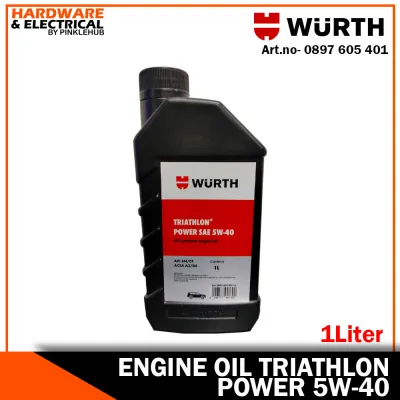
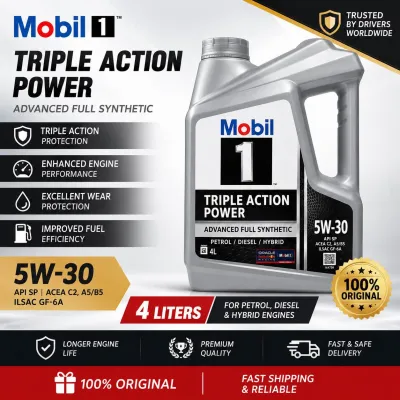
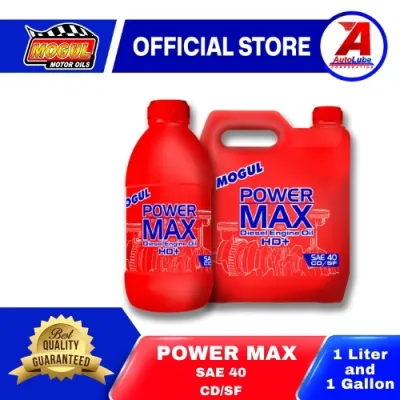
Prices are valid at publication and may change. Please refer to the product page for the latest price.
In addition to viscosity, your manual will list required industry standards, such as those from the American Petroleum Institute (API) or the European Automobile Manufacturers’ Association (ACEA). Modern diesel engines, especially those equipped with exhaust aftertreatment systems like Diesel Particulate Filters (DPF), require specific low-SAPS (Sulphated Ash, Phosphorus, and Sulphur) oils to prevent filter clogging. Using an oil that lacks these specific certifications can permanently damage expensive emissions components and void your vehicle’s warranty.
Diesel engines operate under significantly higher compression ratios and temperatures than gasoline engines, which changes their lubrication needs. The combustion of diesel fuel generates high levels of soot and acidic byproducts. Consequently, diesel-specific engine oils are formulated with robust detergent and dispersant additive packages. These additives keep soot particles suspended in the oil to prevent them from clumping together and causing abrasive wear, while also neutralizing acids to protect internal metal surfaces from corrosion.
Comparing Shell, Castrol, and Motul Diesel Oils
While Shell, Castrol, and Motul are all reputable global manufacturers, they position their products differently in the market. Rather than assuming one brand is inherently better, you should evaluate how each brand’s specific product lines align with your vehicle’s requirements. A premium fully synthetic oil from any of these brands will generally outperform a basic mineral oil from the same or a competing brand, making the product tier and certifications far more important than the logo on the bottle.

When comparing these brands, always verify the technical specifications on the back label. Do not rely on general brand reputation to assume compatibility with your vehicle. A brand may be famous for racing lubricants, but its standard consumer-grade diesel oil must still carry the exact OEM approval code required by your vehicle manufacturer to ensure safe operation.
Shell Diesel Engine Oils
Shell’s diesel engine oil lineup is widely recognized for its focus on fuel economy and active engine cleanliness. Many of their synthetic and semi-synthetic formulations utilize proprietary gas-to-liquid technology, which produces a highly pure base oil that resists thermal breakdown. On their product labels, Shell frequently emphasizes active cleansing agents designed to prevent the formation of performance-robbing deposits on critical engine parts.
When considering a Shell product, look closely at the back label to verify its specific API or ACEA certifications. Shell offers a wide range of oils, from heavy-duty commercial vehicle formulations to passenger car diesel oils. Ensure the product you select matches your vehicle type; a heavy-duty truck oil may not have the correct low-viscosity properties or emissions-system compatibility required for a modern diesel crossover or sedan.
Always verify the exact product tier before purchasing. Shell categorizes its oils into mineral, semi-synthetic, and fully synthetic options. While semi-synthetic oils offer a balanced compromise between cost and protection, fully synthetic formulations provide better flow at startup and superior resistance to high-temperature oxidation, which is particularly beneficial in tropical climates.
Castrol Diesel Engine Oils
Castrol typically focuses its marketing and formulation strategies on engine protection under extreme loads and high operating temperatures. Their diesel product lines often feature additives designed to provide high shear stability, meaning the oil maintains its protective film thickness even when subjected to intense mechanical stress inside the engine. This focus makes Castrol a popular choice for vehicles that frequently carry heavy loads or operate in demanding environments.
To ensure a Castrol oil is suitable for your vehicle, cross-reference the stated OEM approvals on the bottle with your owner’s manual. Castrol collaborates closely with several major vehicle manufacturers to secure official approvals, which are critical for maintaining warranty coverage. Never assume an oil is compatible simply because the front label mentions a general technology; the specific manufacturer code must be present on the back.
When purchasing Castrol products, pay close attention to the physical packaging. Check the manufacturing date printed on the bottle and ensure the tamper-evident seal under the cap is fully intact. Because Castrol is a highly popular brand, verifying these physical details helps ensure you are receiving a genuine, fresh product that will perform as intended.
Motul Diesel Engine Oils
Motul has built a strong reputation in the automotive community for high-performance and specialized lubricants. Often favored by enthusiasts and owners of modified or heavy-duty diesel vehicles, Motul focuses on high-quality synthetic base stocks, including ester-based formulations in their premium lines. These formulations are engineered to provide exceptional thermal stability and strong oil film retention under extreme operating conditions.
If you choose Motul, you must carefully verify that the specific product is formulated for diesel engines and meets the necessary soot-handling standards. Some of Motul’s high-performance oils are optimized for gasoline engines and may not contain the robust detergent packages required to manage the high soot levels of a diesel engine. Always look for explicit diesel ratings, such as API CK-4 or ACEA C3, on the bottle.
Due to its premium positioning and popularity among enthusiasts, it is crucial to verify the authenticity of Motul products. Look for official distributor markings, holographic labels, or specific batch code formats on the packaging. Purchasing from authorized retail partners is the most reliable way to ensure you are getting genuine Motul oil.
Key Specifications to Check on the Bottle
To make an objective comparison between these brands, you must become familiar with the key specifications listed on the back of every oil bottle. The first and most critical specification is the viscosity grade, defined by the Society of Automotive Engineers (SAE). In the tropical climate of the Philippines, where ambient temperatures remain high year-round, a slightly higher hot-viscosity rating (the second number, such as 40 in 15W-40) can help maintain a thick protective film. However, you must never deviate from the viscosity ranges permitted in your owner’s manual, as modern engines are designed with tight clearances that require specific flow rates.
Next, examine the API and ACEA ratings. For modern diesel vehicles equipped with emissions control devices, look for API CK-4 or ACEA C-series ratings (such as C3 or C4). These ratings indicate that the oil has low levels of sulfated ash, phosphorus, and sulfur, which prevents the premature clogging of your diesel particulate filter. For older diesel engines without complex emissions systems, an API CI-4 or CH-4 oil may be acceptable and often provides excellent wear protection at a lower cost.
Finally, look for explicit OEM approvals. Many manufacturers, such as Toyota, Mitsubishi, Ford, and Isuzu, have specific oil standards. If your manual states that your engine requires an oil meeting a specific standard, look for that exact code on the back of the bottle. An official approval means the oil manufacturer has submitted the formulation to the vehicle manufacturer for testing, guaranteeing compatibility with the engine’s seals, metallurgy, and operating parameters.
Matching the Oil to Your Driving Conditions
Your daily driving habits should play a major role in determining which oil formulation is best for your vehicle. If your daily commute consists primarily of stop-and-go city driving in heavy traffic, your engine experiences prolonged idling and low operating temperatures. This type of driving accelerates soot buildup and fuel dilution in the oil. In this scenario, look for a fully synthetic oil with high detergency and excellent soot-dispersant properties to prevent sludge formation.
For vehicles used for heavy towing, hauling cargo, or frequent long-distance highway driving, the engine operates under high thermal stress for extended periods. Under these conditions, maintaining oil film strength is critical to prevent metal-on-metal contact. A heavy-duty formulation with high shear stability and a robust viscosity index will ensure the oil does not thin out excessively under extreme heat.
If you drive a high-mileage diesel vehicle, the internal engine clearances may have widened slightly over years of operation, and rubber seals may have become brittle. For these engines, consider formulations specifically labeled for high-mileage vehicles. These oils often contain seal conditioners to help reduce oil leaks and slightly higher viscosity profiles within the manufacturer’s recommended range to maintain proper oil pressure.
How to Verify Authenticity and Value
The market for engine oils includes counterfeit products that can cause catastrophic engine damage. To protect your vehicle, always inspect the packaging carefully before purchasing. Genuine bottles feature clean, high-quality printing, clear batch numbers, and secure, tamper-evident seals. If the label is misaligned, the printing is blurry, or the plastic bottle feels unusually flimsy, do not use the oil.
To guarantee authenticity, purchase your engine oil only from authorized dealers, official brand stores, or highly reputable automotive service centers in the Philippines. While buying from unauthorized online sellers or roadside shops might save you a few pesos upfront, the risk of purchasing counterfeit oil far outweighs the minor savings.
When evaluating the value of an oil, look beyond the initial price per liter. Calculate the true cost of ownership by factoring in the recommended drain interval and the cost of a high-quality oil filter. A premium fully synthetic oil may cost more upfront (for example, ₱600 per liter compared to ₱350 for a mineral oil), but if it safely allows for a longer drain interval and provides superior engine protection, it can lower your overall maintenance costs over the lifespan of the vehicle.
Frequently Asked Questions (FAQ)
Can I mix different brands of diesel engine oil?
While mixing different brands of diesel engine oil of the same viscosity and specification is acceptable in an emergency, it is generally discouraged for routine maintenance. Each brand uses a unique proprietary blend of additives to achieve its performance ratings. Mixing brands can cause these additive packages to interact unpredictably, potentially reducing the oil’s overall effectiveness, soot-handling capability, or wear protection. If you must top up your oil with a different brand, it is best to perform a complete oil and filter change as soon as practical to restore optimal protection.
Does using a more expensive synthetic oil extend the drain interval?
Using a premium or expensive synthetic oil does not automatically allow you to extend your oil change intervals beyond the vehicle manufacturer’s recommendations. The safe drain interval is primarily determined by your vehicle’s engine design, fuel quality, and driving conditions, as outlined in your owner’s manual. While synthetic oils resist degradation better than mineral oils, they still accumulate soot, fuel, and moisture over time. Additionally, the lifespan of your oil filter limits how long you can safely run the oil; a clogged filter will bypass dirty oil back into the engine, regardless of how expensive the oil is.
Community discussion
Share your experience or ask a question. Comments are reviewed before publication.