
The clearest signs that your Mio i 125 transmission bearing set needs replacement are a persistent whining or grinding noise from the rear-left side of your scooter, noticeable vibrations through the floorboard at cruising speeds, and metallic debris or water contamination in your gear oil. Because the Yamaha Mio i 125 is a daily workhorse on Philippine roads, its transmission is constantly exposed to challenging conditions. High humidity, dusty streets, and sudden downpours that lead to flooded roadways can cause water to seep into the final drive system, rapidly degrading the lubricating properties of your gear oil and ruining the bearings.
Identifying these symptoms early is crucial to avoiding expensive repairs. A worn-out mio i 125 transmission bearing set can eventually seize, leading to catastrophic gear failure or even locking your rear wheel while riding. By understanding how to diagnose these signs and distinguish them from other common continuously variable transmission (CVT) issues, you can make an informed decision before purchasing replacement parts.
Quick Check: Key Symptoms of Worn Transmission Bearings
Worn transmission bearings produce distinct physical and auditory warning signs that every scooter owner should monitor. The most common indicator is a high-pitched whining, howling, or rumbling noise originating directly from the rear-left side of the vehicle, where the gearbox and final drive assembly reside. This sound is often mistaken for engine noise, but a key differentiator is how it behaves: transmission bearing noise changes in pitch and volume based on vehicle speed rather than engine RPM. If you release the throttle and coast down a hill, a failing bearing will continue to whine or grind in direct proportion to how fast the rear wheel is spinning.
Products mentioned in this guide
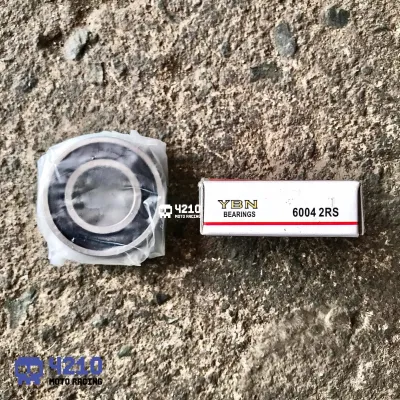
![[Japan] Torque drive bearing set for Mio i 125 M3 and Soul-i 125](https://img.lazcdn.com/g/ff/kf/S68bf3a6728a14ac6a10b56b34b47ae33F.jpg_400x400q80.jpg_.webp)
![[KV] Mio i125 / M3 Genuine TORQUE DRIVE BEARING SET 2PH-E7678-00 From Indonesia](https://img.lazcdn.com/g/p/fb8ce70ffa9f9e63d941399b7bb658b4.jpg_400x400q80.jpg_.webp)
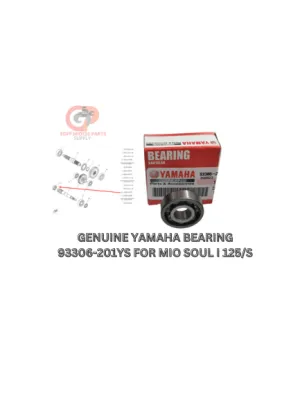
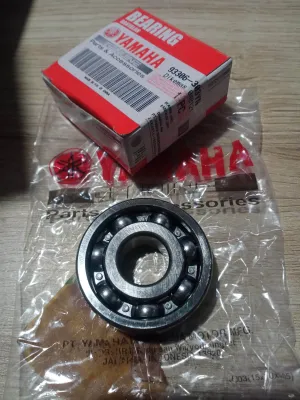
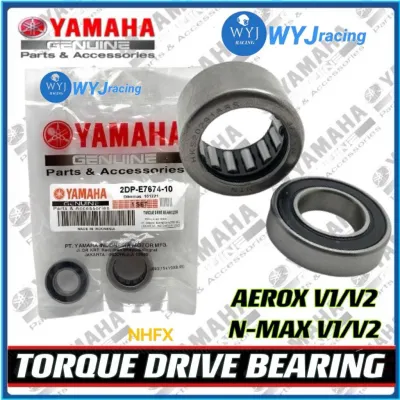
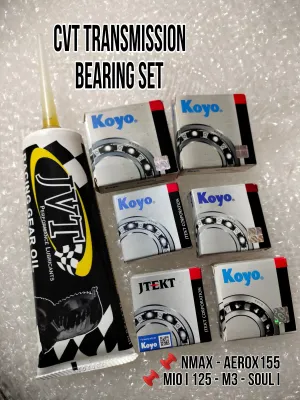
Prices are valid at publication and may change. Please refer to the product page for the latest price.
In addition to these auditory cues, physical vibrations are a major indicator of bearing wear. As the hardened steel balls and races inside the bearings develop pits, flat spots, or corrosion, they no longer rotate smoothly. This roughness translates into a fine, high-frequency vibration that you can feel through the seat, floorboard, and handlebars, particularly when maintaining steady cruising speeds between 40 km/h and 60 km/h. These symptoms almost always develop gradually, starting as a faint, barely audible whistle and steadily worsening over several weeks of daily commuting until the mechanical grinding becomes unmistakable.
How to Tell Bearing Noise Apart from Other CVT Issues
Because the Mio i 125 utilizes a CVT system, several rotating components sit in close proximity to the final drive gearbox. This compact layout means that noises from a worn drive belt, variator rollers, or clutch assembly can easily be confused with gearbox bearing issues. To avoid spending money on a replacement bearing set prematurely, you must isolate the source of the noise through a systematic process of elimination.

Drive Belt and Roller Wear
The components inside the front portion of the CVT casing behave very differently from the gears at the rear. Worn drive belts, sagging tension springs, or flat-spotted roller weights (locally known as flyballs) typically produce distinct slapping, rattling, or clanking noises. These sounds are most prominent during initial acceleration from a complete stop or at low engine RPMs when the belt transitions along the pulley faces.
In contrast, transmission bearing issues remain quiet or masked at idle and become progressively louder as your road speed increases. If your scooter shudders or hesitates only when pulling away from a stoplight but runs smoothly once you reach cruising speed, the issue is highly likely centered on your CVT rollers, clutch lining, or drive belt rather than the internal gearbox bearings.
Gearbox Oil Condition
Checking the condition of your final drive gear oil is one of the most reliable ways to diagnose internal gearbox damage. To perform this check, place your scooter on a level surface, remove the drain plug, and capture a small amount of the oil in a clean, clear container. While older gear oil naturally darkens over time due to heat, it should remain translucent and free of debris.
If the drained oil exhibits a metallic, shimmering sheen—resembling fine glitter—or feels gritty when rubbed between your fingers, this is a clear sign that the bearing races or gear teeth are actively disintegrating. Furthermore, if the oil appears milky or creamy, water has entered the gearbox, likely through the breather tube during a heavy downpour or flood. This water contamination destroys the oil’s lubricating film, indicating that the bearings have been running dry and require immediate inspection.
Rear Brake and Wheel Bearings
The rear wheel assembly contains its own set of moving parts that can mimic transmission issues. For instance, dragging rear brake shoes can produce a continuous scraping or grinding noise that sounds remarkably like a dry bearing. You can rule this out by gently applying the rear brake lever while riding; if the noise pitch changes dramatically or disappears entirely, the issue lies within your drum brake assembly.
It is also important to differentiate between a bad rear wheel bearing and a transmission bearing. A failed wheel bearing typically causes structural play and a rumbling noise centered directly on the rear wheel axle, which often becomes louder when leaning the scooter into turns. Transmission bearing failure, however, localizes the noise deeper within the aluminum gearbox casing, directly behind the clutch bell assembly, and does not necessarily cause the wheel itself to wobble unless the main axle bearing is completely destroyed.
Safe At-Home Inspection Steps for Your Scooter
Before purchasing a new mio i 125 transmission bearing set or booking a mechanic, you can perform several low-risk, reversible physical inspections at home. These diagnostic steps do not require specialized mechanical tools or dismantling the complex gearbox casing. Always ensure your scooter is parked on a flat, stable surface, the engine is turned off, and the ignition key is removed before beginning any inspection.
The Center Stand Spin Test
The center stand spin test is a highly effective way to isolate drivetrain noises without the engine running. Prop your Mio i 125 securely on its center stand on flat, solid ground in a quiet garage or driveway. Ensure the rear wheel is suspended completely off the ground and can rotate freely.
With your hands, spin the rear wheel forward as fast as you safely can. Listen closely to the rear-left side of the scooter, keeping your ears near the CVT cover and the rear axle. A healthy transmission will spin quietly with only a faint, smooth whirring of the gears. If you hear a distinct clicking, harsh grinding, or a rough, dry scraping sound, the internal bearings are likely pitted or dry. You can also place one hand on the rear swingarm or engine casing while spinning the wheel; a failing bearing will transmit a distinct, rough vibration directly through the metal.
Checking for Lateral Play
Checking for lateral play helps you determine if the internal shafts have developed excessive clearance due to worn bearing balls or damaged cages. Crouch behind your scooter and firmly grasp the rear tire at the 12 o’clock and 6 o’clock positions. Attempt to wiggle the wheel side-to-side with moderate force.
A properly functioning rear axle should have virtually zero perceptible lateral play. If you feel a distinct wobble or hear a clicking sound originating from the hub, the rear axle bearing is worn. To isolate this further, you can remove the plastic CVT cover and grasp the clutch bell. If you can wiggle the clutch input shaft side-to-side or in-and-out, the primary transmission input bearing has failed, requiring a complete bearing set replacement to restore proper shaft alignment.
Visual Seal and Leak Inspection
A failing bearing often betrays itself through secondary symptoms, particularly oil seal failure. When a transmission bearing wears out, the shaft it supports begins to rotate slightly off-center (shaft runout). This wobbling motion quickly deforms and tears the rubber oil seals designed to keep the gear oil locked inside the casing.
Inspect the area directly behind the rear wheel hub and the bottom of the gearbox casing for wet, oily residue. Additionally, look inside the rear section of the CVT housing near the clutch assembly. If you spot fresh gear oil pooling or splattered across the clutch components, it indicates that a failing input shaft bearing has destroyed its corresponding oil seal. This leak not only starves the gearbox of lubrication but also risks getting oil on your clutch pads, causing severe clutch slippage.
Next Steps: Repair, Replacement, and Preventing Further Damage
If your diagnostic steps point toward worn transmission bearings, taking prompt action is essential. Ignoring a noisy gearbox can lead to severe consequences. A completely seized bearing can lock up the rear wheel unexpectedly at high speeds, posing a severe safety hazard on busy highways. Furthermore, an unaligned shaft will cause the final drive gear teeth to mesh improperly, chipping the gears and turning a straightforward bearing replacement into an expensive, labor-intensive overhaul of the entire final drive assembly.
When sourcing replacement parts, always select a high-quality, OEM-compatible mio i 125 transmission bearing set. Because bearing specifications, dimensions, and tolerances can vary slightly depending on the exact model year of your Mio i 125, always verify compatibility by checking your scooter’s parts catalog or consulting an authorized dealer before purchasing. A high-quality aftermarket bearing set typically costs between ₱500 and ₱1,500 in the Philippines, making it a relatively affordable preventive measure compared to replacing the entire gearbox.
Additionally, never reuse old gaskets or oil seals during reassembly. Always install brand-new, high-quality rubber oil seals to prevent future leaks, and refill the gearbox with the exact volume and viscosity of gear oil recommended in your Yamaha owner’s manual (typically 10W-40 motorcycle oil or specialized scooter gear oil). Because pressing old bearings out of soft aluminum engine cases and installing new ones requires specialized tools—such as a blind bearing puller and a hydraulic press—along with specific thermal techniques, it is highly recommended to have this service performed by a qualified motorcycle technician. Improper installation using a hammer can instantly misalign or dent the new bearings, ruining them before your first ride.
Frequently Asked Questions (FAQ)
Is it safe to ride the Mio i 125 with a noisy transmission?
No, riding with a noisy transmission is not safe and should be avoided. While a mild, faint whine might allow you to ride slowly and cautiously to the nearest repair shop, continuing to commute at high speeds or carrying heavy loads is extremely risky. A worn bearing generates excessive heat, which can cause the bearing balls to deform, shatter, or weld themselves to the race. If the bearing seizes completely while you are riding, it will instantly lock the rear wheel, leading to a sudden loss of control and a potentially severe accident on the road.
Do I need to replace the final drive gears if the bearings fail?
Not necessarily, provided you catch the bearing failure early. If you address the issue when the bearings are only producing a mild whine or whistle, the final drive gears themselves are usually undamaged and can be thoroughly cleaned and reused. However, if you continue to ride until you hear severe grinding or experience significant shaft play, the misaligned gears will begin to chip, shave off metal, or wear unevenly. In this scenario, you will need to replace both the transmission bearing set and the entire final drive gear set to restore smooth, safe operation.
Community discussion
Share your experience or ask a question. Comments are reviewed before publication.