
When purchasing a modular helmet like the Spyder Force V2 in the Philippines, safety certifications are the most critical factors to consider before hitting the road. The presence of official safety marks is not merely a regulatory formality; it is your primary assurance that the helmet has been engineered and tested to protect your head during an impact. For riders navigating busy thoroughfares, understanding what these certifications mean is essential for both personal safety and legal compliance.
The Import Commodity Clearance (ICC) sticker and the Philippine Standard (PS) mark are the two primary safety indicators managed by the Bureau of Philippine Standards (BPS). These marks signify that a helmet model has successfully passed rigorous testing protocols established under Philippine National Standards. For a modular helmet like the Spyder Force V2, these certifications verify that the protective gear meets the necessary impact absorption, penetration resistance, and retention system strength required for local road conditions.
Decoding PSB and ICC Marks for Motorcycle Helmets
The regulatory landscape for motorcycle helmets in the Philippines relies on two distinct marks issued by the Bureau of Philippine Standards (BPS), an agency under the Department of Trade and Industry (DTI). The Philippine Standard (PS) mark is typically granted to local manufacturers or foreign manufacturers with a consistent quality license, certifying that their production facility adheres to strict quality control standards. In contrast, the Import Commodity Clearance (ICC) sticker is issued for imported shipments of helmets, verifying that samples from a specific batch have been tested and approved before they are allowed onto retail shelves.
Products mentioned in this guide
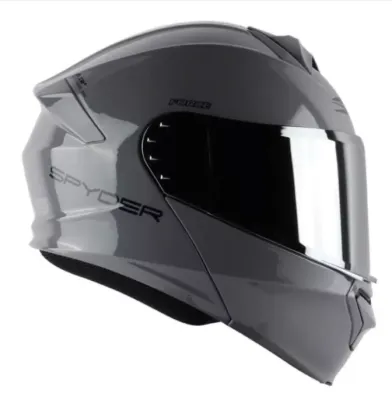
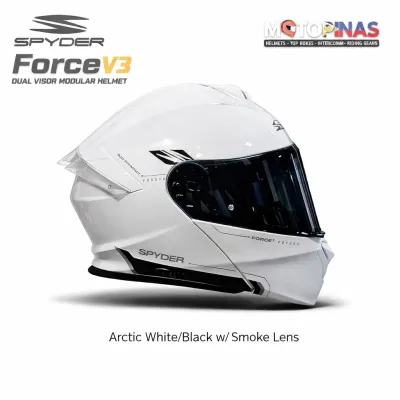
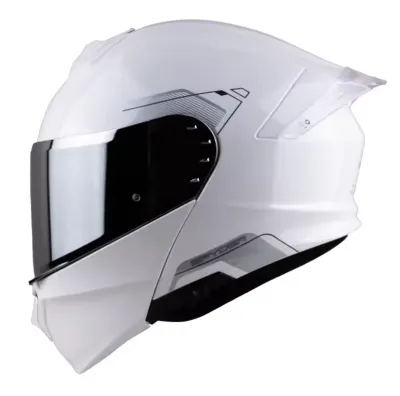
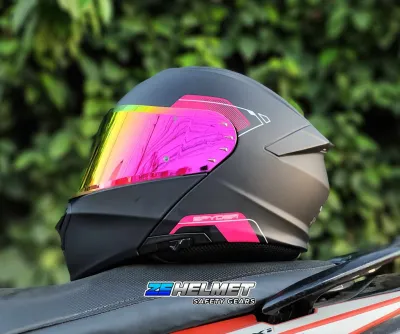
Prices are valid at publication and may change. Please refer to the product page for the latest price.
For owners of the Spyder Force V2, these marks are a legal necessity under Republic Act No. 10054, also known as the Motorcycle Helmet Act of 2009. The Land Transportation Office (LTO) mandates that all motorcycle riders wear standard protective helmets equipped with these official stickers. Riding without a certified helmet, or using one with a counterfeit sticker, can result in heavy fines and the confiscation of your driver’s license during routine traffic stops.
While the PS and ICC marks guarantee that a helmet meets the baseline safety requirements for the Philippine market, it is helpful to understand how they compare to international testing protocols. Local standards are heavily aligned with global benchmarks, but advanced international certifications like the Economic Commission for Europe (ECE 22.05 or ECE 22.06) and the United States Department of Transportation (DOT FMVSS 218) involve different testing methodologies. For instance, ECE 22.06 introduces rotational acceleration tests and high-velocity impact assessments at multiple points on the shell. A helmet carrying both local and international marks offers a broader spectrum of verified protection.
Ultimately, these certifications ensure that the helmet’s materials—such as the outer thermoplastic shell and the inner expanded polystyrene (EPS) liner—can effectively dissipate the energy of an impact. Without these verified marks, there is no guarantee that the helmet will perform as intended during an accident, making verification a life-saving step for every rider.
Safety Implications for Modular Helmet Designs
Modular helmets, such as the Spyder Force V2, offer a versatile hybrid design that combines the convenience of an open-face helmet with the protection of a full-face helmet. However, this dual-nature design introduces specific safety boundaries that riders must fully comprehend. Safety certifications, including the local ICC and PS standards, are typically conducted with the chin bar fully down and locked in place. Unless a modular helmet is explicitly dual-certified for open-face riding (often designated by a double homologation or “P/J” mark under ECE standards), it is only certified to provide full-face protection when closed.

Riding with the chin bar flipped up in open-face mode significantly increases your vulnerability during a crash. In this configuration, your face and jaw are completely exposed to direct impact with the pavement or obstacles. Furthermore, a raised chin bar alters the helmet’s center of gravity and aerodynamic profile. At highway speeds, the upright chin bar can act as a sail, catching the wind and causing severe neck strain, or even pulling the helmet backward off your head during a slide.
The mechanical hinge and locking mechanism of a modular helmet are also critical safety points that require careful attention. The Spyder Force V2 relies on metal or high-strength composite locking pins to keep the chin bar securely fastened to the main shell. Over time, frequent opening and closing, combined with exposure to road dust, sweat, and rain, can cause mechanical wear on these moving parts. If the locking mechanism becomes loose or fails to engage fully, the chin bar could pop open during an impact, leaving you without essential facial protection when you need it most.
To mitigate these risks, riders must treat the modular mechanism with care and always ride with the chin bar locked down. The flip-up feature is designed for convenience when stationary—such as when refueling, speaking to someone, or taking a quick breath of fresh air at a stoplight—rather than for active riding.
How to Verify Authentic Certifications on the Spyder Force V2
Due to the high demand for quality riding gear, counterfeit safety stickers have become a prevalent issue in the market, particularly on unverified online marketplaces and informal retail stalls. To ensure your Spyder Force V2 is genuinely certified, you must perform a thorough physical and administrative inspection of the helmet and its packaging.
Start by locating the ICC sticker, which is typically affixed to the rear lower section of the helmet’s outer shell. A genuine ICC sticker features distinct security characteristics, including a unique serial number, clean and sharp typography, and a holographic foil layer that shifts color and reflects light when tilted. Many modern ICC stickers also feature a QR code that can be scanned using a smartphone to verify the certificate’s authenticity directly through the BPS database.
In addition to the outer sticker, check the interior of the helmet. Genuine helmets usually have a permanent fabric label sewn into the comfort liner or chin strap. This label contains essential manufacturer details, the specific model name (such as Spyder Force V2), the manufacturing date, and any applicable international safety standards like ECE or DOT. If these interior labels are missing, poorly printed, or contain spelling errors, the helmet may be a counterfeit.
To safeguard your purchase, always buy your riding gear from authorized Spyder dealers, official brand stores, or reputable physical retailers. Avoid purchasing from unverified third-party sellers on ecommerce platforms who cannot provide official receipts or warranty documentation. You can also cross-reference the specific model with the official list of certified helmet brands and models maintained on the Department of Trade and Industry (DTI) website to confirm its compliance status.
Maintaining Protection and Knowing When to Replace
A certified helmet like the Spyder Force V2 can only deliver its promised level of protection if it is maintained in optimal condition. The tropical climate of the Philippines—characterized by intense heat, high humidity, and heavy downpours—can accelerate the wear and tear of both the external shell and the internal protective materials. Establishing a routine inspection and maintenance schedule is vital for preserving your helmet’s structural integrity.
Begin with regular inspections of the moving components. Check the chin bar locking mechanism, the hinge pins, and the visor seals to ensure they operate smoothly and lock securely. If you hear any unusual grinding noises or feel resistance when locking the chin bar, clean the mechanism of any accumulated road grit. Visor seals should be kept clean to prevent rainwater from seeping into your eyes during sudden tropical downpours.
When cleaning your helmet, always follow the manufacturer’s instructions to avoid damaging the safety materials. Use only mild soap and warm water to clean the outer shell and the removable comfort liner. Never use harsh chemical solvents, petroleum-based cleaners, or glass sprays, as these substances can chemically degrade the polycarbonate or ABS outer shell, making it brittle and prone to cracking. Similarly, avoid exposing the inner expanded polystyrene (EPS) liner to high heat or chemical fumes, as this material is highly sensitive and can dissolve or compress, permanently losing its impact-absorbing capabilities.
Finally, you must know when it is time to retire your helmet. A strict replacement rule applies to all helmets: any helmet involved in a crash or a significant drop onto a hard surface must be replaced immediately. The EPS liner is designed to compress and absorb the energy of a single impact; once compressed, it cannot protect you a second time, even if the outer shell appears completely undamaged. Additionally, even in the absence of an accident, safety experts recommend replacing your helmet every five years from the date of manufacture or purchase. Over time, exposure to sweat, hair oils, UV rays, and humidity naturally degrades the protective resins and foam, compromising your safety on the road.
Frequently Asked Questions (FAQ)
Is a modular helmet legal for highway riding in the Philippines?
Yes, modular helmets are fully legal for highway riding in the Philippines, provided they carry a valid PS or ICC certification sticker. However, traffic laws and Land Transportation Office (LTO) regulations require the helmet to be worn properly while the motorcycle is in motion. This means the chin bar must be fully down and locked. Riding with the chin bar flipped up can be treated as riding with an open-face helmet without proper chin protection, or even penalized under general reckless riding guidelines. Under Republic Act No. 10054, riding without a compliant, properly secured helmet carries fines starting at ₱1,500 for the first offense, rising to ₱3,000 for the second, ₱5,000 for the third, and up to ₱10,000 along with driver’s license confiscation for subsequent offenses.
Does the Spyder Force V2 meet international standards like ECE or DOT?
To determine if your specific Spyder Force V2 meets international standards such as ECE 22.05/22.06 or DOT FMVSS 218, you must inspect the physical labels on the helmet and cross-reference them with official manufacturer specifications. Look for a permanent stamp or sticker on the rear of the outer shell for the DOT mark, or a sewn-in tag on the chin strap for the ECE certification number. While the local PS and ICC marks are the legal minimum required to avoid fines in the Philippines, international certifications indicate that the helmet has passed rigorous testing protocols recognized globally. Always verify these safety claims through the official Spyder website or authorized dealer documentation rather than relying solely on unverified product descriptions on online marketplaces.
Community discussion
Share your experience or ask a question. Comments are reviewed before publication.