
Deciding between an SRF pulley set and a factory stock pulley for your scooter depends on whether you prioritize customized acceleration or original equipment manufacturer (OEM) reliability. While the stock pulley is engineered for balanced fuel efficiency and long-term durability under standard operating conditions, an aftermarket option like the SRF pulley set alters the transmission’s shifting characteristics to deliver quicker throttle response and improved low-end power. However, this performance shift requires careful consideration of compatibility, maintenance intervals, and overall system wear.
Quick Verdict: When to Choose SRF vs Factory Stock
Choosing the right pulley setup requires analyzing your daily riding environment and performance expectations.
Choose the SRF aftermarket pulley if you prioritize improved initial acceleration, smoother throttle response, or carry heavy loads frequently. This setup is particularly beneficial for riders navigating steep inclines or stop-and-go city traffic where quick power delivery is essential.
Products mentioned in this guide
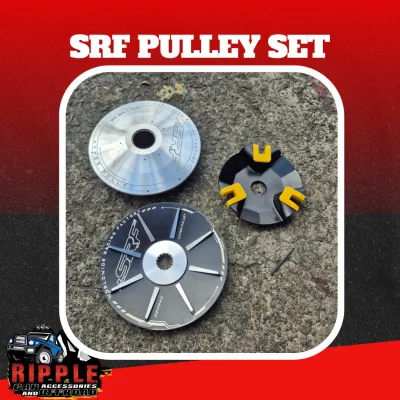
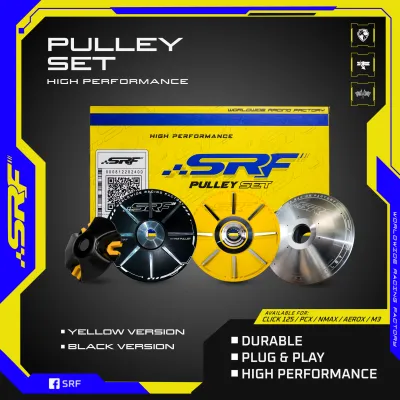
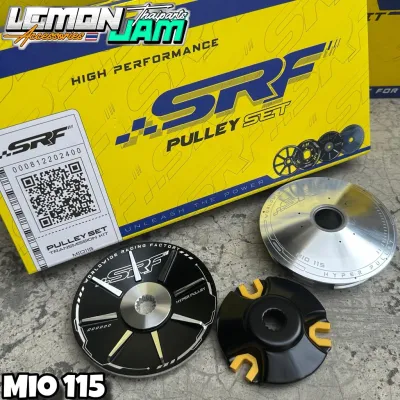
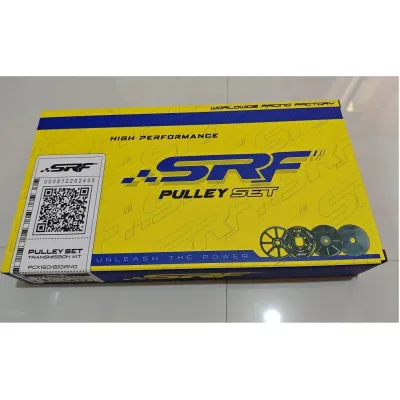
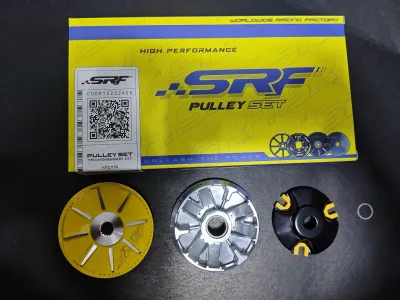
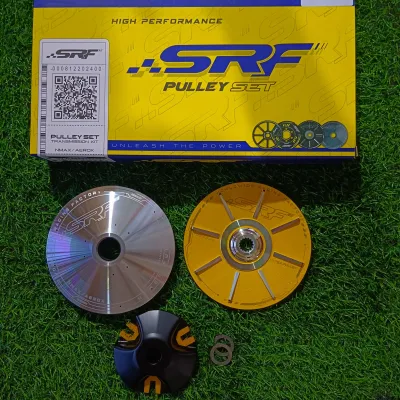
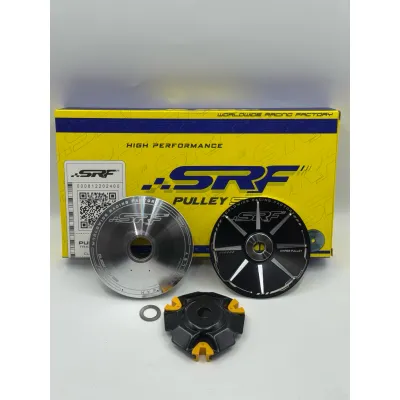
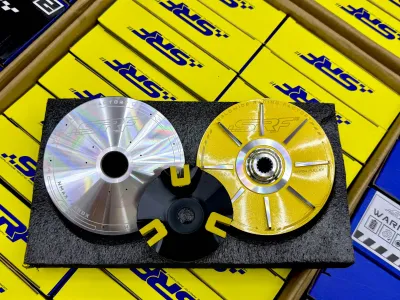
Prices are valid at publication and may change. Please refer to the product page for the latest price.
Choose the factory stock pulley if you prefer guaranteed OEM reliability, maximum fuel efficiency at cruising speeds, and zero modification risks. The stock configuration is optimized by the manufacturer to deliver balanced performance without putting extra stress on other engine components.
Verify first if your current drive belt and clutch setup are in good condition, as worn components will mask the benefits of any pulley upgrade. Installing a high-performance pulley on a worn-out Continuously Variable Transmission (CVT) system will not yield the desired results and may accelerate component failure.
Core Design Differences: Aftermarket vs OEM CVT Pulleys
The mechanical distinctions between an aftermarket pulley set and a factory stock unit lie in their geometry, weight configuration, and manufacturing tolerances. These design choices directly influence how the CVT system manages engine power.

The ramp angle, or the internal track profile where the roller weights slide, is a primary differentiator. Factory stock pulleys feature conservative ramp angles designed to keep engine revolutions per minute (RPM) relatively low, promoting fuel economy and smooth, predictable acceleration. In contrast, the SRF pulley set typically utilizes a steeper or modified ramp profile. This design alters the variator’s shifting behavior, allowing the engine to reach its optimal powerband more rapidly and stay there longer during acceleration.
Roller weights included in aftermarket kits are another critical factor to check. Lighter roller weights require higher engine RPM to generate the centrifugal force needed to push the pulley faces together, which delays the upshift and keeps the scooter in a lower “gear” ratio for better acceleration. Heavier weights, often favored in stock setups, shift the pulley earlier to keep RPMs low. When installing an aftermarket set, you must verify the weight specifications to ensure they match your target performance profile.
Material composition and machining quality also vary between the two options. OEM pulleys are generally cast aluminum, built to meet standard factory specifications for durability and cost-effectiveness. Aftermarket performance pulleys often feature CNC-machined face plates with specialized surface coatings designed to reduce friction and heat buildup. Before installation, you should inspect the build quality and finish of the aftermarket face plate against your original OEM specifications to ensure precise belt alignment and contact.
Real-World Riding Impact: Acceleration, Top Speed, and Efficiency
Modifying your scooter’s CVT system with an aftermarket pulley set introduces distinct trade-offs in daily ride quality, power delivery, and operating costs.
The most immediate change is the trade-off between low-end torque and high-end RPM. A performance-oriented pulley set is designed to maximize low-end and mid-range acceleration, making the scooter feel significantly more responsive when pulling away from traffic lights or climbing hills. However, this gain in acceleration often comes at the expense of high-end efficiency. Because the engine runs at higher RPMs to maintain cruising speeds, your maximum top speed may be reached earlier in the rev range, potentially increasing engine vibration during long highway stretches.
Fuel consumption is directly impacted by these shifting characteristics. Because a modified pulley keeps the engine operating at higher RPMs during acceleration and moderate cruising, it typically reduces overall fuel efficiency. For daily commuters in tropical climates where heavy traffic already lowers mileage, this increased fuel consumption is an important long-term cost factor to consider.
Matching the pulley’s performance characteristics to your specific use case is essential for long-term satisfaction. If your daily route consists of navigating congested urban streets, carrying heavy cargo, or riding with a pillion passenger, the improved throttle responsiveness of the SRF pulley set can make riding less strenuous. Conversely, if your commute involves long, open highway touring where maintaining a steady, low-RPM cruise is the priority, the factory stock pulley remains the more practical and economical choice.
Installation, Compatibility, and Drive Belt Matching
Upgrading CVT components requires strict attention to mechanical compatibility, proper tooling, and safety protocols to prevent transmission failure on the road.
Before purchasing any aftermarket transmission parts, you must verify the exact model, year, and physical dimensions of your scooter. CVT configurations, crankshaft diameters, and spline counts vary significantly between different manufacturers and model years. Never infer compatibility from a generic category term or assume a pulley set fits simply because it is labeled for a similar engine displacement.
Proper installation requires specialized tools to avoid damaging sensitive engine components. You should always use a dedicated variator holding tool to secure the assembly and a calibrated torque wrench to tighten the variator nut. Using an impact wrench without verifying torque specifications can strip the crankshaft threads or crush the spacer boss, leading to catastrophic engine damage. Always consult your scooter’s official service manual for the exact torque specifications.
The drive belt must be thoroughly inspected during this process. Check the belt for signs of cracking, fraying, or excessive wear, and measure its width against the service manual’s wear limits. An aftermarket pulley’s modified face angle may require a specific belt width or length to operate correctly without slipping. A mismatched or worn belt will rapidly degrade under the increased tension of a performance pulley set.
Because transmission failure at high speeds can cause the rear wheel to lock up, leading to a loss of control, safety must be your primary concern. If you lack the required specialized tools, a clean workspace, or mechanical experience, stop the installation immediately and seek assistance from a qualified motorcycle technician.
Cost and Long-Term Value Assessment
Evaluating the financial commitment of a pulley upgrade involves looking beyond the initial purchase price to consider long-term maintenance and complementary parts.
An aftermarket kit like the SRF pulley set requires a higher upfront investment in ₱ compared to a standard OEM replacement pulley. While the initial cost of the kit covers the variator face and roller weights, you must also factor in the potential need for complementary upgrades. To fully realize the performance benefits of a modified pulley, you may need to purchase a stiffer clutch spring, a high-performance drive belt, or alternative roller weights to fine-tune the system.
Long-term maintenance intervals are typically shorter for high-performance CVT setups. The increased friction and higher operating RPMs associated with aftermarket pulleys can accelerate the wear rate of the roller weights, slide pieces, and the pulley face itself. In tropical environments characterized by high ambient temperatures and humidity, these components require more frequent inspection and cleaning to prevent flat spots on the rollers, which can cause erratic shifting.
Final Decision Framework: Match the Pulley to Your Riding Style
To make the right choice for your scooter, evaluate your riding habits, budget, and willingness to perform regular maintenance against these two options.
Choose the SRF Pulley Set if:
- You want quicker off-the-line acceleration and more responsive throttle control in stop-and-go traffic.
- You frequently carry heavy loads, ride with a pillion passenger, or navigate steep, hilly terrain.
- You are comfortable with shorter maintenance intervals and the potential need to fine-tune roller weights.
- You are willing to accept a slight decrease in fuel economy in exchange for enhanced low-to-mid-range performance.
Choose the Factory Stock Pulley if:
- You prioritize maximum fuel efficiency, smooth cruising, and long-distance highway comfort.
- You want a reliable, "install-and-forget" component that adheres strictly to original manufacturer specifications.
- You prefer to minimize maintenance costs and keep standard service intervals.
- Your scooter is still under a factory warranty that could be compromised by aftermarket drivetrain modifications.
Neither option may fit if:
- Your scooter's clutch bell, torque drive, or drive belt are severely worn or damaged. In this scenario, you must perform a complete CVT system rebuild and replace all worn components before attempting to tune the transmission with an aftermarket pulley.
Frequently Asked Questions (FAQ)
Do I need to replace the drive belt when installing an SRF pulley set?
While a brand-new drive belt is not always mandatory, it is highly recommended when installing an aftermarket pulley set. You must check your existing belt for signs of wear, cracking, or width reduction against the minimum specifications outlined in your scooter’s service manual. Because performance pulleys alter the belt’s travel path and operate under higher tension, a worn belt is highly susceptible to slipping or snapping. Additionally, you should evaluate whether the aftermarket pulley’s specific ramp profile requires a different belt length or width for optimal engagement, and consult the manufacturer’s instructions or a qualified mechanic to confirm compatibility.
Will an aftermarket pulley set void my scooter’s warranty?
Installing an aftermarket pulley set can affect your scooter’s factory warranty. You should carefully review the manufacturer’s warranty terms regarding unauthorized modifications to the drivetrain, as many brands will deny claims related to engine, transmission, or electrical failures if aftermarket parts are detected. If your scooter is still within its warranty period, any issues arising from the CVT system may not be covered if the modification is linked to the failure. To mitigate this risk, some riders choose to keep their original factory stock pulley set intact and stored safely, allowing for potential reinstallation if the vehicle requires official warranty servicing.
Community discussion
Share your experience or ask a question. Comments are reviewed before publication.