
When deciding between a stock cast crankcase and an aftermarket CNC machined crankcase for a Honda Click, the right choice depends entirely on your engine build and riding goals. For daily commuting and mild modifications, the stock crankcase provides adequate protection and cost-efficiency. For heavy engine builds involving big bore kits, high compression, or track use, a CNC crankcase offers the structural rigidity and precise tolerances required to protect internal components under extreme stress. This guide compares the structural design, material verification, and application conditions to help you decide if an upgrade is necessary for your specific setup.
Structural Design Differences: Cast vs. Machined
To understand how a crankcase protects your engine, you must first look at how it is manufactured. The stock crankcase of the Honda Click is produced using high-pressure die casting. In this process, molten aluminum alloy is injected into a steel mold under high pressure. While this method is highly efficient for mass-producing scooters, it has inherent physical limitations. As the molten metal cools inside the mold, microscopic air bubbles can become trapped, creating internal porosity that can lead to weak spots within the metal structure.
In contrast, an aftermarket CNC crankcase is machined from a solid block of billet aluminum. A computer-controlled milling machine carves the crankcase directly from the metal block, removing material layer by layer. This subtractive manufacturing process completely eliminates the risk of internal air pockets, resulting in a highly dense and uniform material structure. The wall thickness of a CNC crankcase is also carefully controlled, allowing manufacturers to add extra material to high-stress areas while maintaining a lightweight profile.
Products mentioned in this guide
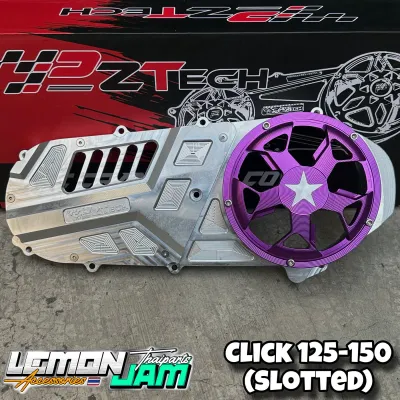
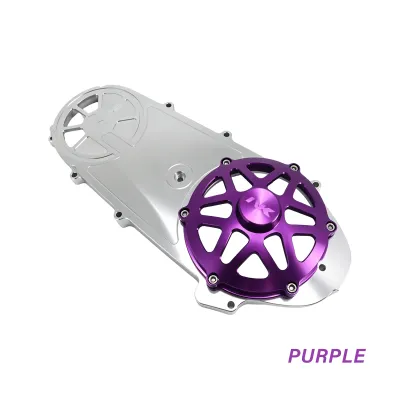
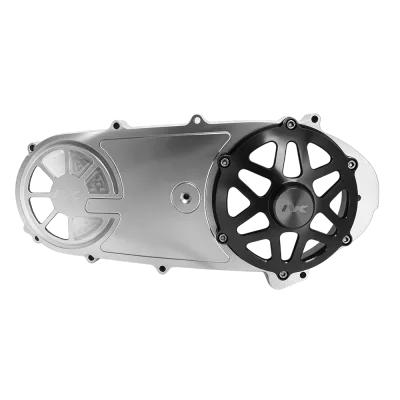
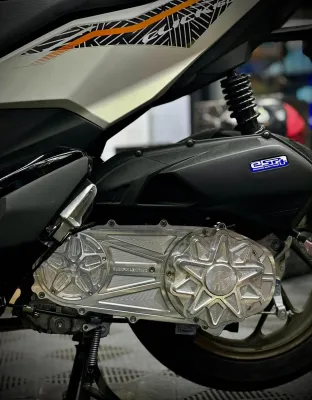
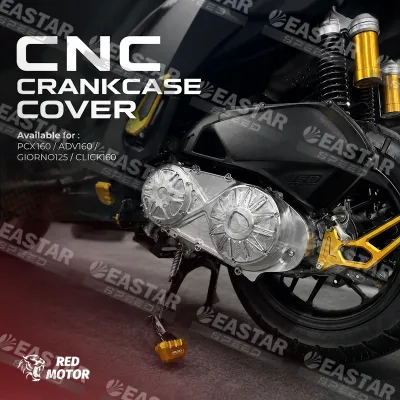
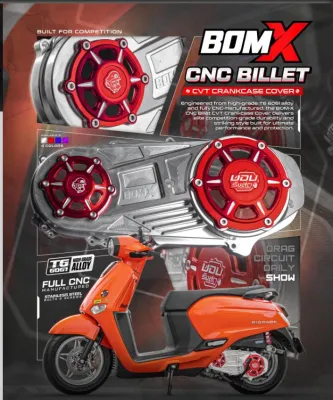
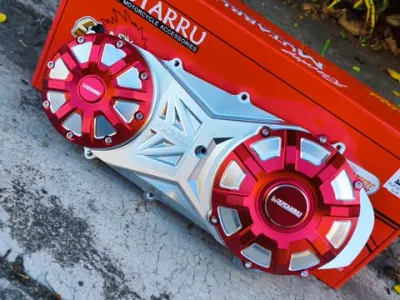
Prices are valid at publication and may change. Please refer to the product page for the latest price.
When comparing these two designs, checking the tolerances of critical mating surfaces is essential. The stock cast crankcase is machined only at key interfaces, such as the bearing seats and gasket surfaces, after the casting process is complete. A CNC crankcase, however, has every single surface machined to extremely tight tolerances. You can verify these tolerances by using a dial indicator or a micrometer to measure the roundness of the bearing journals. Precise tolerances ensure that bearings sit perfectly square, reducing friction and preventing premature wear on the crankshaft.
Another key design difference lies in the structural ribbing. If you examine the manufacturer diagrams for both components, you will notice that stock crankcases use thin, cast-in ribs to save weight and material. CNC crankcases often feature thicker, strategically placed structural ribs designed to distribute mechanical loads more evenly. These reinforced areas help prevent the crankcase from flexing or twisting when the engine is subjected to high torque, protecting the internal gears and shafts from misalignment.
Material Strength and Engine Protection
Evaluating the protection capabilities of a crankcase requires a close look at material specifications. The stock Honda Click service manual lists the standard aluminum alloy used for the engine cases, which is optimized for everyday commuting and standard thermal cycles. When shopping for an aftermarket CNC crankcase, always cross-reference these specifications with the product labels provided by the manufacturer. Look for high-grade billet aluminum identifiers, such as 6061-T6 or 7075-T6, which indicate that the metal has been heat-treated for maximum tensile strength.

Thermal management is another critical factor in engine protection, especially in the tropical climate of the Philippines. High ambient temperatures combined with heavy traffic can cause engine oil temperatures to rise rapidly. Cast aluminum has decent thermal conductivity, but the stock crankcase design has a limited surface area. Many CNC crankcases feature optimized cooling fin designs and increased external surface area. This design allows heat to dissipate more efficiently from the engine oil and transmission housing, helping to maintain stable operating temperatures.
Under high mechanical loads, the risk of crankcase deformation increases significantly. When a high-compression piston moves down the cylinder, it exerts immense downward force on the crankshaft and the crankcase structure. A cast crankcase can experience microscopic flexing under these extreme loads, which can lead to bearing misalignment or hairline cracks over time. A billet CNC crankcase offers much higher yield strength, meaning it can withstand greater forces before undergoing any permanent or temporary deformation. Always verify the manufacturer’s stated maximum operating limits to ensure the crankcase can handle your specific engine configuration.
Matching the Crankcase to Your Engine Build
Determining whether you need to upgrade to a CNC crankcase depends largely on the stage of your engine modifications. For a stock Honda Click or one with mild upgrades, the original cast crankcase is perfectly adequate. Mild upgrades include modifications like a tuned CVT system, an aftermarket exhaust, or an upgraded fuel controller. These changes optimize the scooter’s performance without significantly increasing the peak combustion pressures or mechanical stresses acting on the engine block.
However, the structural demands change dramatically when you transition to heavy engine modifications. If you plan to install a big bore kit, a high-lift camshaft, or a stroker crankshaft, the mechanical forces inside the engine will rise exponentially. High-compression builds generate intense shockwaves that travel through the cylinder studs directly into the crankcase threads. In these high-performance setups, the superior thread strength of a CNC billet crankcase prevents the cylinder studs from pulling out or stripping under load.
Before purchasing any aftermarket crankcase, you must verify the internal clearance and compatibility with your chosen engine components. Upgrading to a longer stroke crankshaft or a larger connecting rod often requires more physical space inside the crankcase. While a stock crankcase might require manual grinding or machining to clear these larger parts—which can dangerously thin the cast walls—many CNC crankcases are pre-machined with extra internal clearance. Always check the manufacturer’s specifications to confirm that your crankshaft, connecting rod, and oil pump will fit without interference.
Installation, Sealing, and Maintenance Checks
Replacing a crankcase is a highly complex procedure that serves as a critical safety boundary for your motorcycle. Because the crankcase houses the primary rotating assembly and supports the rear suspension mount on a scooter, any installation error can compromise the vehicle’s structural integrity and road legality. If you do not possess the specialized tools, clean workspace, or mechanical experience required for this level of engine disassembly, you must seek qualified professional installation.
Proper sealing is the first line of defense against oil leaks and loss of crankcase pressure. When assembling the crankcase halves, verify the matching requirements for gaskets, O-rings, and liquid sealants. Some CNC crankcases are designed to use standard OEM Honda Click gaskets, while others require proprietary seals or specific high-temperature liquid sealants. Always cross-reference the stock part numbers in your service manual to ensure you are using the correct replacement seals during the rebuild.
Tightening torque is another area where precision is non-negotiable. Aluminum threads are easily damaged by over-tightening, which can lead to stripped casing bolts and oil leaks. Conversely, under-tightened bolts can back out due to engine vibration, causing sudden oil loss or structural failure. Always use a calibrated torque wrench and follow the exact torque specifications and tightening sequence outlined in the stock service manual or the CNC manufacturer’s documentation.
Once the installation is complete, perform a series of rigorous post-installation checks before taking the scooter on the road. Fill the engine with the manufacturer-approved type and volume of engine oil, then check for any immediate leaks around the mating surfaces. Start the engine and let it idle, listening closely for any abnormal metallic noises, grinding, or excessive vibrations. If you observe any oil leaks, unusual sounds, or severe vibrations, shut down the engine immediately. These are critical stop conditions that require inspection by a qualified mechanic before the scooter can be safely operated.
Decision Framework: Which Crankcase Fits Your Ride?
To make a clear and practical decision, you must weigh your performance goals against your budget and daily riding needs. The choice between a stock cast crankcase and an aftermarket CNC crankcase comes down to matching the component’s structural limits to your engine’s output.
You should choose the stock crankcase if your Honda Click is used primarily for daily commuting, city riding, or delivery work. If your engine is stock or has only basic bolt-on modifications, the original cast crankcase offers excellent reliability, requires no complex installation adjustments, and saves you a significant amount of money. The stock design is engineered to last for tens of thousands of kilometers under normal operating conditions.
You should choose a CNC crankcase if you are building a high-performance scooter designed for track racing, drag racing, or extreme street tuning. If your build includes a large-displacement big bore kit, a high-compression cylinder head, or a stroker crank, the added structural rigidity of billet aluminum is necessary to prevent catastrophic engine failure. The precise machining tolerances of a CNC crankcase will also help maximize the lifespan of your high-performance internal components.
You must verify your setup first if you are still undecided about your modification path, if you have not confirmed the compatibility of your aftermarket internal parts, or if you do not have access to professional installation tools. Proceeding with a crankcase replacement without a clear plan or the proper equipment can lead to costly compatibility issues and potential safety hazards on the road.
Frequently Asked Questions (FAQ)
Does a CNC crankcase directly increase engine horsepower?
No, a CNC crankcase does not directly generate or increase engine horsepower. It is a structural component designed to house and support the moving parts of your engine. However, it indirectly supports horsepower gains by providing the extreme structural rigidity needed to run high-compression pistons, larger displacements, and higher RPM limits without the risk of the engine block flexing or cracking under pressure.
Can I reuse stock bearings and seals with an aftermarket CNC crankcase?
You must verify the CNC manufacturer’s specific instructions regarding bearing seat tolerances and seal dimensions before attempting to reuse any parts. While some CNC crankcases are designed to accept standard OEM Honda Click bearings and seals, others may require proprietary or oversized components. To ensure long-term reliability and prevent oil leaks, it is highly recommended to install brand-new, high-quality bearings and seals rather than reusing worn components during a major engine rebuild.
Community discussion
Share your experience or ask a question. Comments are reviewed before publication.