
Choosing the right oil filter wrench for your vehicle depends entirely on where the filter is mounted and how much physical space you have to maneuver. While some vehicles feature easily accessible filters right at the bottom of the engine bay, others tuck them deep behind hot exhaust manifolds, steering linkages, or plastic splash shields. Selecting an incompatible tool can lead to stripped filter casings, crushed canisters, or hours of frustration during a routine oil change.
To make an informed decision, you must evaluate your vehicle’s specific layout, the physical dimensions of the filter, and the clearance around the mounting area. The three primary tool designs—strap, claw, and band wrenches—each utilize distinct mechanical principles to grip and turn the filter. Understanding these differences ensures you select a tool that fits your workspace and prevents damage to your vehicle’s engine components.
How Strap, Claw, and Band Wrenches Grip the Filter
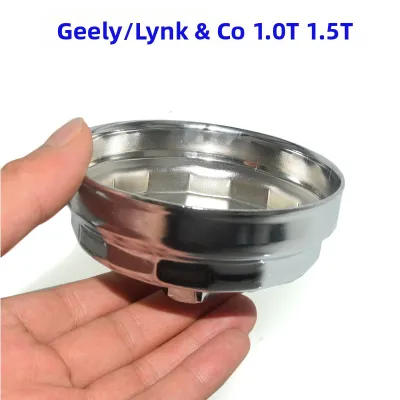
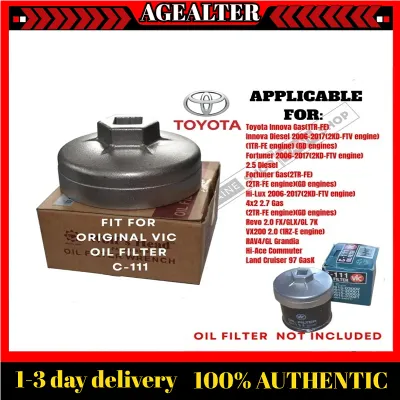
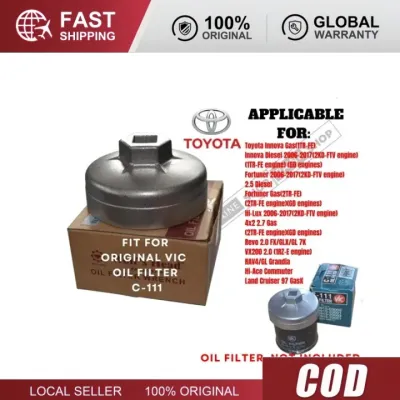
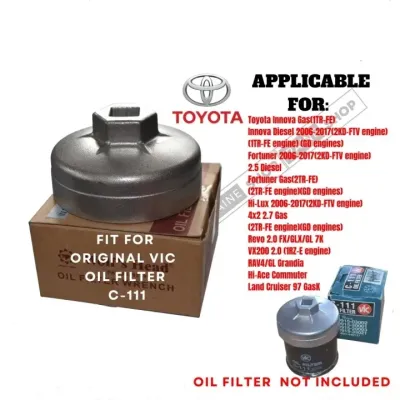
Claw wrenches, which include both adjustable three-jaw designs and fixed end-cap sockets, grip the filter from its very end. A cap-style wrench fits over the flutes of the filter like a socket fits a bolt, utilizing a precise, non-slip interface. Adjustable claw wrenches feature spring-loaded metal legs with sharp teeth that bite into the metal casing as you apply counterclockwise torque using a ratchet. This design provides a positive, mechanical lock that minimizes the risk of slipping, making it highly effective for stubborn or tightly sealed filters.
Products mentioned in this guide
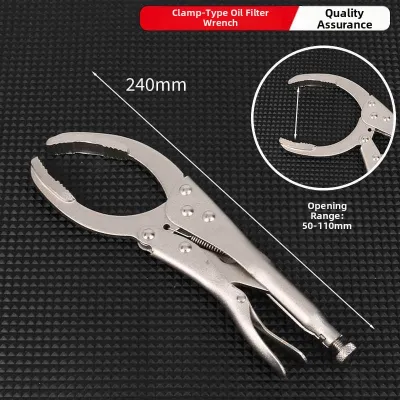
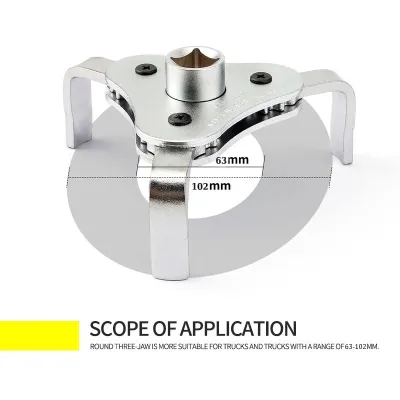
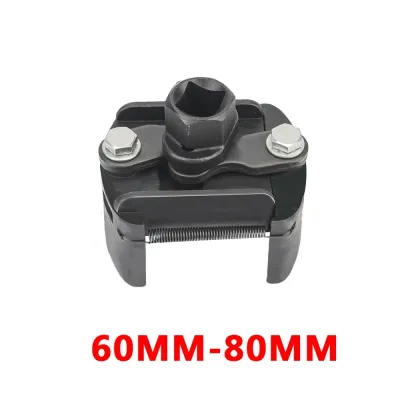
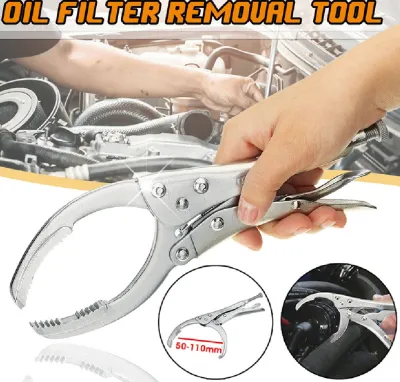
Prices are valid at publication and may change. Please refer to the product page for the latest price.
Strap wrenches utilize a flexible loop made of heavy-duty nylon, reinforced fabric, or rubber attached to a sturdy handle. To use this tool, you wrap the strap around the circumference of the filter canister and pull it taut. As you apply leverage to the handle, the strap tightens and relies on surface friction to turn the filter. Because the strap is flexible, it conforms to almost any shape or size, making it a highly versatile option for non-standard filters or delicate surfaces that you do not want to scratch.
Band wrenches consist of a semi-rigid metal loop connected to a pivoting handle. When you place the band over the filter and pull the handle in the direction of rotation, the band contracts and squeezes the filter body. This design applies a concentrated, mechanical crushing force around the metal canister to generate grip. While highly effective at breaking loose stubborn filters, the rigid metal band requires a specific amount of side clearance to swing the handle and can permanently deform thin-walled filters if excessive force is applied.
Evaluating Engine Bay Clearance and Filter Accessibility
Before purchasing any tool, you must locate your oil filter and assess the surrounding environment. In many modern vehicles, particularly those designed for tropical climates where engine bays are tightly packed to maximize cabin space, filters may be top-mounted under the hood or bottom-mounted near the oil pan. Top-mounted cartridge filters often use plastic housings that require specific cap-style wrenches to avoid cracking the delicate plastic.

Measure the physical gap between the oil filter canister and any nearby obstructions. If you only have a few centimeters of lateral clearance, a strap or band wrench will be difficult to use because these tools require space to wrap around the side of the filter and swing the handle. In contrast, if the filter is recessed deep within a tight cavity or accessible only through a small cutout in the underbody splash shield, an end-access tool like a claw or cap wrench is often the only viable option.
Additionally, consider the angle of approach and the need for auxiliary tools. If the filter is positioned at an awkward angle, you may need to pair your wrench with a socket ratchet, extension bars, or universal swivel joints. Claw and cap wrenches are uniquely suited for this because they feature standard square drives (usually 3/8-inch or 1/2-inch) that allow you to operate the tool from a distance, bypassing tight engine bay obstructions entirely.
Comparing Wrench Types for Different Filter Locations
To help you decide which tool best suits your garage setup, it is helpful to compare their operational characteristics side-by-side. Each design offers distinct trade-offs regarding grip security, space requirements, and versatility.
| Wrench Type | Grip Security | Space Required | Size Adjustability | Risk of Crushing Canister |
|---|---|---|---|---|
| Claw / Cap | High (non-slip) | Low (end-access) | Low (size-specific) | Low |
| Strap | Moderate (friction) | Moderate (side-access) | High (universal) | Low |
| Band | High (mechanical) | Moderate (side-access) | Low to Moderate | Moderate to High |
Claw and cap wrenches are the ideal choice for standard clearance applications or highly recessed filters where side access is completely blocked. Because they grip the reinforced end of the filter canister, they distribute torque evenly and are highly unlikely to crush the metal casing. However, their primary limitation is size specificity; you must match the exact diameter and flute count of your filter, meaning you may need to purchase a new tool if you change filter brands or buy a different vehicle.
Strap and band wrenches excel in open or moderately tight spaces where you have clear side access to the filter body. A strap wrench is highly adjustable and can easily transition from a small motorcycle filter to a large truck filter, making it a cost-effective choice for multi-vehicle households. The main drawback is that oily or greasy surfaces can cause the strap to slip, requiring you to thoroughly clean the filter casing before attempting removal. Band wrenches offer a stronger mechanical grip than straps, but their rigid metal construction makes them less adjustable, and they can easily crush a thin-walled filter if the gasket is seized.
How to Verify Wrench Fitment Before You Buy
To avoid purchasing a tool that does not fit, always verify the physical dimensions of your oil filter before shopping. Start by checking the outer diameter of the filter canister. You can find this specification in your vehicle’s owner’s manual, on the replacement filter packaging, or by measuring the filter directly with a caliper or a flexible measuring tape. Compare this measurement against the minimum and maximum capacity ranges specified by the wrench manufacturer.
If you are planning to buy a cap or claw wrench, you must also determine the flute profile of your filter. Count the number of flat edges (flutes) around the end cap of the filter and measure the distance across these flats in millimeters. Common configurations include 14 flutes at 64mm or 15 flutes at 74mm, but variations are highly common across different automotive brands. Relying on generic vehicle compatibility lists on online marketplaces can be risky, as aftermarket filters often have different flute patterns than original equipment manufacturer (OEM) parts.
Always review the tool’s product specifications carefully rather than relying on broad labels like “universal.” If you are purchasing an adjustable claw wrench, verify that its minimum jaw opening is small enough to grip your filter, as some heavy-duty truck wrenches cannot close tightly enough to grab smaller passenger car filters. Taking these precise measurements beforehand ensures a seamless, frustration-free oil change.
Safe Removal Steps and When to Stop
Performing an oil change at home requires strict adherence to safety protocols to prevent personal injury and vehicle damage. Always park the vehicle on a flat, level surface, engage the parking brake, and secure the wheels with chocks. If you need to raise the vehicle, use high-quality ramps or jack stands rated for your vehicle’s weight; never work under a car supported only by a hydraulic floor jack.
Allow the engine to cool down to a warm, touch-safe temperature before starting. While warm oil flows more easily and helps loosen a stubborn filter gasket, working near a scalding hot engine or exhaust manifold can cause severe burns. Always wear heavy-duty nitrile gloves and safety glasses to protect your skin and eyes from hot oil splashes and road debris.
If the oil filter feels seized and refuses to budge with moderate force, do not attempt to force it with brute strength. Instead, spray a small amount of penetrating oil around the rubber gasket area and let it sit for several minutes to help break the seal. When applying torque, ensure the wrench is seated squarely on the filter to prevent slipping, which can round off the flutes or tear the metal casing.
Establish clear stopping conditions during the removal process. Halt immediately if you feel the wrench slipping, if the metal canister begins to crush or tear open, or if you notice surrounding engine components flexing under the pressure. If a filter is severely seized, stripped, or located in an inaccessible blind spot, stop and consult a qualified professional mechanic. Forcing a damaged filter can tear the mounting threads on the engine block, leading to catastrophic oil leaks and expensive repairs that far outweigh the cost of professional assistance.
Frequently Asked Questions (FAQ)
Can I use a strap wrench on a heavily overtightened oil filter?
Strap wrenches rely entirely on surface friction to grip the filter canister. If an oil filter has been heavily overtightened or has seized due to prolonged exposure to high engine temperatures and tropical humidity, a strap wrench may slip, stretch, or even tear under extreme torque. This is especially true if there is any oil or grease residue on the filter surface. For severely stuck filters, a metal band wrench or an end-cap claw wrench connected to a socket ratchet provides a much more secure, mechanical lock that is far less likely to slip.
Do I need a different claw wrench for every oil filter size?
Traditional end-cap style claw wrenches are highly size-specific and must match both the exact diameter and the number of flutes on your specific oil filter. However, some adjustable three-jaw claw wrenches feature spring-loaded legs that can expand or contract to fit a range of filter diameters. If you own multiple vehicles with different filter sizes, an adjustable claw wrench or a universal strap wrench is more versatile than a collection of individual fixed-size cap wrenches.
Community discussion
Share your experience or ask a question. Comments are reviewed before publication.