
Your scooter’s Continuously Variable Transmission (CVT) is the heart of its performance, translating engine power directly to the rear wheel without manual gears. At the center of this system sits the front drive pulley, commonly known as the variator. Upgrading to an aftermarket option like a Sun racing pulley is a popular way for riders in the Philippines to fine-tune their ride, whether they are navigating the daily stop-and-go traffic of Metro Manila or climbing the steep roads of Antipolo. However, a racing pulley does not magically generate extra horsepower; instead, it optimizes how your engine’s existing power is distributed across different speeds.
The mechanics of a CVT rely on a delicate balance of centrifugal force and belt tension. The front drive pulley consists of a movable drive face and a fixed face, with a rubber drive belt running between them. Inside the movable face, small cylindrical roller weights sit in designated channels or ramps. As engine RPM increases, centrifugal force flings these rollers outward along the ramps, pushing the movable drive face closer to the fixed face. This action forces the drive belt to ride higher up the pulley’s diameter, effectively changing the transmission to a taller gear ratio.
Upgrading to a precision-machined aftermarket drive pulley allows you to alter this shifting behavior. Manufacturers design these components with modified ramp profiles, smoother surface coatings, and different outer diameters to reduce friction and improve belt tracking. By changing these specifications, you can customize the shift curve to keep your engine running within its peak power band for longer periods.
Products mentioned in this guide
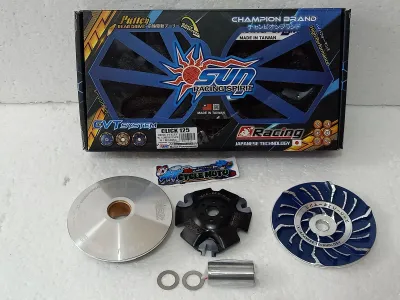

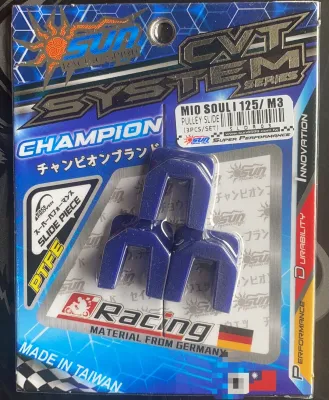
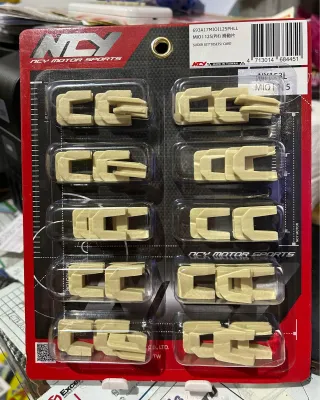
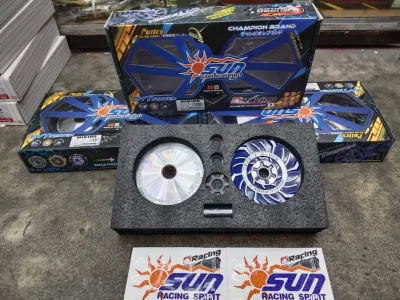
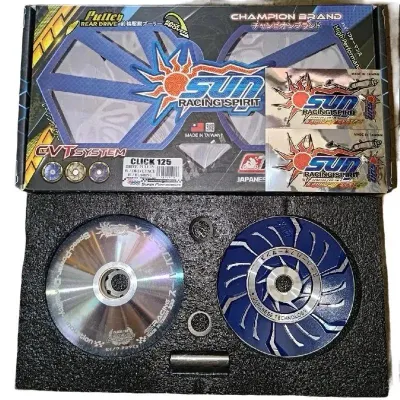
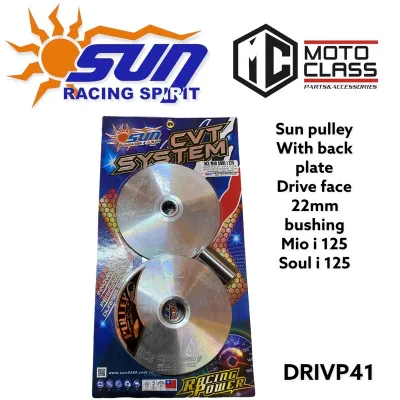
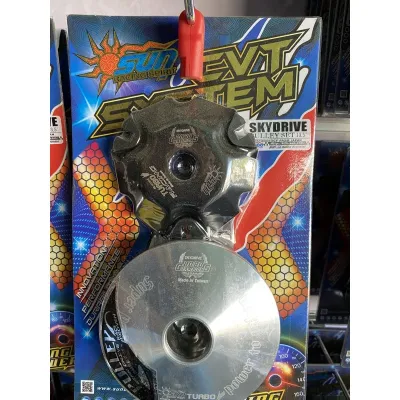
Prices are valid at publication and may change. Please refer to the product page for the latest price.
Decoding Sun Racing Pulley Specifications
When shopping for a Sun racing pulley on online marketplaces or at local motorcycle shops, you will encounter several key technical specifications. Understanding what these numbers and designs mean is crucial for selecting a setup that matches your specific riding needs. The three primary variables you can adjust are roller weights, ramp angles, and the outer diameter of the pulley face.
Roller Weights: The Acceleration vs. Top Speed Trade-off
The weight of the rollers inside your variator is the most influential factor in determining when your CVT shifts. Roller weights are measured in grams, and even a minor adjustment can dramatically alter how your scooter behaves on the road.
Lighter rollers require higher engine RPM to generate the centrifugal force needed to push the pulley closed. Consequently, the engine revs higher before the CVT shifts into a higher gear ratio. This keeps the engine in its peak torque range, resulting in rapid acceleration from a standstill and much stronger pulling power when climbing steep inclines. However, because the engine must spin faster to maintain speed, lighter rollers can lead to higher fuel consumption and increased engine vibration during flat-road cruising.
Conversely, heavier rollers move outward at lower engine RPMs, forcing the pulley to shift earlier. This keeps engine speeds down, which can reduce noise, lower operating temperatures, and improve fuel efficiency. The trade-off is sluggish acceleration, as the engine may struggle to reach its optimal power band when you twist the throttle. Finding the correct weight requires balancing your scooter’s engine displacement, the stiffness of your rear clutch’s contra spring, and your typical riding weight.
Ramp Angles: Shaping the RPM Climb
The ramp angle refers to the physical slope of the channels inside the pulley where the roller weights travel. While roller weights determine when the shifting process begins, the ramp angle dictates how that shift progresses.
A steeper ramp angle requires the rollers to climb a more vertical path, which delays the shifting process and keeps the engine in a higher RPM range for longer. This design is highly favored for aggressive, sporty riding because it provides instant throttle response when exiting corners. On the other hand, a shallower or more progressive ramp angle allows the rollers to slide outward more smoothly, resulting in a linear, predictable acceleration curve that is comfortable for daily commuting.
Because the ramp profile is cast and machined directly into the pulley housing, you cannot adjust it manually. You must choose a pulley design that aligns with your preferred power delivery. Additionally, the ramp profile must be carefully matched with your selected roller weights; an incompatible pairing can cause the transmission to over-rev without transferring power efficiently, or conversely, shift too quickly and kill your momentum.
Outer Diameter: Belt Travel and Overdrive Limits
The outer diameter of the drive pulley face determines the maximum potential gear ratio your CVT can achieve. Think of it as adding an extra overdrive gear to a manual transmission.
A larger outer diameter provides more physical surface area for the drive belt to travel upward. If your engine has enough power to push the belt to the very edge of a larger pulley, your scooter can achieve a higher top speed at a lower engine RPM. This can reduce wear on internal engine components during long-distance rides on provincial highways.
However, simply installing a larger pulley does not guarantee a higher top speed. You must verify that your drive belt is long enough and flexible enough to reach the outer edge without snapping or slipping. Furthermore, the rear driven pulley must be physically capable of compressing fully to accommodate the belt’s movement on the front pulley. If the rear assembly binds or reaches its mechanical limit before the belt reaches the top of the front pulley, you risk severe transmission damage.
Tuning the Setup for Your Riding Environment
There is no single perfect pulley setup; the ideal configuration depends entirely on where and how you ride. In the Philippines, riding conditions vary wildly, meaning a setup that works perfectly on open provincial highways will likely perform poorly in dense urban traffic.

City Commuting and Steep Inclines
- Roller Weights: Opt for slightly lighter rollers than the stock specification to keep the engine in its active power band during frequent stop-and-go situations.
- Ramp Profile: Choose a pulley with a design that supports quick spooling to help you overtake safely and climb hills without losing momentum.
- CVT Balance: Ensure your rear clutch is equipped with a slightly stiffer contra spring to prevent the belt from slipping under heavy loads.
Highway and Long-Distance Cruising
- Roller Weights: Use heavier rollers to keep cruising RPMs low, which helps conserve fuel and keeps engine temperatures manageable in tropical weather.
- Outer Diameter: A larger outer diameter pulley allows the belt to transition into a full overdrive ratio, maximizing your top speed.
- CVT Balance: Pair this setup with a stock or mildly upgraded contra spring to ensure the front pulley can easily overcome rear spring tension at high speeds.
Remember that modifying the front pulley is only half the equation. The CVT is a closed, balanced system; any change made to the front variator must be matched by adjustments to the rear clutch assembly, including the contra spring and torque drive, to maintain a smooth, responsive ride.
Fitment, Safety, and Installation Boundaries
Before purchasing or installing any aftermarket transmission components, it is critical to understand the mechanical boundaries and safety risks involved. A poorly installed pulley can cause catastrophic damage to your engine’s crankshaft or result in sudden transmission failure while riding.
First, verify the exact compatibility of the Sun racing pulley with your scooter’s specific make, model, and manufacturing year. Do not rely solely on generic product titles on online marketplaces. You must confirm that the pulley’s bore size, center boss dimensions, and crankshaft spline count match your vehicle’s original specifications exactly. Attempting to force a mismatched pulley onto the crankshaft will strip the splines, requiring an expensive engine teardown to replace the crankshaft.
Second, always practice safe installation techniques. Never use an impact wrench to tighten the variator nut unless you are highly experienced, as this can easily strip the threads or bend the crankshaft. Instead, use a specialized variator holding tool to secure the pulley in place, and use a calibrated torque wrench to tighten the nut to the exact specification listed in your scooter’s official service manual. Both overtightening and undertightening pose severe risks: an overtightened nut can damage the threads, while an undertightened nut can back off at high speeds, causing the pulley to spin freely and destroy the transmission casing.
Finally, recognize your professional limits. If your scooter has undergone extensive engine modifications, or if you lack the specialized holding tools and torque wrenches required for the job, consult a qualified motorcycle mechanic. A professional can also help check for proper belt clearance inside the CVT casing, ensuring that a larger outer diameter pulley does not rub against the aluminum housing during operation.
Frequently Asked Questions (FAQ)
Do I need to change my drive belt when installing a Sun racing pulley?
While you do not always need to purchase a new drive belt, it is highly recommended to inspect your current belt’s condition before installing a new pulley. Aftermarket pulleys feature different face angles and can alter the belt’s wear patterns. If your existing belt shows signs of cracking, glazing, or has worn below the manufacturer’s minimum width specification, replace it immediately. For optimal performance and to ensure the belt can safely travel to the outer edge of the new pulley, consider pairing the upgrade with a high-quality, matching drive belt recommended by the manufacturer.
Will a racing pulley automatically increase my scooter's top speed?
No, a racing pulley does not add horsepower to your engine. It only optimizes how the existing power is transferred to the ground. A top speed increase will only occur if your original stock pulley was physically preventing the drive belt from reaching its maximum possible height, and if your engine has sufficient power to push the belt into that taller final gear ratio. If your engine lacks the torque to overcome wind resistance and rider weight at high speeds, installing a larger pulley may actually decrease your top speed or cause the engine to bog down.
Community discussion
Share your experience or ask a question. Comments are reviewed before publication.