
When your vehicle suddenly refuses to start or an accessory stops working, finding the root cause requires the right diagnostic equipment. For most automotive electrical issues, the choice comes down to two essential tools: the classic test light and the digital multimeter. Deciding which tool to buy depends entirely on the complexity of your diagnostic tasks, your comfort level with electrical circuits, and whether you need a rapid qualitative check or a precise quantitative measurement.
For quick, straightforward diagnostics—such as verifying if a fuse is blown or checking if power is reaching a headlight connector—a test light is often the fastest and most practical tool. However, if you are diagnosing modern computerized vehicle systems, testing sensitive engine sensors, or tracing subtle voltage drops, a digital multimeter is an absolute necessity. Understanding how these tools interact with your vehicle’s electrical system is the first step toward making a smart purchase and avoiding costly diagnostic mistakes.
Core Differences in Operation and Design
To choose the right tool, you must first understand how each device interacts with an active electrical circuit. A test light is a qualitative diagnostic tool designed to provide a simple, immediate visual indication of whether electrical current is present. It consists of a sharp metal probe, an internal indicator bulb (either a traditional incandescent filament or a modern LED), and a ground lead with an alligator clip. When you connect the clip to a clean chassis ground and touch the probe to a live circuit, the current flows through the tool to light the bulb, confirming the presence of voltage.
Products mentioned in this guide
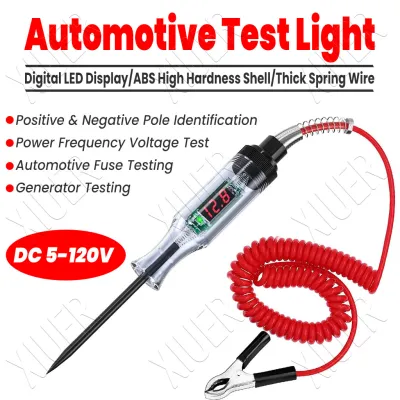
300 Lazada user ratings
LED display for clarity, Compact and portable design,
🛠️Durability:10 👌Ease of Use:10 🔨Durability:10
received npo,dipa po na yrayry,tnx seller
good working Naman xa thanks seller 🥰🥰🥰
Compact and portable design,
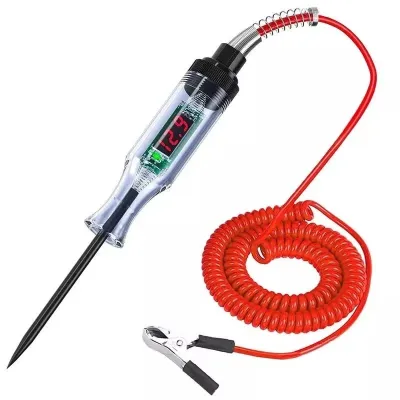
29 Lazada user ratings
Chrome-plated for corrosion resistance, Fast shipping,
ang Ganda thanks seller
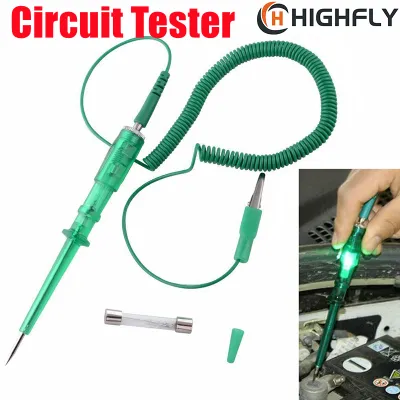
2,950 Lazada user ratings
maganda ung item at ang bills dumating working din siya nagustohan ko talaga salamat seller sa smooth transaction
Ideal for car light circuit testing., Chrome plated probe for enhanced conductivity., Durable AS plastic handle.,
Di ko pa nasubukan pero mukha naman maayos. Review ko uli kung nagamit ko na. Salamat sa seller at Lazada.
maayos un package nun dumating natest ko na din sa oto gumagana naman. good buy
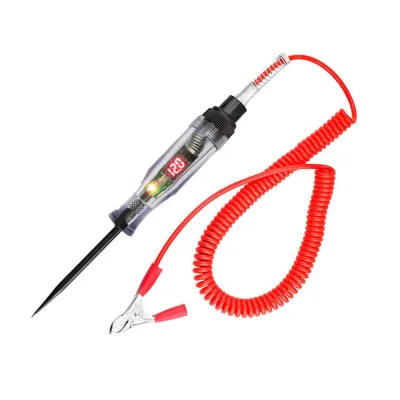
3,298 Lazada user ratings
🛠️Durability: Convenient and versatile tool, Works with different voltage levels, 👌Ease of Use: good battery 🔨Durability: management anskdnam…Read full reviewShow less
🛠️Durability: Convenient and versatile tool, Works with different voltage levels, 👌Ease of Use: good battery 🔨Durability: management anskdnamskks
okay naman. lumalabas ang voltage kapag ginamit sa battery and fuses. bilis ng delivery and matibay naman ang quality ng test pen
Accurate voltage detection, Easy to read digital display, Useful for detecting insurance tram lines, Great for car repairs,
Durable and long-lasting, Suitable for trucks and cars, Easy to read digital display, Works with different voltage levels,
Useful for detecting insurance tram lines, 👌Ease of Use:nice 🛠️Durability:nice
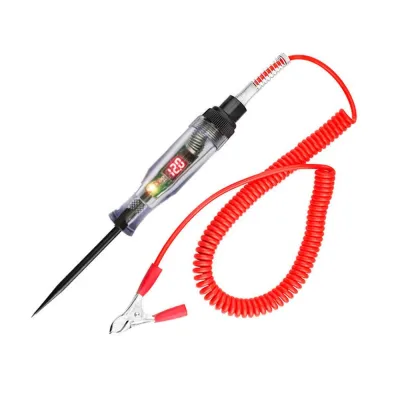
1,184 Lazada user ratings
ok nmn..gumagana..ngb link lng s cp..ewan q bat gnun pero buo un reading nya ndi gaya nyan nsa pic..Easy to use, Clear red display, Durable …Read full reviewShow less
ok nmn..gumagana..ngb link lng s cp..ewan q bat gnun pero buo un reading nya ndi gaya nyan nsa pic..Easy to use, Clear red display, Durable materials, Convenient long probe, Great value for money,
Great value for money, Convenient long probe, Accurate voltage readings, Useful for testing polarity, Easy to use, Versatile for car and tru…Read full reviewShow less
Great value for money, Convenient long probe, Accurate voltage readings, Useful for testing polarity, Easy to use, Versatile for car and truck use,
Useful for testing polarity, Easy to use, Bright bulb for visibility, Comes with fuses, Accurate voltage readings,
Comes with fuses, Accurate voltage readings, Great value for money, Bright bulb for visibility,
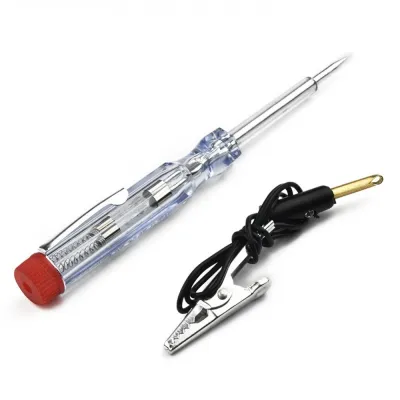
482 Lazada user ratings
mejo mababa sya mag detect ng accurate voltage by around . 4 volts compared sa Inco at Anebg digital multitester pero consistent nman at hin…Read full reviewShow less
mejo mababa sya mag detect ng accurate voltage by around . 4 volts compared sa Inco at Anebg digital multitester pero consistent nman at hindi pabago bago ang reading thank you seller and lazada lex for quick and promt delivery
Accurate voltage testing, Clear indicator light display, great value sana tumagal pero sana wag flash ipadiliver tamad ang rider nila hahay …Read full reviewShow less
Accurate voltage testing, Clear indicator light display, great value sana tumagal pero sana wag flash ipadiliver tamad ang rider nila hahay Ako pa ang pumunta sa canila
Accurate voltage testing, Clear indicator light display, item's received good and quality salamat matagal man dumating pero ok Naman sana tu…Read full reviewShow less
Accurate voltage testing, Clear indicator light display, item's received good and quality salamat matagal man dumating pero ok Naman sana tumagal 👍
Wide voltage range 3V-48V, Lightweight at 130g only, Lightweight at 130g only, Accurate voltage testing, C lear indicator light display,
🛠️Durability:Accurate voltage testing, 👌Ease of Use:Lightweight at 130g only, 📏Accuracy:100% legitimate Accurate

5,948 Lazada user ratings
🛠️Durability:10/10 👌Ease of Use:10/10 📏Accuracy:10/10 Efficient and reliable voltage tester Ideal for automotive electrical systems Useful fo…Read full reviewShow less
🛠️Durability:10/10 👌Ease of Use:10/10 📏Accuracy:10/10 Efficient and reliable voltage tester Ideal for automotive electrical systems Useful for DIY car maintenance Versatile tool for checking circuits Great value for the price Convenient and easy to use Lightweight and portable design 💯% LEGIT SELLER 👍👍
🛠️Durability:Accurate voltage readings, Convenient and easy to use, 👌Ease of Use:Durable construction for long-lasting use, Ideal for automot…Read full reviewShow less
🛠️Durability:Accurate voltage readings, Convenient and easy to use, 👌Ease of Use:Durable construction for long-lasting use, Ideal for automotive electrical systems, 🔨Durability:Useful for DIY car maintenance, Efficient and reliable voltage tester, 📏Accuracy:👍👍👍👍👍
mukhang hindi tatagal.. mukhang laruan eh. pero ano nman aasahan mo sa presyo ng item? maiksi din yung wire, pero madali naman palitan ng ma…Read full reviewShow less
mukhang hindi tatagal.. mukhang laruan eh. pero ano nman aasahan mo sa presyo ng item? maiksi din yung wire, pero madali naman palitan ng mas mahaba at mas matibay. over-all, pang-personal at emergency purposes lang talaga. kaya 5-star pa rin.👍
🛠️Durability:10/10 👌Ease of Use:10/10 maikli nga lang yung wire sa ground at manipis pero pwede na for begginer nagagamit nmn ng maayos
okey sana kaso Wala pa yuong size 8 na kaylangan ko sa picture tingin ko pahaba pero in real maiksi pala

540 Lazada user ratings
Good namn sya at gumagana naman.. Hndi pa sya pala assembled pagkabili kaya nalito ako sa paglagay pro ok namn gumagana
Great value for the price, Handy tool for DIY car maintenance, Accurate voltage testing, Efficient and reliable,
Handy tool for DIY car maintenance, Convenient and easy to use, Helps ensure safe electrical connections,
Compact and portable design, Handy tool for DIY car maintenance, Durable and long-lasting,
🛠️Durability:not sure d ko pa nagamit 👌Ease of Use:cguro, 📏Accuracy:d sure
Prices are valid at publication and may change. Please refer to the product page for the latest price.
In contrast, a digital multimeter is a quantitative instrument that measures and displays precise numerical values. Instead of merely showing if voltage is present, a multimeter tells you exactly how much voltage, resistance, or current is flowing through the circuit. It features a digital liquid crystal display, a rotary dial to select different measurement modes, and two separate test leads. A multimeter relies on an internal battery to power its processor and to inject a tiny, controlled current into circuits when measuring resistance or continuity.
This operational difference highlights how each tool loads the circuit under test. A traditional incandescent test light draws a relatively high amount of current from the circuit to illuminate its bulb, acting as a temporary electrical load. A digital multimeter, when set to measure voltage, has an extremely high internal resistance (typically 10 Megohms or more). This high impedance ensures that the meter draws virtually no current from the circuit, allowing you to take measurements without altering the circuit’s behavior or damaging sensitive electronic components.
Ideal Use Cases for a Test Light
A test light shines brightest in scenarios where speed, simplicity, and physical accessibility are your primary concerns. In the humid, tropical climate of the Philippines, automotive wiring is frequently subjected to moisture and heat, leading to corroded connections and blown fuses. When troubleshooting a dead accessory socket or a non-functioning horn, a test light allows you to rapidly probe both sides of every fuse in the fuse box within seconds. You do not need to look away to read a screen; you simply watch for the bulb to illuminate as you move down the row.

The physical design of a test light makes it exceptionally well-suited for one-handed operation in tight, dark engine bays or cramped spaces under the dashboard. Because you only need to manage a single probe while the ground clip remains attached to the vehicle frame, you can easily maintain your focus on the test point. It is the perfect tool for verifying basic power and ground paths, checking trailer wiring connections, or confirming that a switch is physically opening and closing a circuit.
However, the simplicity of a test light is also its primary limitation. A standard test light cannot tell you if a circuit is suffering from a partial voltage drop. For example, if a corroded wire is only delivering 9 volts to a 12-volt starter relay, a test light bulb may still glow, giving you a false impression that the circuit is healthy. Furthermore, using a traditional incandescent test light on low-voltage data lines or sensitive electronic control modules can draw too much current, potentially damaging delicate vehicle computers.
Ideal Use Cases for a Multimeter
When your diagnostic work moves beyond basic fuses and bulbs into the realm of engine management, sensors, and charging systems, a digital multimeter becomes indispensable. Modern vehicles rely on a network of electronic control units (ECUs) that communicate via low-voltage signals, often operating between 0 and 5 volts. A multimeter allows you to measure these precise signals down to the millivolt, which is essential for verifying the operation of oxygen sensors, throttle position sensors, and mass airflow meters.
Another critical application for the multimeter is performing voltage drop testing across high-current circuits, such as the starter motor cable or the alternator charging wire. Over time, tropical humidity can cause invisible corrosion inside crimped wire terminals, creating high resistance that restricts current flow. By connecting a multimeter in parallel across a suspected cable while the circuit is under load, you can measure the exact voltage lost across the connection. If the meter reads higher than the manufacturer’s specified limit (typically 0.2 to 0.5 volts for most automotive cables), you have found your problem.
Additionally, a multimeter is the only tool of the two capable of measuring electrical resistance (measured in ohms) and current draw (measured in amperes). Resistance testing is vital for checking ignition coils, fuel injectors, and temperature sensors against the manufacturer’s specifications. Current measurement allows you to diagnose parasitic battery drains—the slow discharge of your car battery overnight—by measuring the milliampere draw of the vehicle’s electrical system while it is turned off and asleep.
Feature and Capability Comparison
To help you visualize how these two diagnostic tools compare across key operational categories, refer to the summary table below. This comparison highlights the practical trade-offs between speed and precision.
| Diagnostic Dimension | Test Light | Digital Multimeter (DMM) |
|---|---|---|
| Measurement Type | Qualitative (Yes/No visual feedback) | Quantitative (Exact numerical values) |
| Ease of Use | Extremely high; instant visual feedback | Moderate; requires setting selection and reading |
| Precision Level | None (indicates presence of voltage/ground) | High (measures millivolts, ohms, and microamps) |
| Risk to Sensitive Electronics | High (incandescent models) / Low (LED models) | Extremely low (high-impedance input protection) |
| Typical Price Range | ₱150 to ₱600 | ₱500 to ₱4,000+ |
When interpreting this comparison, consider your current skill level and the types of projects you typically undertake. If you are a casual DIYer who only needs to install a dashcam, replace a headlight bulb, or check a fuse, the low cost and simplicity of a test light make it an excellent starting point. If you plan to perform advanced engine diagnostics, modify wiring harnesses, or troubleshoot complex starting and charging systems, investing in a digital multimeter is the more logical choice.
Safety Boundaries and Tool Limitations
Working on automotive electrical systems carries inherent risks to both you and your vehicle’s sensitive electronics. The most critical safety boundary involves the supplemental restraint system (SRS), commonly known as the airbag system. You must never use a test light—especially an incandescent model—to probe yellow wiring harnesses or connectors associated with the airbags. The current drawn by a test light can inadvertently trigger the airbag inflator, causing catastrophic deployment and severe physical injury. Always consult your vehicle’s factory service manual to identify SRS circuits before performing any electrical tests.
When using a digital multimeter, safety is largely determined by its category (CAT) rating and proper lead placement. When measuring current (amps), the multimeter must be connected in series with the circuit, meaning the current must flow through the meter itself. Attempting to measure current by placing the leads in parallel across a battery or a live circuit will cause a direct short circuit, instantly blowing the meter’s internal fuse or damaging the vehicle’s wiring. Always verify that your test leads are plugged into the correct terminals on the meter face before touching them to an active circuit.
If you encounter conflicting readings, highly unstable digital displays, or wiring configurations that do not match your vehicle’s documentation, stop testing immediately. Do not attempt to bypass fuses or splice into unknown wires without a clear wiring diagram. In these situations, consulting a qualified automotive technician or referring to the original manufacturer’s service manual is the safest path to prevent costly damage to your vehicle’s electronic control modules.
Decision Framework: Which Tool Fits Your Needs?
To make your final purchasing decision, evaluate your typical troubleshooting scenarios against the specific capabilities of each tool.
Choose a test light if:
- Your primary tasks involve basic maintenance, such as checking for blown fuses, verifying power at light sockets, or locating simple ground connections.
- You value speed, portability, and one-handed operation in dark or confined spaces.
- You prefer an intuitive, visual tool that requires no configuration or battery power to operate.
Choose a digital multimeter if:
- You need to diagnose complex engine sensors, test alternator output, or measure exact battery voltage.
- You are troubleshooting modern, computer-controlled vehicles with sensitive 5-volt data circuits.
- You need to perform advanced diagnostics like resistance checks, continuity testing, or tracing parasitic battery drains.
Buy both if:
- You want a complete, professional-grade diagnostic toolkit. Using a test light for rapid initial screening and a multimeter for precise verification provides the ultimate workflow for efficient troubleshooting.
Before purchasing either tool, always verify the specific electrical requirements of your vehicle. If you are working on a modern hybrid or electric vehicle, standard DIY tools may not be rated for the high-voltage systems present under the hood. Always check your vehicle’s owner’s manual and ensure your diagnostic tools carry the appropriate safety certifications for the specific work you plan to perform.
Frequently Asked Questions (FAQ)
Can a test light damage a car's computer?
Yes, a traditional incandescent test light can damage a vehicle’s electronic control unit (ECU). Because incandescent bulbs require a relatively high amount of current to illuminate, probing a sensitive 5-volt computer data line can draw excessive current through the ECU’s delicate transistors, causing them to overheat and fail. If you must use a test light on a modern vehicle, ensure it is a high-impedance LED test light or a computer-safe logic probe, which draws microamps of current and protects sensitive circuits from damage.
Do I need an expensive automotive multimeter?
For most DIY automotive diagnostics, an expensive, professional-grade multimeter is not strictly necessary. A mid-range digital multimeter costing between ₱800 and ₱2,000 will typically offer the accuracy, high input impedance (10 Megohms), and safety fuses required for automotive work. Professional-grade automotive multimeters often include specialized features like engine RPM (tachometer) readings, dwell angle measurements, and temperature probes, which are highly useful for professional technicians but rarely needed for standard electrical troubleshooting.
What is a logic probe and how does it compare?
A logic probe is a specialized diagnostic tool that serves as a middle ground between a test light and a multimeter. It uses high-impedance circuitry to safely test electronic circuits without overloading them, making it entirely safe for vehicle computers. Instead of displaying exact voltages, a logic probe uses colored LEDs to indicate whether a circuit is high (power), low (ground), or pulsing (such as a fuel injector control signal). While highly useful for analyzing digital signals, it still cannot measure exact resistance or current like a multimeter.

Community discussion
Share your experience or ask a question. Comments are reviewed before publication.