
Selecting the correct toyota cvt transmission fluid is critical to maintaining the performance, efficiency, and longevity of your vehicle’s continuously variable transmission (CVT). Unlike traditional automatic transmissions that use geared steps, a CVT relies on a steel belt or chain sliding between variable pulleys, a mechanism that demands highly specialized friction properties. To keep this system operating smoothly, Toyota utilizes two primary specifications for its CVT-equipped vehicles: Toyota CVTF FE (Fuel Economy) and Toyota CVTF TC. Choosing between them depends entirely on your specific model, production year, and transmission design.
Using the incorrect fluid can lead to belt slippage, severe internal wear, and eventually a complete transmission failure that is incredibly costly to repair. Because CVTs operate under high hydraulic pressures and tight tolerances, even a minor mismatch in fluid viscosity can compromise the transmission’s structural integrity. Before purchasing any fluid or attempting a top-up, you must verify your vehicle’s exact requirements to ensure absolute compatibility.
How to Identify the Correct Toyota CVT Transmission Fluid Specification
To choose the right lubricant, you must first understand the distinction between the two primary Toyota CVT fluid specifications currently on the market. Toyota CVTF TC was the standard fluid for earlier generations of Toyota CVTs, engineered with a higher viscosity to provide robust protection and friction grip for older belt-and-pulley designs. As automotive technology evolved toward maximizing fuel efficiency, Toyota introduced Toyota CVTF FE. This newer specification features a lower viscosity, reducing fluid drag within the transmission to improve fuel economy while still maintaining the necessary shear stability.
Products mentioned in this guide
Prices are valid at publication and may change. Please refer to the product page for the latest price.
Finding the exact fluid requirement for your specific vehicle is a straightforward process, but it requires careful verification. Your first and most reliable source of truth is the vehicle owner’s manual, which lists the exact fluid specification under the capacities and lubricants section. For older models, you may also find a label on the transmission dipstick under the hood indicating either “TC” or “FE.” However, because many modern Toyota CVTs are sealed systems without a traditional dipstick, you may need to inspect the transmission casing itself, where the filler plug or overflow bolt is often stamped with the required fluid designation.
In the Philippine market, the fluid requirement generally aligns with the vehicle’s generation and platform design. Modern models such as the current-generation Toyota Vios (AC100 platform), Corolla Altis (E210 generation), Corolla Cross, Yaris Cross, and Toyota Raize are engineered for maximum efficiency and strictly require the lower-viscosity Toyota CVTF FE. Conversely, older legacy models—including early CVT-equipped variants of the Vios (such as the late NCP130 generations introduced around 2016 with the dual VVT-i engine) and older Corolla Altis variants (E170 generation)—are designed around the thicker Toyota CVTF TC specification.
It is vital to understand that visual fluid color or generic marketing terms are never acceptable indicators of compatibility. Different lubricant manufacturers use various dyes (such as red, green, or blue) for aesthetic or identification purposes, but these colors do not represent a standardized specification. Furthermore, generic “CVT” labels on aftermarket bottles do not guarantee that the fluid meets Toyota’s precise shear and friction requirements. Always verify that the bottle explicitly lists the “Toyota CVTF FE” or “Toyota CVTF TC” specification on its label before allowing it near your transmission.
Recommended Toyota CVT Transmission Fluids by Specification
To ensure your transmission operates safely and efficiently, you should choose fluids that align perfectly with your vehicle’s engineering. Below are the recommended options categorized by their specific fluid standards.

Top Picks for Toyota CVTF FE (Newer Models)
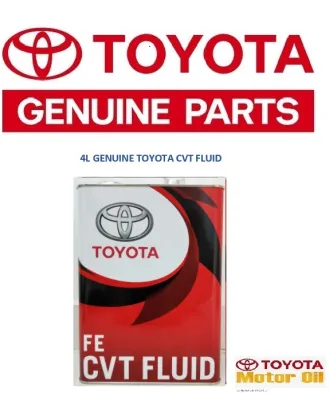
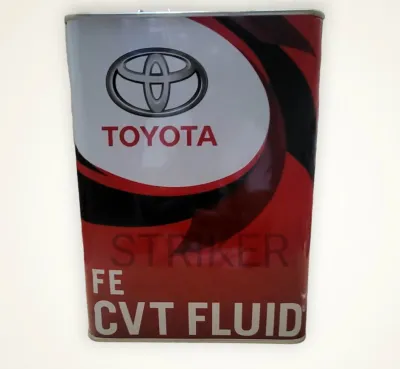
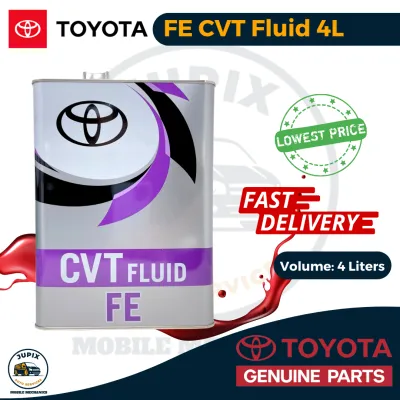
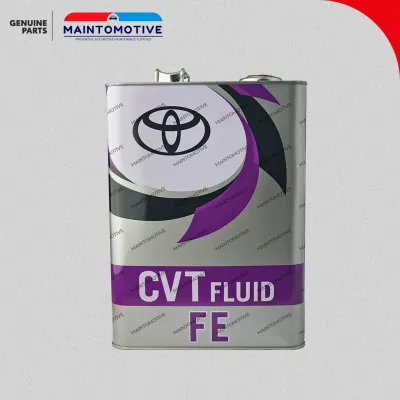
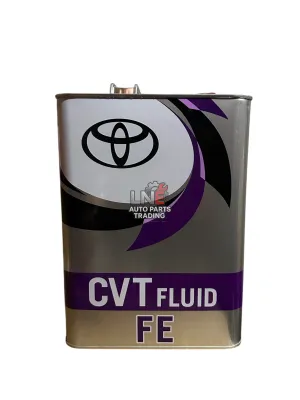
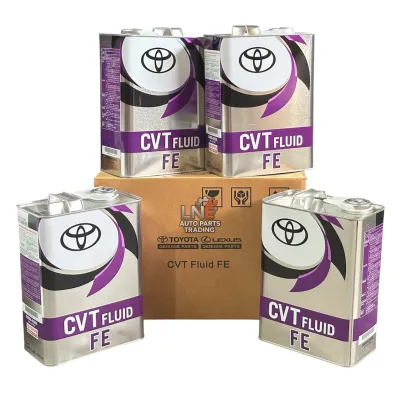
For modern Toyota CVTs requiring the low-viscosity FE specification, the safest and most reliable choice is Toyota Genuine CVTF FE (OEM). Sourced directly through authorized dealerships, this fluid is formulated specifically for Toyota’s proprietary metallurgy and seal materials. It guarantees optimal belt-and-pulley grip, prevents foaming under high thermal stress, and ensures your vehicle remains fully compliant with its manufacturer warranty guidelines.
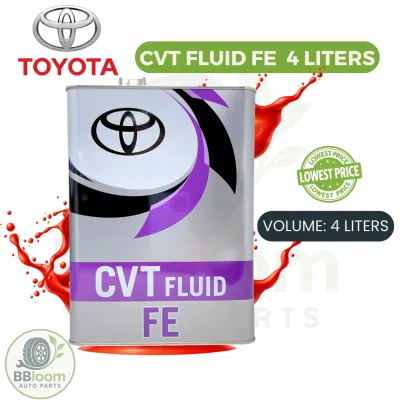
If you prefer high-quality aftermarket alternatives, reputable brands like Aisin and Idemitsu offer excellent options that explicitly state compliance with the Toyota CVTF FE standard. Aisin, being a major original equipment manufacturer for Toyota’s transmission systems, produces aftermarket fluids that closely mirror the performance of the OEM product. When purchasing these alternatives, look for products like Aisin CFEx or Idemitsu CVTF Type FE, and double-check that the label explicitly mentions compatibility with Toyota’s FE specification.
These low-viscosity fluids are designed specifically for modern Toyota platforms driven in the Philippines, including the current-generation Vios (AC100), Corolla Altis (E210), Corolla Cross, Yaris Cross, and Toyota Raize. These vehicles utilize highly optimized hydraulic systems that rely on the thin profile of FE fluid to maintain quick pressure response and high fuel efficiency.
When buying, always verify the “FE” designation on the front of the bottle. Do not use older TC fluid in an FE-designed transmission unless explicitly permitted by a manufacturer service bulletin. Doing so will result in sluggish transmission response, increased hydraulic drag, higher operating temperatures, and a noticeable drop in fuel economy, as the transmission pump must work significantly harder to circulate the thicker fluid.
Top Picks for Toyota CVTF TC (Older Models)
For older Toyota CVTs designed around the higher-viscosity TC specification, Toyota Genuine CVTF TC (OEM) remains the benchmark. This fluid is engineered to provide the robust film strength and high friction coefficient necessary to prevent belt slippage in older transmission designs. It protects the contact points between the steel belt and the pulley faces, preventing premature wear under heavy acceleration and high load conditions.
Among aftermarket options, Aisin CVTF-TC is highly recommended as a direct replacement that meets or exceeds the original performance standards. When exploring other aftermarket brands, be highly cautious of generic “Multi-Vehicle CVT” fluids. While some multi-vehicle fluids claim to cover both TC and FE specifications, they often represent a viscosity compromise. For older, wear-sensitive CVTs, it is always safer to use a dedicated fluid that explicitly lists Toyota CVTF TC on its technical data sheet rather than a broad, universal formula.
This specification is critical for older models operating on local roads, such as the early CVT-equipped Vios (NCP130 generation) and older Corolla Altis models. These older transmissions possess larger internal clearances and different hydraulic pressure mapping, requiring the thicker TC fluid to maintain proper system pressure and lubrication.
Never use newer FE fluid in a transmission designed for TC. The lower viscosity of FE fluid cannot maintain the required oil film thickness under the high-load conditions of a TC transmission. This lack of lubrication can cause the steel belt to slip against the pulleys, leading to severe metal-to-metal scraping, rapid accumulation of debris, and eventual catastrophic transmission failure.
OEM vs. Aftermarket CVT Fluids: Warranty and Performance
When deciding between OEM and aftermarket fluids, the active warranty status of your vehicle should be your primary consideration. For vehicles still covered by Toyota’s standard manufacturer warranty (typically 3 years or 100,000 kilometers in the Philippines), using non-OEM fluids during a service can complicate or potentially void powertrain warranty claims. Local dealerships are highly strict regarding fluid specifications; if a transmission failure occurs and they detect aftermarket fluid, they may deny coverage. For peace of mind during the warranty period, sticking to Toyota Genuine fluids sourced from authorized dealers is the most prudent path.
From a financial perspective, there is a clear trade-off between cost and convenience. Toyota Genuine CVT fluids purchased directly from dealership service centers are premium-priced, often ranging from ₱3,500 to ₱5,500 per 4-liter container. In contrast, high-quality aftermarket fluids from established brands like Aisin or Idemitsu are more budget-friendly, typically retailing between ₱1,800 and ₱2,800 per 4-liter container. Furthermore, aftermarket options are widely accessible at local auto supply shops and verified online merchants, saving you the trip to a crowded dealership.
To manage risks effectively, use this verification checklist when buying aftermarket fluids:
- Verify the Standard: Confirm whether your owner's manual specifies CVTF FE or CVTF TC.
- Read the Back Label: Ensure the aftermarket bottle explicitly lists "Toyota CVTF FE" or "Toyota CVTF TC" under its approved specifications.
- Avoid Universal Claims: Do not buy fluids that only carry vague marketing claims like "suitable for Japanese CVTs" without listing specific OEM standards.
- Check the Technical Data Sheet (TDS): If in doubt, visit the lubricant manufacturer's official website to download the TDS and verify the compatibility listing.
If your vehicle is out of its warranty period, choosing a reputable aftermarket fluid that matches the OEM specification is a safe and highly economical decision. However, because counterfeit automotive fluids are a persistent issue in online marketplaces and unverified physical shops, always purchase your fluids from authorized distributors or highly rated, verified sellers. A cheap counterfeit fluid will lack the necessary additives and can destroy your transmission within a few thousand kilometers.
CVT Fluid Maintenance: Intervals and Replacement Methods
One of the most persistent misconceptions in car maintenance is the concept of “lifetime” CVT fluid. While some manufacturer manuals state that the transmission fluid is designed to last the lifetime of the vehicle under normal driving conditions, this advice does not hold up under local driving realities. In the Philippines, severe driving conditions are the daily norm. Stop-and-go traffic in Metro Manila, climbing steep mountain passes like those to Baguio or Tagaytay, carrying heavy passenger loads, and operating in high tropical heat and intense humidity all accelerate the thermal breakdown of the fluid. Over time, heat causes the friction modifiers in the fluid to degrade, reducing its ability to protect the transmission.
To preserve your CVT, a proactive inspection and replacement schedule is highly recommended. You should have the condition and level of your CVT fluid inspected every 40,000 kilometers. For vehicles driven regularly in heavy traffic or high-heat environments, a complete fluid replacement is highly advisable between 80,000 kilometers and 100,000 kilometers. Always prioritize the specific maintenance schedule outlined in your vehicle’s owner’s manual, adjusting for severe operating conditions as recommended by professional technicians.
When it comes to replacing the fluid, service centers generally offer two different methods:
- Drain and Fill: This traditional gravity method involves removing the transmission drain plug, letting the fluid empty from the pan, and refilling it with fresh fluid. This process typically replaces only 40% to 50% of the total fluid volume, as a significant portion remains trapped inside the torque converter and fluid cooler lines. While incomplete, performing regular drain-and-fills at shorter intervals is a gentle and highly effective way to keep the fluid's additive package fresh.
- Fluid Flush: This method uses a specialized machine connected to the transmission cooler lines to exchange nearly 100% of the old fluid with fresh fluid. While highly thorough, some transmission specialists caution against high-pressure flushes on older, high-mileage CVTs, as the pressure can dislodge accumulated debris and force it into the highly sensitive valve body.
Regardless of the method chosen, performing a CVT fluid change is not recommended as a DIY project. CVTs are incredibly sensitive to both fluid levels and microscopic contamination. Unlike older automatic transmissions that feature a simple dipstick for level checks, modern Toyota CVTs require a highly precise level-adjustment procedure. This involves using a diagnostic scanner to monitor the transmission fluid temperature until it reaches a specific window (typically between 35°C and 45°C), then adjusting the fluid level via an overflow tube in the transmission pan while the engine is running. If the fluid level is even slightly too high or too low, it can cause fluid foaming, overheating, sluggish engagement, or severe internal damage. Always have this service performed by a qualified technician at a professional service center equipped with the proper diagnostic tools.
Frequently Asked Questions (FAQ)
Can I use regular ATF (like WS or T-IV) in my Toyota CVT?
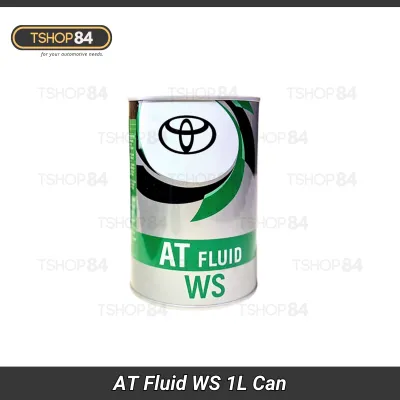
No, you must never use regular Automatic Transmission Fluid (ATF), such as Toyota ATF WS or T-IV, in a CVT. Traditional ATFs are formulated for step-gear transmissions that utilize wet clutch packs, which require entirely different friction characteristics. CVTs rely on highly specialized friction modifiers that allow the steel belt or chain to grip the smooth metal pulleys under immense pressure without slipping. Using standard ATF in a CVT will cause immediate belt slippage, severe friction wear, and catastrophic transmission failure within a very short distance.
What happens if I accidentally mix CVTF FE and CVTF TC?
Mixing CVTF FE and CVTF TC alters the carefully engineered viscosity and friction profile of the transmission fluid. Because FE is a low-viscosity fluid designed for modern, tight-tolerance CVTs and TC is a higher-viscosity fluid designed for older systems, mixing them results in an inconsistent fluid weight. This can cause the transmission to experience shuddering, erratic shifting patterns, belt slippage, or overheating. If you suspect that the fluids have been mixed, avoid driving the vehicle extensively and immediately have a professional perform a complete drain, flush, and refill with the single correct specification designated for your vehicle.
Do I need to replace the CVT fluid filter or strainer during a fluid change?
Whether you need to replace the CVT fluid filter or strainer depends on your specific Toyota model and the service history of the vehicle. Many Toyota CVTs feature an internal metal strainer located inside the transmission pan, as well as an external paper cartridge filter. While some standard maintenance guides only require draining the fluid, replacing the paper cartridge filter and cleaning the internal pan magnets of metallic debris during a major fluid change (around 80,000 km to 100,000 km) is highly beneficial. It prevents accumulated wear particles from recirculating through the sensitive valve body. Consult your owner’s manual or a qualified technician to determine the exact requirements for your vehicle model.
Community discussion
Share your experience or ask a question. Comments are reviewed before publication.