
Quick Answer: Should You Stick with Toyota OEM Coolant?
Choosing between genuine Toyota Long Life Coolant and generic aftermarket alternatives depends on your vehicle’s warranty status, your budget, and your willingness to verify chemical specifications. Toyota OEM coolant is the safest and most reliable choice for vehicles still covered under factory warranty, or when you want to avoid the risk of cooling system damage. Because Toyota engines rely on highly specific metallurgy and seal materials, using the exact factory-specified fluid prevents costly repairs.
Generic or aftermarket alternatives can serve as a cost-effective solution for out-of-warranty vehicles, but only if you meticulously verify that the product meets the exact chemical specifications required by your owner’s manual. In the tropical climate of the Philippines, where high ambient temperatures and heavy traffic put constant stress on your engine, a cooling system failure can lead to catastrophic engine damage. Rather than choosing a coolant based solely on price or color, you must match the chemical formulation to your engine’s precise requirements.
What Makes Toyota Long Life Coolant Unique?
Toyota engines are engineered with specific materials, including aluminum alloys, rubber hoses, and specialized water pump seals, that require targeted chemical protection. Genuine Toyota Long Life Coolant (LLC) and Super Long Life Coolant (SLLC) are formulated using Phosphated Organic Acid Technology (P-OAT). This chemistry relies on organic acids combined with phosphates to provide rapid, long-lasting corrosion protection for aluminum components without relying on older, more abrasive inhibitors.
Products mentioned in this guide
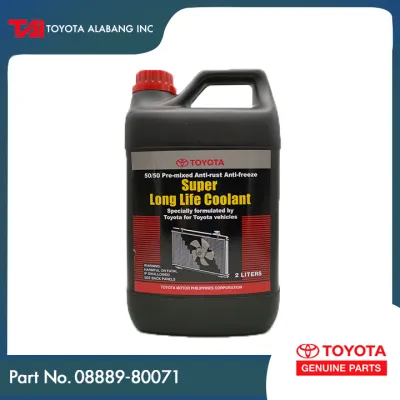
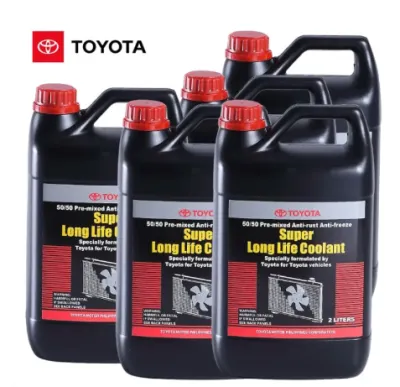
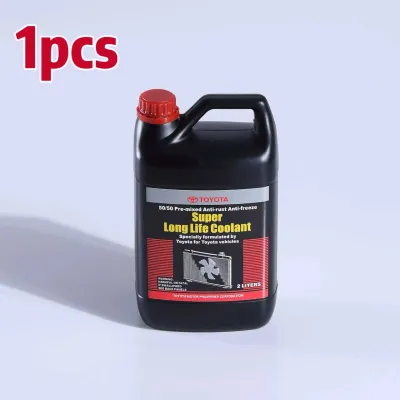
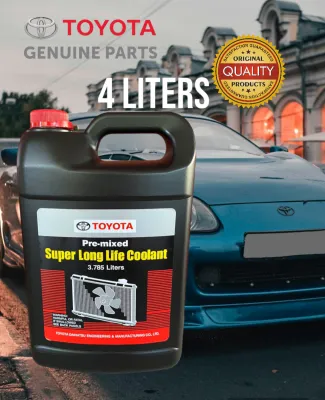
Prices are valid at publication and may change. Please refer to the product page for the latest price.

Unlike traditional coolants, Toyota’s P-OAT formulation is completely free of silicates, borates, nitrites, and amines. Silicates are commonly used in European coolants to protect aluminum, but they can act as abrasives that prematurely wear down water pump seals, leading to coolant leaks and bearing failures. Borates, often found in traditional American green coolants, can cause corrosion in aluminum cylinder heads and radiator cores over time. By eliminating these harsh chemicals, Toyota ensures that the fluid remains stable and non-corrosive throughout its service life.
Another critical aspect of Toyota’s OEM coolant is its compatibility with the specific polymers and elastomers used in Toyota cooling systems. Modern water pumps utilize ceramic and carbon seals that can degrade if exposed to incompatible chemical additives. The phosphate inhibitors in Toyota’s P-OAT formula quickly coat these internal surfaces, preventing cavitation—a phenomenon where tiny vapor bubbles collapse with enough force to pit metal and erode pump impellers.
It is important to understand that “Long Life” and “Super Long Life” refer to specific maintenance intervals designed by Toyota engineers. For example, Toyota Super Long Life Coolant is typically rated for a factory-fill interval of up to 160,000 kilometers or 8 years, while subsequent replacements are recommended every 80,000 kilometers or 4 years. You should always consult your specific vehicle’s owner’s manual to verify these intervals, as severe driving conditions—such as frequent idling in urban traffic or driving in high-humidity coastal areas—can accelerate fluid degradation.
The Reality of Generic and Aftermarket Coolants
Generic and aftermarket coolants encompass a wide range of formulations, from high-quality, vehicle-specific formulas to cheap, “universal” fluids. While reputable aftermarket manufacturers produce excellent P-OAT coolants designed specifically for Asian vehicles, the market is also flooded with traditional Inorganic Additive Technology (IAT) and standard Organic Acid Technology (OAT) formulas. These formulations are often marketed as universal solutions, but they may lack the necessary chemical balance to protect a Toyota engine.
The primary risk of using an incompatible generic coolant is chemical cross-contamination. If you mix a silicate-based coolant with a phosphate-based coolant, the different additive packages can react chemically, causing the inhibitors to drop out of solution. This reaction often results in the formation of a thick, gel-like sludge that clogs the narrow passages of your radiator and heater core, restricting coolant flow and causing the engine to overheat. Once this gelation occurs, restoring the cooling system requires a complex, multi-step chemical flush that can be both difficult and expensive.
Despite these risks, high-quality aftermarket coolants offer distinct advantages, primarily lower price points and wider availability. If you live far from an authorized dealership, sourcing a compliant aftermarket P-OAT coolant from a local auto supply shop is often much easier than driving to a dealership. Additionally, reputable aftermarket brands provide clear compatibility charts on their labels, allowing you to save money while still getting a fluid that matches Toyota’s chemical requirements.
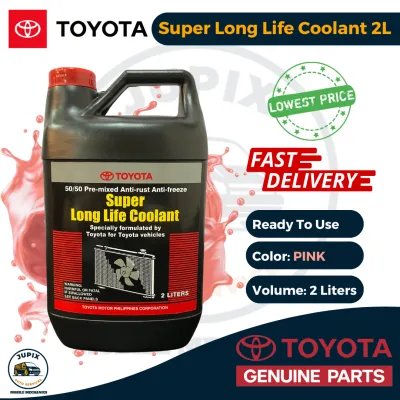
However, you must never rely on coolant color as a guide for compatibility. While Toyota OEM Super Long Life Coolant is pink and the older Long Life Coolant is red, aftermarket manufacturers use a variety of dyes—including blue, green, pink, and yellow—that do not conform to any universal industry standard. A generic coolant dyed pink may use a completely different chemical formulation than Toyota’s P-OAT fluid, and pouring it into your radiator based on color alone can lead to severe cooling system damage.
Key Dimensions for Comparing OEM vs. Aftermarket Coolants
To make an informed decision, you must evaluate how OEM and aftermarket fluids compare across several practical dimensions. The following table outlines the key differences between genuine Toyota coolant, compliant aftermarket P-OAT fluids, and generic “universal” coolants.
| Dimension | Toyota OEM Coolant (LLC/SLLC) | Compliant Aftermarket Coolant | Generic "Universal" Coolant |
|---|---|---|---|
| Specification Match | Perfect (P-OAT, silicate-free) | Verified (Must check label for Toyota compatibility) | Poor (Often contains silicates/borates or lacks phosphates) |
| Warranty Impact | Fully approved; preserves factory warranty | May affect warranty if non-compliant; check terms | High risk of voiding warranty if cooling failure occurs |
| Relative Cost | Premium pricing (₱₱₱) | Mid-range pricing (₱₱) | Budget-friendly retail pricing (₱) |
| Availability | Authorized dealerships, specialty shops | Auto supply stores, online marketplaces | Widespread (gas stations, general hardware stores) |
| Risk Level | Zero risk of chemical incompatibility | Low risk (if specification is verified) | High risk of sludge, corrosion, or seal damage |
Chemical Compatibility and Corrosion Protection
When evaluating aftermarket options, you must look beyond vague marketing claims like “safe for all makes and models.” Instead, inspect the product label for explicit compliance with relevant industry standards, such as Japanese Industrial Standards (JIS) K 2234 or ASTM D3306. These standards ensure that the fluid has undergone standardized testing for corrosion protection, foaming resistance, and chemical stability.
Generic “universal” coolants often omit phosphates to comply with European manufacturer requirements, or they include silicates to satisfy older domestic specifications. In a Toyota engine, this compromise can leave the water pump and aluminum cylinder head vulnerable to accelerated wear. Under the intense driving conditions of the Philippines, where ambient temperatures frequently exceed 35°C, any reduction in corrosion protection can lead to hot spots in the engine block, localized boiling, and eventual head gasket failure.
Warranty and Long-Term Reliability
If your vehicle is still covered by Toyota’s factory warranty, using a non-compliant coolant can have serious financial consequences. In the event of a water pump failure, radiator leak, or blown head gasket, the dealership may analyze the coolant in your system. If they detect silicates, borates, or an incorrect chemical balance, they can legally deny your warranty claim, leaving you to pay for expensive engine repairs out of pocket.
For older, out-of-warranty vehicles, the primary concern shifts from warranty protection to long-term component lifespan. While a cheap, universal coolant might save you a few hundred Pesos upfront, the accelerated wear on your water pump seals and radiator tubes can result in premature component failure. Replacing a water pump or radiator on a Toyota Vios, Innova, or Fortuner costs significantly more than the price difference between a bottle of generic coolant and a bottle of high-quality, compliant fluid.
Cost and Accessibility in the Local Market
Genuine Toyota coolant carries a premium price at authorized dealerships, reflecting the cost of manufacturer testing, packaging, and distribution. Additionally, sourcing genuine parts in rural provinces can be challenging, often requiring a long trip to the nearest major city or relying on specialized online sellers. This logistical hurdle makes aftermarket alternatives highly appealing for vehicle owners outside major metropolitan areas.
However, you must weigh this immediate convenience against the potential long-term costs. If you accidentally use an incompatible generic fluid, you will eventually have to pay for a professional cooling system flush, which requires multiple gallons of distilled water and specialized cleaning agents. Choosing a genuine or verified compliant coolant eliminates this diagnostic guesswork, providing peace of mind that your engine is protected from the moment you pour the fluid into the reservoir.
Decision Framework: Which Coolant Should You Choose?
To determine the best course of action for your vehicle, you can follow this structured decision framework based on your vehicle’s age, warranty status, and maintenance history.
Choose Toyota OEM Long Life Coolant if:
- Your vehicle is under factory warranty: Using the exact OEM fluid guarantees that your powertrain and cooling system warranties remain fully intact.
- You want to avoid chemical guesswork: Sourcing genuine Toyota Pink (SLLC) or Red (LLC) coolant ensures absolute compatibility with your engine's internal metals and seals without requiring you to decode complex chemical labels.
- You are replacing major cooling components: If you are installing a new OEM radiator or water pump, filling the system with fresh OEM coolant protects your investment and ensures the new parts operate under factory-specified conditions.
- You prefer maximum service intervals: Genuine Toyota Super Long Life Coolant is designed to last up to 80,000 kilometers between changes after the initial factory fill, reducing the frequency of cooling system maintenance.
Choose a High-Quality Aftermarket Alternative if:
- Your vehicle is out of warranty: For older models where warranty coverage is no longer a factor, a high-quality aftermarket fluid can save you money without compromising protection.
- You can independently verify the specifications: Only choose an aftermarket brand if the label explicitly states it is a phosphate-compliant, silicate-free, and borate-free P-OAT formula designed for Toyota or Asian vehicles.
- You are on a strict maintenance budget: If dealership prices do not fit your budget, reputable aftermarket brands offer excellent protection at a more accessible price point, provided you perform regular system inspections.
Verify First or Flush the System if:
- You recently purchased a used vehicle: If you do not know the service history of your car, or if the coolant in the reservoir appears discolored, muddy, or brown, do not simply top it off. You should have the system professionally flushed to remove old contaminants before adding fresh coolant.
- You are switching between coolant types: If you are transitioning from an unknown aftermarket fluid back to genuine Toyota coolant, a complete system drain and flush is mandatory to prevent chemical cross-contamination.
Safe Handling and Maintenance Best Practices
When maintaining your vehicle’s cooling system, you must follow strict safety and operational guidelines to protect both yourself and your engine. The most critical rule of cooling system maintenance is to never mix different coolant chemistries. Mixing an organic acid technology (OAT) fluid with an inorganic additive technology (IAT) fluid, or mixing incompatible P-OAT formulas, can cause the protective additives to fall out of solution, creating a thick sludge that blocks heat transfer and ruins your water pump.
Before performing any maintenance on your cooling system, always ensure the engine is completely cold. A hot cooling system is highly pressurized, and opening the radiator cap or expansion tank while the engine is hot can cause boiling coolant to spray out, resulting in severe steam burns. Let the vehicle sit for at least two to three hours, and carefully feel the upper radiator hose to confirm it is cool and soft before slowly loosening the cap.
Engine coolant is highly toxic to humans and pets, and its sweet smell can attract animals. Always store coolant in its original, clearly labeled container, out of reach of children and pets, and clean up any spills immediately using absorbent materials. When disposing of old coolant, follow local environmental regulations in your municipality, as pouring coolant down storm drains or onto the ground can contaminate local water sources.
If you need to dilute concentrated coolant, such as Toyota Red Long Life Coolant, you must use only distilled or deionized water. Never use tap water, well water, or mineral water, as these contain dissolved minerals like calcium and magnesium. These minerals react with the phosphates in the coolant, forming hard scale deposits inside your radiator tubes and engine block that restrict heat transfer and cause localized overheating. If your cooling system requires a complex bleed procedure to remove trapped air pockets, or if you observe heavy rust or oil contamination in the reservoir, seek the assistance of a qualified professional mechanic to perform a thorough diagnostic check and system flush.
Frequently Asked Questions (FAQ)
Can I mix Toyota Pink and Toyota Red coolants?
Although both are genuine OEM fluids manufactured by Toyota, you should avoid mixing Toyota Pink (Super Long Life Coolant) and Toyota Red (Long Life Coolant) because they represent different chemical generations with distinct additive packages. Toyota Red is a concentrated formula that requires manual dilution with distilled water and has a shorter service interval, whereas Toyota Pink is a pre-diluted, modern P-OAT formula designed for extended service intervals. Mixing them can alter the chemical balance of the corrosion inhibitors, reducing the overall lifespan of the fluid and compromising the protection of your water pump seals. If you need to switch from one type to the other, or if you are unsure which fluid is currently in your radiator, perform a complete system drain and flush before refilling with a single, uniform coolant type.
Community discussion
Share your experience or ask a question. Comments are reviewed before publication.