
Finding the correct vios oil is essential for keeping your engine running smoothly and extending the lifespan of your vehicle. The correct engine oil viscosity grade for your Toyota Vios depends primarily on its manufacturing year, the specific engine under the hood, and your typical driving environment. For modern generations of the Vios, Toyota recommends a low-viscosity 0W-20 or 5W-30 oil to maximize fuel efficiency. Older generations typically rely on slightly thicker grades like 5W-30 or 10W-30 to protect internal components with wider mechanical clearances.
Using the wrong viscosity can lead to increased fuel consumption, accelerated engine wear, or inadequate lubrication under high temperatures. Understanding how these grades function allows you to make an informed decision at your next maintenance interval.
What Do Engine Oil Viscosity Numbers Actually Mean?
Engine oil viscosity is rated using a multi-grade system established by the SAE (Society of Automotive Engineers). When you look at a bottle of oil, you will see a designation such as 5W-30 or 10W-30. These numbers represent how the oil behaves at both low and high temperatures, which directly affects how well it protects your engine.
Products mentioned in this guide
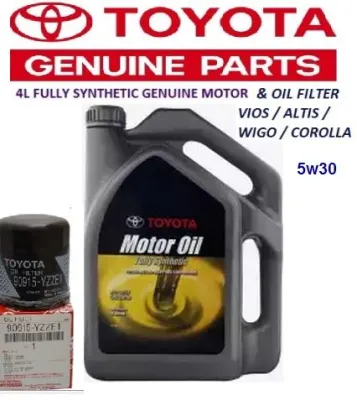
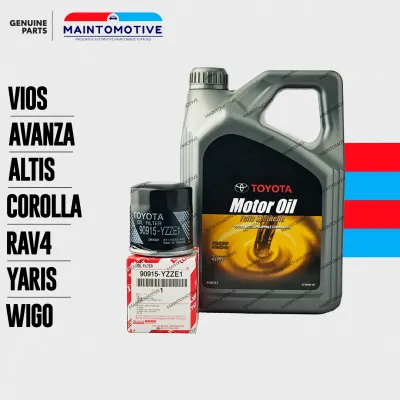
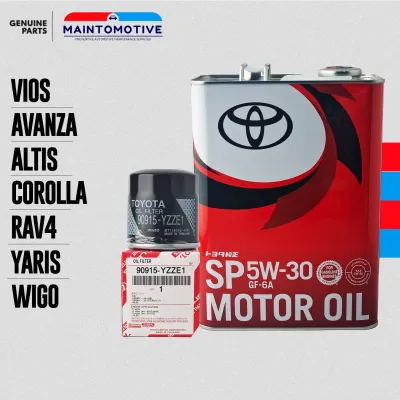
![Toyota Fully Synthetic Engine Oil 5W-30 [4 Liters + Oil Filter] Oil Change for Vios | Avanza | Rush | Altis | Corolla | RAV4 | Yaris](https://img.lazcdn.com/g/p/1d63acaaf81c6a90674e21b126165a77.png_400x400q80.png_.webp)
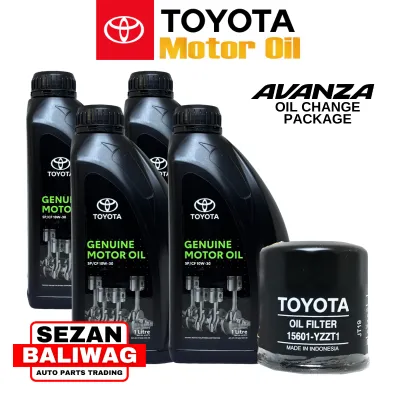
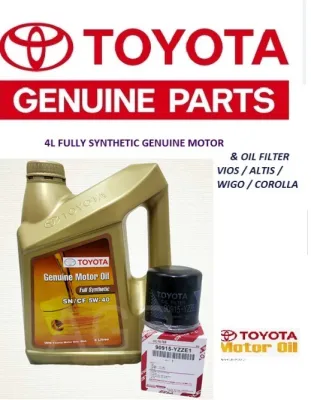
![Toyota Fully Synthetic Engine Oil 5W-40 [4 Liters + Oil Filter] Oil Change for Vios | Avanza | Rush | Altis | Corolla | RAV4 | Yaris](https://img.lazcdn.com/g/p/e5eea87b7568bb8f8f200ae3ed8d2913.png_400x400q80.png_.webp)
Prices are valid at publication and may change. Please refer to the product page for the latest price.
The first number, followed by the letter “W” (which stands for Winter), indicates the oil’s flow characteristics during cold starts. A lower number before the “W” means the oil remains fluid and flows quickly at startup, reducing initial friction when the engine is cold. This initial startup period is when the majority of engine wear occurs, making rapid oil delivery critical.
The second number represents the oil’s viscosity or thickness at normal engine operating temperatures, measured at 100°C. A higher second number indicates that the oil maintains a thicker, more robust protective film under high operating temperatures. Conversely, a lower second number indicates a thinner oil that flows with less resistance.
A common automotive misconception is that thicker oil is always superior for engine protection. While thicker oils provide a heavy physical barrier under extreme mechanical loads, they also create more internal drag. Thinner oils reduce this internal friction, allowing the engine to rotate more freely and significantly improving fuel economy while still providing advanced wear protection in modern engines designed for low-viscosity fluids.
Recommended Viscosity Grades for Toyota Vios Engines
To choose the correct viscosity, you must match the oil to the specific generation of your Toyota Vios. Engine designs have evolved over the years, transitioning from wider mechanical tolerances to highly precise, tightly packed internal clearances.

Newer Toyota Vios models, specifically those equipped with the Dual VVT-i engines such as the 1.3-liter 1NR-FE or the 1.5-liter 2NR-FE, are designed with incredibly tight tolerances. For these modern powerplants, Toyota recommends 0W-20 engine oil as the primary choice to achieve maximum fuel efficiency and immediate lubrication. If 0W-20 is unavailable, 5W-30 is officially listed as an acceptable alternative that provides excellent protection under varying operating conditions.
Older Toyota Vios models, such as those featuring the first-generation and second-generation single VVT-i engines like the 1.3-liter 2NZ-FE or the 1.5-liter 1NZ-FE, were engineered when clearances were slightly wider. For these legacy engines, the standard factory recommendation is typically 5W-30 or 10W-30. These grades provide the necessary film thickness to cushion the moving parts of these older engine architectures.
As a vehicle ages and accumulates high mileage, typically exceeding 150,000 kilometers, minor physical wear can create slightly larger clearances between internal components. If your engine shows signs of minor oil consumption between service intervals, transitioning to a slightly thicker high-temperature viscosity like 10W-40 can be conditionally considered. This adjustment helps seal the piston rings and minimize oil burning, though it should be treated as a wear-compensating measure rather than a performance upgrade.
Always remember that the golden rule of vehicle maintenance is to cross-reference any general guideline with your specific vehicle’s Owner’s Manual or the specification sticker located under the hood. Exact factory recommendations for your specific model year always supersede general advice.
How Driving Conditions in the Philippines Affect Your Choice
While factory guidelines provide a baseline, local driving conditions play a massive role in how engine oil performs. The unique climate and traffic patterns in the Philippines demand careful consideration of your oil’s thermal stability.
Because freezing temperatures are non-existent in the Philippines, the cold-start “W” rating is less about surviving sub-zero winters and more about ensuring rapid fluid circulation during morning startups. Even in warm climates, an oil with a 0W or 5W rating flows significantly faster upon turning the key than a 10W or 15W oil, protecting your engine during those crucial first few seconds of operation.
The primary challenge for vehicles in the Philippines is extreme heat combined with severe stop-and-go urban traffic. Commuting through congested metropolitan areas means your Vios will spend hours idling or crawling at low speeds. This environment limits the cooling airflow through the radiator and engine bay, driving operating temperatures up. Under these conditions, the high-temperature viscosity rating and the oil’s overall thermal resistance are critical to prevent the oil from thinning out excessively.
To combat this intense thermal stress, full synthetic oils are highly recommended over conventional mineral oils. Full synthetics are chemically engineered to maintain their viscosity structure under extreme heat, resisting oxidation and preventing the formation of harmful sludge in high-traffic, high-ambient-temperature environments.
Decoding Oil Quality Standards: API and ILSAC
Selecting the correct viscosity is only half the battle; you must also ensure the oil meets modern quality and performance standards. These certifications guarantee that the oil contains the necessary additive packages to protect your engine over its entire service interval.
The American Petroleum Institute (API) establishes service categories that indicate the oil’s performance level. The current standard is API SP, which was introduced to replace older standards like SN and SM. API SP oils are specifically formulated to provide superior protection against low-speed pre-ignition (LSPI), timing chain wear, high-temperature deposits, and sludge formation.
Additionally, look for the International Lubricant Standardization and Approval Committee (ILSAC) ratings, such as ILSAC GF-6. This certification runs parallel to the API standards and specifically denotes oils that provide enhanced fuel economy and robust emission system protection.
When purchasing oil for your Vios, look for the official API “Donut” or the ILSAC “Starburst” symbol on the product label. Relying on these certified marks is far safer than choosing an oil based solely on marketing terms or legacy product names.
Step-by-Step: How to Verify and Prepare for an Oil Change
Taking a systematic approach to your oil change ensures that your engine receives the exact care it requires while preventing costly maintenance mistakes.
- Step 1: Verify Specifications and Capacity. Consult your Owner's Manual or check the oil filler cap to confirm the exact viscosity grade and the required oil capacity for your specific engine code. A standard oil change with filter replacement for a Toyota Vios typically requires between 3.3 to 3.7 liters of oil, but you must verify the exact volume in your vehicle's documentation.
- Step 2: Inspect the Current Oil Level. Pull the engine dipstick, wipe it clean, reinsert it, and pull it out again to check the level and condition of the current oil. If the oil is exceptionally dark, gritty, or smells burnt, it is past its service life. If the level is consistently low, your engine may be consuming oil, which requires closer inspection.
- Step 3: Source a Quality Oil Filter. Ensure you purchase an OEM Toyota oil filter or a certified high-quality equivalent. The filter is responsible for capturing microscopic contaminants and maintaining proper oil pressure; using a substandard filter can restrict flow and damage your engine.
- Step 4: Execute or Delegate the Service. Decide whether to perform a DIY oil change or visit a professional service center. If you choose the DIY route, always use a calibrated torque wrench to tighten the oil pan drain plug to the manufacturer's specified torque (typically around 37 Nm, but verify this in your vehicle manual) to prevent stripping the threads. Always replace the drain plug crush washer and ensure you dispose of the used engine oil safely and legally at an authorized recycling or collection center. If you lack the proper tools, jack stands, or experience, seek qualified professional service.
Frequently Asked Questions (FAQ)
Can I mix 5W-30 and 10W-30 engine oils in my Vios?
It is highly recommended to avoid mixing different viscosity grades or different brands of engine oil. While they will physically mix inside the engine, combining different grades alters the overall viscosity and can dilute the specific additive packages designed for thermal stability and wear protection. If you must top up your oil in an emergency with a different grade, do so sparingly, and plan to perform a complete oil and filter change to the correct single grade as soon as possible.
Is full synthetic oil necessary for older Toyota Vios models?
While full synthetic oil is not strictly mandatory for older Vios models if the original owner’s manual permits conventional or semi-synthetic oils, it remains highly beneficial. Older engines have accumulated wear and are more susceptible to sludge buildup and thermal stress. Full synthetic oil offers superior resistance to oxidation, maintains a stronger protective film under high tropical temperatures, and keeps internal engine components cleaner over longer service intervals, making it an excellent investment for vehicle longevity.
Community discussion
Share your experience or ask a question. Comments are reviewed before publication.