
Squeezing the brake lever of your motorcycle should immediately inspire confidence, yet many riders find their stock braking systems lacking in responsiveness and bite. When looking for upgrades in the local market, the trc brake caliper frequently emerges as a popular topic of discussion among commuters and enthusiasts alike. While upgrading your caliper can noticeably improve lever feedback and initial bite, “stopping power” is not a metric determined by a single component. True braking performance is a system-wide result of the interaction between your master cylinder, brake pads, rotor diameter, hydraulic lines, and tire grip.
A TRC caliper serves as a highly cost-effective aftermarket solution for riders seeking a firmer lever feel over basic factory single-piston setups during daily commutes. However, premium global brands still maintain a distinct mechanical advantage in extreme heat management and track-level consistency. This makes TRC an appealing choice for budget-conscious commuters and casual tourists, while aggressive riders may need to look toward higher-tier alternatives to suit their performance demands.
Critical Safety and Compatibility Checks Before Upgrading
Because braking systems are safety-critical assemblies, any modification to these components carries inherent risks that must be managed with extreme care. An incorrect fitment, mismatched hydraulic ratio, or loose mounting bolt can lead to sudden, catastrophic braking failure on the road. Before purchasing any aftermarket caliper, you must thoroughly verify your motorcycle’s specific model, production year, and original technical documentation. Never infer compatibility from a generic online marketplace category term or a universal product listing.
Products mentioned in this guide
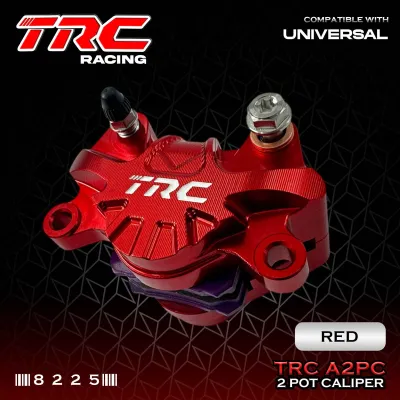
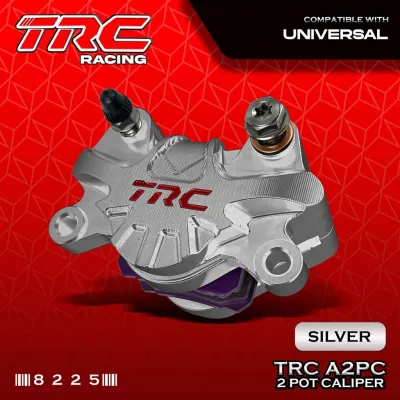
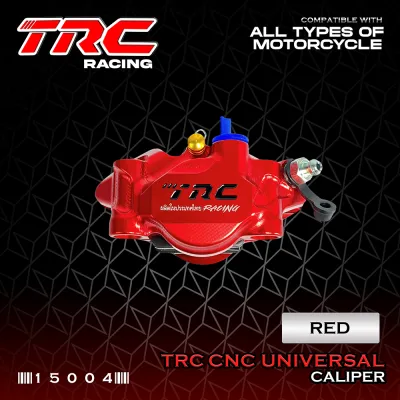
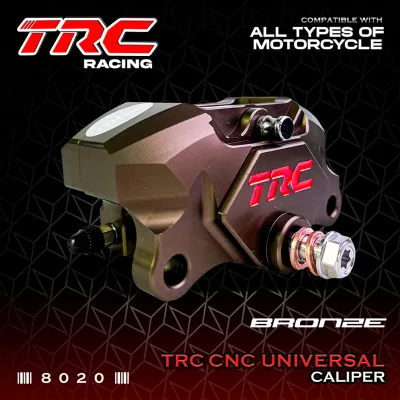
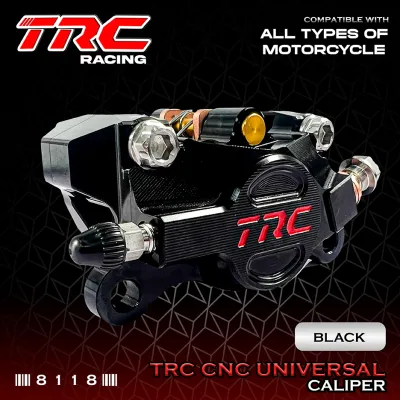
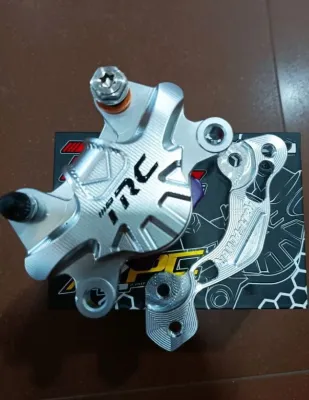
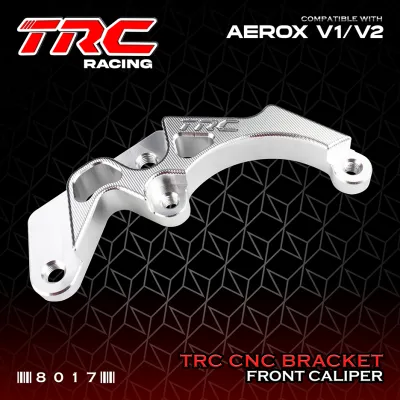
Prices are valid at publication and may change. Please refer to the product page for the latest price.
Start by identifying the mounting interface of your front fork or rear swingarm to ensure the caliper matches the required mounting type—whether radial or axial—along with the precise bolt-hole spacing and rotor diameter. Additionally, you must check the compatibility of your master cylinder’s bore size. Mismatching a large, multi-piston aftermarket caliper with a small stock master cylinder will result in a spongy, unresponsive lever that requires excessive travel to achieve adequate clamping force.
Because of the high pressures and vibrations experienced during operation, always refer to your original-vehicle instructions for exact torque specifications. We strongly recommend having any caliper upgrade installed, torqued, and bled by a qualified professional mechanic to ensure the hydraulic system is completely free of air bubbles and functions safely under pressure.
Key Factors That Determine Real-World Stopping Power
Piston Count and Bore Size
The number of pistons inside a caliper directly influences how hydraulic pressure is distributed across the backing plate of your brake pads. While a basic single-piston floating caliper pushes from only one side, dual-piston and four-piston configurations apply force from both sides of the rotor. This opposing piston design results in more even pad wear, a stiffer lever feel, and a highly progressive braking modulation that allows you to control deceleration with fine precision.

However, more pistons do not automatically translate to better braking if the total piston bore area is mismatched with your master cylinder. You must verify that the hydraulic volume moved by your lever matches the volume required to actuate the caliper pistons. A proper hydraulic ratio ensures that you do not have to squeeze the lever all the way to the handlebar grip before the pads bite the rotor.
Caliper Body Material and Rigidity
When you squeeze your brake lever, the hydraulic pressure inside the caliper can exceed several hundred pounds per square inch. Under this immense pressure, the physical body of the caliper has a natural tendency to flex outward. Any flex in the caliper body absorbs hydraulic energy that should otherwise be transferred directly to clamping the rotor, leading to a soft lever feel and reduced ultimate stopping power.
Most standard OEM and budget-friendly aftermarket calipers are constructed from cast aluminum, which is cost-effective but inherently more prone to micro-flexing under extreme loads. In contrast, premium aftermarket calipers are often CNC-machined from solid billet aluminum or forged under high pressure. These manufacturing methods yield a much denser, stiffer structure that minimizes flex, delivering a highly consistent, firm lever feel even during emergency stops.
Brake Pad Compound Compatibility
Even the most rigid, multi-piston caliper cannot deliver superior stopping power if it is paired with low-quality brake pads. The caliper acts as the mechanical muscle, but the brake pad compound is what generates the friction against the spinning rotor. You must ensure that your chosen caliper is compatible with high-performance pad compounds, such as sintered metal or advanced ceramics, which can withstand high operating temperatures without glazing.
If you install a premium caliper but reuse worn organic pads or cheap replacements, the system’s coefficient of friction will remain low. Sintered pads offer excellent initial bite and wet-weather performance, making them ideal for the unpredictable tropical downpours in the Philippines, though they do transfer more heat to the caliper body and pistons.
Heat Dissipation and Fluid Capacity
Braking is the process of converting kinetic energy into thermal energy. During long descents down steep mountain roads—such as the Marcos Highway or the winding routes of Tagaytay—your brakes generate immense heat. If this heat cannot escape, it transfers to the brake fluid, causing it to boil and resulting in a sudden, dangerous loss of braking pressure known as brake fade.
The physical design, surface area, and fluid capacity of the caliper body play a vital role in managing this thermal load. Calipers with larger internal fluid volumes and exposed cooling fins dissipate heat much more effectively. In highly humid and hot tropical environments, efficient thermal management is essential to prevent the hydraulic fluid from degrading prematurely.
TRC Brake Caliper Performance vs. OEM and Premium Aftermarket Options
TRC vs. Standard OEM Calipers
For many riders in the local motorcycle community, upgrading to a trc brake caliper is a practical step to overcome the limitations of stock braking setups. Most small-displacement underbone motorcycles and scooters come equipped with basic single-piston or dual-piston floating calipers. These factory units are built to a strict budget, often resulting in a wooden, uncommunicative lever feel and rapid performance degradation under heavy use.
Upgrading to a multi-piston TRC caliper typically provides a noticeable improvement in brake modulation and initial bite. Because these aftermarket calipers utilize a fixed body design with opposing pistons, they apply pressure more symmetrically to the rotor. This reduces uneven pad wear and shortens the free-play travel of your brake lever, giving you greater confidence when navigating congested urban traffic or sudden stops.
TRC vs. Premium Aftermarket Brands
While TRC offers an appealing balance of performance and affordability, it is important to understand where it stands relative to premium, globally recognized aftermarket brands. High-end manufacturers utilize advanced forging techniques, specialized piston coatings (such as hard-anodized or titanium finishes), and proprietary internal seal designs. These premium features ensure that the caliper remains highly responsive and leak-free even under the grueling conditions of track racing or high-speed sport riding.
Furthermore, premium brands offer widely available, standardized rebuild kits and replacement seals, ensuring long-term serviceability. TRC calipers, while highly durable for daily road use, may not offer the same level of extreme heat resistance or specialized parts support. If your riding style involves aggressive track days or high-velocity sport touring, investing in a premium tier caliper ensures absolute consistency at the limit.
Specification Verification Matrix
To help you evaluate your options, the following matrix outlines the key technical specifications and design features you should verify on the product label or manufacturer spec sheet before making a purchase.
| Feature to Verify | Standard OEM | TRC / Mid-Tier Aftermarket | Premium Aftermarket |
|---|---|---|---|
| Mounting Type | Typically axial; model-specific brackets | Axial or radial options; often requires adapter brackets | Radial or axial; highly precise machining and direct fitment |
| Piston Configuration | Single or dual-piston; floating design | Dual or four-piston; opposing fixed design | Four or six-piston; high-precision opposing fixed design |
| Body Construction | Cast aluminum | Cast or basic machined aluminum alloy | CNC-machined billet or forged aluminum alloy |
| Ideal Use Case | Standard daily commuting and low-speed city riding | Budget-friendly upgrades, enhanced daily commuting, casual touring | Track racing, high-performance sport riding, extreme mountain descents |
How to Choose the Right Caliper for Your Riding Style and Budget
Selecting the right caliper is a balance between your typical riding environment, performance expectations, and budget. To make an informed decision, evaluate which of the following scenarios best matches your daily routine.
- Choose TRC if: Your primary goal is to replace a worn, sluggish stock caliper or to achieve a firmer lever feel without spending a fortune. TRC calipers are highly suited for daily commuting through busy metropolitan areas, running errands, and casual weekend road trips. They offer a substantial boost in aesthetic appeal and braking confidence over basic factory setups while keeping your upgrade costs highly manageable (typically within a mid-range budget of several thousand pesos).
- Choose Premium Aftermarket Brands if: You demand uncompromising performance under extreme conditions. If you frequently ride high-displacement motorcycles, participate in competitive track events, or regularly carry heavy cargo down steep mountain passes, the superior heat dissipation and structural rigidity of a premium forged caliper are non-negotiable safety assets. These units are designed to withstand continuous thermal abuse without a hint of brake fade, though they require a significantly higher financial investment.
- Stick to OEM if: Your motorcycle is still covered by the manufacturer's warranty, or you prefer a completely hassle-free, plug-and-play maintenance experience. Factory calipers are engineered specifically for your bike's original master cylinder and brake lines, eliminating the need for custom fabrication, adapter brackets, or aftermarket fluid lines. If your stock brakes are functioning adequately for your daily needs, maintaining them with fresh high-quality pads and regular fluid flushes is often the most practical path.
If you do decide to upgrade your caliper, remember to budget for necessary ancillary components. A high-performance caliper cannot reach its full potential if it is choked by expanding rubber hoses or degraded hydraulic fluid. To maximize your investment, pair your new caliper with high-quality stainless steel braided brake lines, fresh DOT 4 or DOT 5.1 brake fluid (as specified by the manufacturer), and a set of premium sintered brake pads.
Frequently Asked Questions (FAQ)
Do I need to change my master cylinder when installing an aftermarket caliper?
Not always, but you must verify the hydraulic compatibility before riding. The master cylinder and the caliper operate as a closed hydraulic system; the ratio between the master cylinder’s piston area and the caliper’s total piston area determines the lever feel and clamping force. If you install a large four-piston caliper while keeping a small stock master cylinder, the lever may feel soft and spongy because it cannot displace enough fluid to move the pistons efficiently. If your lever travel becomes excessive after installation, upgrading to a master cylinder with a larger bore size is highly recommended to restore a firm, responsive feel.
Will a bigger brake caliper automatically make my motorcycle stop faster?
No, a larger caliper alone does not guarantee shorter stopping distances. Actual stopping distance is ultimately limited by the mechanical grip of your tires on the asphalt, the performance of your front suspension, and the friction coefficient of your brake pads. A larger caliper provides better heat management, reduces lever effort, and improves modulation, allowing you to control the braking force more precisely. However, if your tires lose traction or your ABS activates prematurely, the extra clamping force of a larger caliper cannot be utilized safely.
How often should I rebuild or service an aftermarket brake caliper?
In humid, dusty, and tropical environments like the Philippines, aftermarket brake calipers require more frequent inspection and maintenance than standard factory units. You should inspect the caliper seals for signs of fluid leakage, clean road grime and brake dust from the pistons, and check for even pad wear every 5,000 to 10,000 kilometers. Additionally, the hydraulic brake fluid should be completely flushed and replaced at least once every one to two years, as brake fluid is hygroscopic and absorbs moisture from the humid air, which lowers its boiling point and compromises safety.
Community discussion
Share your experience or ask a question. Comments are reviewed before publication.