
Choosing the right physical security for your motorcycle is one of the most critical decisions you will make as a rider. Many riders search for a reliable grip lock for motorcycle security to protect their investment, often picturing the small, colorful throttle clamps that pinch the front brake lever. While those compact clamps serve as quick visual deterrents, a true security strategy requires comparing heavy-duty U-locks (also known as D-locks) and robust chain locks.
Directly compared, U-locks generally offer superior cutting resistance and rigidity for their weight, making them the strongest choice for high-theft urban areas. Chain locks, on the other hand, win on sheer versatility, allowing you to secure your motorcycle to fixed external objects or wrap around complex handlebar and frame geometries. While lightweight throttle clamps are highly convenient for quick stops, using heavy-duty U-locks or chain locks to secure the handlebars, forks, or frame remains the only reliable way to prevent professional ride-off or lift-away theft.
Understanding the Mechanisms: Heavy-Duty Locks vs a Dedicated Grip Lock for Motorcycle
To make an informed decision, you must first understand how these locking mechanisms operate. A high-quality U-lock consists of a rigid, U-shaped hardened steel shackle that inserts into a straight, heavy-duty crossbar. The locking mechanism inside the crossbar typically secures both ends of the shackle simultaneously. This double-locking design means a thief must make two distinct cuts with a power tool to remove the lock, doubling the time and effort required to bypass it.
Products mentioned in this guide
![[BAZZAR] 1Pcs Security Grip Caps Lock for Bicycle Motorcycle Anti Theft Lock](https://img.lazcdn.com/g/p/b34022e0f11cb59a9cfb20884dad2104.jpg_400x400q80.jpg_.webp)
Prices are valid at publication and may change. Please refer to the product page for the latest price.
In contrast, a chain lock relies on a series of interlocking steel links, which are ideally hardened to resist cutting and sawing. These links are almost always encased in a heavy-duty fabric or sleeve to protect your motorcycle’s paint and fairings. The chain is secured by looping the ends together and fastening them with a heavy-duty padlock or an integrated locking head. The flexible nature of the chain allows it to drape, twist, and conform to irregular shapes, which is impossible with a rigid U-lock.
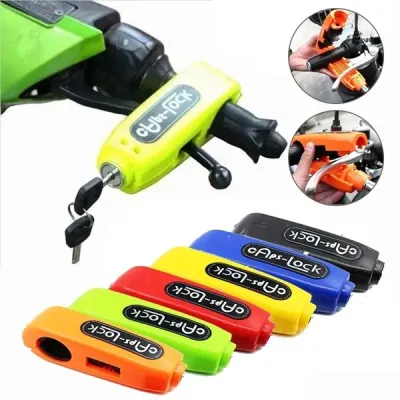
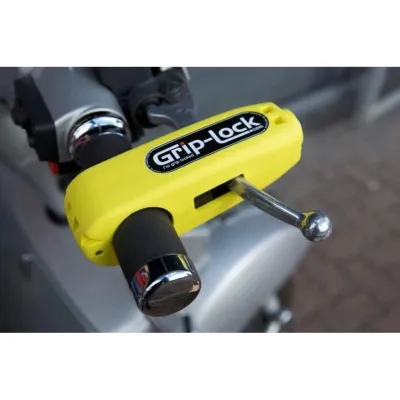
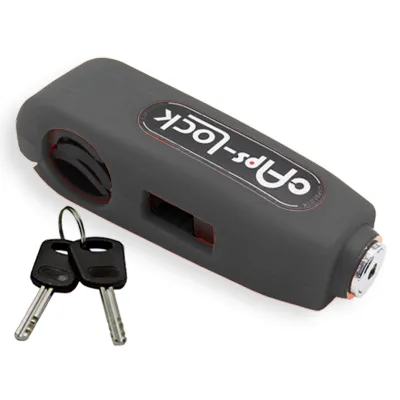
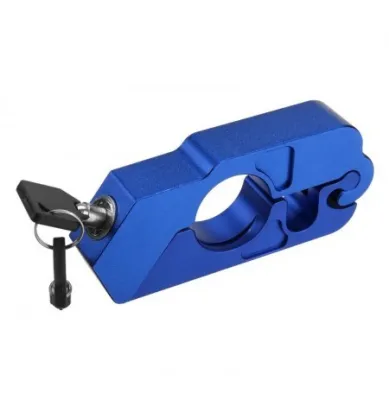
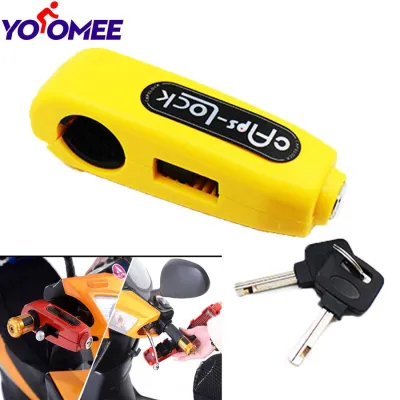
It is vital to differentiate these heavy-duty options from dedicated grip lock clamps. A standard throttle clamp is a small plastic or lightweight metal device that clamps over the handlebar grip and the front brake lever, keeping the front brake permanently applied. While these clamps are excellent for preventing the bike from rolling away on a slope and act as an immediate visual warning to opportunistic thieves, they do not anchor the motorcycle to anything. A pair of thieves can easily lift a clamped scooter or underbone into the back of a van in seconds, or simply cut the exposed hydraulic brake line to release the braking pressure entirely. Therefore, U-locks and chain locks must be viewed as your primary physical security barriers, while grip clamps should only serve as secondary deterrents.
Core Comparison: Security, Portability, and Handlebar Fit
Evaluating how these locks perform in real-world scenarios requires looking at three core dimensions: physical security, daily portability, and physical compatibility with your motorcycle’s handlebars and controls.

Theft Protection and Cutting Resistance
The rigid shape and thick, hardened steel shackle of a quality U-lock naturally resist manual bolt cutters. Because the shackle is solid and tight, there is very little room for a thief to insert a leverage tool, such as a bottle jack or a long steel pipe, to pop the lock open. A shackle thickness of 14mm or greater is generally considered the threshold for resisting manual hand-tool attacks, forcing thieves to rely on loud, attention-grabbing power tools.
For a chain lock to match the manual cutting resistance of a 14mm U-lock, the individual chain links must be significantly thicker and heavier, typically 12mm to 16mm. Because chain links are flexible, they can easily be laid flat against the pavement. This ground contact allows a thief to position one arm of a massive bolt cutter against the concrete, using their entire body weight to press down on the other arm. This leverage technique makes thin or medium-duty chains highly vulnerable if they are allowed to rest on the ground.
When it comes to portable angle grinders, no portable lock is entirely indestructible. However, high-quality locks utilize advanced metallurgy, such as manganese steel, chrome-moly alloys, or ceramic-infused materials, designed to dull grinder discs rapidly. A thick, encased shackle or chain link forces the thief to consume multiple cutting discs and batteries, creating highly visible sparks and extreme noise that increase the likelihood of detection. When shopping, prioritize locks with certified security ratings and verified hardened steel cores over unverified marketing claims of being completely uncuttable.
Portability and Storage on the Bike
U-locks offer an exceptional weight-to-security ratio. Because they do not require long, overlapping links, a high-security U-lock is relatively compact and lightweight compared to an equally secure chain. Many scooters and underbone motorcycles common in the Philippines feature under-seat storage compartments (often called a U-box) that can easily accommodate a medium-sized U-lock. Alternatively, some manufacturers offer dedicated frame-mounting brackets that keep the U-lock securely bolted to the chassis during transit, preventing it from rattling or shifting.
Heavy-duty chain locks are notoriously bulky and heavy. A secure 12mm or 14mm chain that is long enough to be useful can easily weigh between 4 and 8 kilograms. Carrying this weight daily can be a physical burden. If your motorcycle lacks a spacious top box or saddlebags, you may be tempted to carry the chain in a backpack. However, riding with a heavy metal chain on your back is highly discouraged, as it poses a severe spinal injury risk in the event of a fall. Wrapping a heavy chain around your waist or the passenger grab rail is also common, but if the protective fabric sleeve wears through, the bare metal links will quickly scratch your paint, damage plastic fairings, or clatter against hot engine components.
Handlebar Compatibility and Locking Options
The primary limitation of a U-lock is its rigid, fixed internal dimensions. If you intend to use a U-lock to secure your handlebars or front forks, you must carefully measure the clearances beforehand. Thick aftermarket grips, handguards, large front brake fluid reservoirs, and bulky plastic fairings can easily prevent a rigid shackle from closing. Trying to force a U-lock into a tight space can put dangerous, concentrated pressure on your hydraulic brake lines, throttle cables, or electrical wiring harnesses, which can lead to hidden damage and sudden mechanical failure on the road.
Chain locks offer unmatched compatibility and flexibility. Because the chain can bend and snake through tight spaces, you can easily weave it through the handlebar triple clamp, around the forks, and through the frame without putting rigid pressure on sensitive controls. This flexibility also opens up far more parking options. If the only available parking spot is next to a thick concrete pillar or a wide utility pole, a long chain lock can easily loop around the object and secure your motorcycle, whereas a rigid U-lock would be far too small to fit.
The Decision Framework: Choosing the Right Grip Lock for Motorcycle Security
To select the ideal locking setup for your daily ride, evaluate your typical parking environments, your motorcycle’s design, and how much weight you are willing to transport. Use the following guidelines to make your decision.
Choose a U-Lock if:
- You prioritize maximum physical cut resistance with the lowest possible carrying weight.
- Your motorcycle has a spacious under-seat compartment, a top box, or a secure frame area where a rigid lock can be easily stored.
- You park primarily in designated motorcycle parking zones equipped with narrow metal ground anchors or rails that easily fit a rigid shackle.
- Your handlebar and front fork area has clear, unobstructed spaces where a metal shackle can pass through safely without pressing against brake lines, throttle cables, or wiring.
Choose a Chain Lock if:
- You frequently park in varied, unmonitored public areas where you must secure your bike to thick, irregularly shaped fixed objects like trees, lamp posts, or concrete pillars.
- Your motorcycle has a fully faired body, tight clearances, or aftermarket accessories around the handlebars that prevent a rigid U-lock from closing.
- You have a reliable built-in storage solution, such as a secure top box, side panniers, or a tail bag, to safely transport a heavy chain without carrying it on your body.
- You want the flexibility to lock multiple parts of your bike simultaneously, such as looping the chain through the rear wheel, the frame, and a fixed post, or securing two motorcycles together.
Neither may be sufficient if:
- You rely solely on a lightweight, plastic-bodied throttle clamp or a thin, braided steel cable lock. These items can be cut silently in seconds with basic hand tools. They should only be deployed as secondary, visual warnings alongside a primary heavy-duty U-lock or chain lock.
Verify first before purchasing:
- If you are purchasing your security gear from an online marketplace, never guess the dimensions. Use a caliper or a soft measuring tape to check your handlebar diameter, grip thickness, and the distance between your forks.
- For U-locks, verify the inner shackle width and length to ensure it can clear your wheel or triple clamp. For chain locks, verify the total length (usually 1.2 to 1.8 meters is ideal for versatility) and ensure the individual link thickness matches your security requirements.
- Always consult your motorcycle's original owner's manual to identify safe structural locking points on the frame or swingarm, ensuring you avoid clamping or wrapping locks around fragile components like brake discs, speed sensors, or radiator fins.
Maximizing Security and Lock Lifespan in Tropical Climates
Owning a high-quality lock is only half the battle; how you use and maintain it determines its effectiveness and longevity, especially under challenging environmental conditions.
Keep the Lock Off the Ground Whenever you secure your motorcycle, make a conscious effort to keep the lock body, the U-lock shackle, and the chain links suspended in the air rather than resting directly on the pavement. If a lock rests on the ground, a thief can use the concrete as an anvil, striking the lock repeatedly with a heavy sledgehammer to shatter the locking mechanism. Keeping the lock elevated forces the thief to attempt awkward, mid-air cuts or strikes, which dramatically reduces their physical leverage and increases the time and noise required to break the lock.
Protect Against Tropical Corrosion The tropical climate of the Philippines, characterized by high humidity, intense monsoon rains, and salty air in coastal regions, is incredibly harsh on metal security gear. Rainwater and road grime can easily penetrate the keyway, causing the internal brass or steel pins to corrode, rust, and eventually seize. To prevent this, choose locks that feature integrated weather caps or sliding keyway covers.
Additionally, establish a regular maintenance routine. Periodically spray the keyway with compressed air to blow out dust, and apply a dry graphite or Teflon-based lubricant to the internal mechanism. Avoid using wet, oily lubricants like standard WD-40 inside the key cylinder; while they provide temporary relief, they attract road dust, pocket lint, and grit, creating a sticky paste that will eventually jam the lock permanently.
Layer Your Security No single lock is entirely foolproof. The most effective way to protect your motorcycle is to layer your security devices. Combine a primary, heavy-duty lock—such as a frame-anchored chain or a robust U-lock—with a secondary visual deterrent. A bright, neon-colored disc lock with a reminder cable, or a lightweight grip lock clamp on your handlebar, forces a thief to bring multiple types of tools and spend twice as much time attempting a theft. In most cases, seeing a multi-layered security setup will convince a thief to move on to an easier, less protected target.
Frequently Asked Questions (FAQ)
Can I use a standard bicycle U-lock for my motorcycle?
You should avoid using a standard bicycle U-lock to secure a motorcycle. Bicycle locks are engineered for lower-risk, low-weight scenarios and typically feature much thinner shackles, often under 12mm, made from softer steel alloys. These materials cannot withstand the heavy-duty bolt cutters, massive pry bars, and battery-powered angle grinders commonly used by motorcycle thieves. A motorcycle requires a dedicated, heavy-duty lock made of hardened steel alloys with a shackle thickness of at least 14mm to provide adequate resistance against professional theft attempts.
Is a grip lock clamp enough to prevent motorcycle theft?
A lightweight grip lock clamp is not enough to secure your motorcycle on its own. These devices only lock the front brake lever against the throttle grip, which prevents the motorcycle from being rolled forward or backward easily. However, they do not anchor the bike to a fixed object. A team of thieves can easily lift a lightweight motorcycle or scooter into the back of a utility vehicle or van in a matter of seconds. Furthermore, many of these clamps are constructed from plastic or thin cast aluminum, which can be shattered with a single hammer blow or bypassed by cutting the exposed brake line. They should only be used as a secondary visual deterrent in combination with a heavy-duty chain lock or U-lock.
Community discussion
Share your experience or ask a question. Comments are reviewed before publication.