
When you look at a bottle of engine oil, the front label can seem like a confusing collection of numbers, letters, and official-looking seals. These markings are not marketing jargon; they are precise technical specifications that dictate how the oil will perform inside your vehicle’s engine. Understanding these ratings is a direct way to protect your engine from friction, heat, and premature wear.
Choosing the correct engine oil requires matching your vehicle manufacturer’s requirements with the specifications on the bottle. These specifications primarily cover two areas: how easily the oil flows at various temperatures (viscosity) and how well it protects engine components under stress (performance certifications). Using the wrong oil can lead to reduced fuel efficiency, increased engine wear, or even voided vehicle warranties.
Decoding Viscosity Grades Like 0W-20
Viscosity refers to a fluid’s resistance to flow, which most people think of as thickness. The Society of Automotive Engineers (SAE) established the numerical grading system found on almost every bottle of motor oil to standardize how this thickness is measured. A grade like 0W-20 is a multigrade rating, meaning the oil is formulated to perform reliably in both cold winter conditions and high-temperature operating environments.
Products mentioned in this guide
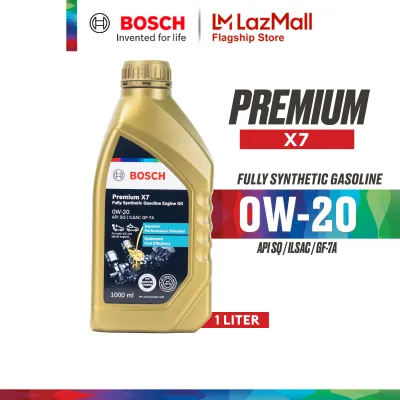
4 Lazada user ratings
Super smooth na ng engine ko after switching to Bosch 🔥 Hindi na maingay kahit cold start. Legit pang long drive, sulit!
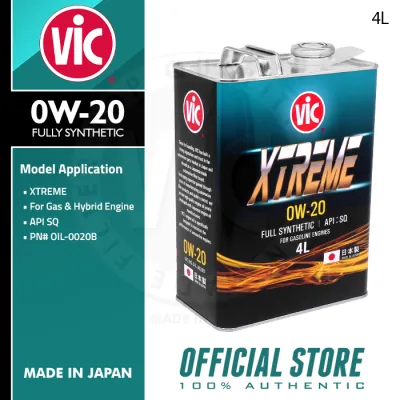
1 Lazada user ratings
Quality oil fit for my Honda City GM6 with 0W20 Viscosity. First time to use API SQ engine oil. Initial driving experience is so smooth and …Read full reviewShow less
Quality oil fit for my Honda City GM6 with 0W20 Viscosity. First time to use API SQ engine oil. Initial driving experience is so smooth and cold start is a breeze. Recommended for stop & go traffic. If I’ll buy next oil change. That means its a very good engine oil. Order soon after a long term review.
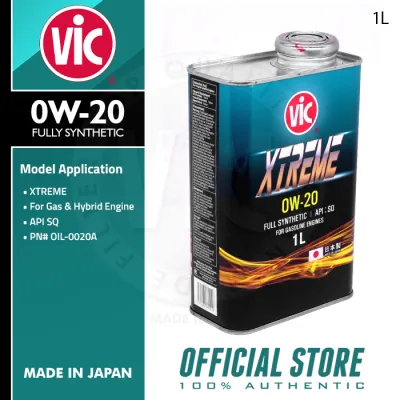
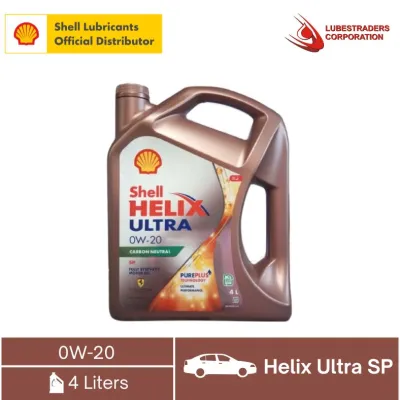
6 Lazada user ratings
💰Price: cheaper than if bought from shell stations This 0w-20 engine oil is a unicorn in where I live. I’ve been to 4 stations and not one o…Read full reviewShow less
💰Price: cheaper than if bought from shell stations This 0w-20 engine oil is a unicorn in where I live. I’ve been to 4 stations and not one of them sells this 0w-20. I had to resort to buying online. Good thing it’s cheaper (i had asked the price) from seller :) This is the first time I’ve put this engine oil in our car. As before, i’m only using what the CASA provides. Hence, I can’t really say if this performs better or worse as I’ve only driven it for around 5km as of posting this review. Still, bottle looks legit! 5/5
My ordered items was delivered earlier than i have expected. Also item i ordered was packed well.
83 Lazada user ratings
Enhanced engine performance with this oil, Provides excellent lubrication for your engine, Ideal for modern vehicles, High-quality oil for y…Read full reviewShow less
Enhanced engine performance with this oil, Provides excellent lubrication for your engine, Ideal for modern vehicles, High-quality oil for your car, Keeps the engine running smoothly, Extends the life of your engine, Improved fuel efficiency with this oil, Great protection against wear and tear,
Maintains optimal engine cleanliness, Enhanced engine performance with this oil, Provides excellent lubrication for your engine, Keeps the e…Read full reviewShow less
Maintains optimal engine cleanliness, Enhanced engine performance with this oil, Provides excellent lubrication for your engine, Keeps the engine running smoothly, Extends the life of your engine,
Enhanced engine performance with this oil, Extends the life of your engine, Improved fuel efficiency with this oil, Excellent oil for high-p…Read full reviewShow less
Enhanced engine performance with this oil, Extends the life of your engine, Improved fuel efficiency with this oil, Excellent oil for high-performance engines,
Keeps the engine running smoothly, Enhanced engine performance with this oil, Great protection against wear and tear,
High-quality oil for your car, Improved fuel efficiency with this oil, Great protection against wear and tear,
10 Lazada user ratings
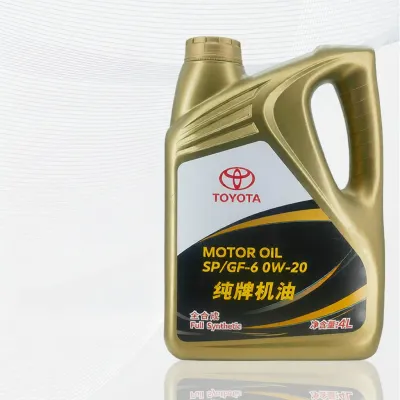
I trust Toyota and this order proved why once again. Solid quality and it arrived earlier than expected. Very pleased!
The quality is consistently excellent. They really care about their customers. Very happy with my order.
Ordered on a whim and I'm so glad I did. Quality speaks for itself. Already planning my next purchase!
I used it right after three puffs and it works great; I will definitely buy more if I need them.
Second time buying this. This oil filter is specifically for Toyota vehicles and it works well.
Prices are valid at publication and may change. Please refer to the product page for the latest price.
The first part of the grade, consisting of a number followed by “W” (for Winter), represents cold-weather performance. A lower number indicates the oil remains more fluid at low temperatures, allowing the oil pump to distribute it quickly during a cold start. For example, a 0W oil flows more easily in cold temperatures than a 5W or 10W oil, reducing initial starting friction.
The second number, such as the “20” in 0W-20, represents viscosity at normal operating temperature (100 degrees Celsius). A lower second number means the oil remains thinner at high temperatures, while a higher number indicates a thicker oil film. Thinner oils reduce internal engine drag to improve fuel economy, but they must maintain sufficient film strength to prevent metal-on-metal contact.
It is a common misconception that thicker oil always provides better protection, or that a thinner oil is universally required. Modern engines are built with tight tolerances and precise clearances between moving parts, requiring specific viscosity grades to lubricate these narrow passages. Always consult your vehicle owner’s manual to find the exact viscosity grade recommended for your engine, rather than choosing an oil based on general assumptions.
Understanding Performance Certifications: API, ILSAC, and ACEA
Beyond viscosity, engine oils must meet performance standards set by international automotive and petroleum organizations. These certifications guarantee that the oil contains the necessary additives to prevent oxidation, control sludge, resist shear, and protect emission systems. The three most common standards are API, ILSAC, and ACEA.

The American Petroleum Institute (API) sets performance standards that are updated periodically. API service categories use a two-letter code: “S” stands for Service (gasoline engines), while “C” stands for Commercial (diesel engines). The second letter indicates the generation of the standard. For instance, API SP is the current standard for gasoline engines, offering enhanced protection against low-speed pre-ignition (LSPI) and timing chain wear compared to older standards like API SN.
The International Lubricant Standardization and Approval Committee (ILSAC) works alongside the API to create standards specifically focused on passenger car gasoline engines. ILSAC ratings are designated by the prefix “GF” followed by a number, such as GF-6. These standards place a heavy emphasis on improving fuel economy and protecting modern turbochargers. When shopping, look for the API “Starburst” symbol on the front of the bottle, which indicates the oil meets the current ILSAC requirements.
European vehicles often require oils that meet standards set by the European Automobile Manufacturers’ Association (ACEA). Because European engines frequently feature different designs and distinct emission systems, their oil requirements differ from North American standards. ACEA classifications use letters to denote the application: “A/B” for gasoline and light-duty diesel engines, and “C” for catalyst-compatible oils designed for vehicles with advanced exhaust aftertreatment systems.
To verify these certifications quickly on a retail shelf, look at the back of the oil bottle for the API “Donut” symbol. This circular graphic clearly displays the API service category in the top half, the viscosity grade in the center, and whether the oil has resource-conserving properties in the bottom half. Matching these symbols to your vehicle’s requirements ensures the oil has the correct chemical composition for your engine.
How to Match Engine Oil Specifications to Your Vehicle
Finding the correct oil for your vehicle does not require professional mechanical training, but it does demand careful attention to detail. The first and most important step is to consult your vehicle owner’s manual. This document contains a dedicated section on engine maintenance that specifies the exact viscosity grade and the minimum performance certifications required for your specific engine model.
If you do not have the owner’s manual on hand, you can often find quick reference indicators directly under the hood. Many manufacturers print the recommended viscosity grade, such as 5W-30 or 0W-20, directly on the engine’s oil filler cap or on the handle of the oil dipstick. While this is a shortcut for viscosity, it rarely lists the required performance certifications like API or ILSAC ratings, so verifying the full specifications in the manual remains necessary.
Once you know your vehicle’s requirements, compare them directly to the labels on the oil bottle before making a purchase. The bottle must match both the required viscosity grade and meet or exceed the required performance standard. For example, if your manual calls for an API SN oil, you can use a newer API SP oil, but you should never use an older standard like API SL if your vehicle requires modern protection.
Using an oil that does not meet the manufacturer’s specifications carries significant risks. Incorrect oil can lead to accelerated engine wear, increased oil consumption, poor fuel economy, and the formation of harmful engine deposits. In modern turbocharged or gasoline direct-injection engines, using the wrong oil specification can even cause catastrophic engine failure. If you are ever unsure about the correct specifications or cannot locate your owner’s manual, consult a qualified professional mechanic to ensure you choose the right product.
Frequently Asked Questions (FAQ)
Can I mix different viscosity grades or brands of engine oil?
In an emergency situation where your engine’s oil level is dangerously low, mixing different brands or viscosity grades is acceptable to prevent immediate engine damage. However, this should only be a temporary solution. Mixing different oils can dilute the specialized additive packages of the higher-quality oil and alter the overall viscosity, which may reduce protection over time. It is recommended to perform a full oil and filter change as soon as possible to restore the correct, uniform specification recommended by your manufacturer.
Does my older car need the latest API or ILSAC specification?
Generally, newer API and ILSAC standards are designed to be backward compatible, meaning a modern API SP oil can be used in an older engine that originally required an API SN or SM oil. However, there are exceptions for classic cars or highly specialized vintage engines, which may require specific high-zinc formulations to protect older flat-tappet camshaft designs. Always check your owner’s manual for any minimum standards or manufacturer-specific exceptions, and refer to the owner’s manual for the minimum required standard.
Community discussion
Share your experience or ask a question. Comments are reviewed before publication.