
In the Yamaha NMAX V2, the torque drive nut is a critical fastener that secures the rear pulley (driven pulley) assembly, keeping the clutch spring, movable sheave, and torque cam tightly locked on the drive shaft. By maintaining precise clamping force, this nut ensures that the pulley halves squeeze the Continuously Variable Transmission (CVT) belt evenly, allowing for smooth gear ratio transitions and efficient power transfer to the rear wheel. When you are navigating daily stop-and-go traffic or climbing steep inclines, the torque drive nut nmax v2 relies on is the primary mechanical anchor keeping your scooter’s transmission stable under heavy load.
A failure or loosening of this specific nut directly disrupts how the CVT belt grips the rear pulleys. This leads to immediate performance issues, such as belt slippage, severe transmission vibrations, and a noticeable loss of acceleration. Understanding how this small but vital component functions can help you diagnose drive-system issues early, preventing costly roadside breakdowns and protecting other expensive transmission parts from catastrophic damage.
The Role of the Torque Drive Nut in the CVT Assembly
The rear pulley assembly of the Yamaha NMAX V2, often referred to as the torque drive or driven pulley, is responsible for adjusting transmission ratios in response to engine speed and load. This assembly consists of several moving parts, including the fixed sheave, the movable sheave, the compression clutch spring, and the torque cam. As the scooter accelerates, the movable sheave slides along the torque cam’s angled grooves, changing the width of the pulley groove to let the CVT belt ride higher or lower.
Products mentioned in this guide
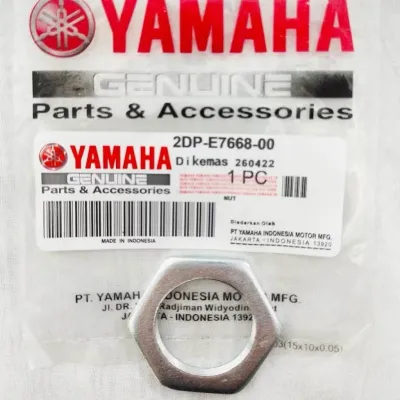
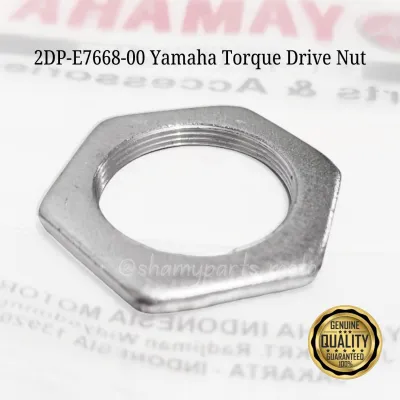
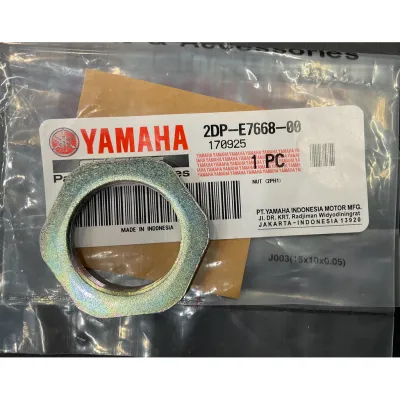
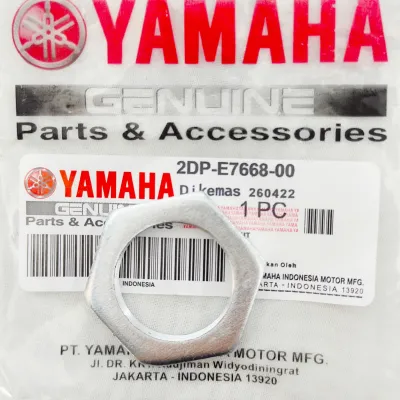
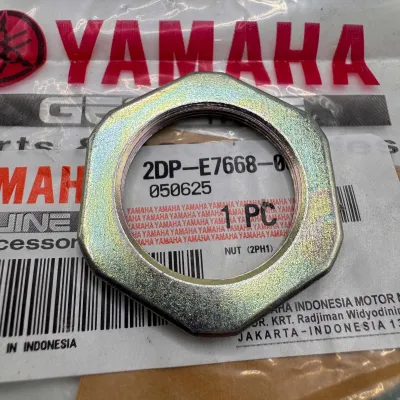
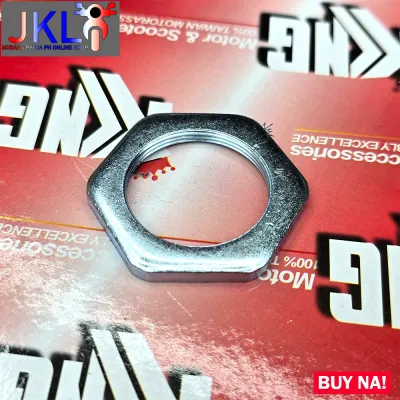
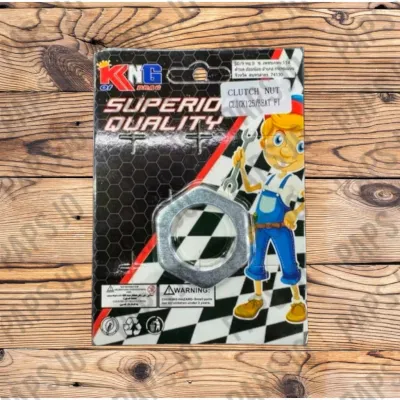
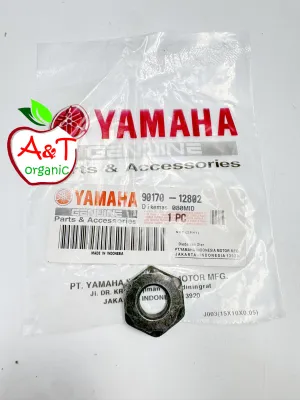
Prices are valid at publication and may change. Please refer to the product page for the latest price.
At the center of this dynamic system is the torque drive nut, which exerts the heavy axial clamping force required to hold the entire rear pulley stack together against the powerful resistance of the clutch spring. This nut ensures that the movable sheave remains perfectly aligned with the fixed sheave on the drive shaft. Proper alignment is crucial because even a fraction of a millimeter of deviation can cause the pulley halves to squeeze the CVT belt unevenly, disrupting the smooth transition of gear ratios.
Without the constant, high-tension clamping force provided by this nut, the mechanical link between the engine’s rotational force and the rear wheel is severely compromised. The torque drive nut prevents the high-tension clutch spring from pushing the pulley components outward and off the shaft. If this fastening force is lost, the pulley sheaves will separate, the belt will lose tension, and the transmission will fail to transfer power, leaving you stranded without drive.
In the tropical climate of the Philippines, where scooters frequently face high operating temperatures, heavy stop-and-go urban commuting, and high humidity, the CVT system undergoes immense thermal and physical stress. These harsh environmental factors make the structural integrity of the rear pulley assembly even more critical. A properly secured torque drive nut ensures that the internal components of your NMAX V2 CVT can withstand these daily demands without shifting out of alignment.
Symptoms of a Loose or Failing Torque Drive Nut
When a torque drive nut begins to back off or lose its clamping tension, the scooter will display immediate, observable riding symptoms. One of the most common signs is sluggish acceleration or a feeling of power loss, where the engine revs highly (high RPM) but the scooter struggles to gain speed. This occurs because the loose nut allows the pulley sheaves to spread apart, causing the CVT belt to slip along the pulley faces instead of gripping them firmly to transfer power.

You may also experience erratic shifting patterns, where the transmission fails to transition smoothly between low and high gear ratios. The scooter might feel jerky during acceleration, or it may suddenly hesitate when you twist the throttle. This erratic behavior happens because the movable sheave is no longer sliding predictably along the torque cam, resulting in unstable belt tension and inconsistent power delivery to the rear wheel.
In addition to performance drops, a failing torque drive nut produces distinct auditory cues that you should never ignore. A loose nut typically allows the rear pulley components to wobble, leading to a metallic rattling, clicking, or grinding noise coming from inside the CVT cover. This noise is often most pronounced when you are decelerating, idling at a traffic stop, or starting to accelerate from a complete standstill.
If the nut loosens significantly, the movable sheave will wobble violently on the drive shaft, causing severe vibration throughout the footboards and frame of the scooter. This wobble leads to uneven belt tracking, which rapidly degrades the belt’s edges and can cause it to shred. For your safety, stop operating the scooter immediately if you hear severe metallic rattling or experience sudden power loss, as continuing to ride can cause the rear pulley to disintegrate, lock up the rear wheel, or snap the belt in the middle of busy traffic.
Inspection Requirements and Torque Specifications
Inspecting, tightening, or replacing the torque drive nut on a Yamaha NMAX V2 requires systematic disassembly and the use of the correct tools. To access the nut, you must first remove the plastic air duct, the outer CVT cover, the clutch bell, and the entire rear pulley assembly. Because the clutch spring inside the rear pulley is under high compression, compressing the assembly safely requires a specialized clutch spring compressor tool to prevent the spring from launching the components outward when the nut is loosened.
When working on the rear pulley, using the correct holding tools is an absolute safety requirement. You must use a universal holding tool or a specific pulley holder to lock the assembly securely in place while loosening or tightening the torque drive nut. Attempting to hold the pulley by hand or using makeshift tools can bend the sheave faces, damage the torque cam, or cause personal injury if the high-tension spring suddenly decompresses.
To guarantee road safety and mechanical reliability, always consult the official Yamaha NMAX V2 service manual for the exact torque specification and tightening sequence. Tightening the nut must be done using a calibrated torque wrench rather than relying on general estimates or pneumatic impact wrenches. Over-tightening with an impact wrench can easily strip the fine threads on the shaft or crack the nut, while under-tightening risks the nut backing off during operation.
If you observe that the threads on the torque drive nut are stripped, the seating collar is deformed, or the drive shaft threads show signs of wear, do not attempt to reassemble the system. These components must be replaced with genuine Original Equipment Manufacturer (OEM) parts to restore the structural integrity of the drivetrain. Using non-standard hardware or damaged parts in this high-stress area compromises the safety of your motorcycle and can lead to severe mechanical failure on the road.
Frequently Asked Questions (FAQ)
Can I reuse the torque drive nut after removing it?
The torque drive nut can generally be reused during routine CVT maintenance, provided that its threads, seating surfaces, and overall structural integrity are in flawless condition. Before reinstalling the nut, carefully inspect it for any signs of thread stretching, cross-threading, rounded corners, or metal fatigue.
If you detect any deformation or if the nut has been subjected to improper impact wrench usage in the past, it must be replaced immediately with a new OEM nut. Because this fastener is subjected to constant heat, vibration, and heavy spring tension, using a compromised nut increases the risk of it backing off while riding, which can cause severe transmission damage.
Will a loose torque drive nut damage the CVT belt?
Yes, a loose torque drive nut will rapidly damage the CVT belt and significantly shorten its lifespan. When the nut loses its clamping force, the rear pulley sheaves are allowed to wobble and separate, which prevents the belt from tracking straight along the pulley faces.
This misalignment forces the belt to rub unevenly against the metal sheaves, generating excessive friction and heat. Over a short period, this uneven friction leads to rapid edge wear, fraying of the internal cords, and eventual belt snapping. Addressing a loose torque drive nut early is essential to avoid the cost of replacing a ruined CVT belt and other damaged pulley components.
Community discussion
Share your experience or ask a question. Comments are reviewed before publication.