
The replacement cycle for ignition coils depends heavily on whether you choose Original Equipment Manufacturer (OEM) parts or universal alternatives, as well as how they interact with your spark plug maintenance schedule. While OEM coils are engineered to match specific vehicle tolerances, universal ignition coils offer broader compatibility but may have varying lifespans depending on build quality and application. Rather than relying on a single fixed mileage number, determining when to replace your ignition coils requires understanding the relationship between coil wear, spark plug intervals, and observable engine symptoms.
To maintain optimal engine performance, you should inspect your ignition coils whenever you replace your spark plugs, verifying their condition against observable wear and manufacturer specifications rather than relying on arbitrary intervals.
Understanding Ignition Coil Lifespans: Universal vs. OEM
To make an informed decision for your vehicle, it is essential to understand the structural and engineering differences between OEM and universal ignition coils. OEM coils are designed by or for the vehicle manufacturer to meet exact electrical resistance, thermal dissipation, and physical mounting tolerances for a specific engine family. This precise matching ensures that the coil operates within the exact parameters expected by the engine control unit (ECU).
Products mentioned in this guide
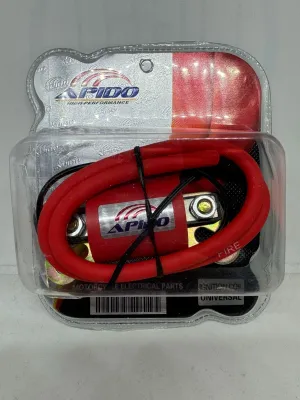

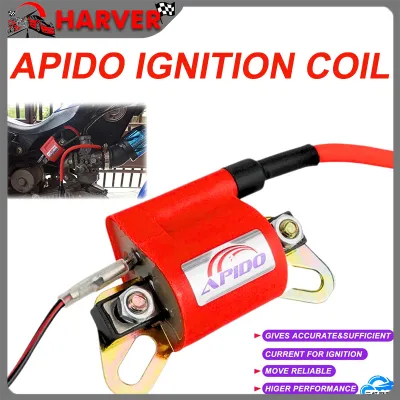
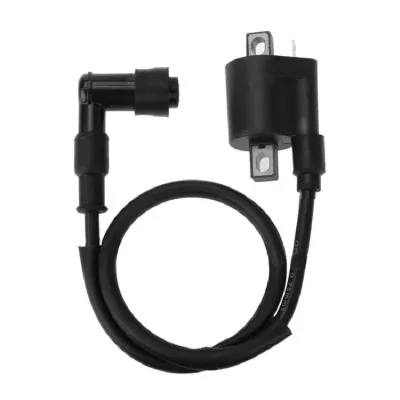
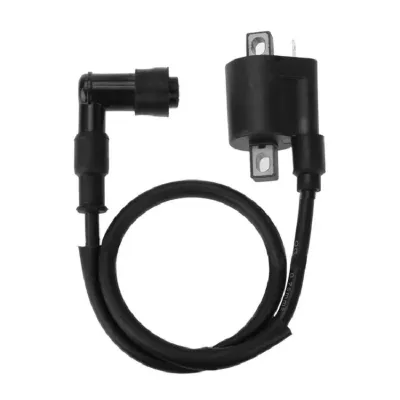
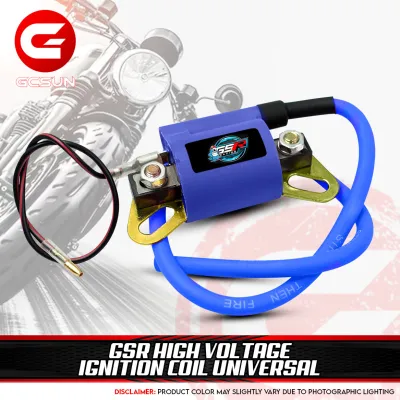
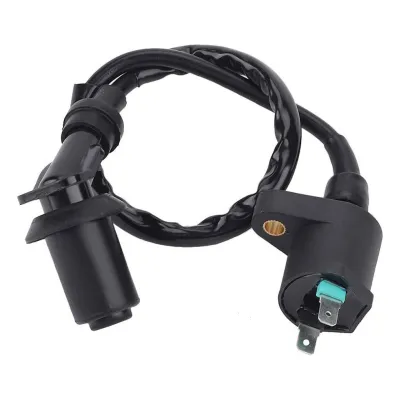
Prices are valid at publication and may change. Please refer to the product page for the latest price.
In contrast, universal ignition coils are engineered for broad fitment across multiple vehicle makes and models. While this makes them highly accessible and versatile, it also means their internal winding ratios and materials may not perfectly align with your vehicle’s original electrical specifications. Because of these design differences, the expected service life of universal coils can vary widely by brand and manufacturing quality.
When purchasing universal parts, you must check the specific manufacturer’s packaging, labels, or documentation to verify the expected service life and compatibility. Slight deviations in electrical resistance or thermal management in universal parts can influence long-term durability. If a universal coil runs hotter than an OEM equivalent or requires more primary current to generate a spark, its internal insulation may degrade faster over time.
Additionally, it is important to remember that warranty periods provided by aftermarket manufacturers do not automatically equal the actual operational lifespan of the coil. A warranty protects you against early manufacturing defects but does not guarantee the component will perform optimally under harsh driving conditions for the duration of that period. Always treat the warranty as a safety net rather than a definitive maintenance schedule.
Coordinating Ignition Coil and Spark Plug Replacement Schedules
To establish a reliable maintenance routine, you should first consult your vehicle’s owner manual to identify the baseline spark plug replacement interval. Spark plugs and ignition coils operate in a direct mechanical partnership, meaning the health of one directly impacts the performance and lifespan of the other.

When spark plugs become severely worn or their gaps widen beyond factory specifications, they require a significantly higher voltage to jump the gap and ignite the fuel-air mixture. This increased voltage demand forces the ignition coil to work harder, generating excessive internal heat that prematurely degrades the coil’s copper windings and insulation. Consequently, neglecting your spark plugs is one of the most common causes of early ignition coil failure.
When planning maintenance, you can choose between a preventive or a reactive replacement framework. A preventive approach involves replacing your ignition coils at the same time as a major spark plug service, especially if the vehicle has reached high mileage. A reactive approach, on the other hand, means you only replace the ignition coils when they show clear signs of failure or throw diagnostic trouble codes.
Your choice between these two strategies should factor in the labor costs and physical accessibility of the coils. For engines where the coils are easily accessible on top of the cylinder head, a reactive strategy is often highly cost-effective because replacing a single coil takes only a few minutes. However, if your vehicle has a complex engine layout where accessing the coils requires removing the intake manifold—which can incur labor costs of several thousand pesos ₱ at a local workshop—replacing all coils and spark plugs simultaneously is often the more economical choice.
Key Factors That Degrade Ignition Coil Performance
Ignition coils operate in a highly demanding environment, and several external factors can drastically shorten their operational life. Excessive engine bay heat and thermal cycling are primary culprits for both OEM and universal coils. In tropical climates with high ambient temperatures and heavy traffic congestion, the heat under the hood can rise dramatically, causing the coil’s plastic housing and internal epoxy to crack over time.
Moisture ingress and high-humidity environments also present significant challenges for ignition systems. When moisture penetrates the spark plug wells or the coil boots, it can lead to corrosion on the electrical terminals and cause electrical arcing, where the high-voltage current bypasses the spark plug and grounds out against the engine block. This issue is often exacerbated by improper engine washing techniques that leave standing water in the spark plug recesses.
Underlying electrical system issues can also cause premature coil failure. A failing battery, a deteriorating alternator, or poor ground connections can create voltage spikes and unstable current flow through the vehicle’s electrical system. These fluctuations put additional stress on the coil’s primary windings, leading to rapid internal degradation.
Finally, keeping the spark plug wells clean and free of engine oil is critical. Slow leaks from a worn valve cover gasket can fill the spark plug wells with oil, submerging the lower portion of the ignition coil. Over time, engine oil degrades the rubber boot and insulation of the coil, causing the spark to misfire and ruin the component.
Diagnosing Failing Ignition Coils: Symptoms and Safe Next Steps
Recognizing the early warning signs of a failing ignition coil can prevent more severe engine damage, such as catalytic converter failure due to unburned fuel. Common symptoms include engine misfires, a rough or unstable idle, decreased fuel economy, hesitation during acceleration, and an illuminated check engine light on your dashboard.
If you suspect a coil issue, you can perform a safe visual inspection as an initial diagnostic step. Remove the coil and inspect the outer housing for physical cracks, discoloration, or carbon tracking, which appears as fine gray or white lines indicating where electrical current has leaked through the insulation. You should also check the connector pins inside the electrical plug for signs of corrosion or bent metal.
Before performing any electrical work or removing ignition components, you must establish strict safety boundaries. Always disconnect the negative battery terminal to prevent accidental electrical shocks or short circuits that could damage your vehicle’s sensitive electronics. Always refer to your original-vehicle instructions and service manual for specific torque specifications and removal procedures.
You must also recognize when to stop DIY troubleshooting and consult a qualified professional. If an engine misfire persists after you have swapped the suspected coil, if you require specialized OBD2 diagnostic tools to trace complex electrical faults, or if you observe any signs of melting or cracking on the engine wiring harness, halt your work immediately. Working on damaged high-voltage wiring without professional training poses significant safety risks and can lead to costly electrical damage.
Frequently Asked Questions (FAQ)
Can I replace just one universal ignition coil instead of the whole set?
While replacing only the failed ignition coil is mechanically possible and highly cost-effective in the short term, it may not always be the best long-term strategy. The remaining coils in your engine have endured the exact same mileage, thermal cycles, and operating conditions, meaning they may be nearing the end of their operational life as well. If your vehicle has high mileage or if the coils are difficult to access, replacing the entire set at once prevents repeated labor costs and diagnostic headaches. Additionally, mixing a brand-new universal coil with heavily worn OEM coils can sometimes cause slight variations in spark output, leading to a less consistent idle.
Will using a universal ignition coil affect my vehicle's warranty?
Using an aftermarket or universal ignition coil does not automatically void your vehicle’s overall manufacturer warranty. However, if the universal coil is found to be defective and directly causes damage to another component—such as sending a voltage spike that damages the engine control unit—the vehicle manufacturer has the right to deny warranty coverage for that specific damaged part. To protect yourself, always keep your purchase receipts, ensure the universal coil is explicitly rated for your vehicle model, and review the aftermarket manufacturer’s own warranty terms for potential recourse in the event of a part failure.
Community discussion
Share your experience or ask a question. Comments are reviewed before publication.