
Finding a vintage helmet for men in the Philippines requires balancing classic style, safety certifications, and your personal budget. In a riding environment characterized by dense urban traffic and unpredictable tropical weather, choosing a retro-style helmet is more than an aesthetic decision.
You do not have to compromise safety for style. Instead, you must know how to allocate your budget and verify that your chosen helmet is legally road-worthy before hitting the highway.
Defining Vintage Styles and Non-Negotiable Safety Baselines
Vintage helmet aesthetics are highly popular among classic motorcycle enthusiasts, cafe racer riders, and modern retro scooter owners in the Philippines. These helmets typically fall into three main design categories: open-face (three-quarter) helmets, retro full-face helmets, and classic scrambler or cafe racer styles.
Products mentioned in this guide
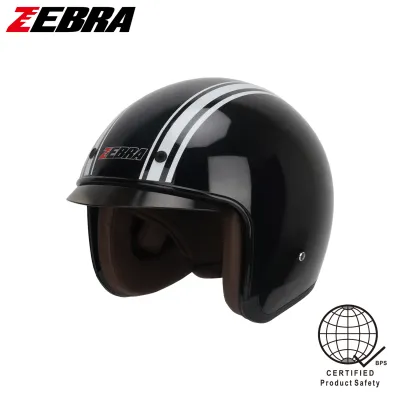
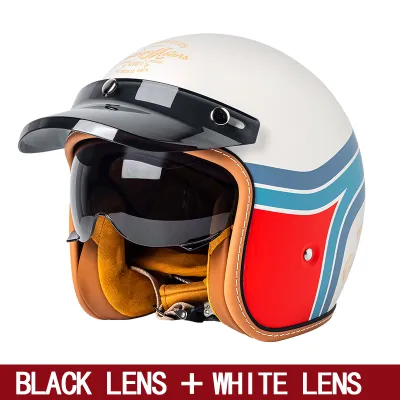
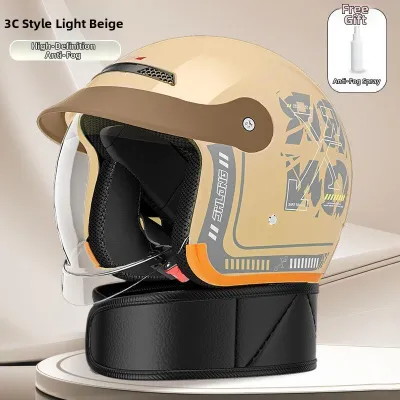
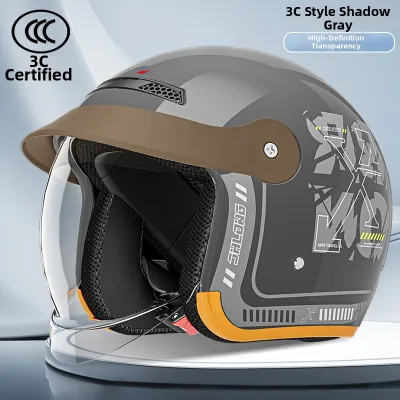
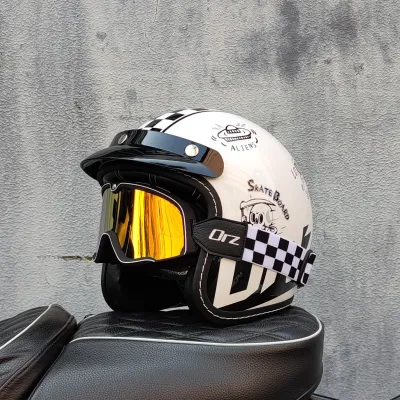
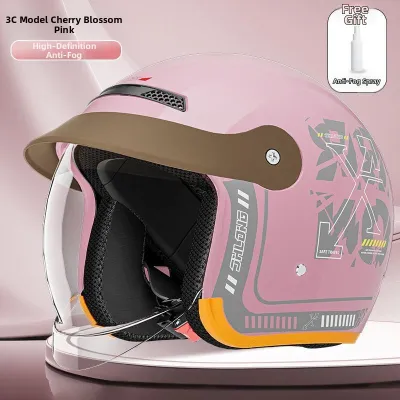
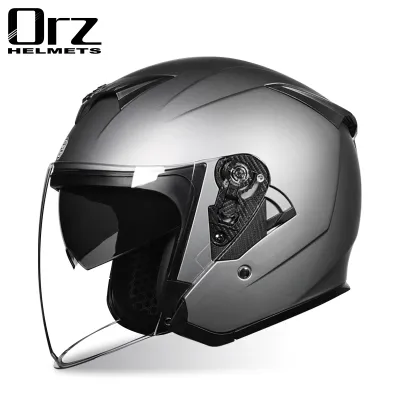
Prices are valid at publication and may change. Please refer to the product page for the latest price.
Unlike modern sport or touring helmets, which feature sharp aerodynamic lines and complex multi-vent systems, vintage-style helmets rely on clean, rounded silhouettes, minimalist hardware, and classic paint schemes. While they capture the spirit of mid-century motorcycling, modern retro-style helmets are engineered with contemporary safety technology hidden beneath their classic exteriors.
It is critical to distinguish between a modern retro-style helmet and an actual vintage or second-hand helmet. You must never ride with a genuine decades-old helmet or a used helmet of unknown history. Over time, the expanded polystyrene (EPS) liner—the crucial shock-absorbing layer inside the helmet—degrades and becomes brittle, even if the helmet has never been in an accident.
Furthermore, older helmets were manufactured under outdated safety standards that do not match today’s rigorous testing protocols. A second-hand helmet may also possess invisible structural micro-fractures from previous drops, rendering it useless in a crash.
To ensure your helmet actually protects your head, you must verify its safety certifications. Look for international standards such as the United Nations Economic Commission for Europe (ECE 22.05 or the newer, more stringent ECE 22.06) standard, or the Department of Transportation (DOT) FMVSS 218 certification.
In the Philippines, road legality requires that any motorcycle helmet must carry a valid Import Commodity Clearance (ICC) sticker or a Philippine Standard (PS) mark issued by the Bureau of Philippine Standards (BPS). Before purchasing, cross-reference these certifications with the latest guidelines from the Land Transportation Office (LTO) to ensure your helmet is fully compliant with local traffic laws.
How to Allocate Your Budget Without Compromising Safety
When shopping for a vintage helmet for men, establishing a realistic budget is essential, but safety must remain your non-negotiable baseline. A helmet’s primary job is energy management during an impact.

Therefore, the bulk of your budget—whether you are looking at entry-level options around ₱2,500 or premium models exceeding ₱15,000—must go toward the core safety components. These include a robust, certified outer shell, a multi-density EPS impact liner, and a highly secure retention system, typically utilizing a double D-ring or a high-quality micrometric buckle.
If a manufacturer cuts corners on these fundamental elements to lower the price, the helmet is not worth buying. Fortunately, there are several areas where you can safely compromise to keep costs down without sacrificing head protection.
Choosing a basic solid paint finish—such as gloss black, matte grey, or cream white—is often significantly cheaper than purchasing the exact same helmet model with custom graphics or limited-edition designer collaborations.
Additionally, you can save money by opting out of integrated features like built-in Bluetooth communication systems or internal drop-down sun visors. These convenience features add manufacturing complexity and cost, but they do not improve the helmet’s impact resistance.
You must exercise extreme caution when browsing online marketplaces, where suspiciously low-priced “vintage” helmets are abundant. If you see a retro-style helmet listed for under ₱1,500 that claims to have premium certifications, it is highly likely to be a counterfeit or a “novelty” helmet.
Novelty helmets are thin plastic shells lined with simple foam rather than impact-grade EPS. They offer zero protection in a crash and are illegal for road use in the Philippines. Always purchase from authorized dealers or official brand stores to guarantee you are receiving a genuine, certified product.
Finally, calculate the true cost of ownership before finalizing your purchase. Many minimalist open-face vintage helmets do not come with built-in eye protection.
If you choose a model that requires separate riding goggles or a snap-on bubble shield, you must factor those accessories into your total budget. High-quality, scratch-resistant, and UV-protected goggles or visors can add anywhere from ₱800 to ₱3,000 to your initial investment, so plan accordingly to avoid unexpected expenses.
Critical Features to Evaluate in Retro-Style Helmets
Retro aesthetics present unique engineering challenges, as manufacturers must blend classic shapes with modern safety requirements. Because vintage designs lack the aerodynamic contours and extensive venting of modern helmets, you must carefully scrutinize specific physical features depending on your budget tier.
Understanding these trade-offs will help you select a helmet that looks great without compromising on comfort or safety.
Shell Construction and Weight Management
The material used to construct the helmet’s outer shell is a major factor in both its price and its overall performance. Budget-friendly retro helmets typically utilize injection-molded polycarbonate or ABS plastic shells.
While these materials are highly impact-resistant and affordable, they tend to be heavier, often pushing the helmet’s weight past 1.5 kilograms. On the other hand, mid-range and premium vintage helmets often feature fiberglass composite or carbon fiber shells.
These materials are exceptionally strong and significantly lighter, which dramatically reduces neck fatigue during long weekend rides along the Marilaque Highway or through rural provinces. Deciding if a lighter shell is worth the extra cost depends largely on how many hours you spend in the saddle.
Visor Configurations and Eye Protection
Eye protection is highly variable among vintage designs, and your choice will directly impact your riding experience. Some retro helmets feature integrated, flip-up bubble shields or flat visors that offer excellent wind and rain protection.
Others are completely open-face or feature classic three-snap configurations, allowing you to attach aftermarket bubble shields, peak visors, or wear separate riding goggles. If you opt for separate goggles or snap-on shields, ensure they are securely fastened so they do not fly off at highway speeds.
Regardless of the style, always check that the visor or goggle lens features certified anti-scratch and UV-resistant coatings. These coatings are essential for protecting your eyes from flying debris and the intense Philippine sun.
Interior Comfort and Ventilation Trade-offs
One of the most significant trade-offs of the vintage aesthetic is ventilation. Classic full-face helmets often have very small chin vents and lack the forehead and exhaust vents found on modern sport helmets.
In the hot and humid climate of the Philippines, this reduced airflow can lead to rapid heat buildup and excessive sweating. To mitigate this, prioritize helmets that feature removable, washable interior liners made from moisture-wicking materials.
Being able to easily remove and wash the cheek pads and comfort liner is essential for preventing mold, bacteria, and unpleasant odors from developing after sweaty afternoon rides.
Navigating Online Marketplaces and Avoiding Counterfeits
Purchasing a vintage helmet for men online requires a systematic approach to ensure you get the correct fit and a genuine product. Before placing an order, you must accurately measure your head circumference using a flexible measuring tape, wrapping it around your head about 2.5 centimeters above your eyebrows.
Additionally, pay close attention to your head shape. Most helmet manufacturers design their interiors for either “intermediate oval” or “round oval” heads. A helmet that is the correct size but the wrong shape will cause painful pressure points on your forehead or the sides of your head.
To avoid fit issues, a highly recommended strategy is to visit a physical motorcycle gear store to try on the specific helmet model you are interested in. Even if you plan to purchase the helmet online to take advantage of seasonal discounts or exclusive vouchers, trying it on in person allows you to confirm the exact size and feel the weight firsthand.
When trying on a helmet, wear it for at least 10 to 15 minutes in the store. It should feel snug against your cheeks and forehead without causing localized pain, and it should not rotate when you shake your head.
When shopping on e-commerce platforms, verifying the authenticity of the seller is paramount. Look for official brand stores, certified mall tags, or authorized distributor badges on the platform. Avoid listings from unknown third-party sellers that have generic product photos, extremely low prices, or zero customer reviews.
Genuine sellers will gladly provide proof of their authorized dealer status and can verify the presence of the official BPS or ICC stickers on the specific unit they are shipping to you.
Finally, read the seller’s return and exchange policies carefully before checking out. Because helmet fit is highly subjective, you must ensure that the seller allows size exchanges if the helmet does not fit perfectly upon arrival.
Keep in mind that helmets are bulky items, so you should factor in potential return shipping costs if an exchange is necessary. Always inspect the packaging and the helmet thoroughly upon delivery before finalizing the transaction.
Long-Term Care and Replacement Rules for Retro Helmets
Proper maintenance is crucial to preserve both the aesthetic appeal and the protective capabilities of your vintage helmet. To clean retro visors and outer shells, always consult the helmet manufacturer’s specific care instructions first.
For general cleaning, use a soft microfiber cloth dampened with warm water and a mild, pH-neutral soap, avoiding harsh chemical solvents or glass cleaners that can degrade polycarbonate shields or damage the outer paint.
If your vintage helmet features genuine leather or faux-leather exterior trims, check the product label of any leather conditioner or cleaner before application, as unauthorized products can discolor or weaken the material.
If the manufacturer’s instructions conflict with a cleaning product’s label, or if the trim material is unidentified, stop and consult the helmet manufacturer or a qualified professional.
No matter how well you maintain your helmet, it has a limited operational lifespan. The industry-standard rule is to replace your helmet every five years from its manufacture date, or immediately after any impact, even if the helmet fell from a low height and shows no visible exterior damage.
During a crash, the EPS liner compresses to absorb the impact energy. Once compressed, that specific section of the liner cannot protect you in a subsequent accident.
To verify your helmet’s remaining lifespan at the time of purchase, you must locate and read the manufacture date stamp. This is typically printed on a white tag sewn onto the chin strap, or on a sticker affixed to the raw EPS liner underneath the comfort padding.
The date is usually formatted as MM/YYYY or WW/YYYY (week and year). Avoid buying helmets that have already sat on a retailer’s shelf for several years, as their protective lifespans are already ticking down.

Community discussion
Share your experience or ask a question. Comments are reviewed before publication.