
Finding the right tire for your scooter or underbone motorcycle in the Philippines requires balancing your daily riding habits, local road conditions, and budget. The optimal tire choice always depends on matching your motorcycle’s exact factory specifications and your typical riding environment.
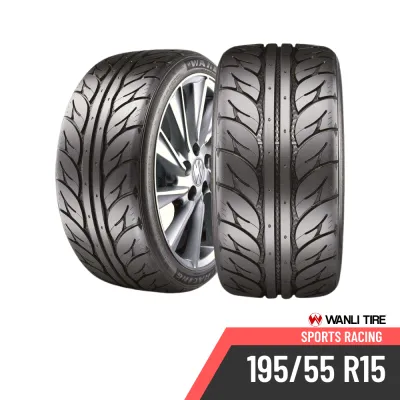
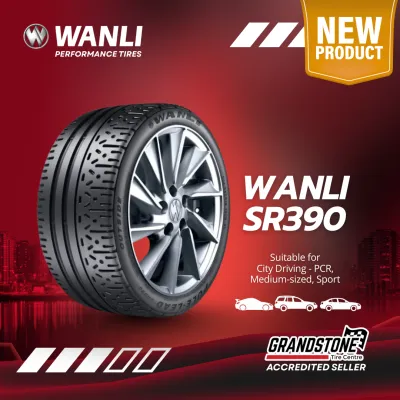
Wanli Sport Racing tires are generally suitable if you are a budget-conscious daily commuter who primarily rides on paved urban roads. If your daily route consists of dry, well-maintained city streets and you want an affordable option to keep your vehicle running, this tire type can be a practical choice.
Conversely, you may want to look at other specialized brands if your daily riding involves frequent travel through heavy tropical downpours, high-speed highway touring, or carrying heavy passenger loads and cargo. Specialized wet-weather or heavy-duty touring tires from established premium brands often feature specific tread designs and rubber compounds optimized for those demanding scenarios.
Products mentioned in this guide
Prices are valid at publication and may change. Please refer to the product page for the latest price.
Verify Your Scooter or Underbone's Exact Tire Specifications
Before comparing any tire brands, you must identify the exact factory specifications required for your specific motorcycle model. Using the wrong tire size or rating can severely compromise your safety, alter your vehicle’s handling, and accelerate wear on your suspension components.
To find these specifications, look at the sidewall of your current tires or consult your motorcycle’s owner’s manual. A typical tire size marking for a scooter or underbone might look like “90/80-14” or “70/90-17”. The first number represents the tire’s width in millimeters. The second number is the aspect ratio, which is the height of the tire’s cross-section expressed as a percentage of its width. The third number, following the hyphen, indicates the rim diameter in inches.
Following the size dimensions, you will find the load index and speed rating, represented by a number and a letter, such as “46P”. The number is a code that corresponds to the maximum weight capacity the tire can safely support at its maximum inflation pressure. The letter represents the maximum speed the tire is certified to sustain under its recommended load.
Matching the original equipment manufacturer (OEM) size and load capacity is critical for smaller displacement motorcycles like scooters and underbones. These vehicles are engineered with precise tolerances for clearance, steering geometry, and braking performance. Exceeding or falling short of the designated speed rating and load index can lead to unpredictable handling, poor fuel economy, and premature tire failure.
For instance, an underrated tire may overheat and suffer a blowout under heavy loads, especially when carrying a pillion passenger or heavy cargo. Conversely, an oversized tire can rub against the swingarm, fender, or suspension components, leading to dangerous friction and potential loss of control.
How to Compare Wanli Sport Racing with Other Available Brands
When evaluating Wanli Sport Racing tires against other options in the local market, you should rely on physical design characteristics and official manufacturer specifications rather than brand reputation alone.

First, perform a visual tread pattern analysis. Look closely at the groove depth and the presence of sipes, which are the small slits cut into the tread blocks. Tires designed for sport racing often feature larger slick areas with fewer grooves to maximize the contact patch on dry pavement. While this design provides excellent dry grip, it reduces the tire’s ability to channel water away.
If you frequently ride during the monsoon season in the Philippines, you should compare this with commuter-focused tires that feature deep, continuous grooves designed to prevent aquaplaning on wet roads. Look for grooves that extend all the way to the shoulder of the tire, as these help channel water away when leaning into a turn.
Second, check the rubber compound indicators on the manufacturer’s labels. Tire compounds generally range from soft to hard. Soft compounds offer superior grip because they conform more easily to the road surface, but they wear down much faster. Harder compounds provide longer tread life and better fuel efficiency but offer less traction during aggressive cornering.
The tropical climate of the Philippines plays a significant role here. High ambient temperatures and intense sun exposure can accelerate the aging of soft rubber compounds. A sport racing tire with a soft compound might wear out exceptionally fast when subjected to hot asphalt during the dry season, whereas a harder compound will resist wear much better.
Third, consider the construction type of the tire. Most tires for smaller displacement scooters and underbones are bias-ply, meaning the internal cords run diagonally across the tire. Bias-ply tires have stiff sidewalls, making them highly resistant to impact damage from potholes, which is a common hazard on local roads.
Some premium options may offer radial construction, where the cords run at a right angle to the centerline. Radial tires generally provide a more compliant ride, better heat dissipation, and improved high-speed stability, though they are typically more expensive and have more flexible sidewalls.
Finally, locate the tread wear indicators (TWI) on the tire. These are small, raised bars situated inside the main tread grooves. As the tire wears down, the tread surface will eventually become flush with these indicators, signaling that the tire has reached its legal wear limit and must be replaced immediately. Comparing the depth and placement of these indicators across different brands can help you estimate the relative lifespan of each option under similar riding conditions.
Evaluating Price, Availability, and Overall Value
To determine the true value of Wanli Sport Racing tires compared to other brands, you must look beyond the initial purchase price and calculate the total cost of ownership.
Start by comparing the upfront retail costs in ₱ against the expected tread life. A lower-priced tire might seem like a bargain initially, but if its compound wears out twice as fast as a slightly more expensive alternative, you will end up spending more money on replacements and installation fees over time. Review the manufacturer’s wear ratings and compound descriptions to gauge how many kilometers of daily commuting you can realistically expect before reaching the tread wear indicators.
Next, check the local availability of both front and rear tire sets. It is highly recommended to install matching tires on both wheels to maintain balanced handling, consistent grip levels, and uniform wear patterns. Some budget brands may have inconsistent supply chains in the Philippines, meaning you might easily find a front tire but struggle to locate the matching rear tire. Ensure that your chosen retailer has both sizes in stock before committing to a purchase.
Additionally, remember to factor in the auxiliary costs associated with a tire change. The total investment is not just the price of the rubber itself; it also includes professional installation, wheel balancing, and the replacement of the valve stems. Skipping wheel balancing or reusing old, degraded rubber valve stems to save a few pesos can lead to uneven tire wear, vibrations at higher speeds, and slow air leaks that compromise your safety on the road.
Essential Safety Checks Before Purchasing and Installing
Before finalizing your purchase and having your new tires mounted, you should perform several physical quality checks to ensure you are getting a safe, authentic, and undamaged product.
Always check the manufacturing date code, which is molded into the tire’s sidewall as a four-digit number. The first two digits represent the week of manufacture, while the last two digits indicate the year. For example, a code of “1226” means the tire was produced in the 12th week of 2026. Avoid purchasing tires that have been sitting in storage for several years, even if they are brand new. Over time, the rubber compounds naturally degrade, harden, and lose their structural integrity, making them prone to cracking and sudden failure.
Next, carefully inspect the tire bead—the inner edge that seals against the wheel rim—and the sidewalls for any signs of storage damage. Look for micro-cracks, deep scuffs, or unusual deformities in the tire’s shape. Tires that have been improperly stacked or compressed in hot warehouses can develop permanent warps that make them difficult to mount securely or cause persistent air leaks.
You must also verify that the tires carry the required safety certifications and regulatory markings for road legality in the Philippines. Look for official quality marks, such as the Import Commodity Clearance (ICC) sticker or the Philippine Standard (PS) mark, which indicate that the tire model has undergone rigorous safety and performance testing.
Finaly, if you are considering a tire size that deviates slightly from your motorcycle’s original specifications, stop and consult a qualified professional mechanic. You must verify that the tire will not conflict with the swingarm, drive chain, belt cover, or fender clearances. A tire that looks acceptable on a stationary motorcycle may expand slightly at high speeds or rub against the bodywork when the suspension compresses over bumps, leading to dangerous friction and potential loss of control.
Frequently Asked Questions (FAQ)
Can I mix a Wanli Sport Racing tire with a different brand on the same motorcycle?
It is highly recommended to use matching tire models from the same brand on both the front and rear wheels of your motorcycle. Mixing different brands, tread patterns, or construction types can lead to unpredictable handling and compromised safety. Different tires are engineered with distinct rubber compounds, carcass stiffness, and tread profiles, which behave differently under braking, cornering, and wet-weather conditions. If you must mix brands due to an emergency or stock shortage, ensure that both tires share the same construction type (such as both being bias-ply) and consult a professional mechanic to verify that the handling characteristics remain safe.
How do I know if a sport racing tire is suitable for daily commuting?
To determine if a sport-oriented tire is suitable for your daily commute, you must evaluate your typical riding conditions against the tire’s design limits. Sport racing tires are engineered to provide maximum grip on dry, smooth pavement, often requiring a warm-up period to reach their optimal operating temperature. For short, low-speed city commutes, the tire may never reach this temperature, meaning you will not benefit from its specialized grip. Additionally, these tires often feature fewer tread grooves, which can significantly reduce traction on wet, slippery roads during sudden tropical downpours. If your commute involves wet weather or rough roads, a dedicated commuter or touring tire is generally a safer and more durable choice.
What should I do if my preferred tire brand is out of stock in my exact size?
If your preferred tire brand or model is out of stock in your exact OEM size, do not immediately purchase a significantly wider or narrower alternative. Installing an incorrect tire size can alter your motorcycle’s steering geometry, compromise speedometer accuracy, and cause the tire to rub against the suspension or fenders. Instead, consult your motorcycle’s owner’s manual or a qualified mechanic to see if the manufacturer lists any approved alternative sizes. If no alternatives are officially approved, it is safer to wait for a restock or choose a different reputable brand that offers a tire in your exact factory-specified dimensions.
Community discussion
Share your experience or ask a question. Comments are reviewed before publication.