
Selecting the right waterproof motorcycle riding boots requires balancing immediate convenience with long-term exposure. For daily commuters, the priority lies in finding highly breathable, flexible, and high-traction footwear that can handle sudden tropical downpours and slick city streets without leaving feet soaked in sweat. Conversely, long-distance touring riders require taller, heavily reinforced boots with continuous membrane protection designed to withstand hours of highway-speed rain, wind pressure, and changing altitudes.
In tropical climates where heavy downpours can occur instantly, riding with wet feet is more than an inconvenience; it compromises control, comfort, and safety. Understanding how different waterproof features perform under distinct riding conditions allows you to make an informed investment that protects your feet from both external wetness and internal moisture buildup.
Understanding Waterproof Construction in Riding Boots
To evaluate waterproof riding boots effectively, you must first understand the baseline mechanisms that keep water out. Manufacturers generally use two primary methods to achieve water resistance: internal waterproof membranes and external surface coatings. Internal membranes consist of specialized materials with microscopic pores that are small enough to block liquid water droplets from entering but large enough to allow sweat vapor to escape. External surface coatings, such as durable water repellent treatments or specialized waxes, cause water to bead up and roll off the outer shell, but they do not provide a permanent barrier on their own.
Products mentioned in this guide
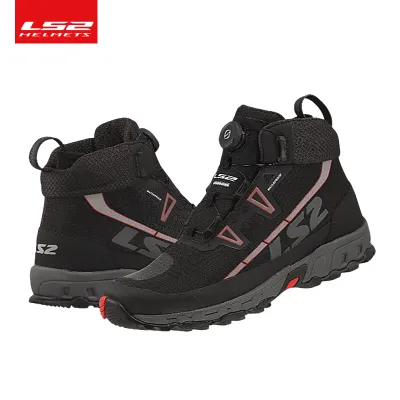
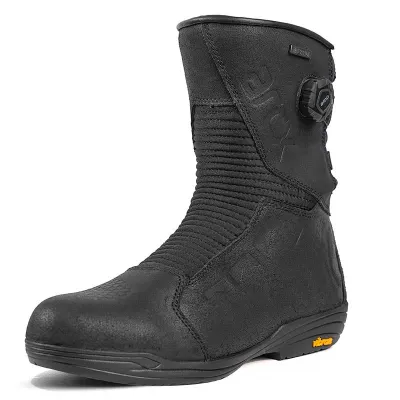
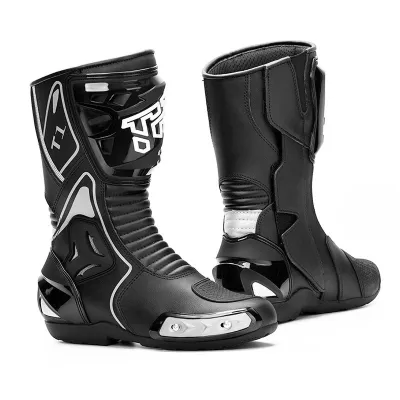
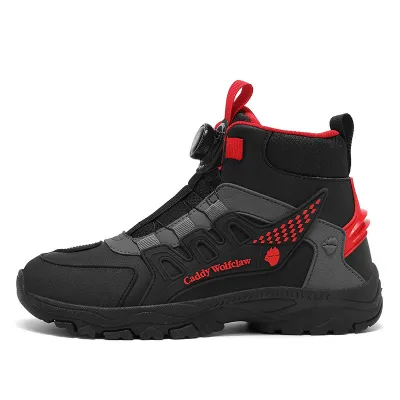
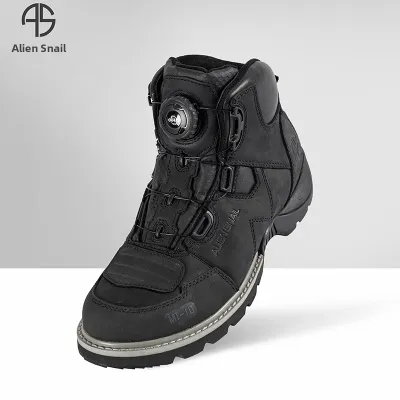
Prices are valid at publication and may change. Please refer to the product page for the latest price.
While surface coatings are useful for shedding light rain, they quickly wear off under the constant friction, flexing, and debris exposure typical of motorcycle riding. For reliable wet-weather performance, a boot must feature an integrated internal membrane. This membrane is typically sandwiched between the outer chassis (usually leather or high-durability synthetic textile) and the inner comfort liner, ensuring that even if the outer material becomes saturated, your foot remains dry.
Beyond the membrane itself, the physical construction of the boot determines its water-resisting capabilities. Seam-sealed construction is critical because every needle hole created during assembly is a potential leak point; manufacturers must seal these seams internally with waterproof tape. Additionally, look for a gusseted tongue, which is a folding bridge of waterproof fabric connecting the tongue to the main body of the boot. Without a proper gusset, water will easily penetrate the zipper or lace area, rendering the waterproof membrane useless.
To verify these waterproof claims, always consult the manufacturer’s technical specifications and product labels rather than relying on generic marketing terms. Look for specific certifications, such as the European EN 13634 standard, which includes optional testing for water resistance (indicated by the “WR” abbreviation on the certification label). This certification ensures the boot has undergone standardized testing to verify its structural integrity and water-blocking capabilities.
Key Features to Prioritize for Daily Commuting
Daily commuting in urban environments presents unique challenges, particularly in warm, humid climates. Stop-and-go traffic generates significant engine and ambient heat, making breathability and moisture-wicking linings your top priority. A completely sealed boot with poor breathability will trap sweat, leaving your feet just as wet as if they had been exposed to the rain. Prioritize boots that feature highly breathable microporous membranes paired with moisture-wicking mesh interiors to keep your feet dry and comfortable during slow city transits.

Commuters also require convenience and speed when transitioning from the bike to the office or destination. Quick-entry designs, such as side-zipper closures secured by hook-and-loop flaps, allow you to slip the boots on and off rapidly without wrestling with wet laces. Ensure that any zipper mechanism is backed by a wide waterproof gusset to prevent water from forcing its way through the zipper teeth while riding.
Urban roads become exceptionally slick during the first few minutes of a downpour as water mixes with accumulated oil, dust, and debris. Your boots must provide exceptional traction on wet urban surfaces, including painted pedestrian crossings, metal manhole covers, and concrete parking structures. Look for outsoles made from soft, high-grip rubber compounds featuring deep siping—grooves designed to channel water away from the contact patch—to prevent slips when putting your feet down at intersections.
Finally, consider the limits of splash protection versus full submersion. Commuter boots are often cut lower, around ankle height, to maximize flexibility and walking comfort. While this design is highly effective at blocking road spray and shallow puddles, it has a lower water-entry line. If you must navigate deeply flooded streets or heavy standing water, a low-cut commuter boot can allow water to spill over the collar, soaking your feet from the top down.
Essential Waterproof Features for Long-Distance Touring
Long-distance touring demands heavy-duty construction capable of enduring prolonged exposure to continuous rain, high wind speeds, and shifting weather fronts. The most critical feature for touring is an extended shaft height, typically reaching mid-calf or shin level. This height is essential for creating a secure, overlapping interface with your riding pants. When riding at highway speeds, wind forces water upward and outward; a tall boot collar tucked securely under a sealed pant cuff prevents water runoff from entering the top of the boot.
Continuous highway riding subjects boots to constant wind pressure, which can force water through weak points in the construction. The waterproof membrane must be exceptionally durable to withstand the continuous flexing of your ankles and the friction of shifting gears over hundreds of kilometers. Look for touring boots that utilize premium, multi-layer membranes known for retaining their waterproof integrity under high physical stress.
Touring often involves riding through diverse microclimates, such as climbing from hot, humid coastal highways to cool, damp mountain passes. To maintain comfort across these temperature shifts, your boots must offer adequate thermal regulation. This requires a slightly roomier fit in the toe box to accommodate technical, moisture-wicking socks without restricting blood circulation, which is vital for keeping your feet warm in cold, wet conditions.
Additionally, structural reinforcement in the toe, heel, and shin areas serves a dual purpose. Beyond providing crucial impact protection, rigid reinforcements prevent the boot from collapsing under wind pressure or heavy rain. If the outer material collapses and presses the internal membrane directly against your skin, it eliminates the insulating air gap, leading to rapid heat loss and a sensation of dampness even if no water has actually penetrated the membrane.
Evaluating Cross-Scenario Compatibility
If you participate in both daily commuting and weekend touring, you must decide whether to invest in a single versatile pair of boots or separate, specialized footwear. Attempting to use a single pair for both scenarios involves clear compromise points. A heavy, stiff, shin-high touring boot offers maximum protection and waterproofing on the highway, but it can feel hot, bulky, and restrictive when walking around an office or running quick urban errands. Conversely, a lightweight, flexible commuter shoe lacks the structural support and extended coverage needed to keep you dry during an all-day highway downpour.
For riders seeking a single compromise option, a mid-height touring or adventure-style boot can serve as a viable middle ground. These boots offer substantially more protection and water resistance than a casual riding shoe, yet they remain flexible enough for short walks. However, you must accept that these boots will run warmer during slow-moving city commutes and may require more effort to put on and take off compared to dedicated commuter footwear.
Splitting your budget into two specialized pairs is often the most practical approach if you ride frequently in wet weather. This strategy allows you to use a lightweight, highly breathable, quick-access boot for daily urban trips, while preserving your heavy-duty, maximum-protection touring boots for long-distance journeys. Furthermore, owning two pairs ensures that if one set of boots becomes thoroughly soaked, you have a dry, safe alternative to wear while the other pair dries naturally, preventing the growth of odor-causing bacteria.
Inspecting and Maintaining Waterproof Integrity
To ensure your boots perform reliably when the weather turns, you must establish a routine inspection and maintenance protocol. Before using a new pair of boots, or after storing them for an extended period, perform a thorough visual inspection. Examine the interior lining for any bunching or pulling, which can indicate that the internal membrane has delaminated from the outer shell. Check the exterior stitching, particularly around the sole joint and the gussets, for loose threads or separation.
Regular cleaning is essential to preserve both the breathability and water repellency of your boots. Dirt, mud, and road grime act as abrasives that can wear down the delicate fibers of the outer shell and clog the microscopic pores of the internal membrane, severely reducing its breathability. Clean your boots using a soft-bristled brush, mild soap, and clean water. Avoid harsh household detergents, solvents, or high-pressure washers, as these can strip natural oils from leather, degrade synthetic materials, and puncture internal membranes.
Over time, you must be able to recognize the signs of membrane failure. If your feet consistently feel wet in specific areas, such as around the toes or along a seam, the internal membrane may have been punctured or worn through. Once an internal membrane is ruptured, it cannot be repaired; at this point, the boots should be retired from wet-weather service, though they may still serve as dry-weather protective gear.
Finally, always consult the manufacturer’s care label before applying any aftermarket treatments. When the original surface water repellency begins to fade, you can restore it using approved waterproofing sprays or waxes designed specifically for breathable membranes. Never use heavy silicone-based sprays or thick greases on membrane-equipped boots, as these products block the pores of the membrane, permanently destroying the boot’s breathability and trapping sweat inside.
Frequently Asked Questions (FAQ)
Are waterproof motorcycle boots completely breathable in hot weather?
No waterproof membrane is perfectly breathable in extremely hot and humid conditions. The moisture-transfer process relies on a temperature and humidity differential; sweat vapor moves from the warm, highly humid environment inside the boot to the cooler, drier air outside. When the ambient outdoor temperature and humidity are exceptionally high, this differential decreases, slowing down the transfer process. To manage foot moisture in hot weather, always pair your waterproof boots with synthetic or merino wool riding socks that actively wick sweat away from your skin, rather than cotton socks, which absorb and retain moisture.
Can I apply aftermarket waterproofing sprays to my riding boots?
Yes, but you must only use aftermarket sprays that are explicitly approved by the boot manufacturer for use with breathable membranes. Standard silicone-based waterproofing sprays can coat the surface of the boot in a solid film, blocking the microscopic pores of the internal membrane and permanently ruining its breathability. Always clean the boots thoroughly and let them dry completely before application. Test the spray on a small, inconspicuous area first to ensure it does not discolor or degrade the leather or synthetic textiles.

Community discussion
Share your experience or ask a question. Comments are reviewed before publication.