
Choosing the correct engine oil viscosity is one of the most critical steps in maintaining the long-term health and fuel efficiency of your Toyota Wigo. For most model years and engine variants of this popular hatchback, Toyota recommends using either 0W-20 or 5W-30 engine oil. These multi-grade formulations are engineered to flow quickly during cold starts while maintaining a protective barrier at high operating temperatures.
Because the Wigo has evolved through different generations—transitioning from the early 1.0-liter 1KR-DE and 1KR-VE three-cylinder engines to the newer 1.2-liter WA-VE three-cylinder engine—the precise recommendation can vary. Selecting the appropriate viscosity ensures that your engine remains properly lubricated, runs quietly, and delivers the excellent fuel economy for which the vehicle is known.
How to Confirm the Exact Viscosity for Your Toyota Wigo
To determine the exact engine oil viscosity your specific Toyota Wigo requires, your primary and most authoritative source of information is always the vehicle’s Owner’s Manual. This document contains detailed specifications tailored to your car’s model year, engine code, and regional requirements. It specifies not only the recommended Society of Automotive Engineers (SAE) viscosity grade but also the exact oil capacity required for a standard oil and filter change.
Products mentioned in this guide

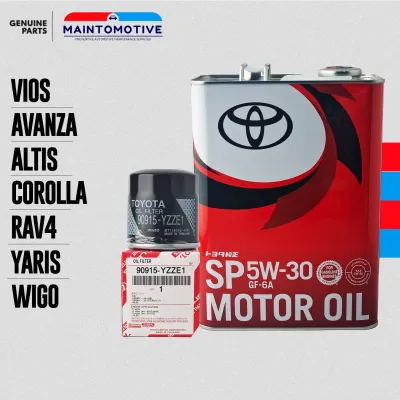
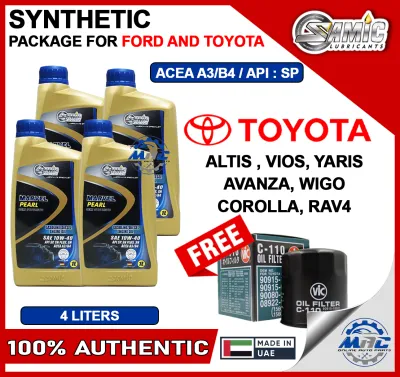
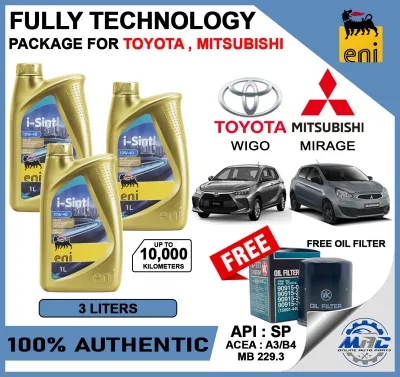
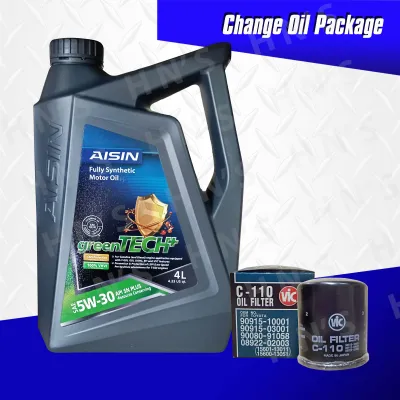
Prices are valid at publication and may change. Please refer to the product page for the latest price.
Another quick way to verify the recommended viscosity is to inspect the engine bay. Locate the oil filler cap on top of the engine valve cover. In many modern vehicles, including various Wigo model years, the factory-recommended viscosity grade, such as 0W-20, is stamped directly onto the surface of the cap. This serves as an immediate reference point during routine maintenance.
If you have purchased a pre-owned Wigo and the manual is missing, or if you suspect the vehicle has undergone an engine modification or swap, do not rely on guesswork. In such cases, consulting a local Toyota dealership or an authorized service center in the Philippines is highly recommended. Service advisors can look up your vehicle’s Vehicle Identification Number (VIN) to confirm the exact factory specifications.
It is crucial to remember that oil recommendations are not one-size-fits-all across all Wigo model years. The older 1.0-liter engines and the newer 1.2-liter powertrains have different internal tolerances and operating characteristics. Direct verification ensures you do not inadvertently use an oil that is incompatible with your specific engine variant.
Decoding Viscosity Grades: What the Numbers Actually Mean
Understanding the alphanumeric codes on a bottle of engine oil helps demystify how the lubricant behaves inside your engine. These codes are established by the SAE J300 standard. In a grade like 0W-20 or 5W-30, the “W” stands for “Winter” and indicates the oil’s flow characteristics in cold temperatures, while the second number represents the oil’s viscosity or thickness at the engine’s normal operating temperature of 100°C.

A lower number preceding the “W” (such as 0W or 5W) indicates that the oil remains fluid and flows easily at extremely low temperatures. While the Philippines does not experience freezing winter weather, a low cold-start rating remains highly beneficial. Most engine wear occurs during the initial seconds after starting the car, when the oil has drained back into the oil pan. A 0W or 5W oil flows rapidly to the cylinder head and valve train, minimizing metal-on-metal friction during startup.
The second number (such as 20 or 30) represents the oil’s resistance to flow at high temperatures. In the tropical climate of the Philippines, where ambient temperatures frequently exceed 30°C and stop-and-go traffic in metro areas places severe thermal stress on small-displacement engines, this rating is critical. The oil must remain thick enough to maintain a continuous, protective film over moving parts, preventing direct contact under high heat.
Modern engine design has shifted toward tighter internal tolerances, meaning the spaces between moving metal parts are incredibly small. Consequently, the old automotive belief that “thicker oil is always better” no longer applies. Tightly engineered powerplants like those in the Wigo require thinner oils like 0W-20 to flow freely through narrow oil passages. Using an excessively thick oil can restrict flow, increase internal friction, and cause the engine to work harder, which ultimately wastes fuel.
The Risks of Using the Incorrect Oil Viscosity
Using an engine oil with a viscosity grade that deviates from Toyota’s specifications can lead to noticeable performance drops and long-term mechanical issues. If you fill your Wigo’s engine with oil that is too thick, such as a 15W-40 or 20W-50 grade commonly used in older or larger diesel vehicles, you will introduce unnecessary fluid drag. This drag forces the engine to expend more energy simply moving its own internal components, resulting in sluggish acceleration and a significant drop in fuel economy.
Furthermore, overly thick oil may fail to circulate quickly enough during a cold start. This delayed lubrication can cause premature wear on critical components like the timing chain, camshafts, and piston rings. Over time, this wear manifests as loud engine ticking, increased vibration, and a shortened engine lifespan.
Conversely, using an oil that is too thin for your specific engine variant or operating conditions carries its own set of severe risks. If the oil is too thin, the protective lubricant film can shear or break down under high thermal loads. Without a stable barrier, metal components will rub directly against each other, leading to rapid wear of the bearings and cylinder walls.
Thin oil is also more prone to slipping past worn piston rings and valve guides into the combustion chamber, where it burns off. This leads to high oil consumption, requiring you to top up the oil frequently, and can eventually clog the catalytic converter. Most importantly, using an unapproved oil viscosity can void your vehicle’s manufacturer warranty, leaving you financially responsible for expensive powertrain repairs.
Beyond Viscosity: Checking Quality Standards and Specifications
Selecting the right viscosity is only half the battle; you must also ensure the oil meets the necessary quality and performance standards. Look for certifications from the American Petroleum Institute (API) on the bottle. Modern gasoline engines like the Wigo’s benefit greatly from recent API service categories, such as API SP or API SN Plus. These standards are specifically formulated to prevent low-speed pre-ignition (LSPI) and offer superior protection against timing chain wear and engine sludge.
Another critical certification to look for is from the International Lubricant Standardization and Approval Committee (ILSAC). Standards such as ILSAC GF-6 run parallel to the API SP category, focusing heavily on fuel economy retention, resource conservation, and emission control system protection. Choosing an oil with these ratings helps your Wigo maintain its low-emission, high-efficiency characteristics.
When browsing shelves at an automotive retail store or shopping on an online marketplace, always physically inspect the product label. Look for the API “Donut” or the ILSAC “Starburst” certification marks. Relying solely on eye-catching brand marketing or low price points can be risky, as sub-standard oils may lack the advanced additive packages required to keep your Wigo’s engine clean and protected. High-quality fully synthetic oils meeting these standards typically range from ₱400 to ₱900 per liter in the local market.
Frequently Asked Questions (FAQ)
Can I mix different viscosity grades in an emergency?
Mixing different oil viscosity grades is not recommended for routine maintenance, as it alters the oil’s physical properties and can compromise the performance of the additive packages. However, if you find yourself in an emergency situation where your Wigo’s oil level is dangerously low and you risk engine seizure, adding any clean engine oil is better than running the engine dry. If you must mix viscosities to get home, you should schedule a professional oil and filter change as soon as possible to restore the correct, uniform viscosity grade.
Should I switch to a thicker oil as my Wigo accumulates high mileage?
There is a common misconception that high-mileage vehicles must automatically switch to a thicker oil to compensate for internal wear. For a modern engine like the Wigo’s, you should continue using the manufacturer’s recommended viscosity grade as long as the engine is running smoothly and not consuming oil. You should only consider switching to a slightly thicker oil if a qualified mechanic diagnoses a specific mechanical issue, such as worn seals or excessive oil consumption, and explicitly advises a change based on physical wear.
Community discussion
Share your experience or ask a question. Comments are reviewed before publication.